
Powering Progress
Renewable energy and new technology create a more sustainable workplace.
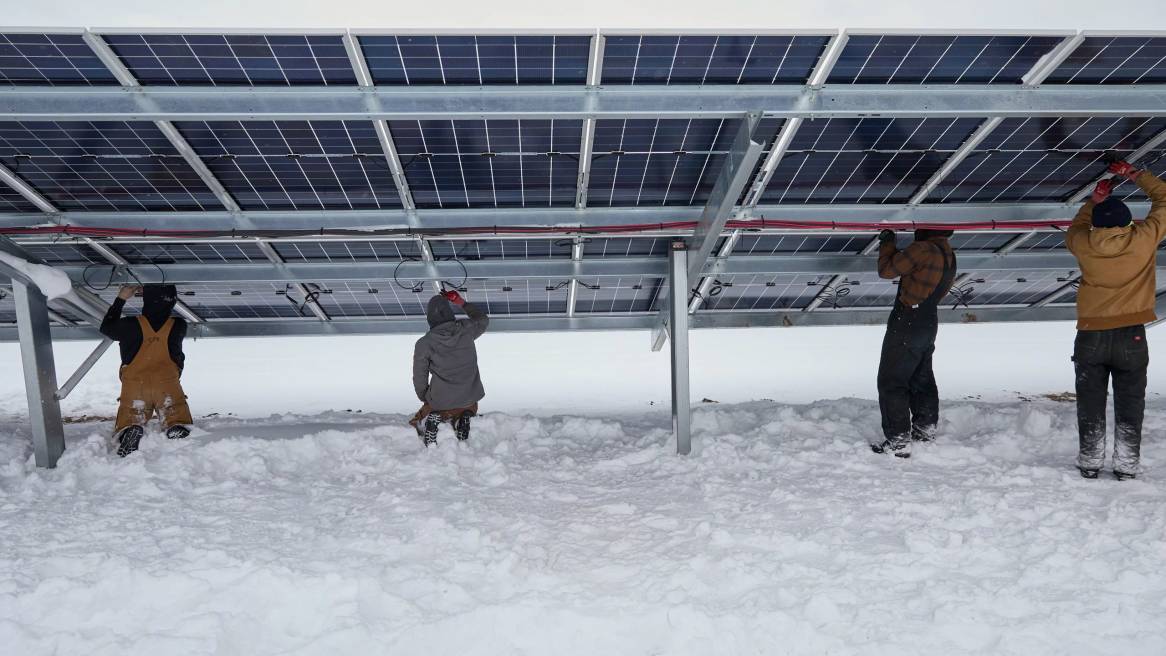
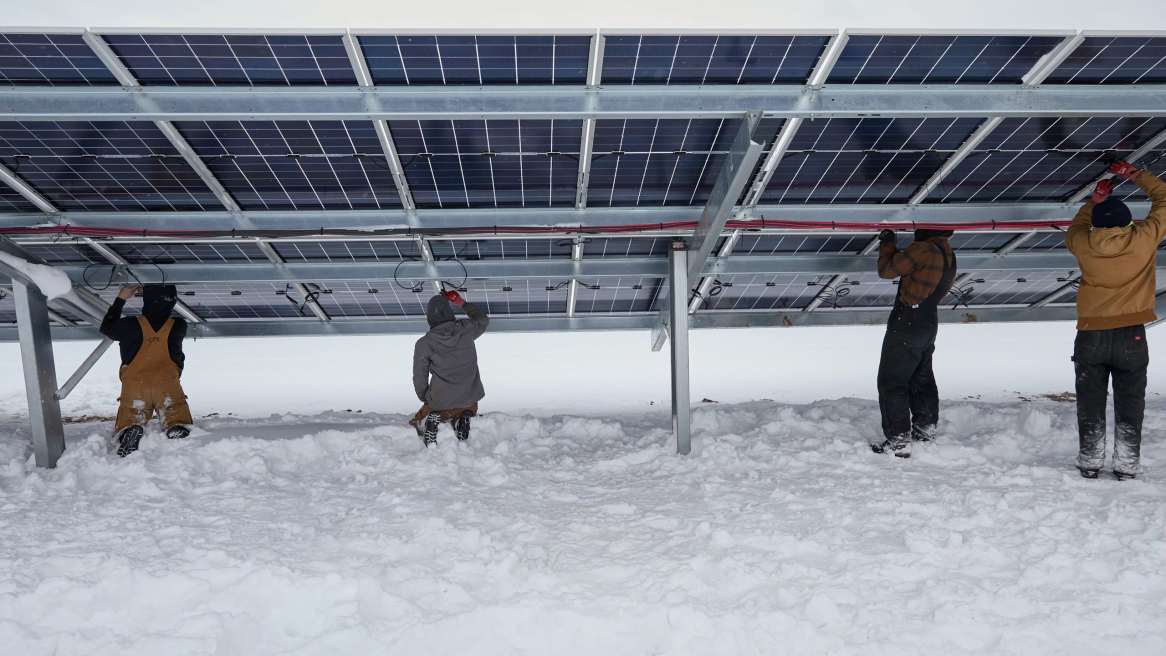
If you visit the Steelcase manufacturing plant in Kentwood, Michigan, today, you’ll notice something new before you even step inside. In a nearby green space, rows of solar panels stretch across the landscape; an 800-kilowatt array, generating clean energy for the plant and all of the products it makes. It’s the largest solar installation across the Steelcase global footprint, and signals something bigger: the latest effort in an organization-wide strategy to design and make products in ways that dramatically reduce their carbon footprint.
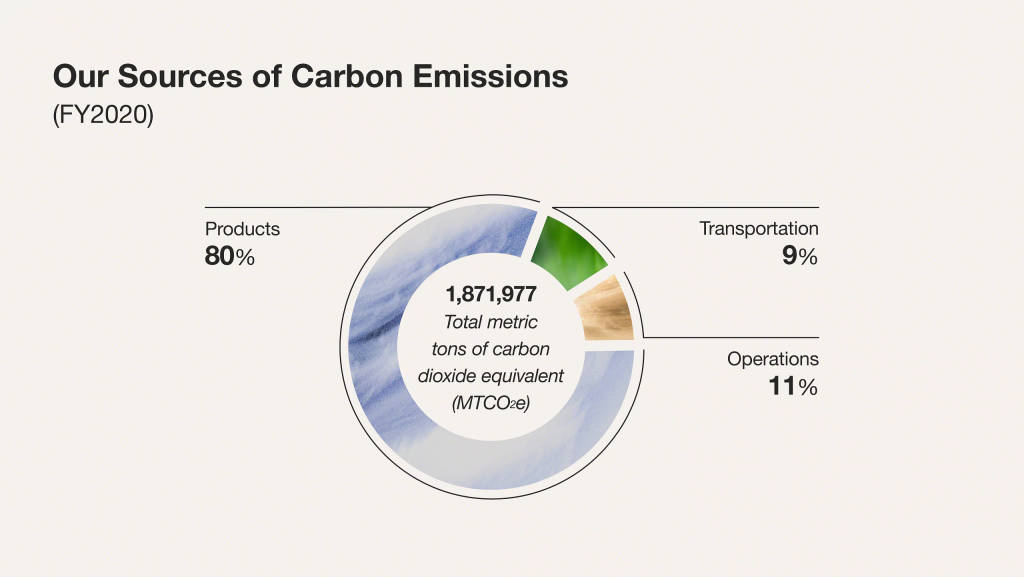
Designing for the planet means looking at every stage of a product’s life: how it’s made, what it’s made from, how long it lasts and what happens when someone is done using it. This mindset guides teams across Steelcase as they work to reduce embodied carbon, keep materials in circulation longer, and create products that help customers meet their sustainability goals.
“Our biggest opportunity to help customers meet their sustainability goals lies in the products themselves,” says Kaila Bryzgalski, product sustainability marketing manager. “When we improve how we make things and what we make them from, the impact multiplies.”
Solar energy powers lower-carbon manufacturing
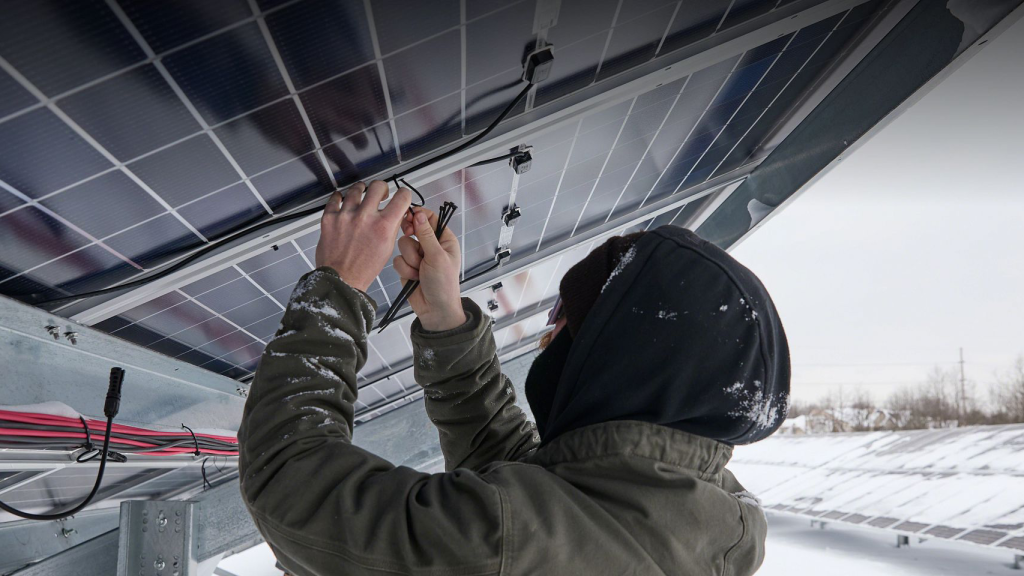
The Kentwood solar array is a major step in that direction. It builds on earlier solar projects at Steelcase facilities in Rosenheim, Germany; Pune, India; and Stribro, Czech Republic. Each installation strengthens the company’s ability to manufacture lower-carbon products and accelerates progress toward long-term climate goals. It’s all part of a global effort to consider renewable energy wherever the company operates.
“After installing solar roof panels in Europe and Asia, we’ve been working to scale those successes in other parts of the world,” says Elizabeth Girgen, who manages the U.S. project. “This latest installation is a significant step forward.”
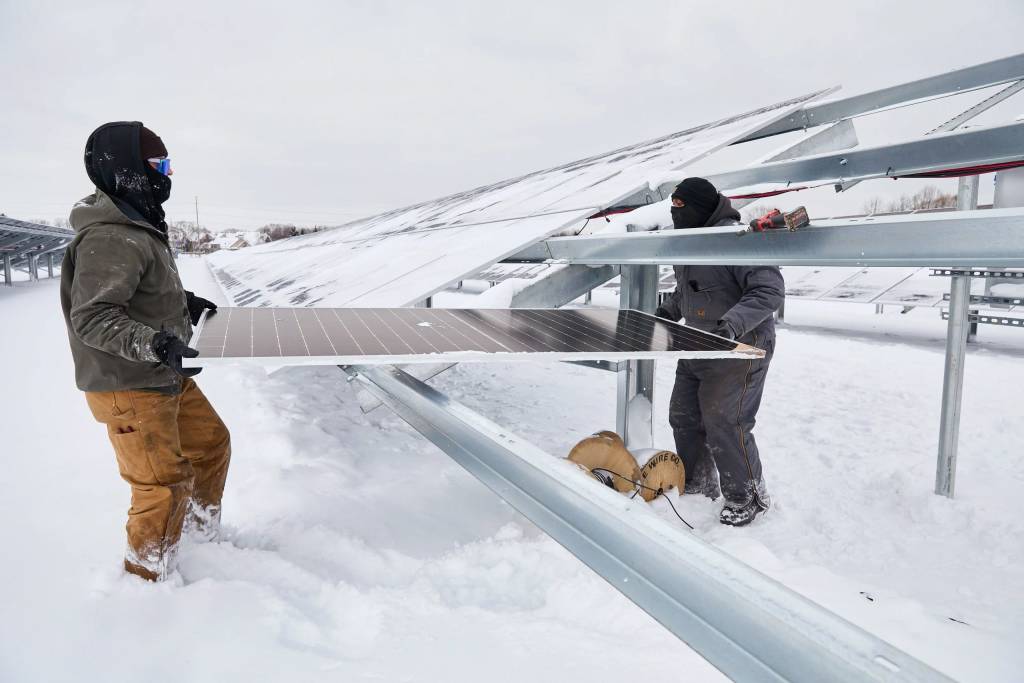
Girgen believes Kentwood is the ideal place to expand renewable energy: The plant produces a high volume of products in seating and storage categories with substantial energy demands and strong potential to reduce embodied carbon. “The array produces enough electricity to power roughly 125 homes annually, covering about 5% of the plant’s total energy consumption,” Girgen says.
Generating renewable energy onsite means all products made there are more sustainable for customers who buy them.
This work supports the company’s broader climate goals: reducing operational emissions 50% by 2030 and value-chain emissions on a path to net-zero future, which includes cutting value-chain emissions more than 90%. Renewable energy plays a critical role in reducing the carbon intensity of manufacturing.
Circular design keeps materials in use
Clean energy is only part of the sustainability story. Steelcase is also rethinking materials and product lifecycles to reduce emissions tied to the materials used to make products. Circular design is central to that effort.
Circular by Steelcase® means products are used more. The program emphasizes reuse and task chairs into high-performance remanufactured products, instead of sending materials to landfills. Some chairs are reused onsite while others become beautiful, durable, high-performance seating for customers around the world.
A relentless circular design mindset also drives the push for significantly more recycled content in Steelcase high-performance chairs. Across the task seating options in the Americas, the recycled content has doubled, reducing the average carbon footprint and lowering the carbon footprint by 35%, on average.
These chairs are built to last, easy to repair, and designed to be remade at the end of their use—key parts of a circular system.
When you choose our circular services, circular design and lower-carbon manufacturing powered by renewable energy, you help create a more sustainable future.
“All of these efforts add up. Together, they create a ripple effect that gives our customers products with smaller footprints, longer lifespans and more circular pathways,” says Bryzgalski. “We’re committed to keep improving, measuring each step along the way and sharing our progress to continue the momentum.”