
Designing for Trust Across Differences
What the 2025 Better Is Possible Design Challenge reveals about communication, community and better work.
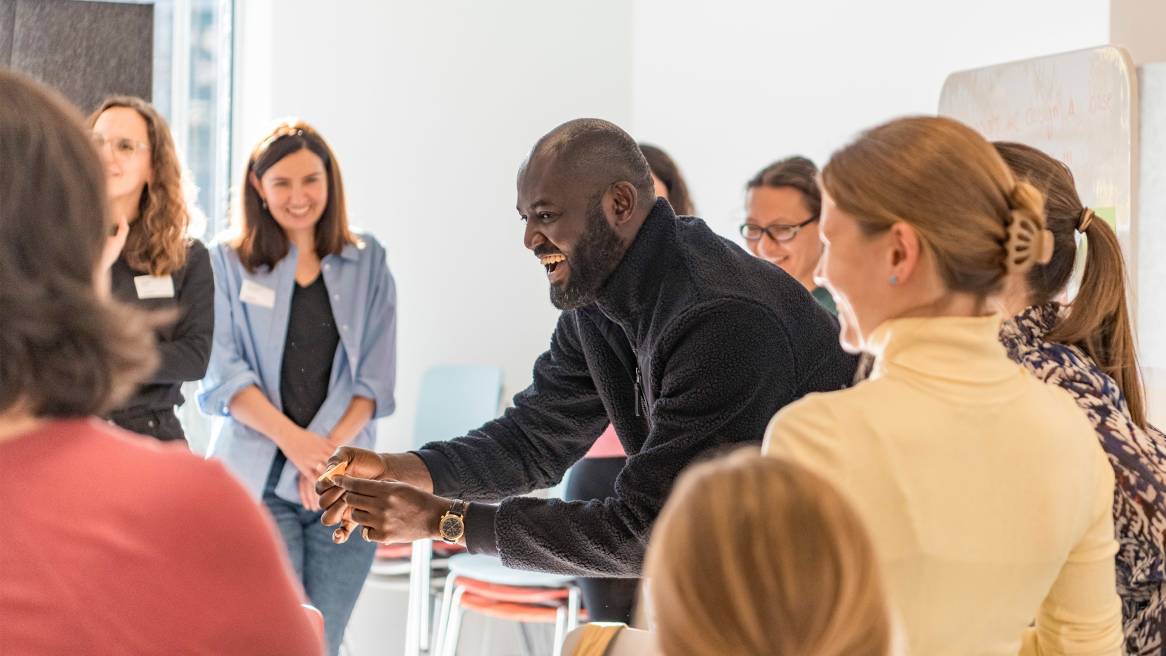
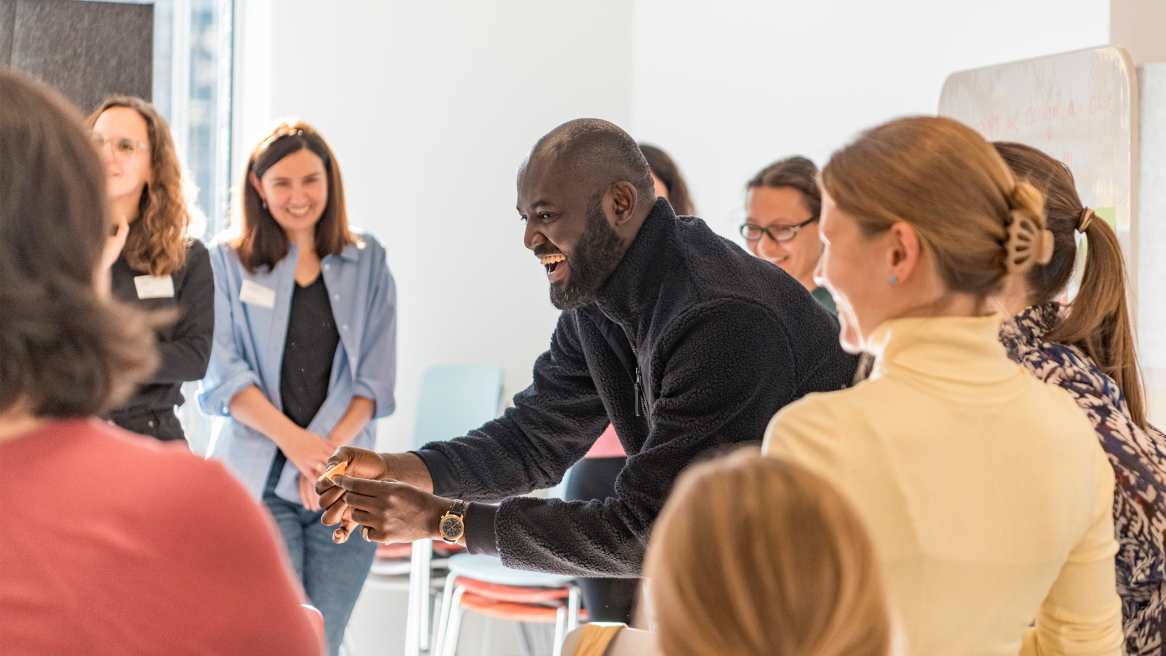
In today’s world, division, misunderstanding and polarization are among the most urgent challenges we face. This isn’t just in politics or the media, but also in our workplaces and personal relationships. At a time when trust can feel harder to build across differences, civil discourse and open communication need more than good intentions. They need practice.
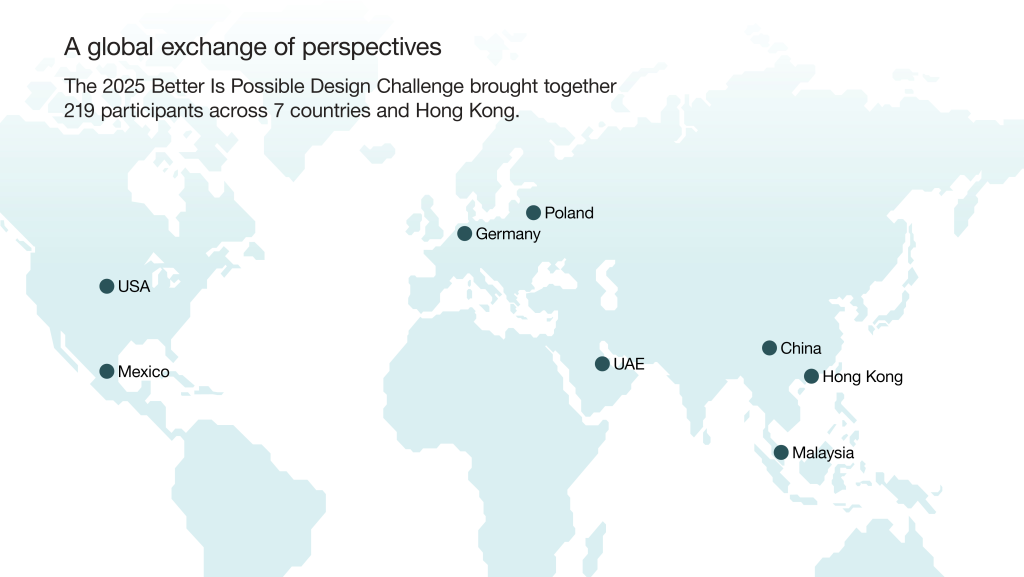
That was the idea behind the third annual Better Is Possible Design Challenge. This one-day global event brought together Steelcase employees, dealers, partners, customers and members of the broader community. Their shared prompt: How might we design for trust and communication across differences to create community?
Starting from common ground
The Design Challenge is a part of the Better Futures Community, a global network of organizations and individuals connected by Steelcase, all working toward a shared goal of improving the wellbeing of people and the planet.
Within that broader community, the prompt needed to resonate across many perspectives. With participants bringing different viewpoints and experiences, the team needed a theme people could step into on equal footing. Not a theme requiring specialized expertise.
As Jorge Barrios, Steelcase Senior Program Coordinator, explained, “connection is more possible than ever, but it’s also increasingly fragile. Because so much of life happens at work, often alongside people with different beliefs, the workplace becomes a daily opportunity to practice trust and communication across differences.”
“Design” is not just for designers
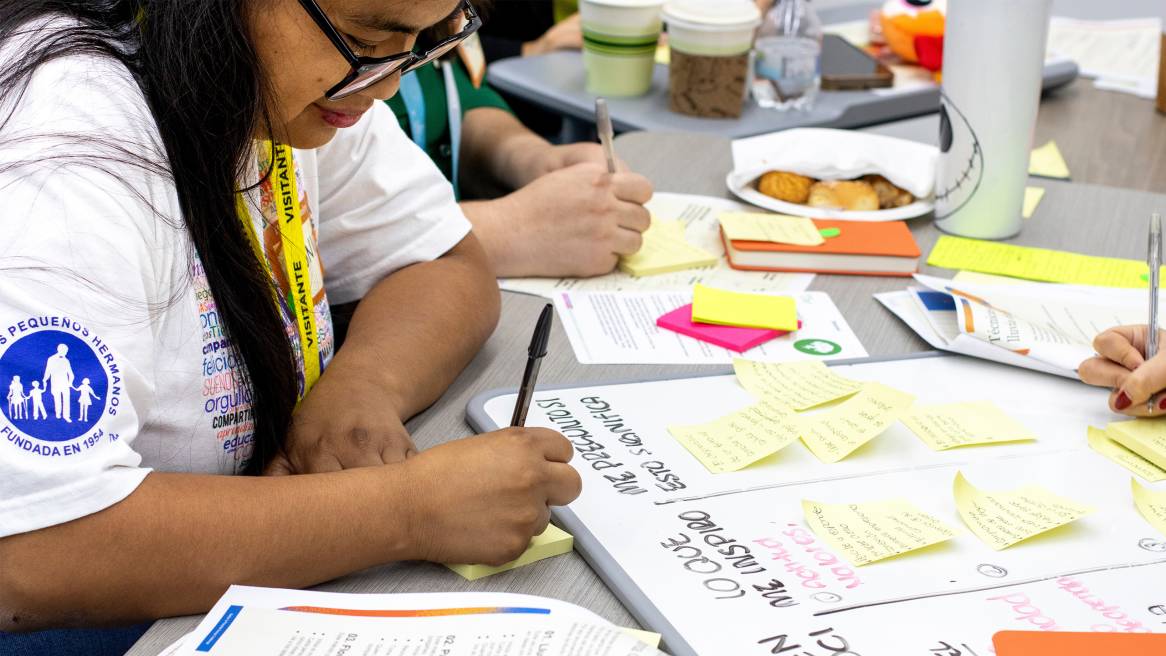
Few participants consider themselves “traditional” designers in their day-to-day roles. Using a design thinking framework, the challenge encourages them to see design as a way to explore a complex social issue, such as mistrust, through listening, reflection, ideation and prototyping. The goal is not to solve the issue in one day. The goal is to help people apply design thinking beyond product design and into the social conditions that shape a community.
That framing matters for leaders. Trust is rarely built through a single policy. It takes shape through repeated moments. For example: how meetings begin, how conflict is handled, who gets heard and what happens after feedback is given. The Better Is Possible Design Challenge helps participants move from understanding a challenge to generating ideas and building simple models for change.
A participant’s point of view: What it looks like in practice
Jamon Alexander, president and CEO of West Michigan Center for Arts + Technology (WMCAT), joined the challenge alongside his team. He described the experience as “an antidote to the weight, uncertainty and hyper-individualism we’re experiencing collectively.”
For WMCAT, the impact goes beyond a single day. The organization has participated in the Design Challenge before. The event has helped inform its three-year strategic plan and its organizational habits at the heart of human-centered design: curiosity, clear and respectful communication, assuming positive intent, learning from feedback and making space to practice and grow.
What participants say they gained
The post-event survey shows participants consistently rated the experience highly across five measures, including the relevance of the issue and their sense of empowerment to take action after the workshop concluded.
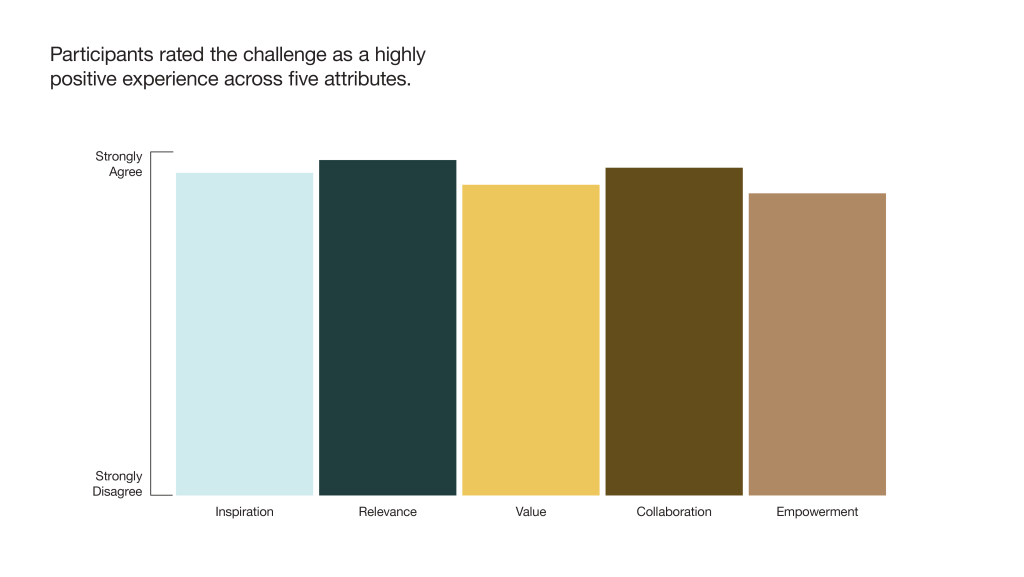
What the numbers do not fully capture is what people describe in their own words. Many survey responses describe specific actions they plan to take after the challenge, pointing to three recurring themes: personal improvement, increased empathy and stronger communication.
In their open-ended responses, participants express wanting to build greater transparency and trust. They intend to make time for reflection and apply what they learned to improve leadership and collaboration within their teams. Others point to active listening, embracing different perspectives and creating more inclusive spaces for dialogue and understanding. Improving communication also emerged as a clear priority, with many focused on strengthening collaboration through better interpersonal skills.
What this means for leaders shaping workplaces
If you influence culture, talent, facilities or workplace strategy, the takeaway is clear: trust grows through repeated experiences that help people listen and work through ideas together.
At a time when misunderstanding and polarization can make trust harder to build, the workplace can be a place where community is rebuilt with purpose. The 2025 Better Is Possible Global Design Challenge offers a practical reminder: belonging is not a slogan. It is a practice, strengthened one conversation and one shared experience at a time.
Learn more about the Steelcase Better Futures Community
The Better Futures Community is a global network of organizations and individuals connected to Steelcase, all working toward a shared goal of improving the wellbeing of people and the planet. The Better Futures Community turns individual contribution into collective action through:
- Changemakers: Employee volunteers who lead local impact
- Catalysts: Community partners advancing positive social change
- Network: Connections that bring employees, dealers, partners and customers together through shared learning
Stay connected to the Better Futures Community. Subscribe for quarterly insights and event updates.