
Revving Up Student Engagement With Learner-Centered Classrooms
Discover the latest insights from real classrooms
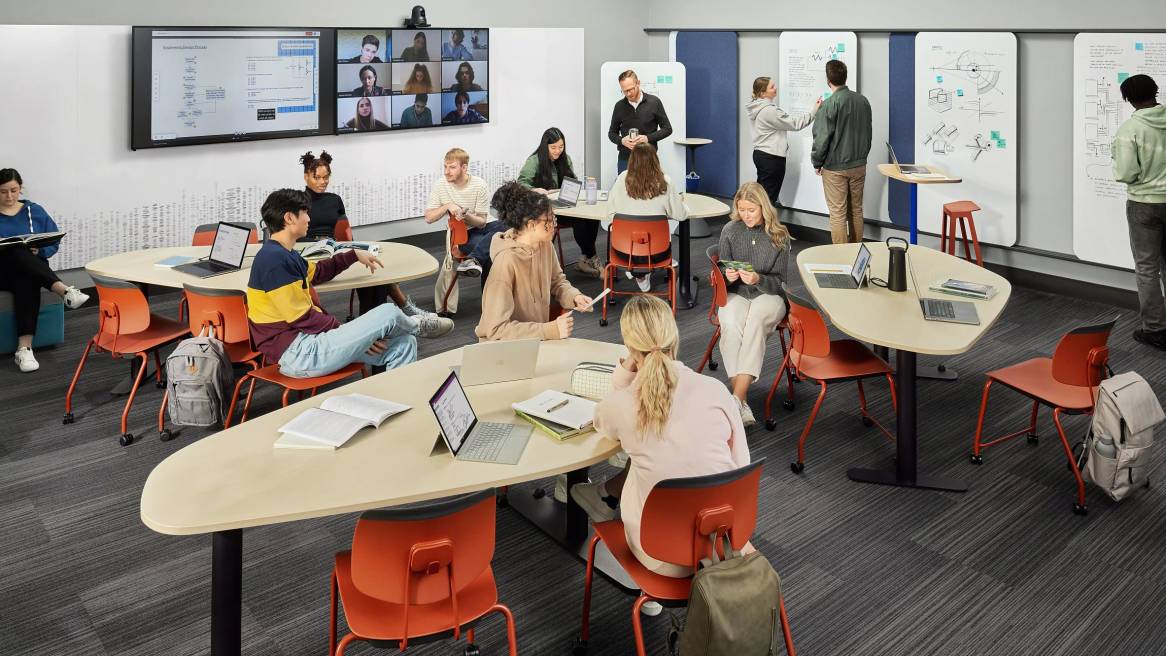
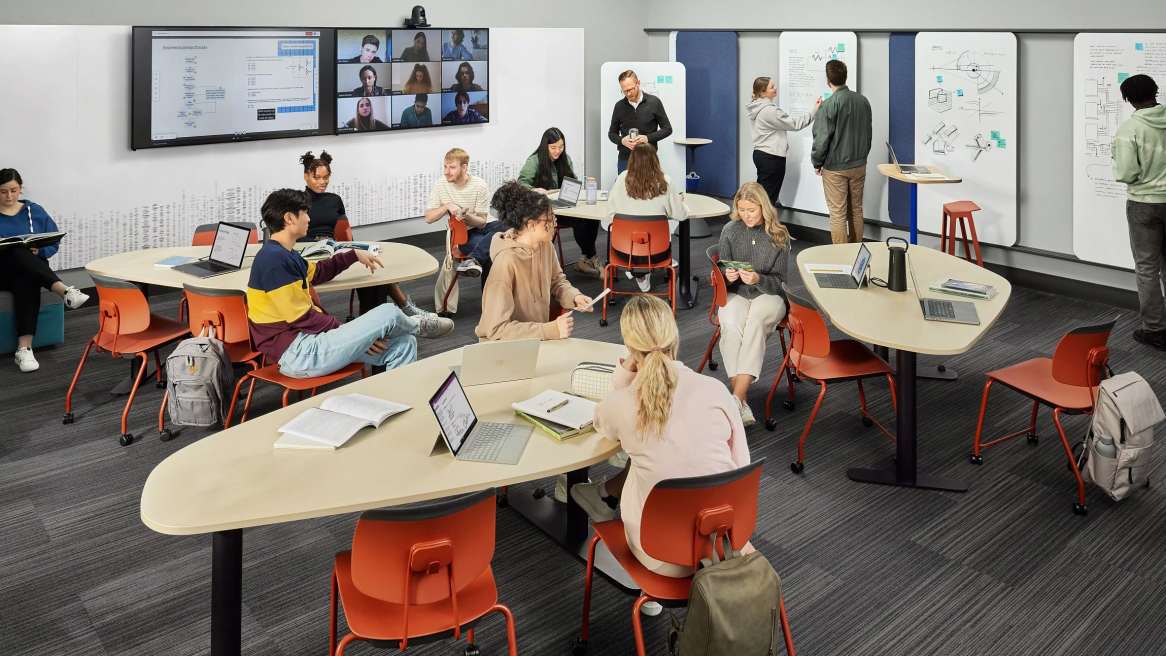
After surveying 16,594 students and 664 instructors across 112 K-12 schools, one thing was abundantly clear to the Steelcase Learning research team: students excel when they’re in the driver’s seat. More specifically, when that seat is in a learner-centered classroom.
In fact, our researchers found a direct link between learner-centered classrooms and improved engagement rates among students and teachers. Unlike traditional classrooms, which are designed with fixed furniture settings that lead to a passive learning experience, learner-centered spaces support student involvement and interactive learning. This helps add choice and control. The majority of students surveyed believe these classrooms help them be more creative, collaborative and motivated to learn.
As a result, Steelcase Learning wanted to know: How might we design better classrooms with elements that engage and empower learners and educators?
“Today’s students prefer learning spaces that encourage connection and collaboration. We need to design classrooms that support these needs and can foster the development of important future-ready skills,” says Andrew Kim of Steelcase Workspace Futures.
Based on the data, Steelcase Learning researchers identified four key insights:
- Flexible classrooms enhance learning experiences
- The built environment can foster physical and psychological wellbeing and inclusion
- Digital tools amplify teaching and learning but can also be a barrier
- The transition to learner-centered classrooms requires intentional design
These insights were put to work in a variety of classroom environments. While there are a wide variety of applications, these are just a few of the many environments developed that showcase insights in the development of learner-centered classroom design.
Multi-Purpose Classrooms
Designed for flexibility, these spaces promote movement and versatility. Students can follow the flow of learning, and quickly transition between lecture and small group sessions. Lounge areas provide space for brainstorms and partner projects. Comfort is essential for wellbeing, and these spaces offer a variety of postures and settings throughout the room.
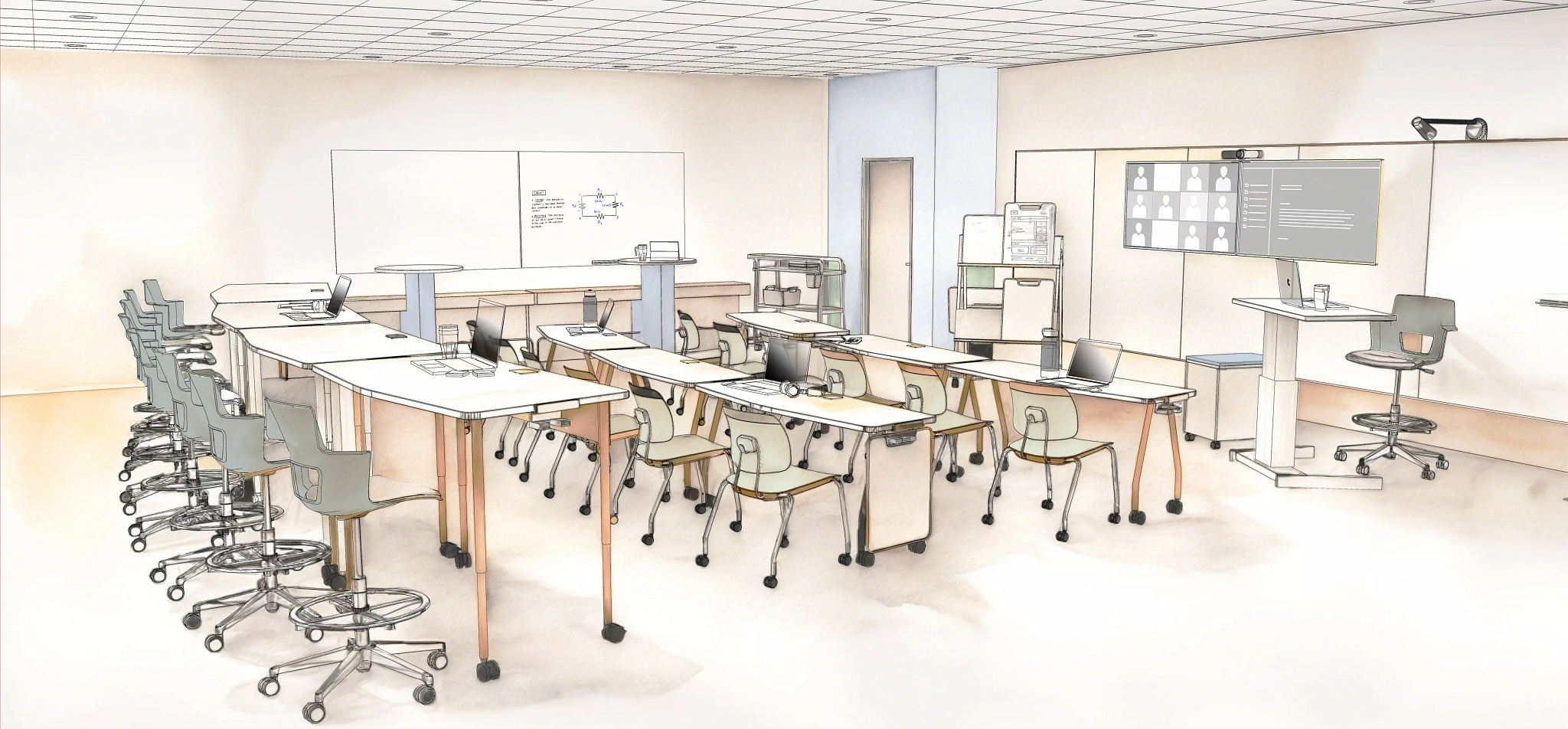
Active Breakout Classrooms
These large spaces are great for implementing learner-centered strategies that encourage student participation and interaction. By offering a variety of flexible zones, from soft seating to standing-height tables, these classrooms empower students to choose which settings best support their needs.
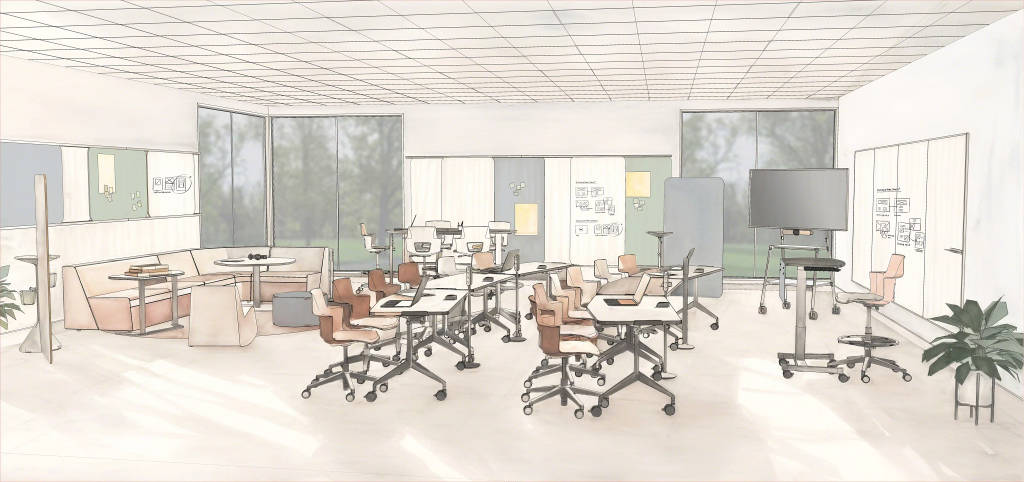
Makerspace Classrooms
With a focus on immersive technologies and tools, these spaces encourage exploration and provide students with opportunities to visit places and scenarios they might not normally be able to encounter. Movable storage and tools make room for flexibility as technology and teaching methods evolve.
Flexible Seating Classrooms
By providing a range of places to work, think, interact and create, students can select their seating based on their unique needs. Tables and lounge settings can bring groups together to build connection, trust and collaboration. Private spaces provide room for quiet focus.
These considerations support what today’s learners expect from classrooms that empower connectedness and focus on the development of future-ready skills.
The classroom environment needs to empower connectedness and support the development of future-ready skills. Explore our insights on how learner-centered classroom environments can lead to improved learning outcomes and better student and educator engagement.