
Soft Forms, Strong Connections: The Evolution of Steelcase Flex Active Frames
Designing Dynamic Spaces for Community and Creativity
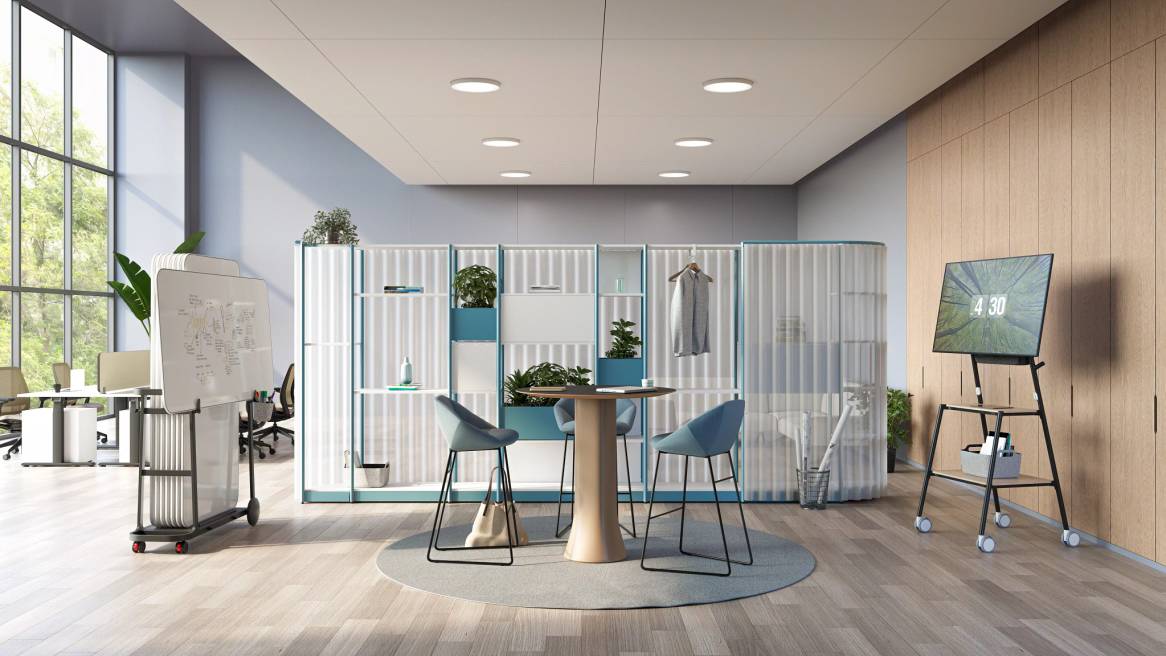
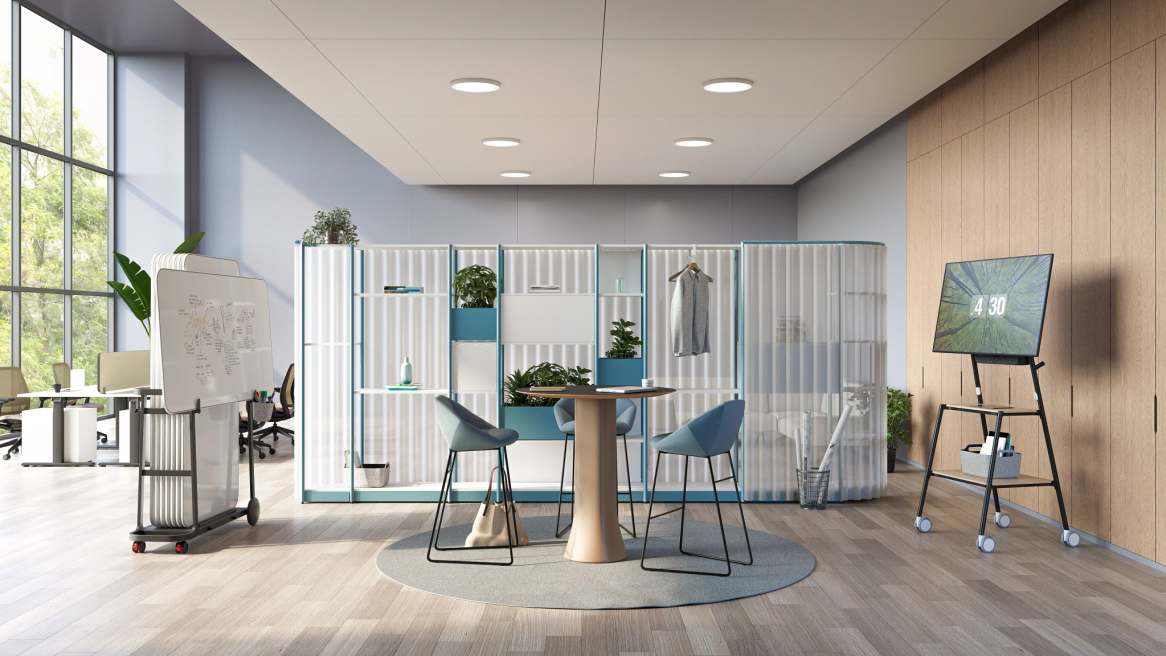
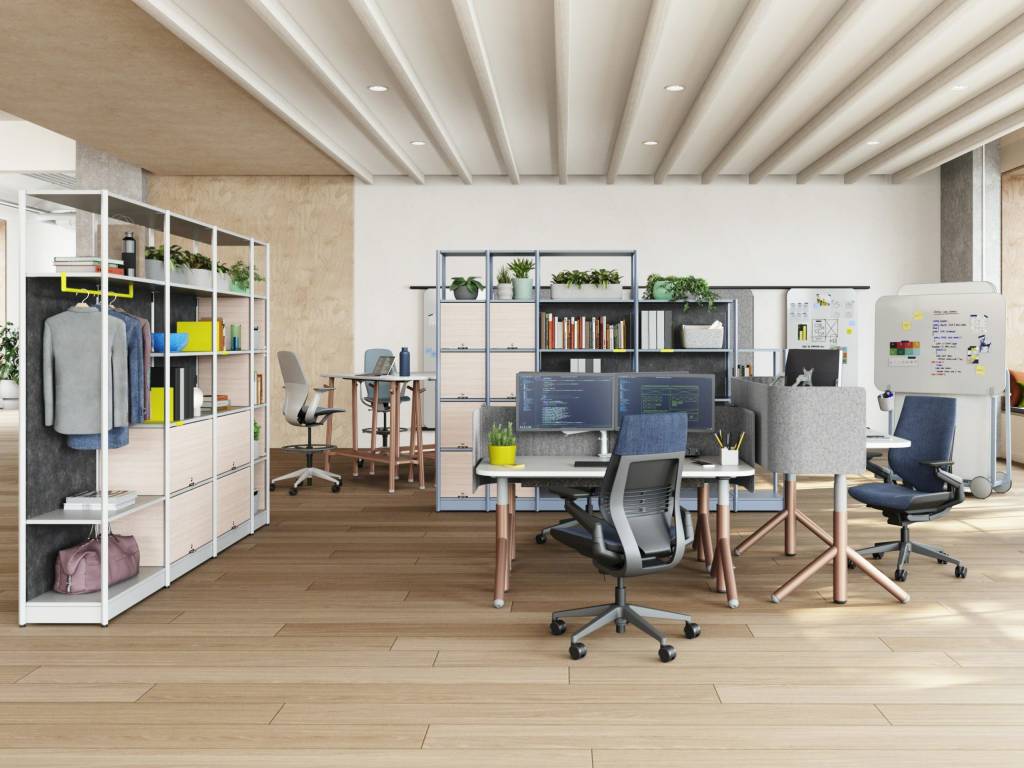
In today’s ever-shifting world of work, spaces need to do more than just function—they need to inspire, support the people who use them and adapt to changing needs. This need sparked the development and evolution of Flex Active Frames. Originally introduced as a modular system to define open-plan offices, Flex Active Frames quickly gained popularity for its ability to bring structure and flexibility to open spaces. The latest enhancements have taken this concept even further, offering a softer, more organic approach to space division that blends functionality with aesthetics and supports a wide range of work styles.
The Design Process: Adding a Human Touch to Office Space Planning
From the very early design phases of Flex Active Frames, the design team imagined a system that could evolve over time and respond to people’s changing needs. Designer Penghao Shan shed light on the design process. “We had mapped out this evolution from the start. But how do you go about bringing it to life? It’s a process that can take a decade. But you begin with the foundation, and you build from there.”
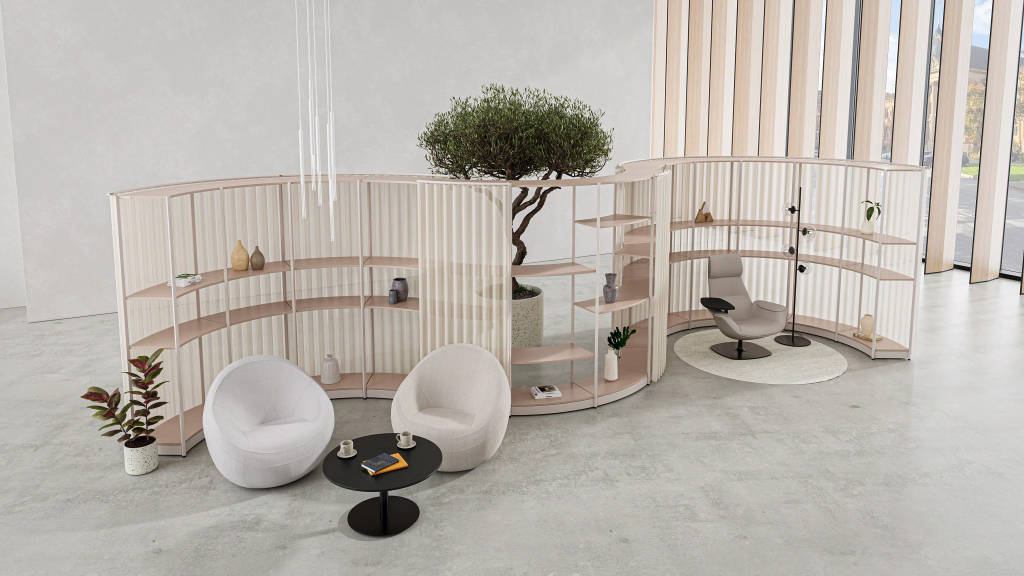
This intentional approach led to the latest chapter in the Flex Active Frames journey: the introduction of curved shelves and benches, planters, and curtains. These new elements soften the system’s original industrial lines, bringing a more organic, emotionally resonant quality to the spaces they shape. This human-centered concept is aligned with what people need in the workplace: community and the feeling that they belong.
“The previous version was sharp and linear,” “Penghao explains. “With these new softer elements, it’s rounded out, balanced, emotionally driven.” He emphasizes that curves aren’t just aesthetic—they influence how people feel.
“Soft corners impact how the human brain perceives a setting. They make a space feel more residential and welcoming.”
Penghao ShanDesign Manager, Steelcase
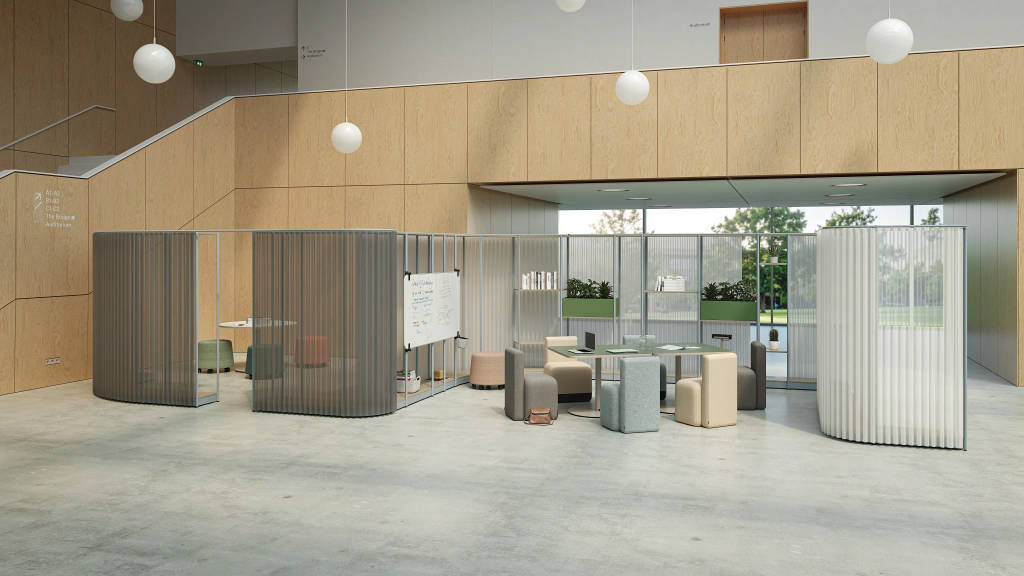
Curtains play a subtle but powerful role. “They’re a great way to add an extra layer,” Penghao says. “They signal that you’re in a different zone. It’s less industrial, less office-y. It makes a big difference.”
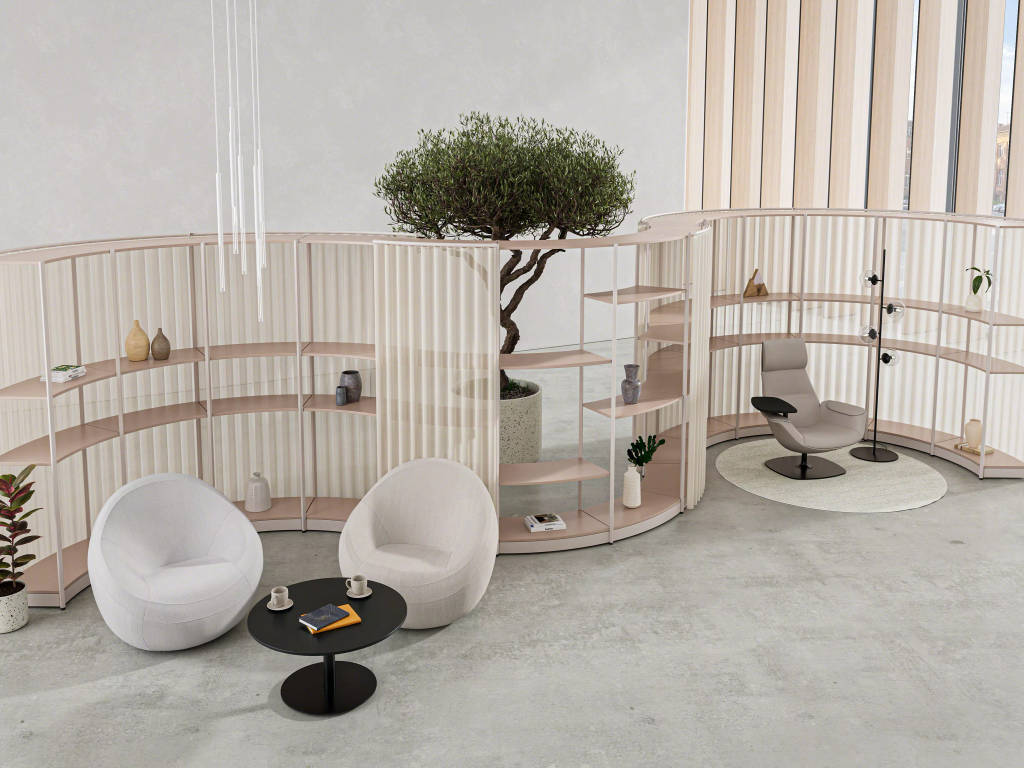
Making sure the curved elements could be seamlessly integrated with the original linear elements required mathematical precision and lots of testing. “We had to get the geometry just right,” Penghao explains. “The curve has to be big enough to shape a space, but not so big it takes over.” This level of refinement ensures that the new elements harmonize with the original system, creating continuity.
Designed to Support Community at Work
A thriving workplace is more than just a collection of desks—it’s a dynamic ecosystem where people connect, focus, learn, and recharge. At the heart of this is community-based design, an approach that prioritizes human connection, flexibility, and well-being. Flex Active Frames brings this concept to life with a modular system that adapts to diverse work styles and evolving team needs throughout the day.
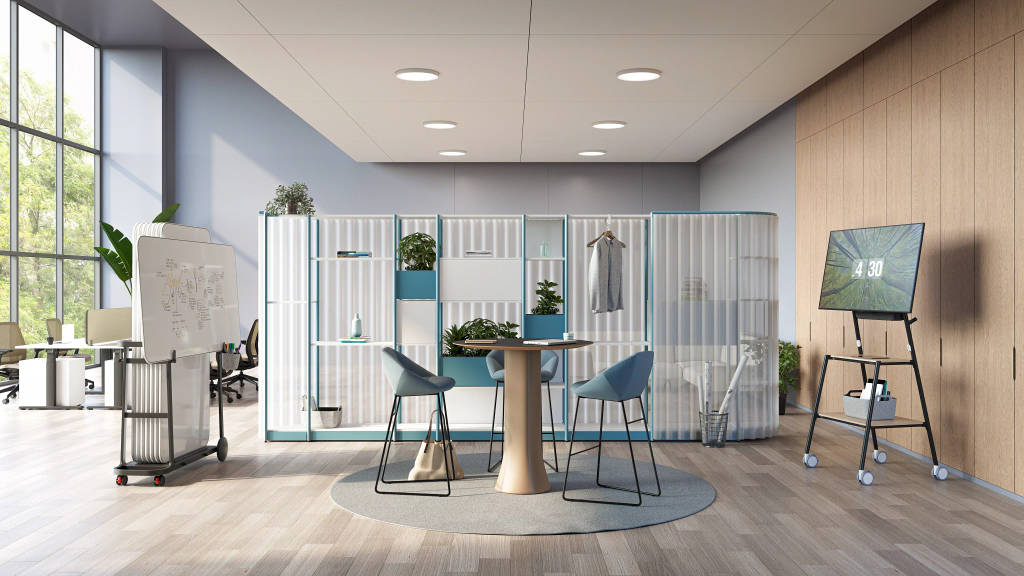
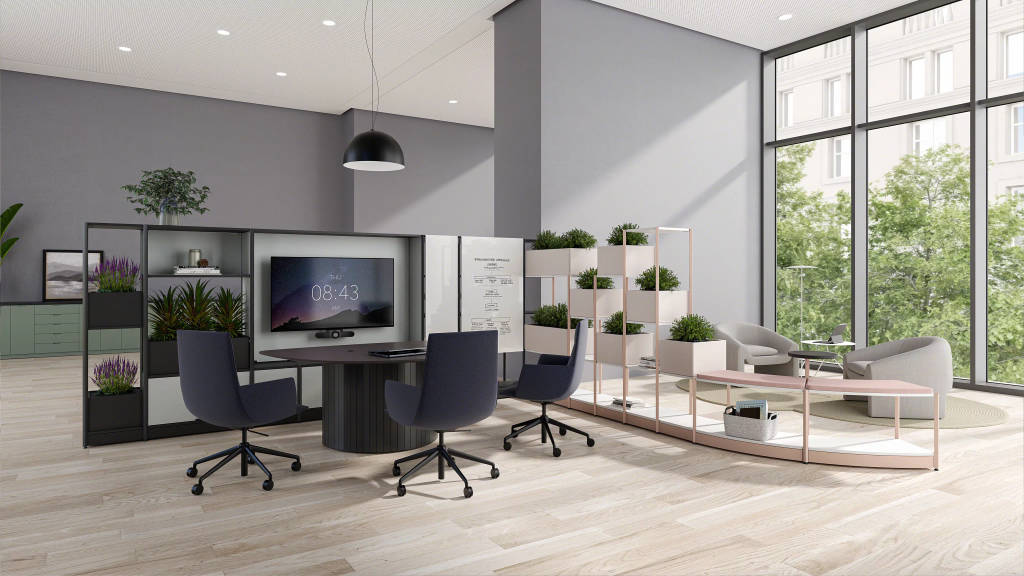
But building community doesn’t mean constant togetherness—privacy is a critical part of the equation. Research reveals that people need a range of privacy solutions, allowing them to focus, reflect, or recharge. Flex Active Frames supports this balance by offering partial acoustic privacy and visual shielding through elements like curtains, planters, and shelving. These features help define zones without fully enclosing them, allowing people to feel connected yet comfortably separated when needed.
This thoughtful balance of openness and privacy enables organizations to create a wide range of purposeful spaces, each designed to support different modes of work and interaction:
Adaptability Without the Overhaul
Flex Active Frames can perfectly support a vast range of uses for working, learning, or connecting. And because the system is easy to reconfigure, spaces can evolve as teams and tasks change.
“Organizations can replace single elements in the system and have a completely new space. It’s all upgradable and built to evolve.”
Penghao ShanDesign Manager, Steelcase
One of the most thoughtful aspects of Flex Active Frames is its ability to support change without a complete office makeover. In a world where needs shift quickly, being able to adapt a space without tearing it apart is invaluable. “You don’t need a construction site,” Penghao points out. “It eliminates a lot of complications for people trying to structure and re-structure their spaces.”
A Future-Proof Space Planning Solution
Flex Active Frames provides a framework for shaping space that’s flexible, human-centered, and built to evolve. Whether you’re shaping a collaborative hub, a quiet retreat, or a multifunctional learning zone, the system offers a foundation that can grow with you. At its core, the design of Flex Active Frames is all about creating spaces that don’t just accommodate people—but support them, inspire them, and help them feel at home.