
Preparing Learning Environments for What’s Ahead
As education evolves under new human, technological and institutional pressures, Steelcase offers a view of what academic spaces will need next
The impact of education extends far beyond the classroom. It carries into the lives people build, the work they do and the communities they shape. The quality of learning today helps shape what society will be able to rely on tomorrow. That’s why shifts in education carry such weight.
Steelcase Learning has been studying current changes through a strategic foresight lens to better understand what is shaping the future of education and what learning environments will need next.
As Jordan Smith, Steelcase WorkSpace Futures researcher, explains, “Foresight methods help us understand how signals of change across education will shift the trajectory of learning. From there, we can explore how space can support learners and educators as learning models, expectations and environments continue to evolve.”
The forces reshaping education
Steelcase’s latest research shows education being reshaped by human needs, rapid digital transformation and growing institutional pressure. These forces are converging in ways that alter how learning is delivered, how it is experienced and how its value is assessed.
These challenges are especially prevalent in higher education. Institutions are balancing enrollment concerns, rising costs and higher expectations for the student experience. They are also navigating broader shifts, including inequity, mental health challenges and changing student demographics, all of which are raising new questions about how learning should be supported.
For leaders responsible for academic spaces, planning for these new demands is not merely a design issue. It’s a question of readiness. The built environment can anchor institutions to instructional models that no longer serve them well. It can also help them adapt with greater confidence.
Learning must support the whole person
Steelcase found that learning is becoming more centered on human needs. Students and educators expect more from education than access to information alone. They want settings that feel supportive and inclusive, and that reflect the reality that people learn in many ways rather than one fixed approach.
That shift broadens the definition of a successful learning environment. Academic performance is still important, of course, but so is the quality of the experience students and educators have each day.
.

.
Wellbeing is central to that experience. Steelcase’s research points to growing mental health challenges for learners and educators alike, with teachers reporting higher burnout than other working adults. That does not make wellbeing solely a design issue, but it does raise the importance of environments that feel welcoming and better support people throughout the day.
Inclusion is part of the same conversation. The research highlights a disconnect between how adults perceive student belonging and how students experience it themselves. Staff and parents tend to overestimate students’ sense of belonging, which matters because institutions may assume students feel more supported and connected than they actually do. Closing that gap will require learning environments that elevate voice, belonging and participation.
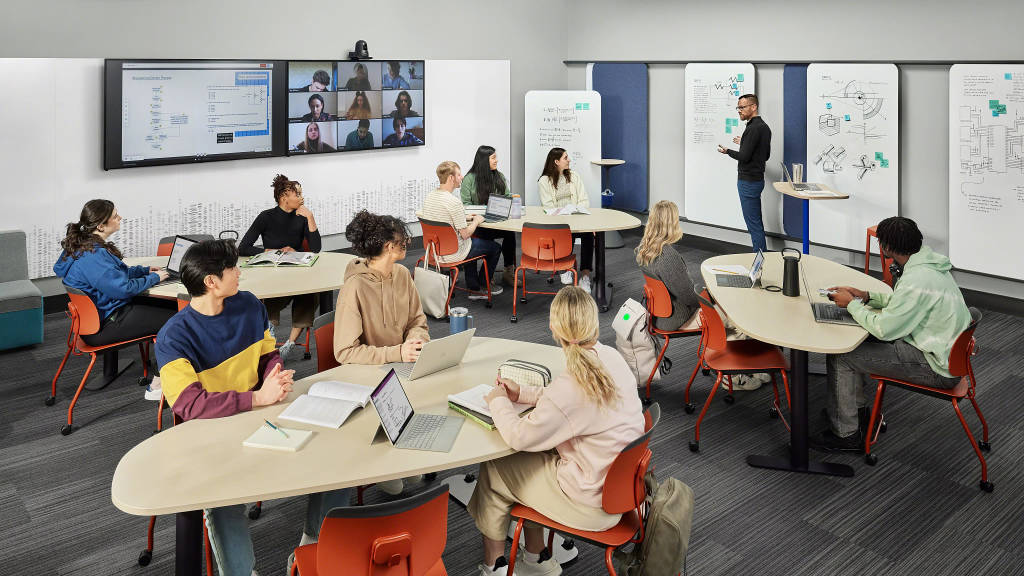
The need for inclusion also shows up in how students connect and work together. Steelcase research shows students respond strongly to learner-centered environments . Eighty percent said a learner-centered classroom helps them collaborate with classmates, compared with 60% in a traditional classroom.
Technology is changing what learning spaces need to enable
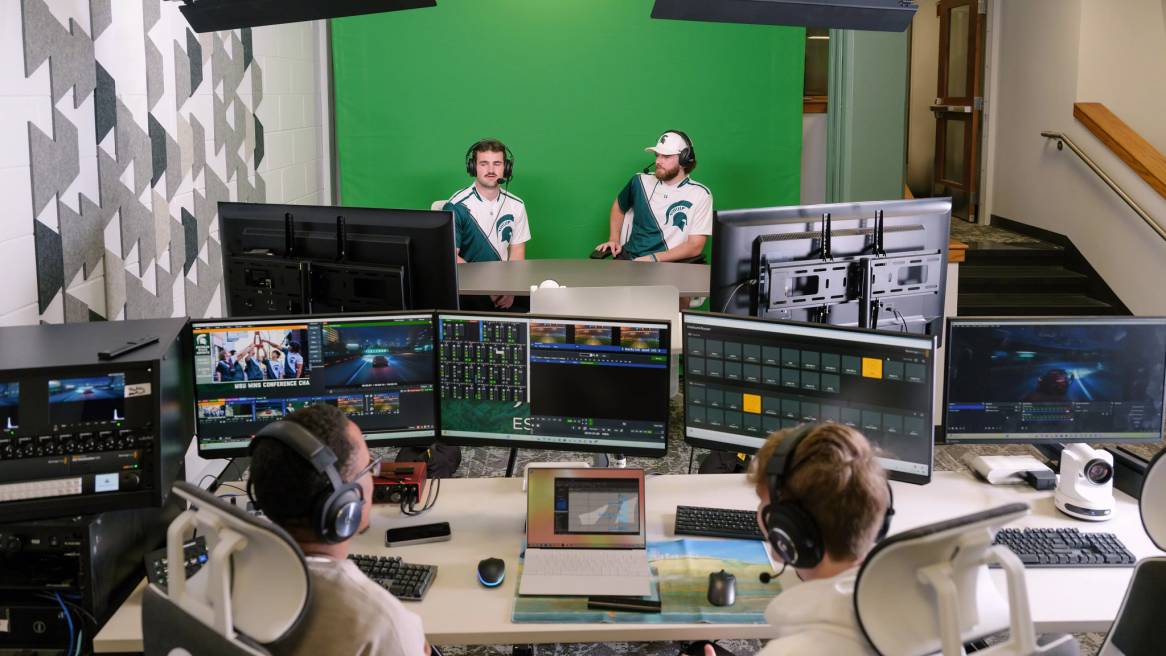
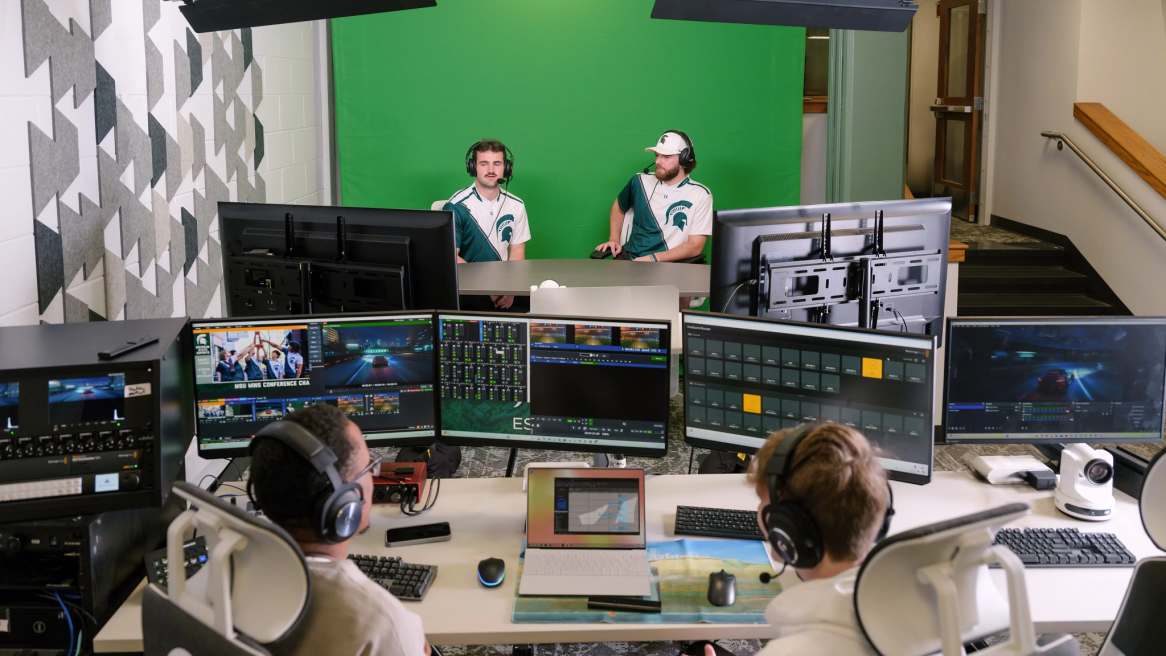
Technology continues to expand access and reshape the learning experience. Hybrid models have pushed learning beyond the traditional classroom, and AI is quickly entering education, bringing new capabilities along with difficult questions. New immersive tools are also opening different ways for learners to engage with content and one another.
.
.
None of these changes make physical space less relevant. In many cases, they do the opposite. As more foundational instruction becomes technology-enabled, in-person environments may become even more valuable for what they uniquely support — discussion, project work, peer exchange and the social process of making meaning together.
Digital transformation does not diminish the role of place. It raises expectations for what learning spaces should enable.
Institutions are under growing pressure to adapt
.
.
Institutions are being asked to do more amid uncertainty. Public funding has declined while tuition has risen, placing more scrutiny on the value of education and on the capital decisions institutions make. At the same time, expectations continue to rise around access, experience, sustainability and long-term adaptability.
That pressure is changing what learning environments need to do. Flexibility has become a strategic concern rather than a nice-to-have.
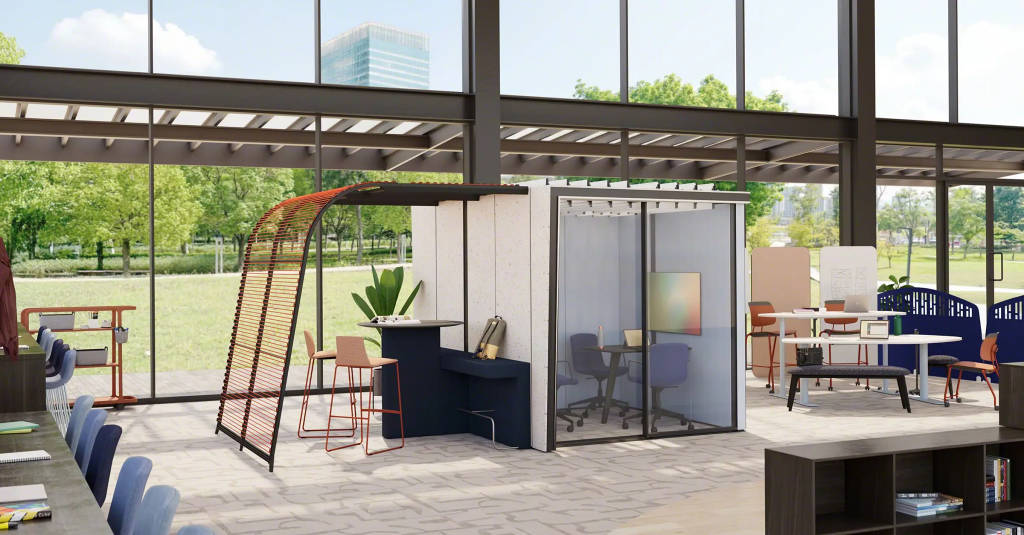
Steelcase’s research suggests that academic environments will need to become more adaptable over time. Some will need to support AI-enabled instruction alongside active learning, while others must adjust more easily as programs, pedagogies and enrollment patterns shift. The research also underscores the growing importance of environments that support comfort, focus and psychological safety.
Just as important, Steelcase ties adaptability to sustainability. That includes modular, sustainably sourced systems that can evolve over time, reduce the need for major renovations and support long-term resilience. It also points to durable materials, replaceable components and circular design as part of that equation.
The takeaway for institutions is clear: when capital decisions face greater scrutiny, academic spaces need to do more over time — supporting adaptability, continued relevance and long-term resilience.
Designing future-ready learning environments
The goal of Steelcase’s foresight research is not to predict exactly what comes next. It is to help leaders prepare for change with greater clarity. For education leaders, that means looking beyond immediate needs and asking a more useful question: What kinds of environments will help institutions stay relevant and supportive as learning continues to evolve?
It’s unlikely there will be one universal answer. More likely, the future will call for a broader ecosystem of spaces that work together. Some will support deeper collaboration. Others will protect focus or make room for quieter forms of participation. The priority is not uniformity. It is the ability to support a range of learning modes well.
That is where Steelcase Learning can help. Working with leading schools and organizations, Steelcase measures outcomes, studies how learning is changing and translates those insights into human-centered solutions that foster engagement and wellbeing.
Education will continue to evolve. Institutions that treat learning environments as part of their broader strategy will be better equipped for what comes next.
Explore more of our research and solutions at Steelcase Learning or get a copy of our latest lookbook for education.