
Steelcase Opens New WorkLife Center at Fulton Market Design Days
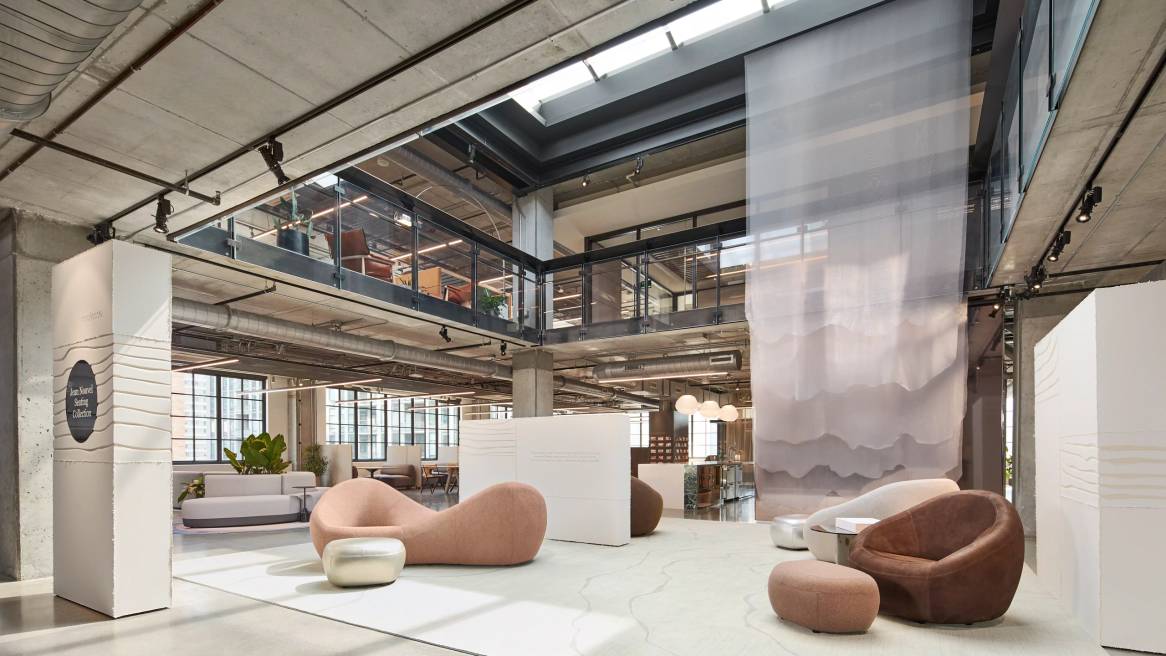
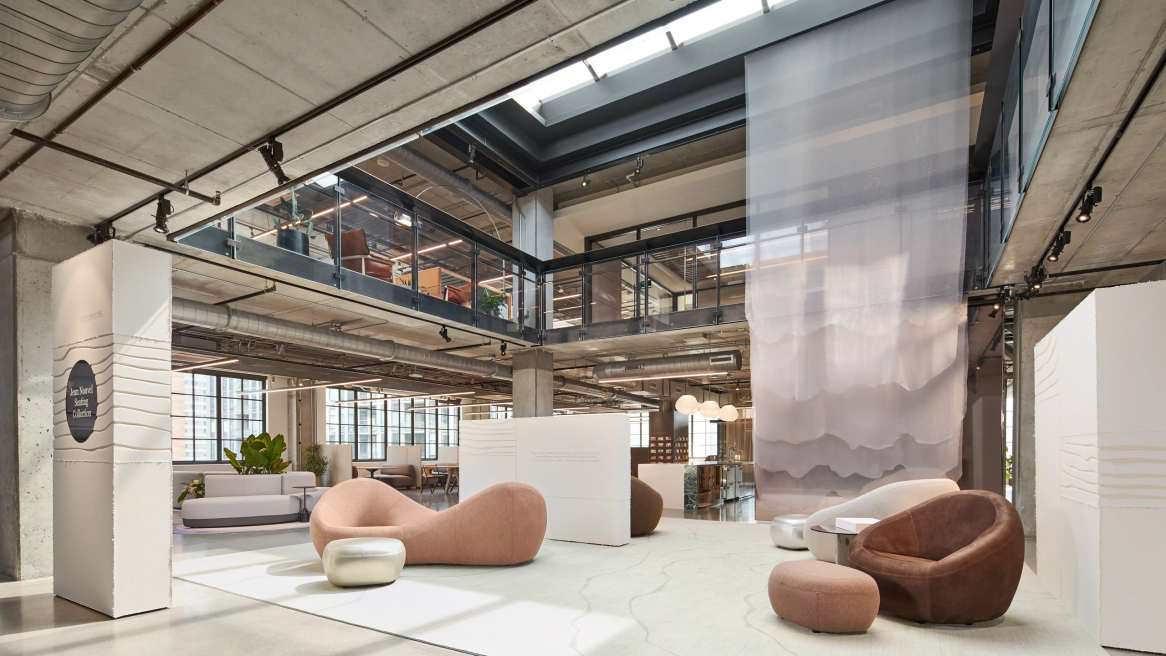
As the world of work continues to evolve at an unprecedented pace, Steelcase unveiled its new 28,000-square-foot WorkLife Center in the heart of Chicago’s Fulton Market district during Fulton Market Design Days (June 9 -11, 2025) — a marquee event whose theme this year is community.
The new WorkLife Center demonstrates a powerful new thesis for the future of work: that community is no longer a mere corporate buzzword but an essential strategic asset. In an era marked by rapid technological change, shifting work patterns and heightened employee expectations, the space models how physical environments can be designed to cultivate connections, foster resilience and ultimately drive organizational success.
Why Community Matters
Over the past five years, technological advances and social shifts have reshaped how and where work happens. Video calls have become routine, AI is transforming workflows, sustainability is no longer optional, and employee wellbeing is a priority. These changes have created new expectations — and new challenges — that traditional office designs struggle to meet.
Located on the top two floors of 811 West Fulton Market, the new WorkLife Center translates Steelcase’s extensive research into a design methodology the company calls “Community-Based Design.” Drawing inspiration from urban planning principles and decades of research, the concept emphasizes that workplaces should be more than places where people come to perform tasks. Instead, they should serve as living ecosystems of diverse spaces and people where relationships are nurtured, and a sense of belonging is central.
“A sense of community is the glue that keeps us together during change or adversity,” says Allan Smith, Steelcase president, Americas, and chief product officer. “Change is constant, and the workplace can be used strategically as the infrastructure on which to build community at work. It is how organizations and their people can thrive during times of rapid change.”
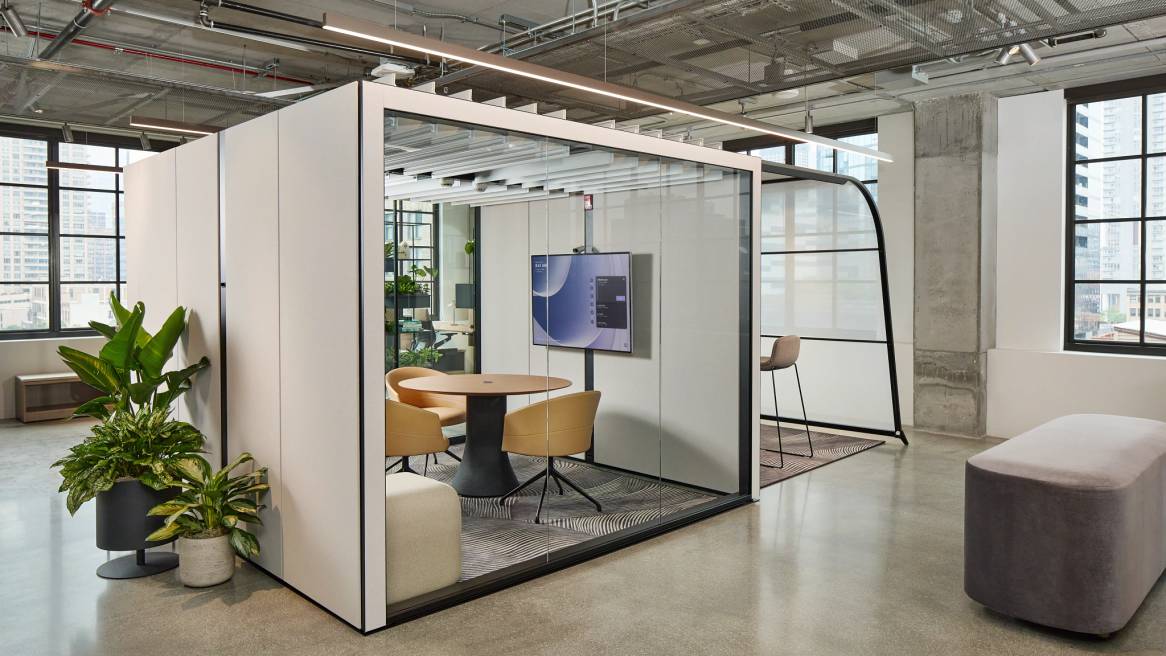
Designing for Community
The space supports the many ways people work — from quiet focus to collaborative problem-solving — while encouraging spontaneous interactions that build trust. The seamless flow between areas encourages informal interactions, which research shows are crucial for trust-building and innovation.
The Fulton Market neighborhood itself provides a fitting home for Steelcase’s vision. Once an industrial district, it has transformed into a vibrant hub for technology, design and culinary innovation — a vibrant example of how communities flourish when diverse people come together around shared goals. This makes it an ideal setting for a workplace focused on community and resilience.
“We’re thrilled to be joining the vibrant neighborhood of Fulton Market,” said John Minnema, regional sales manager for Steelcase. “Our new Chicago WorkLife illustrates what a thriving and resilient community at work can look like, offering a range of spaces and experiences that can easily adapt to change, where people can come together to do their best work. We are excited to welcome designers and clients to be inspired — during Design Days and beyond.”
A Sustainable Approach
In 2024, Steelcase announced its bold commitment to a net-zero future with the release of the industry’s first and only net-zero transition plan. By focusing on its products, operations and transportation, Steelcase aims to reduce its carbon emissions by more than 90% throughout its entire value chain by 2050.
Progress toward this goal is evident in the WorkLife Center. Steelcase thoughtfully integrated many materials from the Merchandise Mart with existing materials in the new space. Among the most notable, wood from the old WorkCafe preserved using an ancient Japanese technique called Shou Sugi Ban now creates a tunnel-like hallway into the atrium. In the hospitality area, existing terrazzo and marble were used to lower the bar to be more inclusive.
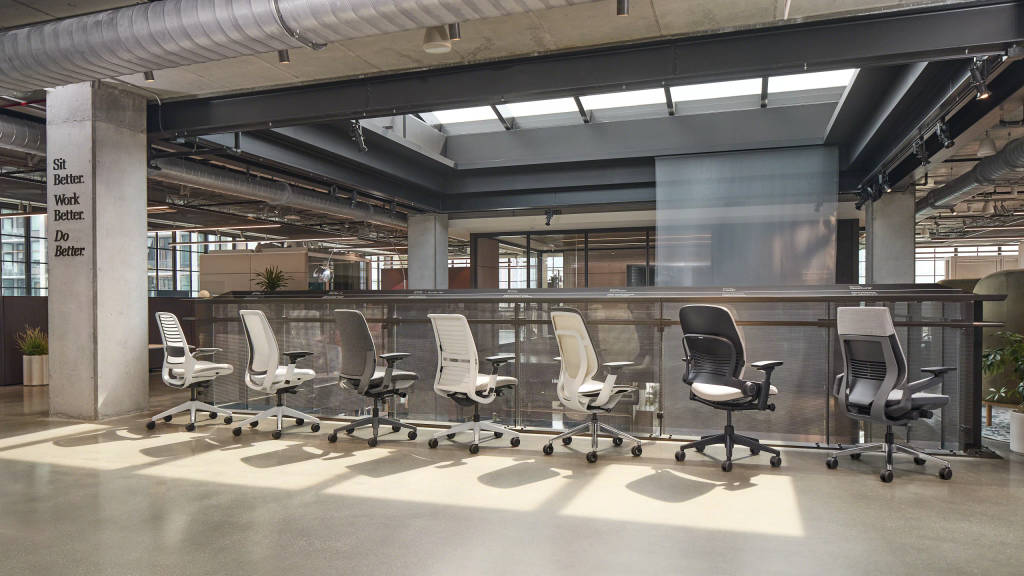
The space also features our redesigned high-performance seating, which has doubled the amount of recycled content it contains. The recycled plastics come from day-to-day items like water bottles and carpet scraps. Every task chair sold in the Americas now contains higher recycled content.
“Our WorkLife Center is more than a showroom — it’s an invitation to imagine how thoughtful design can foster human connection and resilience. As Design Days 2025 spotlights community, we’re eager to share a vision of the workplace where people don’t just work alongside one another but truly come together,” says Smith