
Three Ways to Design a More Flexible Workplace
Creating spaces that foster community and resilience is key to building our best cities. Now it's time to see how it can design great offices, too.
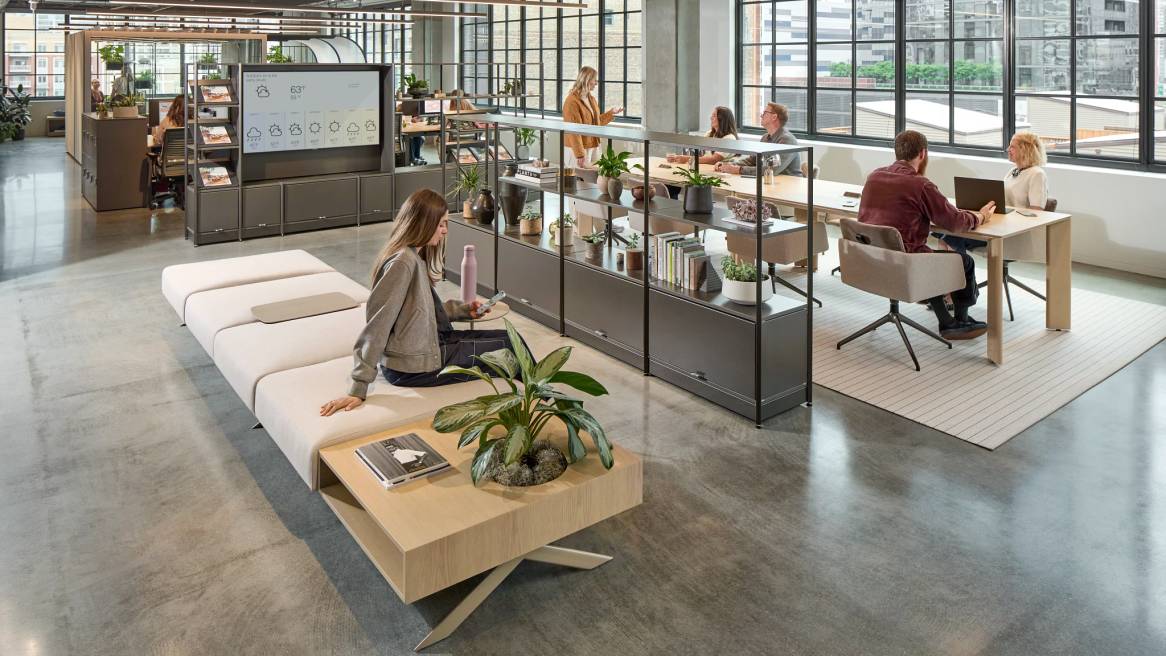
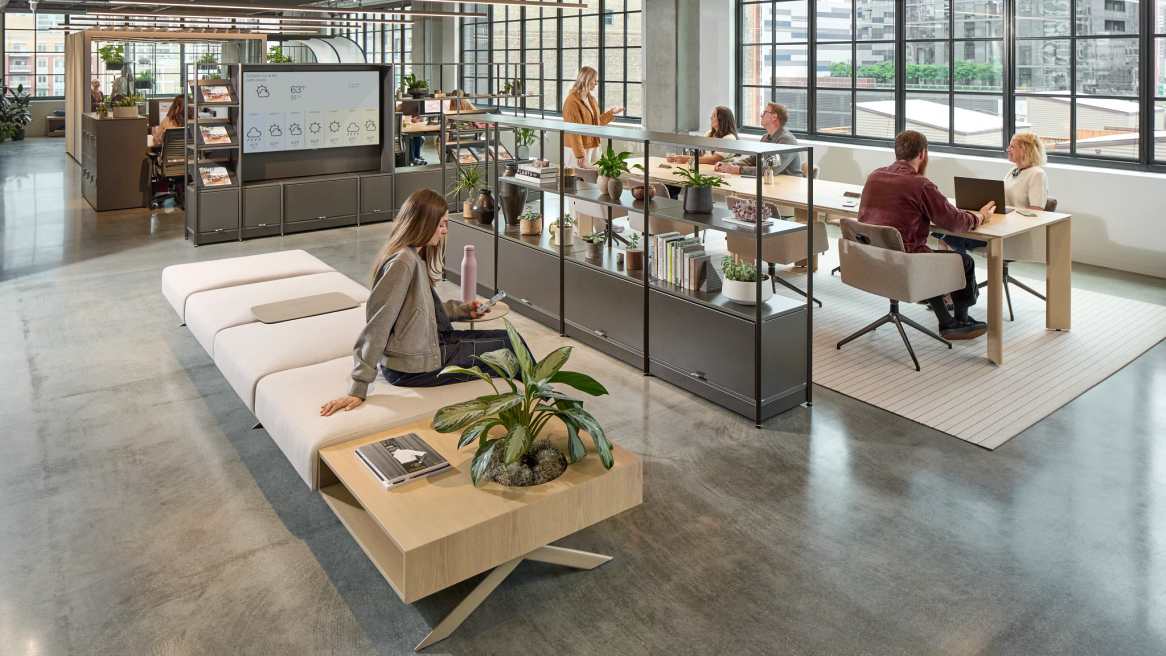
“Just get past this challenge, then things will finally settle down.” If you’ve uttered this sentiment recently, you’re not alone. But then you also know today’s dynamic business environment isn’t about to settle anytime soon. Business as usual is anything but.
Most leaders recognize the importance of flexibility for their people and organization. Ninety-six percent of leaders plan to make changes to their workplace within the next two years (Steelcase Leader Research 2025). The #1 reason why: a need for more flexibility.
Rapid changes in how work is done are creating slippery business conditions and altering how people behave at work. Employees now spend an average of 96 hours per week on screens — that’s four full days. Artificial intelligence is accelerating the pace of work, causing small teams to spin up quickly to tackle new priorities. These forces are contributing to a decline in global wellbeing and engagement, and an attrition of company culture (Gallup 2025).
People feel disconnected and organizations are struggling to adapt, in part, because many offices still feel rigid. Employees arrive at workplaces that are no different from what they experienced 10 or even 20 years ago. They struggle to find private spaces, small huddle rooms and up-to-date technology integrated into well-designed meeting rooms. They spend most of their time tethered to their workstation, wondering why they’re coming into the office just to stare at a screen.
Creating Community at Work
Flexible, community-driven spaces can counter these barriers and improve how people engage with their work and how they feel throughout the day. Community-Based Design, an approach to the workplace developed by Steelcase and inspired by urban planning principles, helps communities adapt to change. It promotes adaptable, multi-use workspaces that meet diverse needs and support a range of activities and work styles.
Five interrelated districts create the infrastructure for a workplace community. Each district is multi-use, with a primary focus on supporting a specific type of work: the City Center (socialization), Neighborhoods (team and individual focus and collaboration), Business District (shared collaboration spaces), Urban Parks (rejuvenation), and University District (learning).
Community-Based Design can bring flexibility to your workplace in three key ways.
1. Flexibility for People: Neighborhoods Offer Choice and Control
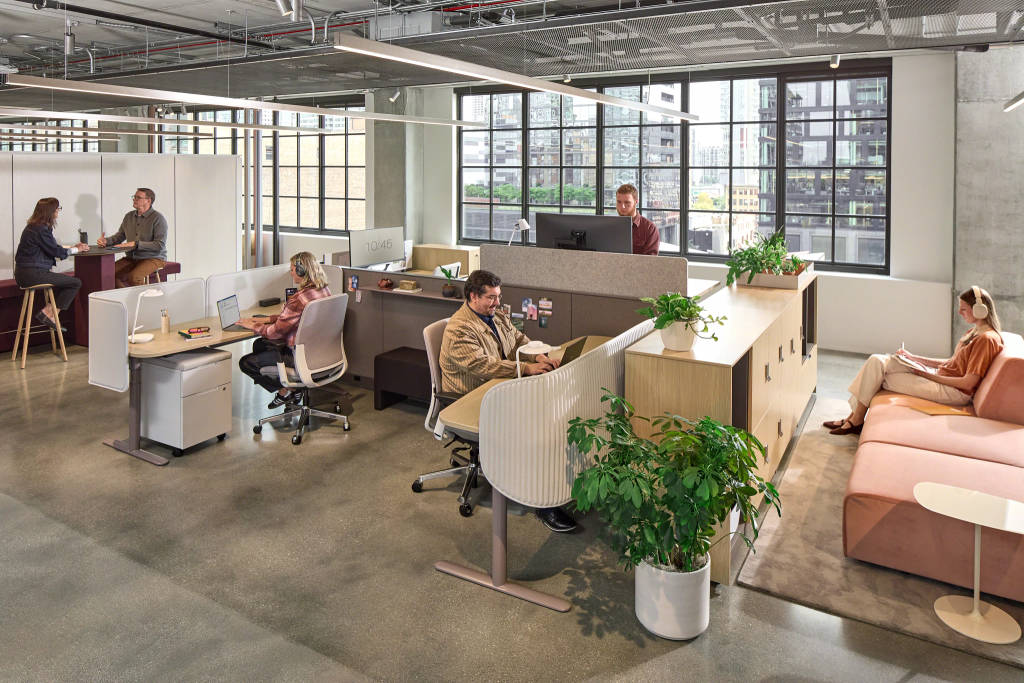
Having the right spaces nearby and permission to use them makes all the difference. Great cities include quiet residential areas, energetic entertainment hubs, active marketplaces, bustling libraries and serene parks. Similarly, vibrant, flexible workplaces offer a range of spaces so people don’t have to go far to get what they need. Team neighborhoods give people destinations where they can find places for privacy and solitude for deep work, social hubs for connection and belonging, and retreat areas when it’s time to take a screen break.
.
.
How it creates community: The space is designed to meet the needs of all the people who work there, as each employee can seek out what they need when they need it.
How it’s flexible: By providing a range of spaces, people can adapt their work environment to suit the task at hand, their preferred working style and their current mood.
2. Flexibility for Teams: Adaptable Technology-Integrated Spaces
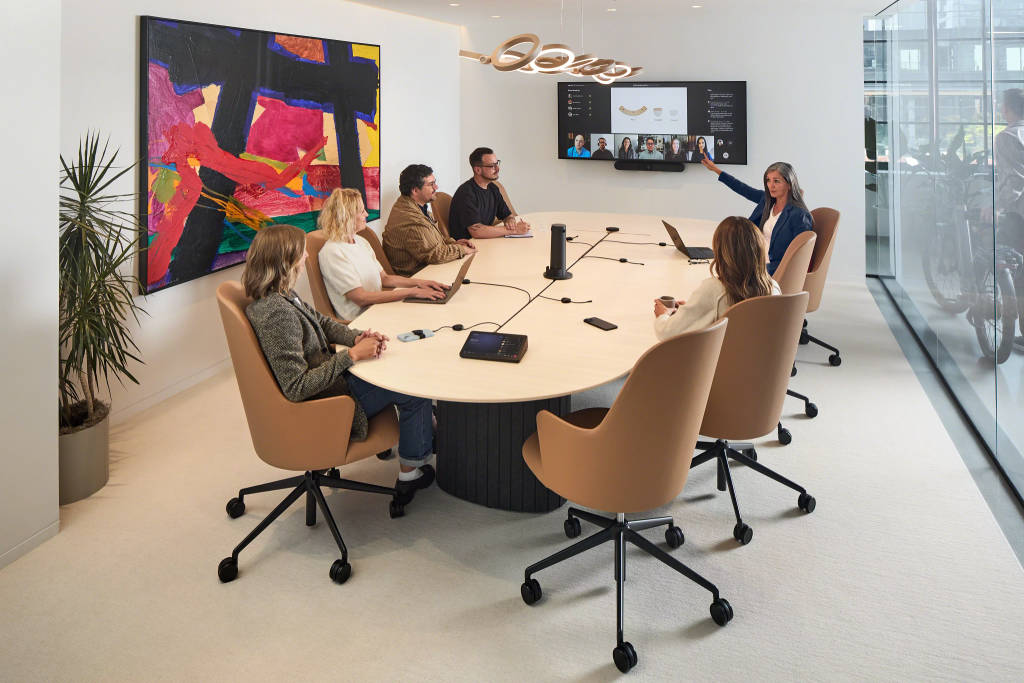
True flexibility is something most people don’t notice, like adaptive traffic lights and sensors that reduce congestion. When technology is integrated seamlessly into our spaces, it fades into the background. In our workplaces, teams require environments able to transition seamlessly from brainstorming to execution. They need shared spaces that work as well for in-person collaboration as they do for virtual collaboration. The technology must be able to be updated without architecture or furniture getting in the way, meaning power and data cables are easily accessible.
.
.
How it creates community: Teams stay connected and productive, whether in-person or remotely.
How it’s flexible: Teams can shift from one type of work to another with easy-to-use technology and spaces designed to accommodate change. Even in spaces that are difficult to adapt, technology can add flexibility by providing collaboration tools for open and enclosed areas.
3. Flexibility for Organizations: Resilient Infrastructure
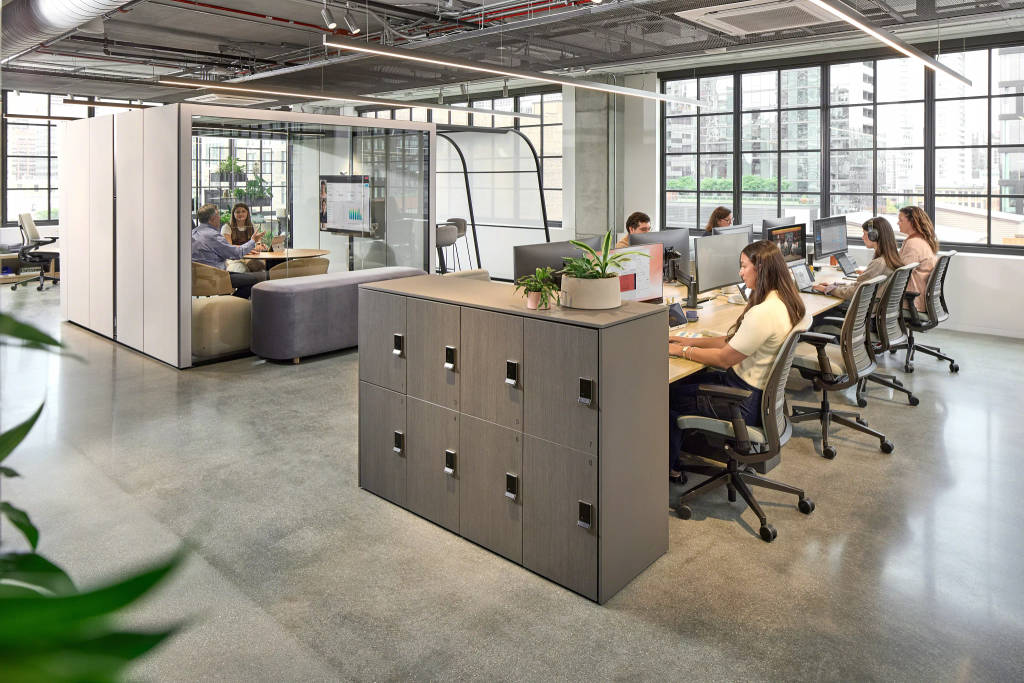
Well-designed places morph based on a community’s needs. A supermarket can become a health clinic. An abandoned school may be converted into apartments. Organizations require similar flexibility, especially with the increasing adoption of AI technologies. Mixed-use spaces create a dynamic ecosystem that can evolve to meet changing needs. If a team needs more workstations or an additional collaboration area, a single setting can be adapted rather than overhauling an entire standardized floor plan to meet space and aesthetic requirements. Furniture and elements like team pods, demountable walls, standalone screens, and barriers create a kit of parts that can create “owned spaces” that are adaptable or movable over time.
.
.
How it creates community: When the places where people work match the evolving needs of an organization, it builds resilience and fosters growth.
How it’s flexible: Fixed architecture and monolithic floor plans can lock organizations into work styles that may not be sustainable over time. A kit of parts and more dynamic designs create a workplace that can adapt to changing conditions.
Embracing Community and Flexibility
Flexibility isn’t a trend — it’s a necessity. Offices that foster community help individuals and organizations remain resilient. Embracing community-based design moves beyond static layouts to create flexible, human-centered workplaces that support wellbeing, engagement and innovation. By designing workplaces as communities, organizations can transform uncertainty into opportunity and create environments where people genuinely enjoy working.