
A More Inclusive Future Begins Here: What Accessibility Tours Make Possible
From empathy to action, Accessibility Tours at Steelcase are transforming the way people think about space, design and inclusion.
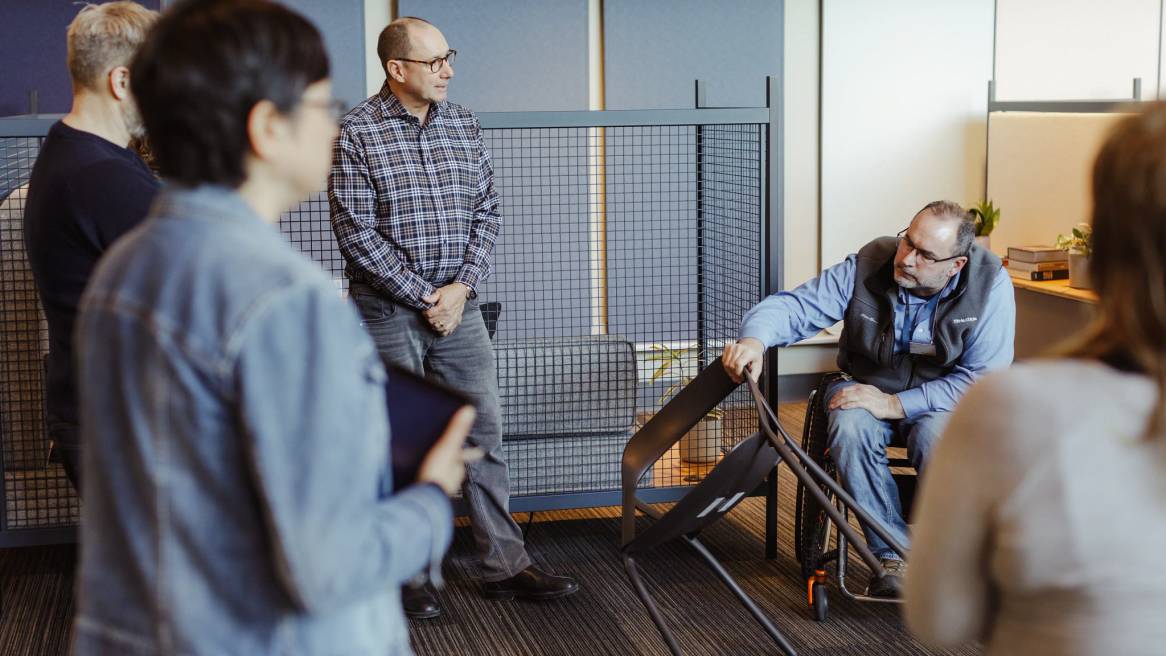
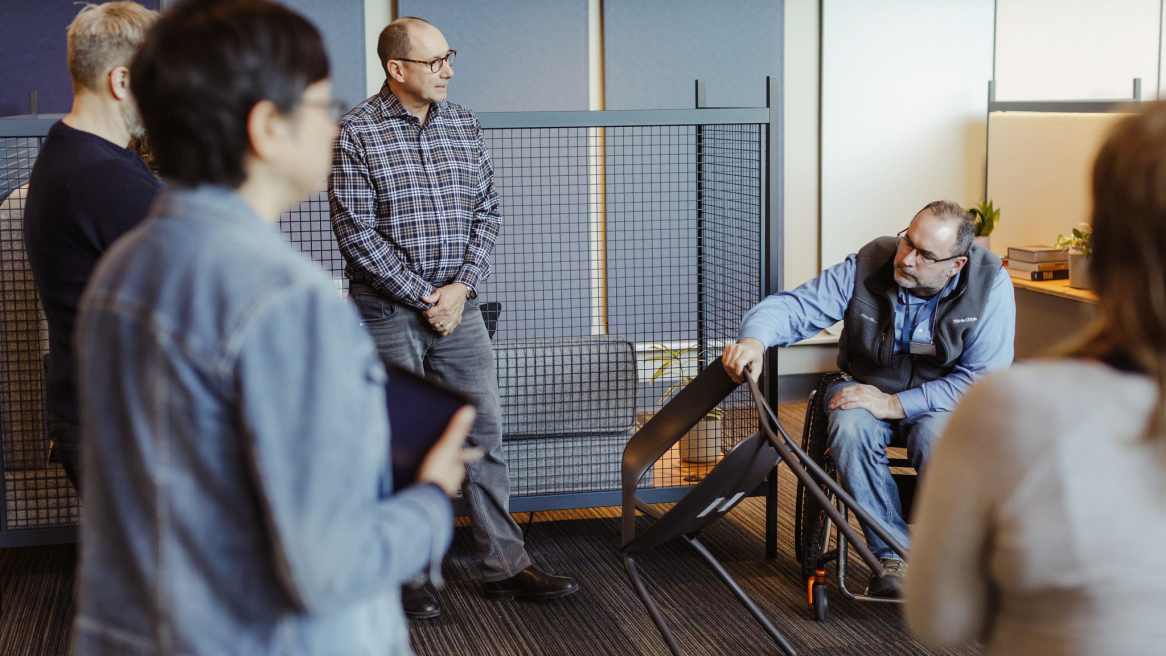
A quiet moment unfolds inside a Steelcase workspace. Designers, product engineers and other employees move alongside a small group of guests, navigating the space in different ways. One guest uses a wheelchair, another experiences low vision and someone else describes how sensory elements like light and sound affect their focus. Each session brings people of different abilities into the same space, moving together through real environments and learning side by side.
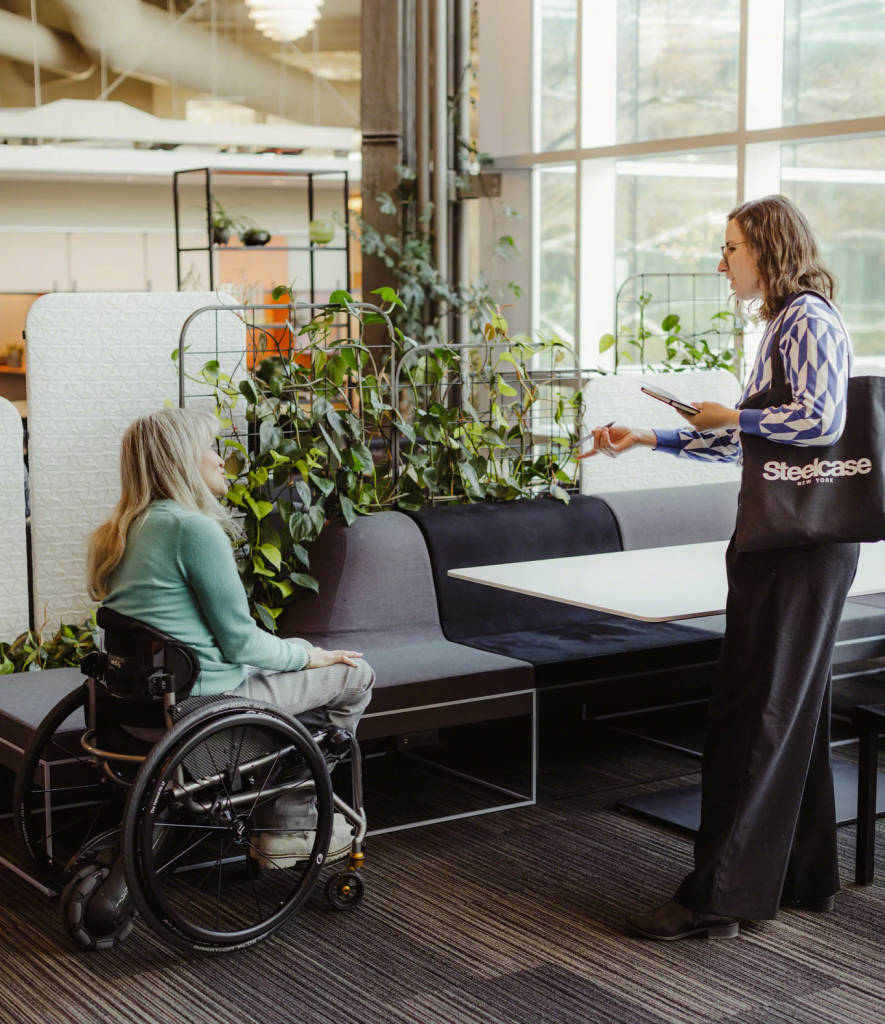
These are Accessibility Tours, immersive learning sessions led by individuals with disabilities, which explore everyday spaces across Steelcase. They’re not training exercises or compliance audits. They’re dynamic dialogues through experiential learning, a chance to see the workplace through another person’s perspective and to design more thoughtfully because of it.
“You get used to adapting to a world that wasn’t built for you,” says Vicky Schmidt, a longtime Test Pilot with Disability Advocates of Kent County (DAKC). “But at Steelcase, they don’t just listen — they ask for more.” That authentic interest in lived experience is influencing design conversations within Steelcase and with its customers.
.
Designing With, Not For
The tours originated from Steelcase’s partnership with DAKC through its Better Futures Community, a global network connecting employees, community partners, dealers and customers to make an impact for people and the planet. The Inclusive Design practice, led by Kamara Sudberry, aims to have employees learn directly from people with lived experience, deepening their understanding through genuine connection.
Inclusive design means designing with, not for, people. As Sudberry puts it, “It isn’t theoretical. It’s something you learn by doing and listening.”
This design approach reflects a global reality. According to the World Health Organization, about 1.3 billion people — roughly one in six worldwide — live with a significant disability. As populations age, that number continues to grow. Workplaces everywhere are looking for ways to create spaces that help more people feel welcome and able to do their best work. These tours help Steelcase teams better support organizations navigating similar challenges.
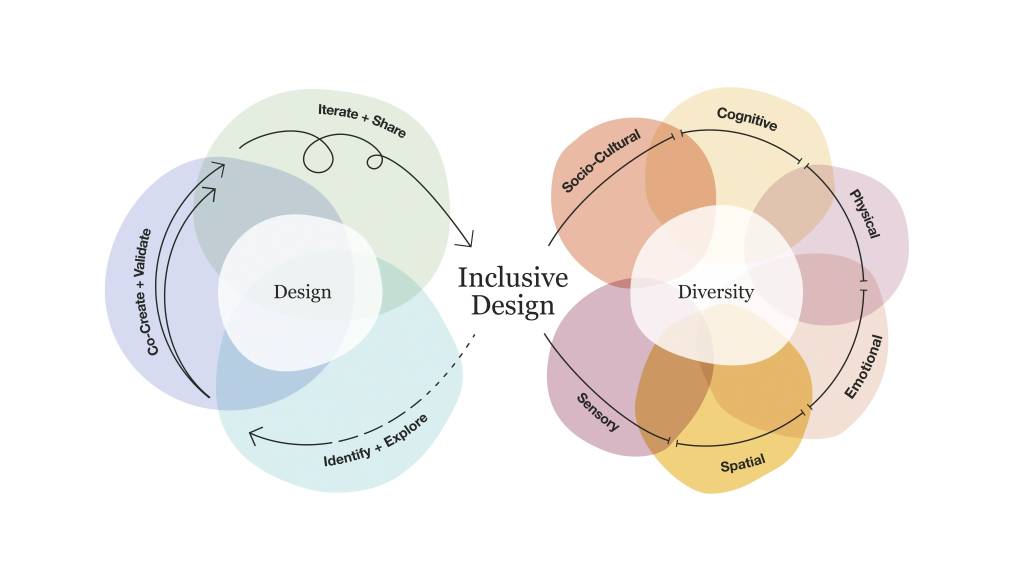
Great communities are inclusive by design
Inclusive design considers the full spectrum of human diversity, including people’s conditions, experiences, abilities, language, culture, gender and age. Considering the full range of people’s needs and encouraging them to express their perspectives creates a win-win experience.
.
Inside the Tours
Throughout 2025, Accessibility Tours took place across multiple Steelcase locations, both in the United States and abroad.
Grand Rapids, Michigan
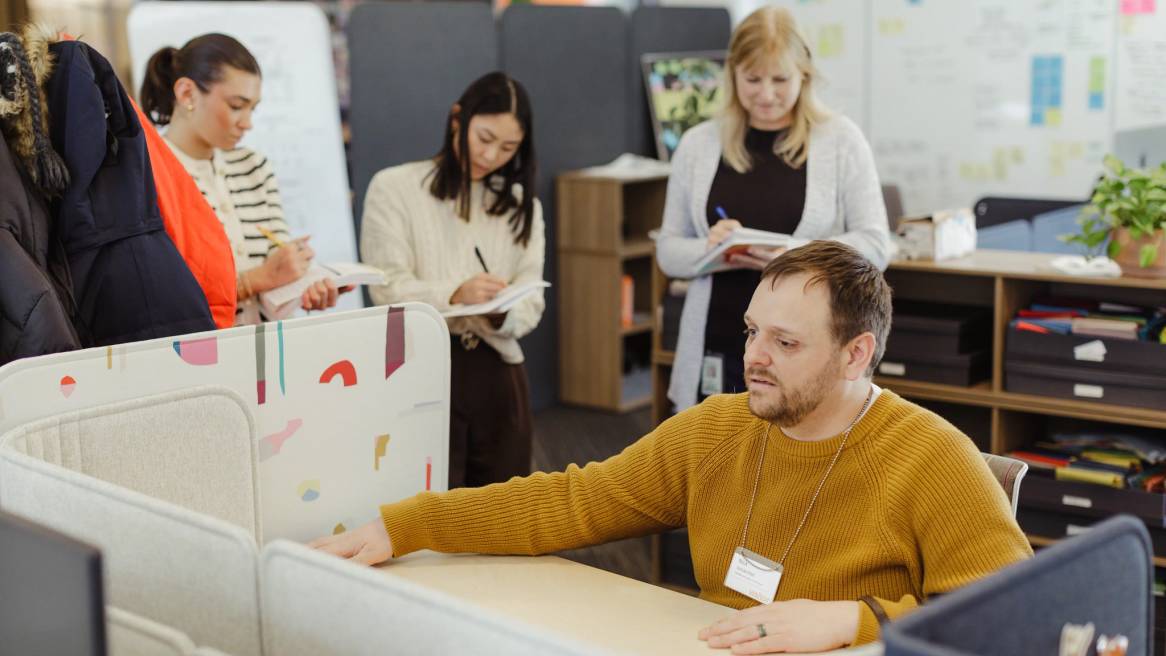
Steelcase hosted four tours across its Grand Rapids campus. Teams from design, engineering, marketing and senior leadership walked the spaces with DAKC’s Test Pilots, individuals who represent a broad range of disability and neurodivergent conditions.
After each tour, participants gathered for reflection sessions. They discussed what worked well and where the environment created barriers, from furniture features to flooring friction to lighting contrast.
Small improvements followed quickly: reoriented seating layouts, improved lighting for sensory comfort and added height-adjustable workstations. But the deeper outcome — one that will influence product and space decisions for years — was how Steelcase employees began thinking differently about their work.
One Steelcase participant described it as “a new lens for inclusion.” Another said, “Anyone who designs a product or space must understand these lived experiences.”
Monterrey, Mexico
That same learning began to extend globally when the Steelcase Monterrey team introduced a similar experience on its own campus. Partnering with local accessibility advocates, they explored how people moved through their environment and where barriers showed up. While regional standards differ — Mexico does not have an equivalent to the Americans with Disabilities Act (ADA) — the insight was the same: everyday friction can be reduced through more intentional design.
“It helped us see things differently,” says Niní Sepúlveda, design manager at Steelcase Monterrey. “We want to bring these conversations to our teams and our customers so we can learn together.”
.
What We’re Learning Through These Tours
Observation and action examples from either Grand Rapids or Monterrey:
| ..Observation | ..Action |
| ..Participants with varying mobility needs noted how ..rare and meaningful it was to have real choice in ..where to sit together in the Steelcase LINC Café — ..something they don’t often experience. | ..Designers are identifying ways to remove barriers in ..even more shared spaces by offering a range of ..seating options in proximity, making inclusive choice ..more common and supporting a stronger sense of ..belonging. |
| ..Lighting levels make reading or focusing difficult for ..individuals with low vision or sensory sensitivities. | ..Several areas received updated lighting to support a ..wider range of needs. |
| ..Lived experiences revealed gaps beyond ADA ..minimums. | ..Teams are expanding design considerations to reflect ..physical, sensory and cognitive differences — ..informing both space prototypes and early product ..exploration. |
| ..Some workstations were not easily adjustable for ..participants with different mobility or ergonomic ..needs. | ..Height-adjustable workstations were added in key ..locations to improve access and comfort for more ..people. |
| ..In Monterrey, conversations with participants ..highlighted limited regional accessibility guidance ..and customer uncertainty about where to begin. | ..The Steelcase team aims to be a resource for ..inclusive design conversations with local clients and ..partners when possible. |
.
Designing a Better Future
Accessibility work at Steelcase is about more than physical space. It’s about belonging. Listening to a wide range of experiences helps teams design environments where every person feels seen, heard and valued.
As Kamara Sudberry notes, “This isn’t for optics. It’s directly tied to our purpose and how we do business. With inclusion embedded in design, we make work better for everyone.”
These tours deepen that work. They encourage participants to pay attention, question assumptions and design with a clearer understanding of what people truly need to thrive.
Explore practical guidance for inclusive design, see real-world examples and understand how design can better support more people.