
Blueprint for a Better Office
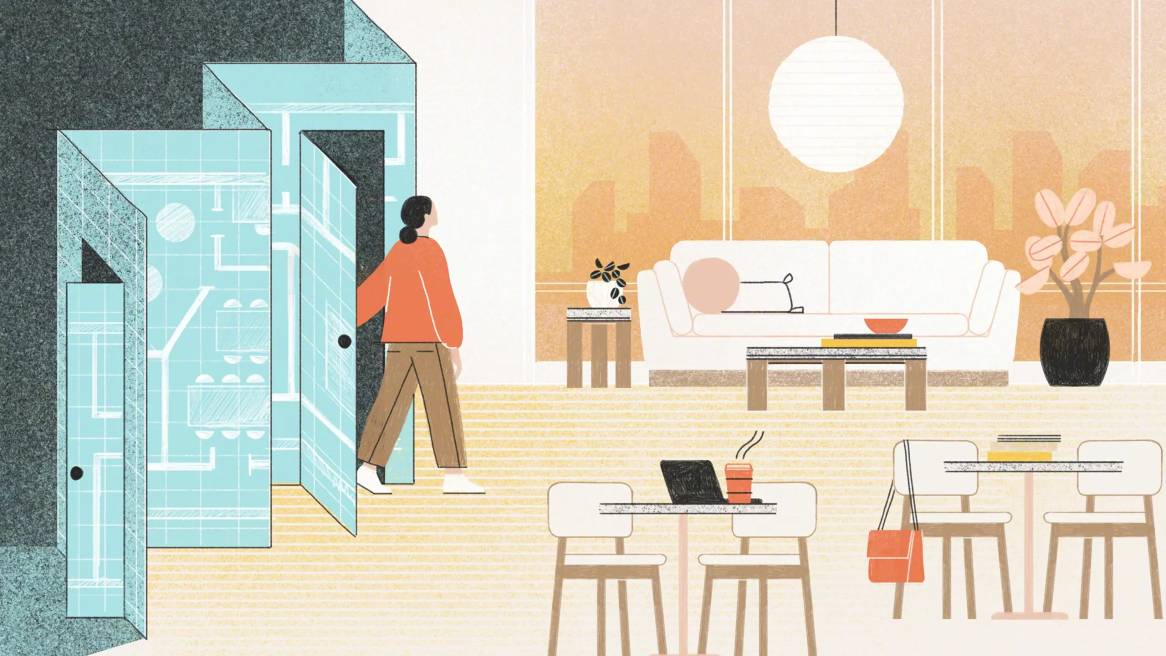
A workplace can look great. But what really defines a good day is whether it helps people get work done. Yet new Steelcase research in 9 countries reveals that many workplace improvements aren’t landing where they matter most.
Employees identify 4 critical gaps holding the office back. Targeted improvements in these areas, even subtly at first, can make a meaningful difference right away.
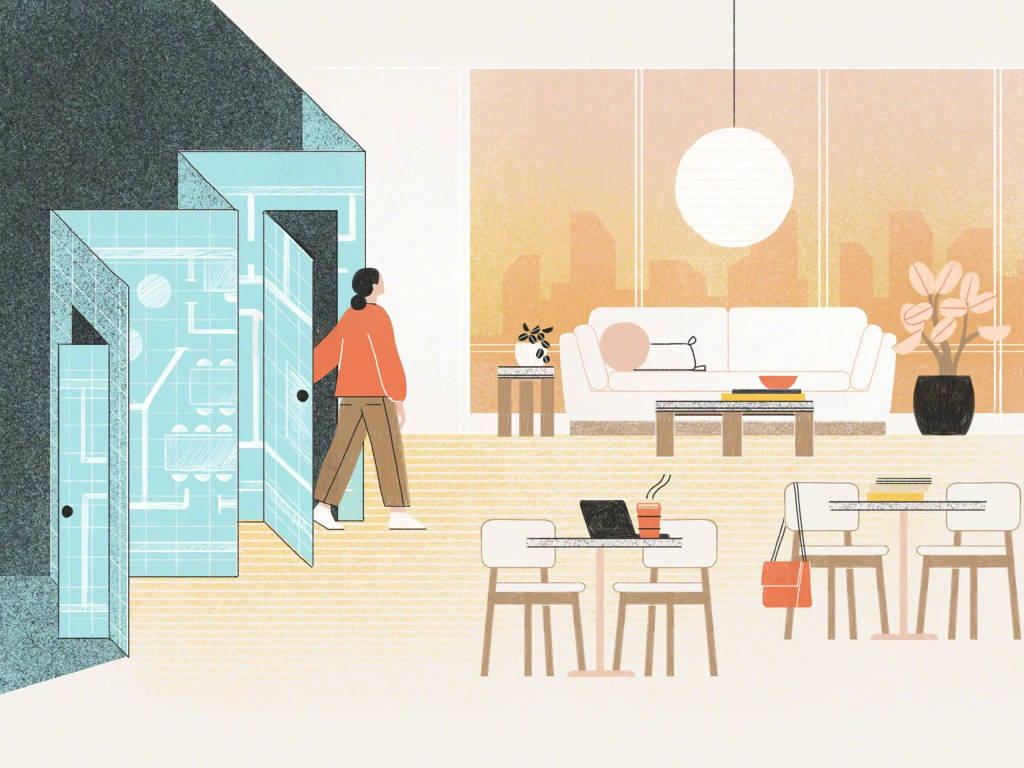
The obligation office
Globally, the number #1 reason people say they go to the office isn’t to do their best work — it’s because they’re required to.
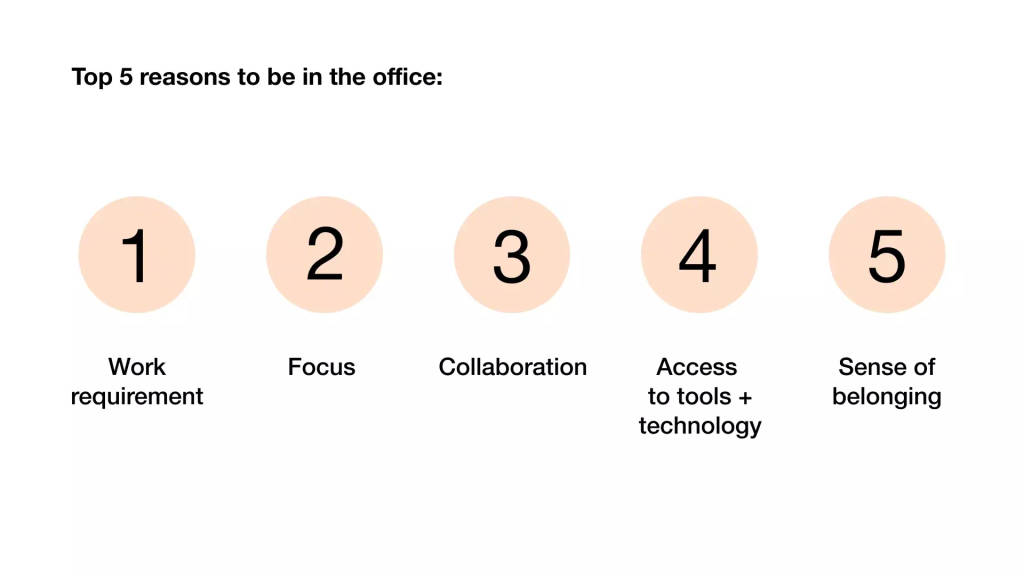
The office needs to support what matters
One likely reason why: across the board, people are not happy with how their spaces support what they think is most important. Gaps are sizable and have a real impact.
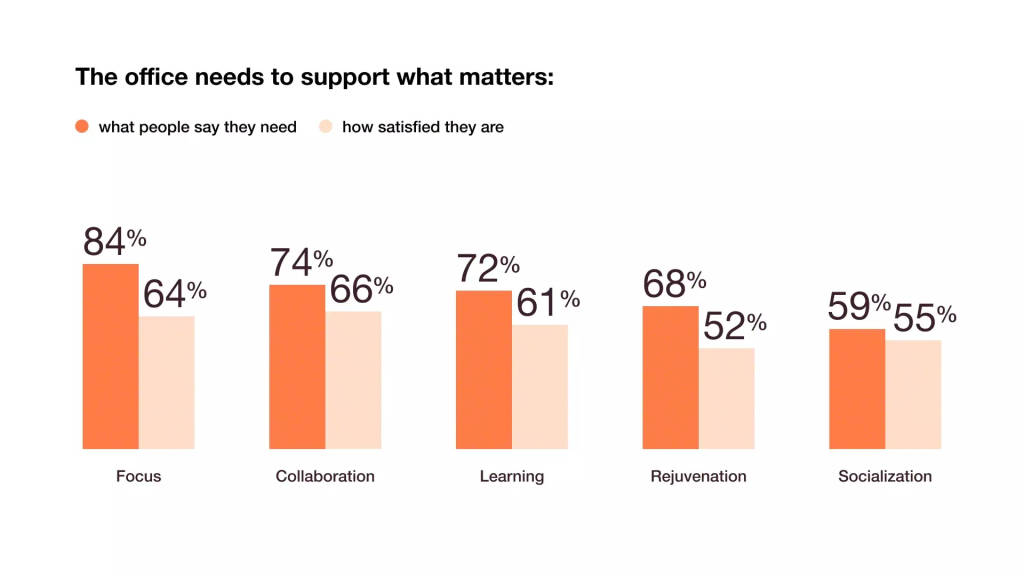
Enhancing spaces to address 4 specific gaps — wellbeing, focus, screen time and privacy — significantly improves how people feel about the workplace.
1. Address wellbeing: The biggest need
When asked what they most want improved in the office, employees overwhelmingly cite wellbeing in the workplace as their #1 request. Data show the biggest boosts to wellbeing come from improving a range of spaces for focus, collaboration and connection.
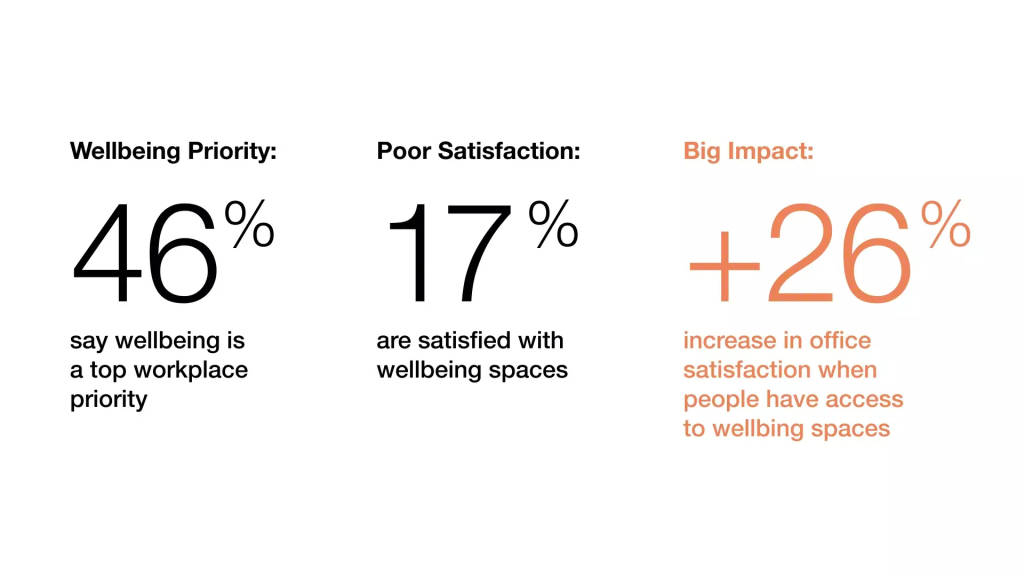
2. Fix focus
On average, people spend two-thirds of their day working alone, yet they are not happy with the spaces they have available for focus work.
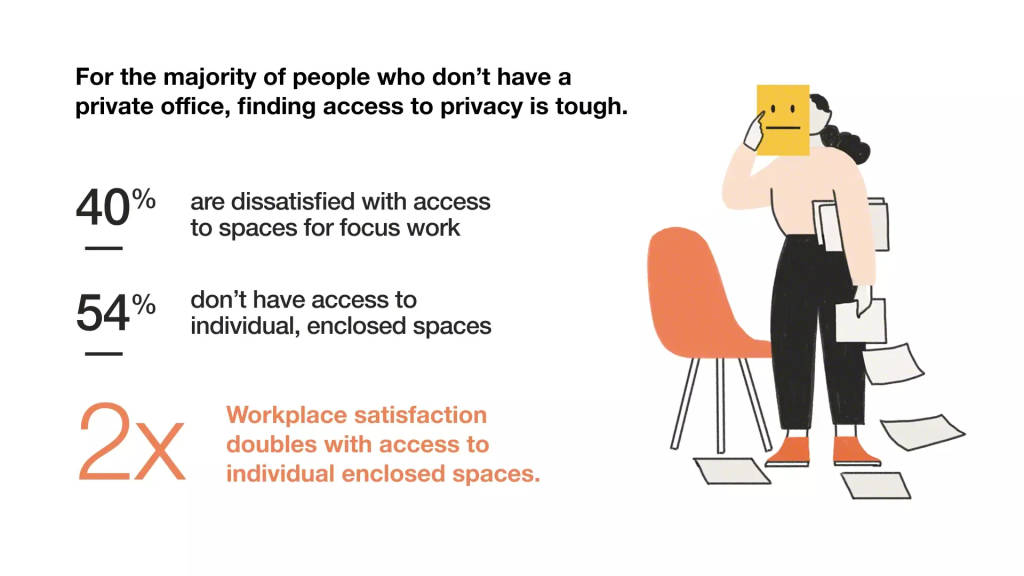
3. Manage the screen effect
Screens now dominate the workday, with people reporting 71% of their screen time is spent alone. And too much screen time leads to lower engagement.
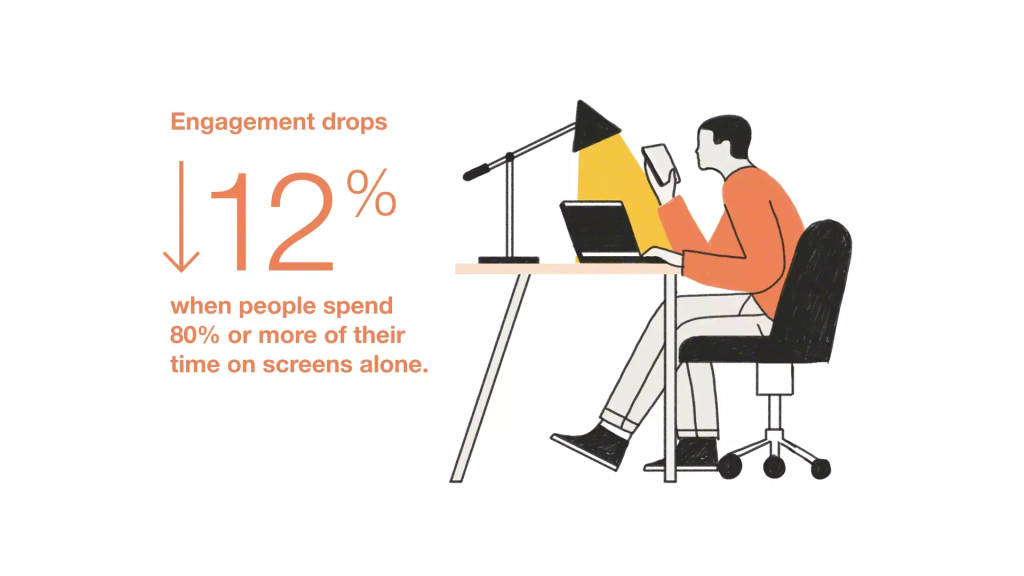
4. Add more pRivacy
Privacy is key to addressing wellbeing, focus and screen time.
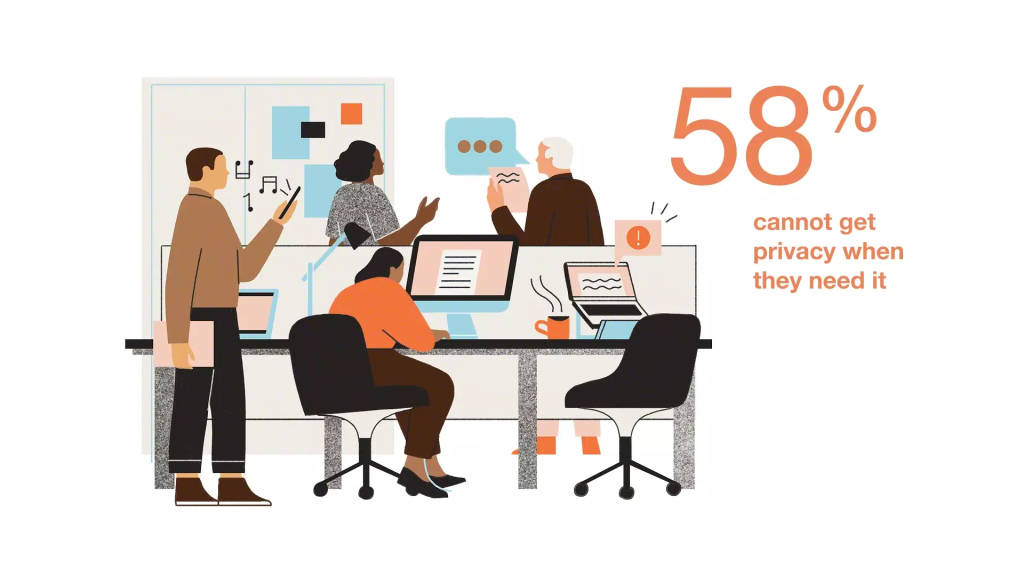
Employees point to a range of privacy needs beyond being able to just shut a door.
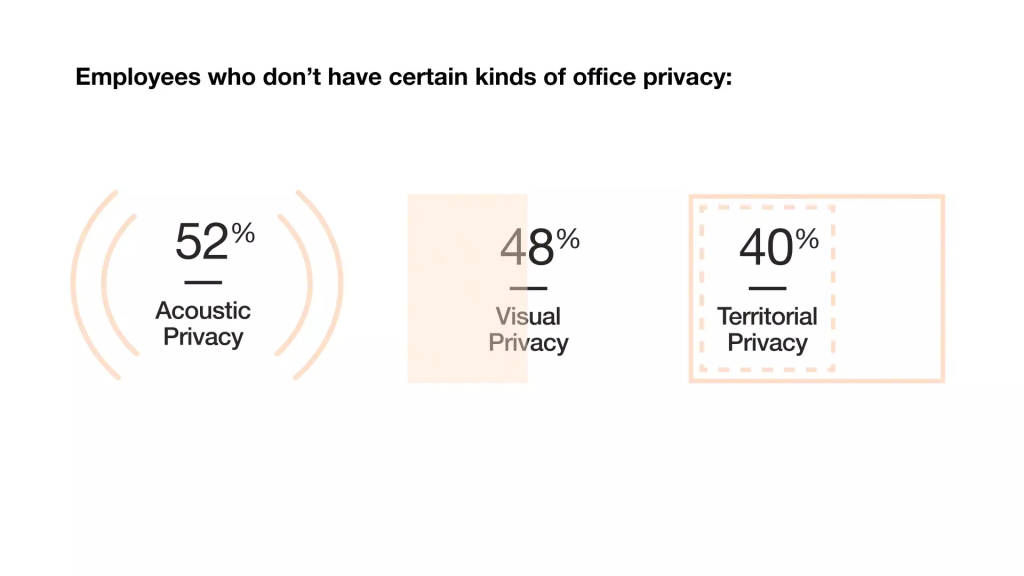
What People Need
Early signals point to a powerful lever most people don’t have — access to a variety of spaces (3 or more) that support different kinds of work. And those who do, report higher levels of:
+14% Higher engagement
+16% Stronger sense of community
+13% Improved wellbeing
The message is clear. When workplaces support how people actually work in different ways throughout the day, people perform better and feel better. And that’s what turns the office into a place people want to be.
Data Source:
Steelcase Global Employee Research December 2025