
How Student Designers Turn Neighborhood Inspiration Into Workplace Community
Top five finalists in the Steelcase NEXT Student Design Competition explore what makes workplaces feel more connected.
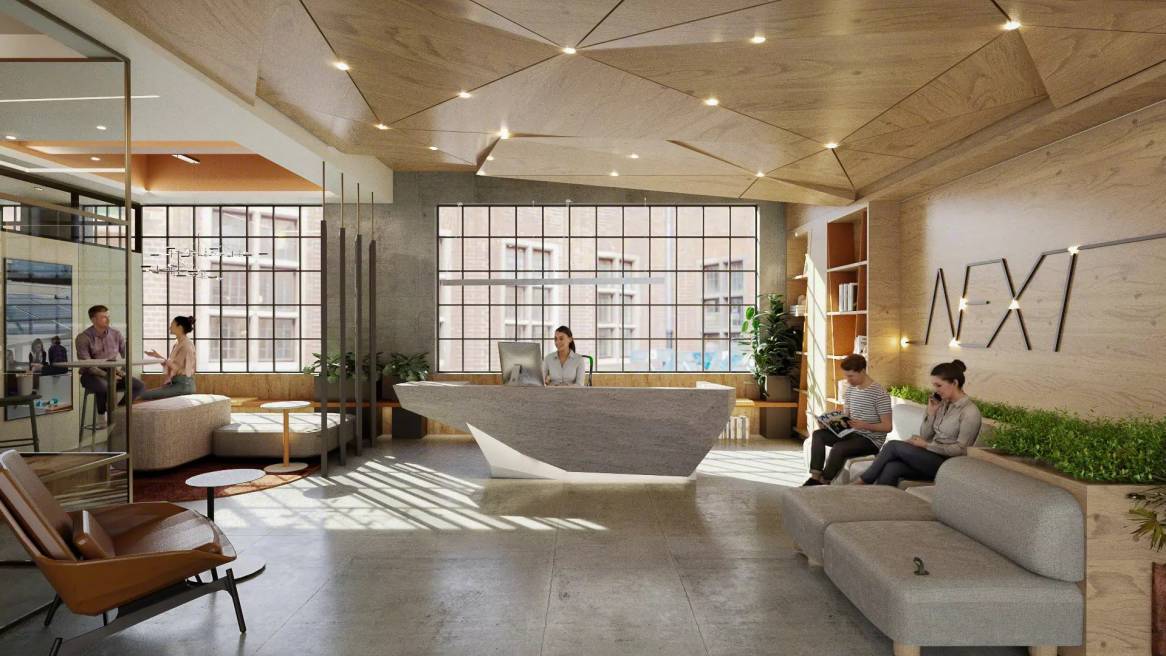
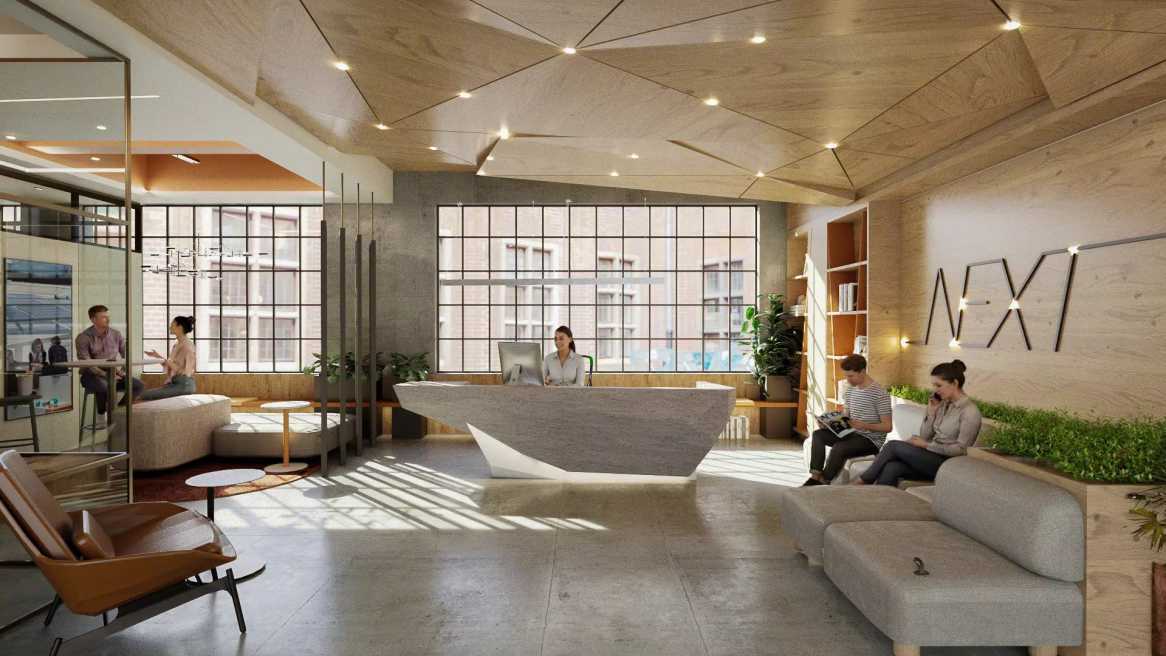
Every year, the Steelcase NEXT Student Design Competition challenges emerging designers to create the office of the future. For its 13th year, Steelcase invited students to envision a 15,200-square-foot Los Angeles office for a fictional law firm. The aspiration was a hub for in-person collaboration in a hybrid world, for a firm guided by the mantra “Rooted in law, driven by legacy.”
Set within ROW DTLA, a creative hub built to be LA’s “city within a city,” the brief called for more than a polished building. With new Steelcase research showing that U.S. employees most often go to the office because “they have to,” it asked students to imagine a place that earned the commute by offering something work alone cannot: welcome, identity and human connection.
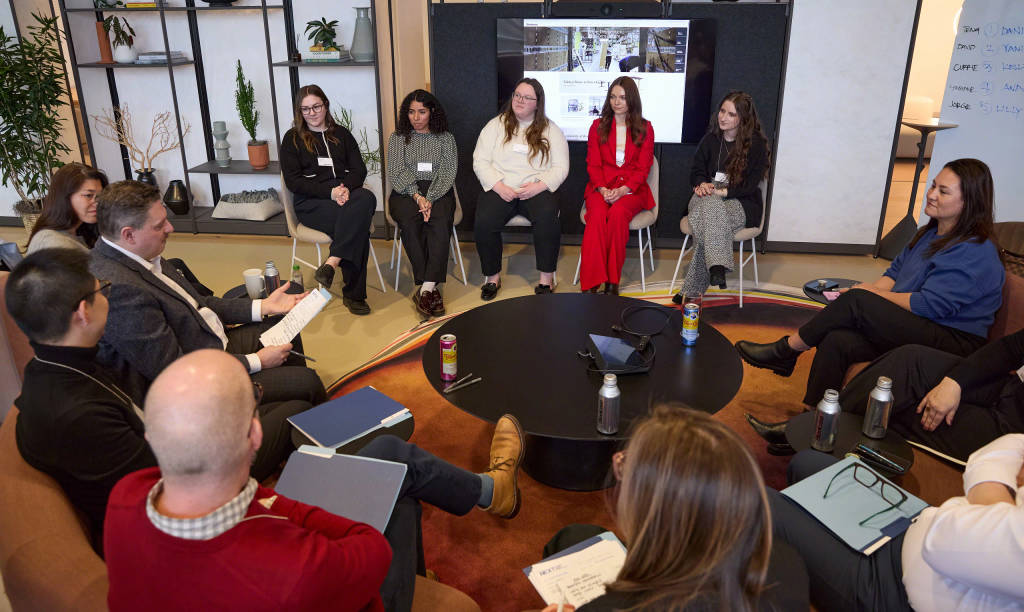
The Steelcase NEXT Student Design Competition is one of the largest interior design challenges in North America, drawing more than 1,600 students from 80+ university programs each year. The top five finalists are invited to Steelcase headquarters to present their concepts in person to a panel of leading designers and architects, who evaluate the work based on research, creativity, functionality, and how well it addresses the needs of the modern workplace.
.
Designing a workplace like a neighborhood
What emerged were five distinct concepts, each shaped by a different inspiration from the ROW community. One student drew from market culture, another from balance and restoration, others from repeated encounters, rail history and art. But together, they pointed to the same idea: a workplace earns daily presence the way a neighborhood does, not through mandate, but through familiarity, choice, shared experience and the feeling that people belong there.
“The design goal was to create a destination where everyone feels included, welcomed and comfortable throughout their entire day,” said Denise Calehuff, Design Alliances Principal at Steelcase and competition co-leader. “These students rose to that challenge and beyond.”
Each finalist developed a full design concept and presented it to industry judges. The competition awarded monetary prizes, opportunities to grow professional networks and more.
.
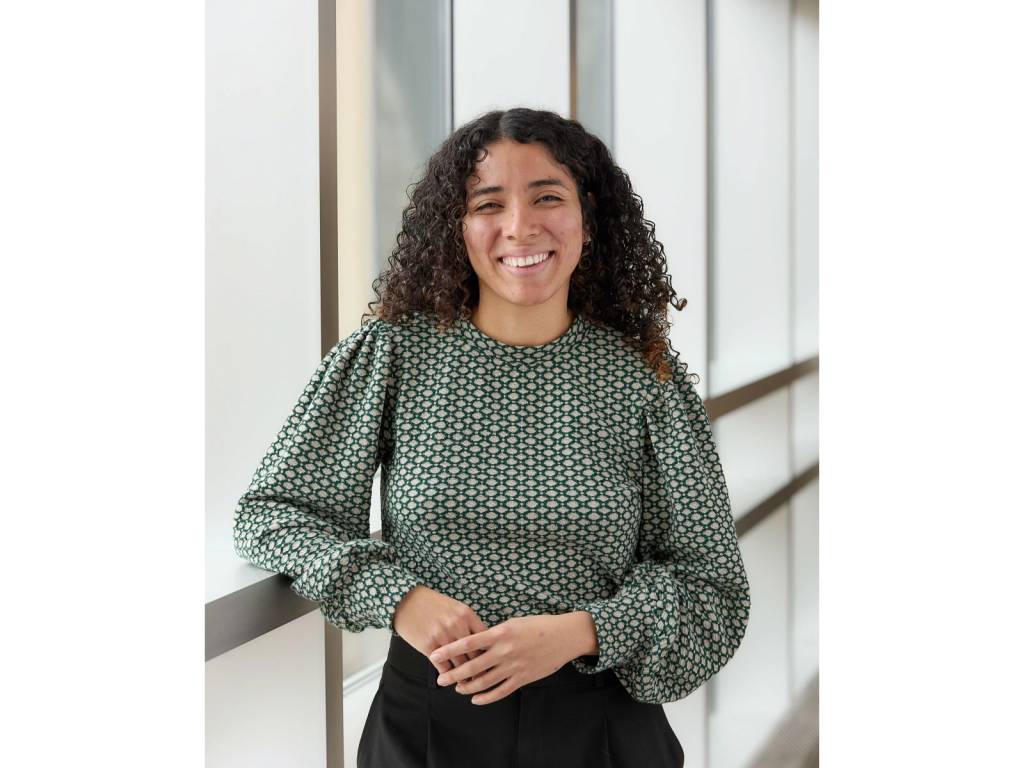
Winner: Yanira Rivas · California State Long Beach
.
Community through legacy
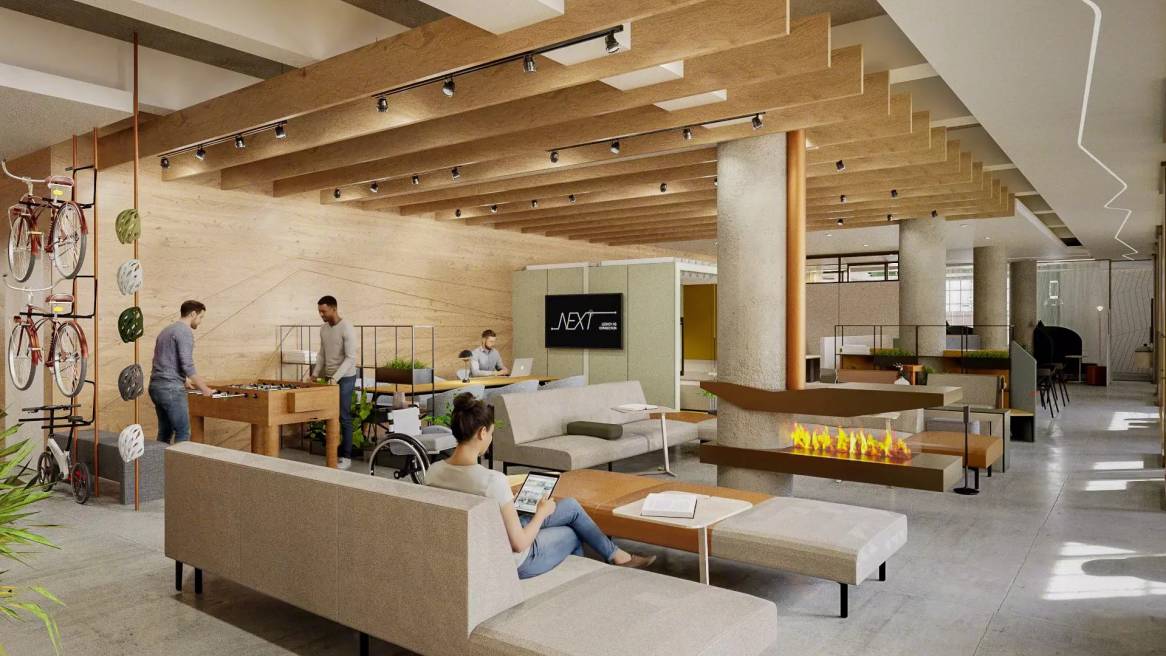
As this year’s winner, Yanira Rivas approached the project by rethinking legacy itself. Her concept began with chispa — Spanish for spark — and the belief that a workplace should make connections easier. “Our focus needs to be on our impact on others, our living legacy, rather than the prestige,” she said.
That idea gave her a different version of what a law office could be: one shaped less by hierarchy and more by the kinds of everyday interactions and connections people associate with a neighborhood. She recognized legal work can be an intense and potentially isolating job, and that connection in that environment can become accidental. Her response was to create more opportunities for intentional interactions, rather than leaving them to chance.
The result was a workplace that behaves more like a neighborhood than a corporate interior: open enough for chance encounter, warm enough to invite people in and layered enough to support different kinds of connection.
Stephanie Clements, principal and design director at Gensler, admired the way Rivas handled the complexity of a law firm while making the space feel “both sophisticated and welcoming.” “The level of talent was incredible,” she said, “you handled the complexity of a law firm’s needs with a really strong design eye.”
Explore Yanira’s winning designs
.
Finalist: Danielle Dubois · University of Manitoba
.
Community through balance
Danielle Dubois found her concept in the scales of justice, seeing them as a reminder that workplaces should balance intensity with restoration. “Through the research, I saw the scales of justice and it clicked for me early on in the process. I kept going with it,” she says.
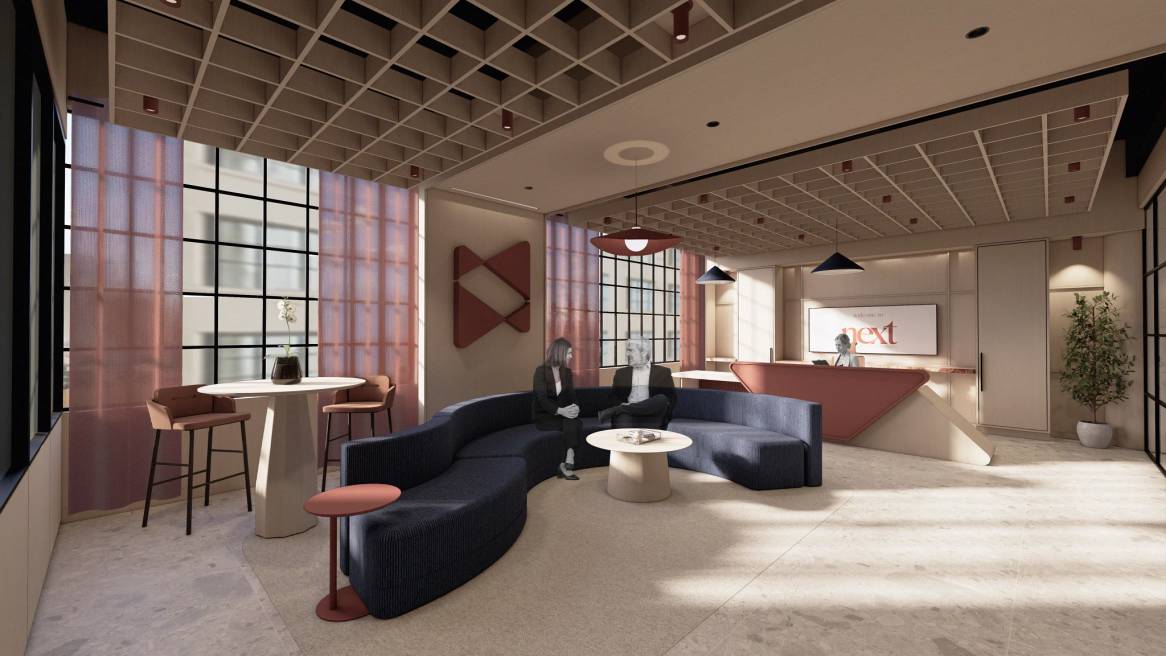
As a result, Dubois organized the office around emotional balance, reflecting one lesson of a neighborhood: people return to places that support different needs throughout the day.
Her plan made space for both collaboration and restoration, treating wellbeing as part of the workplace rather than an added amenity.
In a profession often defined by pressure and performance, Dubois’ concept suggests that people are more likely to stay engaged when the workplace also gives them room to reset. Nicole Zack, design manager and workplace strategist at Ted Moudis Associates, noted that Dubois “did a great job considering all of the different needs of the legal office. She showcased her concept with strong renderings and a clear visual point of view.”
Explore Danielle’s designs
.
Finalist: Kelly Marek · Kansas State University
.
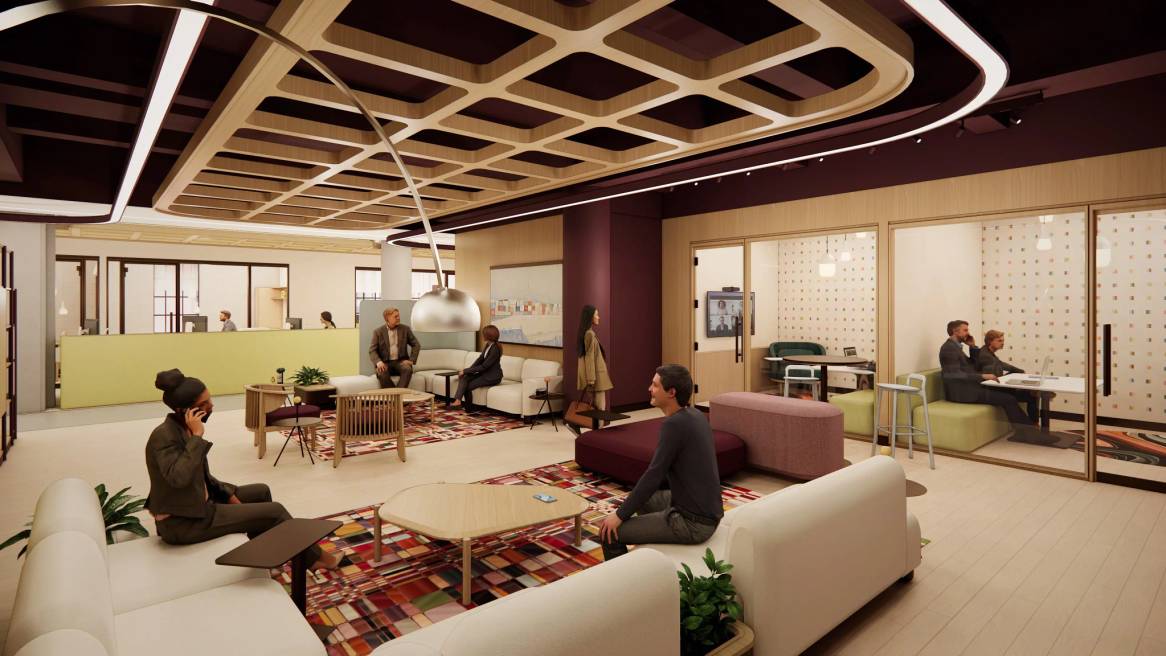
Community through shared space
Kelly Marek looked to ROW DTLA not just as a destination, but as a pattern of connection, variety and repeated encounter. “The ROW atmosphere inspires people to come together,” she said. “This informed how employees can come together in the office through my design.”
That insight shaped her plan from the start. Marek organized the office into four practice-group neighborhoods, each with its own visual identity, then connected them through a circulation loop designed to support both easy access and unplanned interaction. The result was a workplace that felt connected and easy to navigate.
Her wildcard room, a “communal living room,” brought that idea into focus. It connected different parts of the workplace, creating a stronger sense of shared identity and a center of gravity for the entire office.
“LA is a collection of neighborhoods, and that’s what you’re reproducing here,” said David Holt, principal and director of interiors at HOK. “Your design solves circulation problems beautifully.”
Explore Kelly’s designs
.
Finalist: Ana Skvortsova · Marymount University

.
Community through support
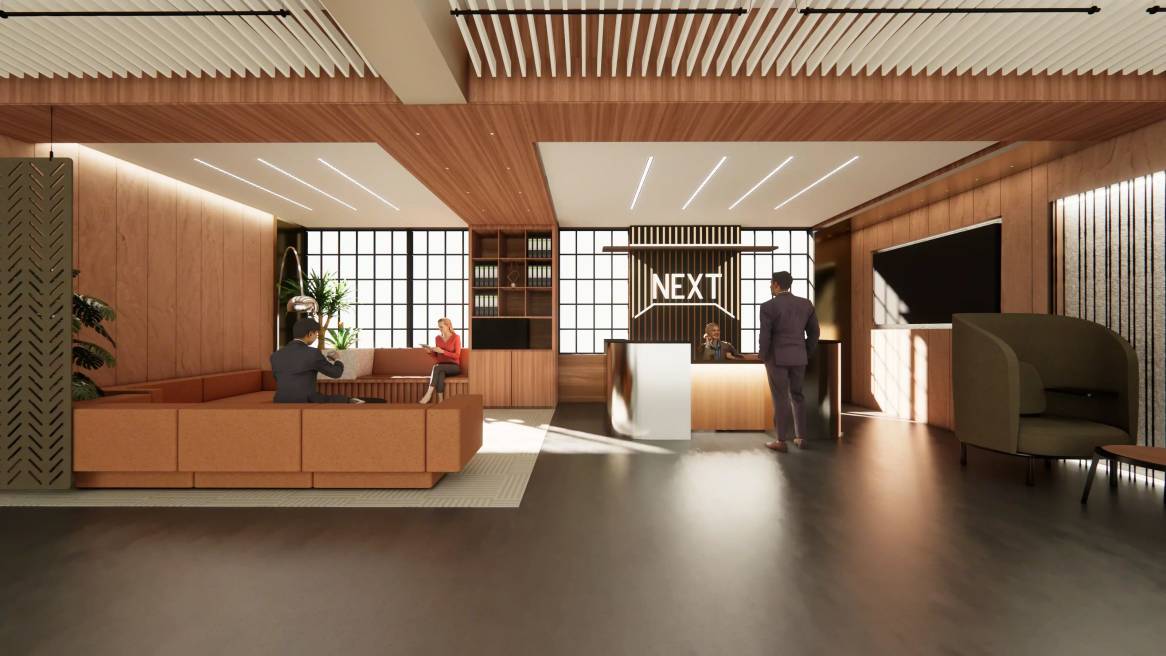
Ana Skvortsova found her concept in the site’s history. Looking at LA’s once-fragmented rail system and the unifying role Union Station came to play, she imagined the workplace in similar terms: not as a collection of separate functions, but as a connected environment.
“I wanted to build a place where everyone feels seen and supported,” says Skvortsova. “An environment where people can find a semi-private spot to refocus without losing their connection to the office ecosystem.”
Skvortsova’s design brought teams closer together while preserving the ability to step back, refocus and choose the right setting for the moment. Her diagonal circulation “spine” unified the floor plan while opening access to daylight, views and shared amenities.
Jorge Bernal, principal and practice leader at Perkins&Will, responded to the strength of that concept, saying he appreciated “the way those systems came in and merged in the center.” “The diagonal was a play on the railroad and the evolution of the concept is commendable,” Bernal says.
Explore Ana’s designs
.
Finalist: Lilly Vezino · Maryville University

.
Community through art
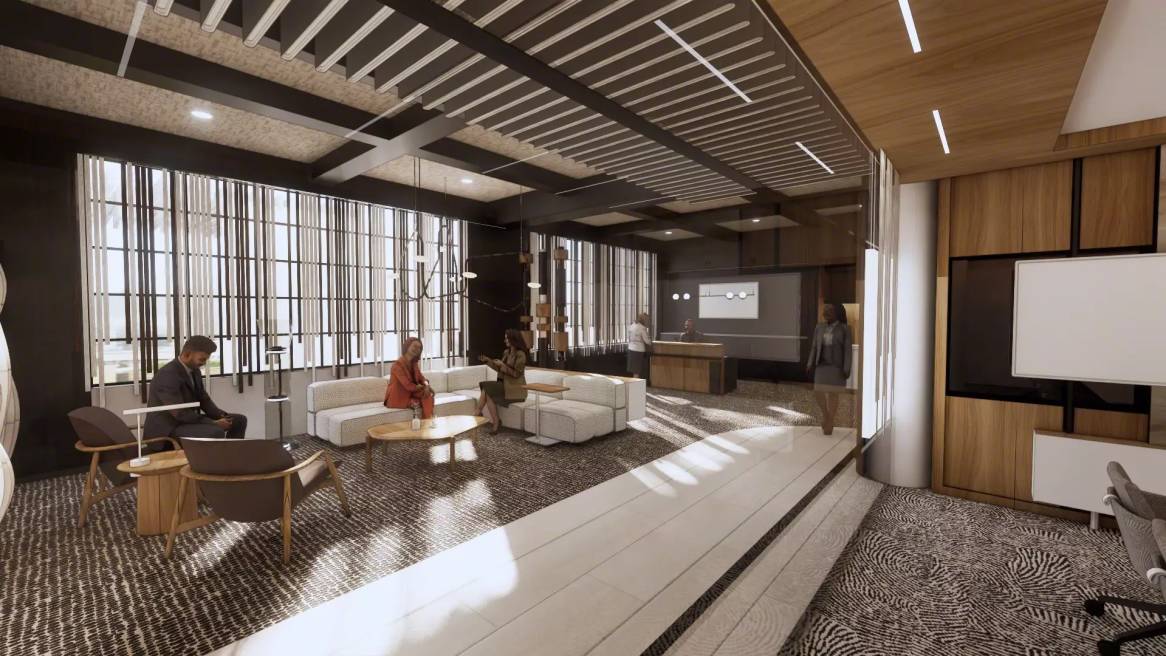
Lilly Vezino built her design around a personal conviction. “I am where I am today through access to art,” she said. She found her inspiration not in legal precedent, but in the murals of ROW DTLA, specifically the line art of Carly Kuhn, whose work she described as “a response to the noise and chaos of the world around us.”
She designed the office on a gradient from “wit” to “sophisticated” to “whimsical”, using color and contrast to temper the “sunny” aesthetic of LA to create a more relaxed atmosphere. “Your use of black, which is just hard to do, brings down the brightness and lightness of LA and moves it towards a more relaxed space,” said Currie Gardner, Associate Principal and Senior Interior Designer at HLW. “Very high-end design.”
Her wildcard room, a “digital canvas,” brought art into daily office life by turning personal expression into a shared experience. “Art is community binding,” Vezino said. “It can transform spaces.”
Explore Lilly’s designs
A community legacy worth building
These five students were given a fictional firm and a real question: what does it take to make people want to be somewhere? Their design inspirations varied — a spark, a scale, a neighborhood, a railroad station, a love for line art — but their underlying answer was the same.
A community isn’t the marble in the lobby or the name on the door. It’s what accumulates between people when the space gives them room to find each other. ROW DTLA already understood that. These students recognized it and brought it into the workplace.
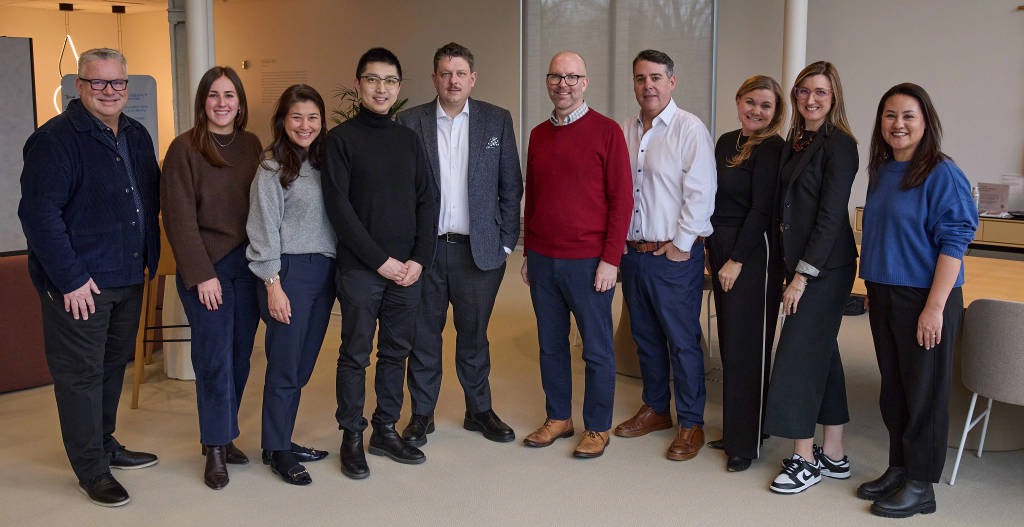
“The intention of NEXT is to open our eyes to the possibilities of what can happen in the workplace,” said Jerry Holmes, design alliances principal at Steelcase and competition co-leader. “A big part of this event is seeing what young designers are thinking about and where they are leading us. It’s safe to say, the future of design is in great hands.”
Learn more about the NEXT Student Design Competition and explore the winning entries. We look forward to launching the 14th annual Steelcase NEXT competition this fall.