
Under One Roof: Designing a New Approach to Public Service
How South Dakota reimagined government service
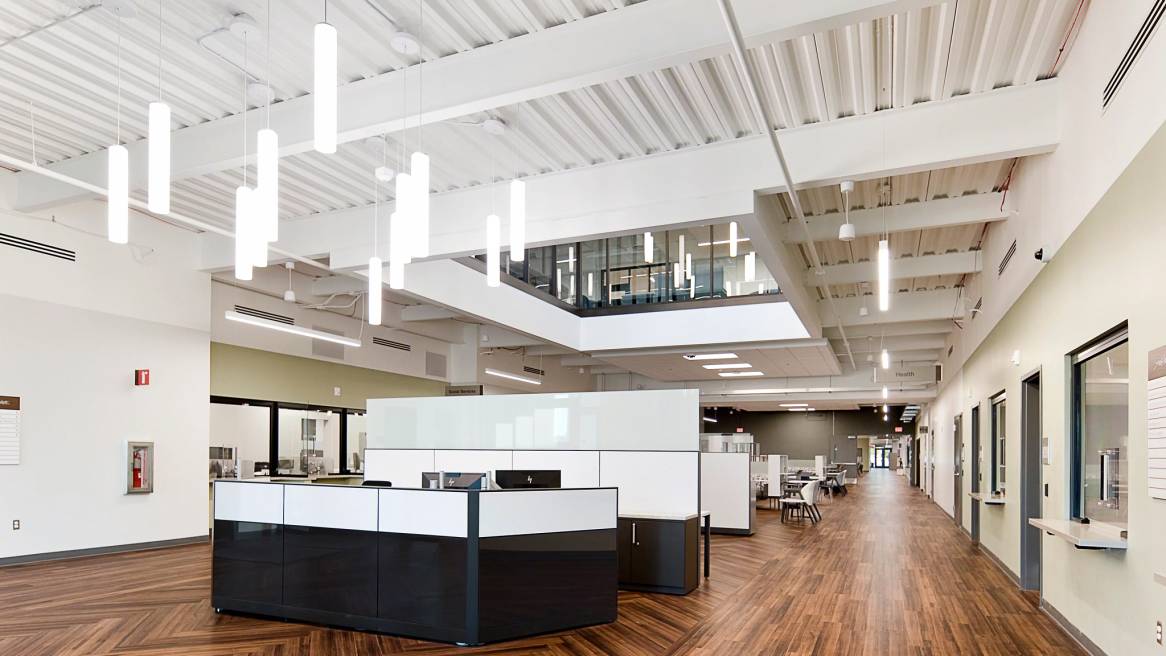
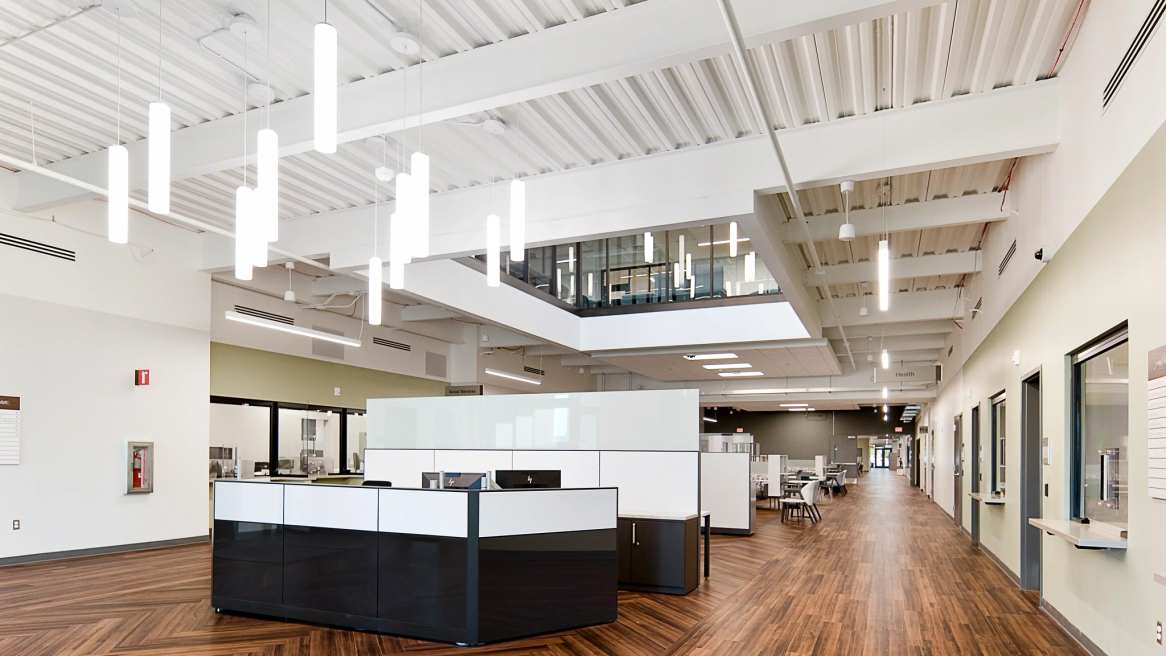
For decades, doing business with the State of South Dakota in Sioux Falls meant moving from place to place — a driver’s license in one building, social services in another, employment assistance somewhere else entirely. For the people who relied on those services, many of them already navigating moments of crisis, the experience could feel fragmented and exhausting. For the employees delivering that work, it often felt the same.
The state’s new One Stop facility was designed to change that.
The new 283,000-square-foot hub is home to almost 600 employees from 13 agencies, representing a fundamental shift in how South Dakota thinks about government — not as a collection of silos, but as a connected system meant to serve people more holistically. The goal: bring everyone under one roof and make it work better for citizens and employees alike.
“We consolidated more than 20 separate leases into this one building,” explains Tom Albrecht, director of facilities acquisitions and services for the State of South Dakota. “From an operational standpoint, that matters. But what really matters is what it means for the people who come here needing help — and for the people who show up every day to provide it.”
Shifting from fragmented spaces to shared purpose
Before the move, many agencies operated in older facilities that were dark, cramped and ill-suited to the realities of modern public service. Conference rooms were scarce. Privacy was limited. Collaboration across departments was largely aspirational.
The project changed how leaders understood the role of the workplace itself. “I don’t think we fully appreciated how much space influences the way people work until we went through this process,” Albrecht says. “Steelcase and their local (dealer) partner Interstate Office products helped us think differently about that — not in terms of design for its own sake, but in how the environment can support collaboration, focus and the experience of the people we serve.”
“You couldn’t even get a full team in one room for a meeting,” says Brenda Tidball-Zeltinger, deputy cabinet secretary and chief of operations for the Department of Social Services. “And when you’re doing emotionally demanding work, the environment matters more than people realize.”
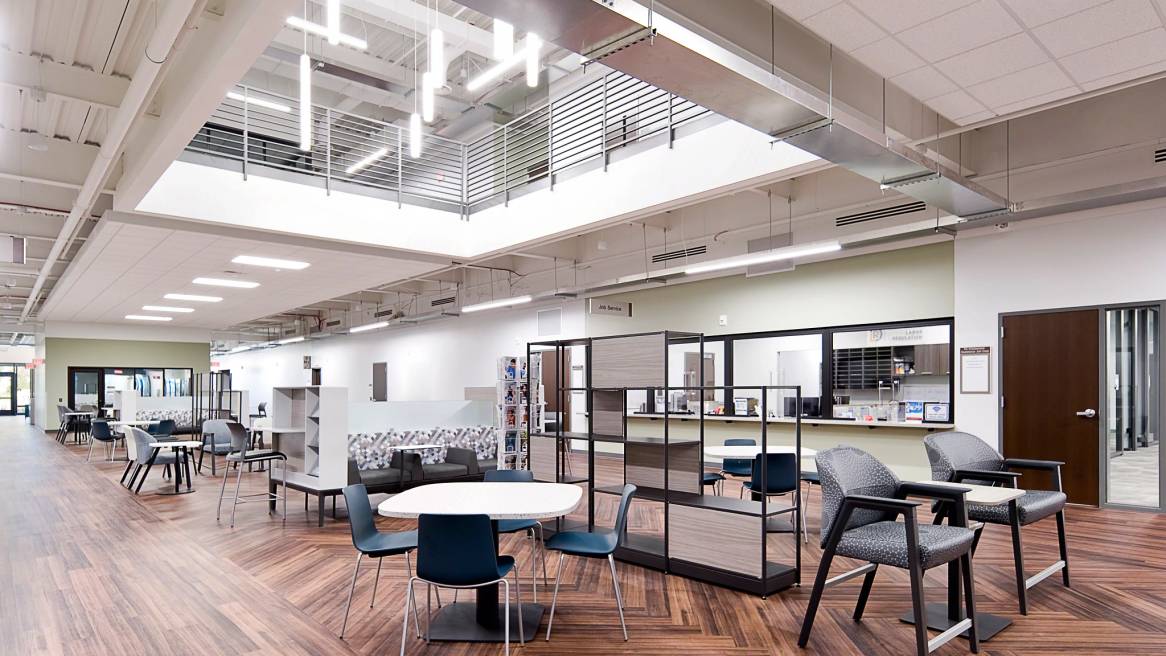
The new facility was designed with those challenges front and center. Natural light floods the space. Circulation paths are wide and purposeful. Instead of treating hallways as leftover space, they are lined with comfortable seating, touchdown areas and informal meeting spots that invite conversation.
For Albrecht, the design was intentionally shaped around the emotional realities of the people inside it. “Some of our staff deal with people on the worst days of their lives,” he says. “We didn’t want them — or the citizens they serve — walking into a place that felt institutional or punitive. This needed to feel uplifting.”
Designing for dignity — and flexibility
Nowhere is that philosophy more evident than on the first floor, where citizens interact most directly with the state. Private intake rooms sit just off the main lobby, allowing people to share sensitive information comfortably. Behind the scenes, agencies that once operated miles apart now sit steps apart.
“The idea is first-contact resolution,” Tidball-Zeltinger explains. “Bring the services to the person, instead of sending the person all over the city. That’s more respectful of their time — and their dignity — and more efficient state service delivery.”
The building’s extensive use of prefabricated walls was another strategic decision. With nearly 4,700 linear feet of movable architecture, the State designed the facility to evolve as needs change. “This was always meant to be a 100-year building,” Albrecht says. “We may grow. Agencies may shift. We wanted the ability to reconfigure space without tearing the place apart.”
Building a workplace that helps people do hard work
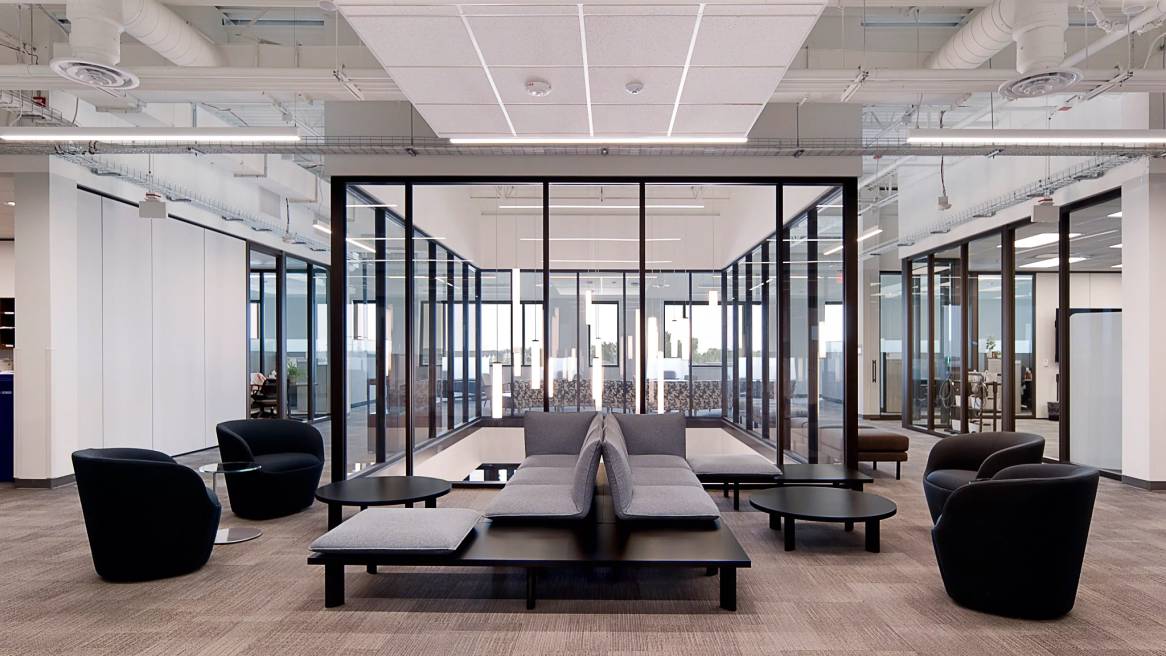
For employees, the impact has been immediate. Workstations are larger and height adjustable. Storage allows people to personalize their space. Quiet rooms, phone booths and enclosed pods give staff places to focus or decompress.
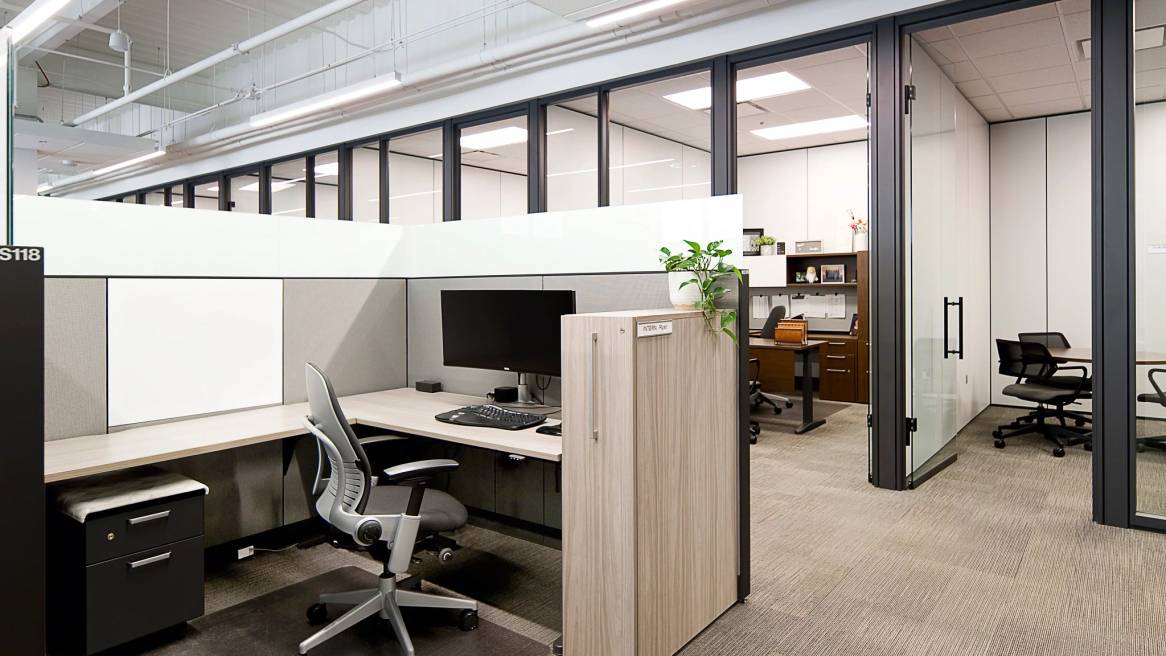
“You see people moving around more,” Albrecht says. “Taking a call in a pod. Having a quick conversation in the hall. Going to the café, which we call the Hub, not just to eat, but to work.”
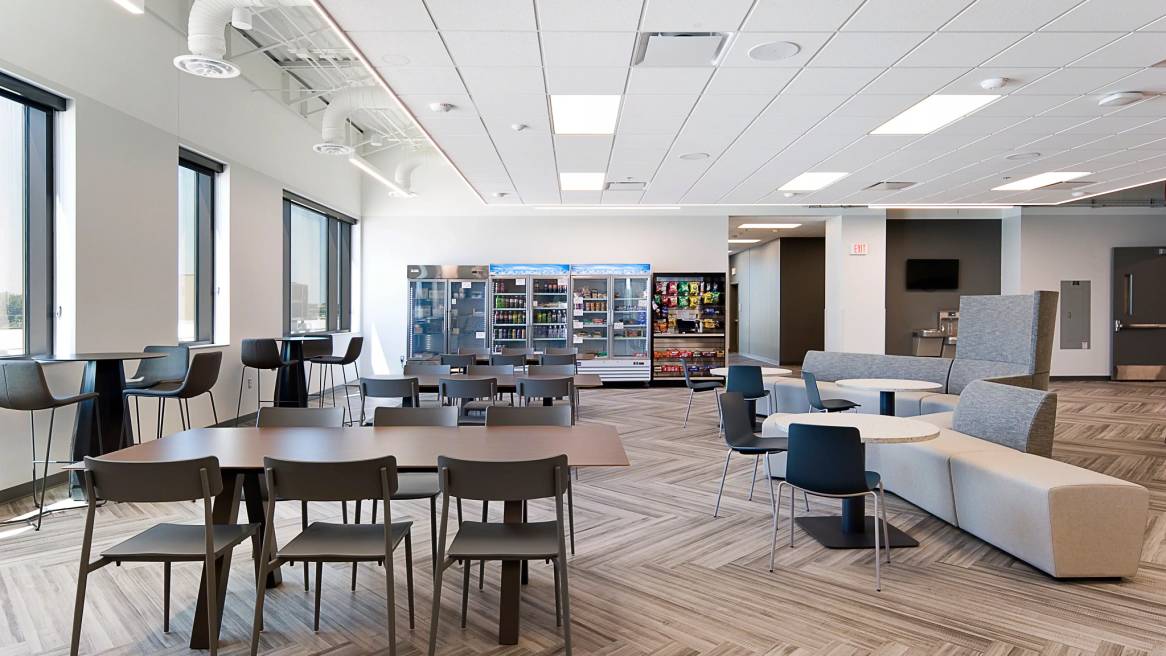
The Hub, a sun-filled working lounge near the front of the building, has become an informal heart of the facility. Large communal tables encourage interaction across departments, while smaller settings support focused work.
“This is not a silent building,” Albrecht adds. “It’s not loud either. It’s just… alive.”
Creating Spaces for Collaboration
That sense of energy is by design, according to Darin Seeley, commissioner of the Bureau of Human Resources and Administration. Bringing agencies together was never only about convenience.
“Most citizens don’t interact with just one program,” Seeley says. “They interact with several, often at the same time. When our employees are co-located, they start seeing the whole picture.”
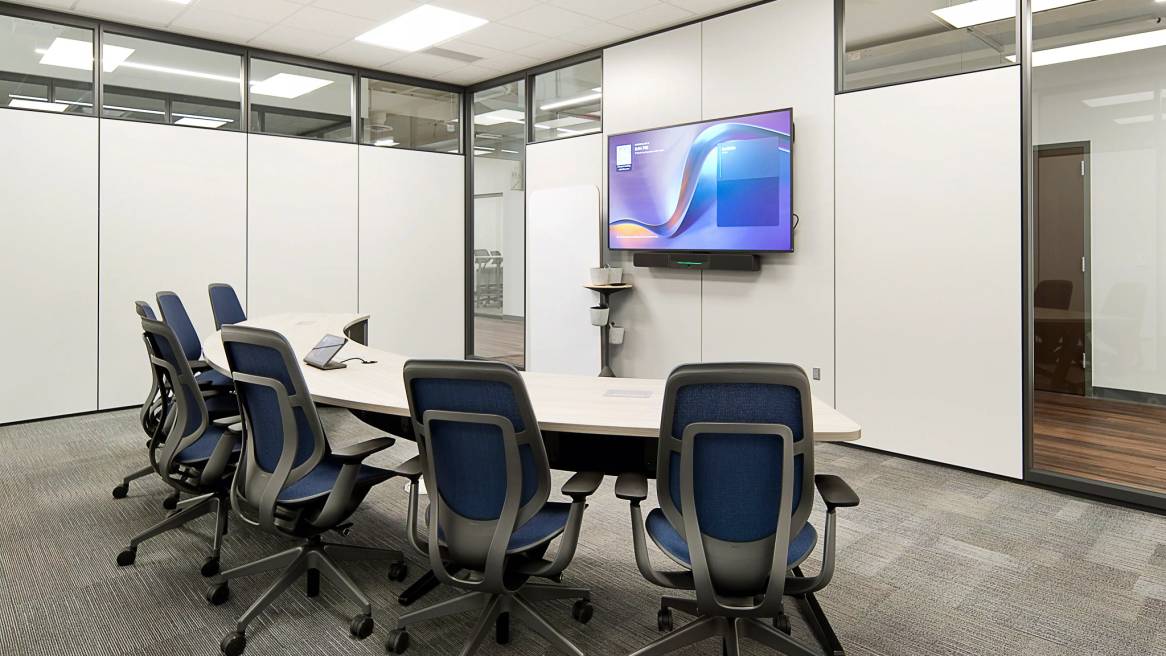
The building makes those connections easier, both formally and informally. Shared conference rooms reduce duplication. Chance encounters build familiarity. Over time, Seeley believes, the space will support deeper coordination behind the scenes and improve outcomes for citizens.
Encouraging a cultural shift, not just a move
Still, the transition has required adjustment as teams across a dozen agencies are working together under one roof. New spaces demand new norms. Leaders have had to reinforce what Tidball-Zeltinger calls a “culture of permission” — reminding staff that it’s “okay to work in shared areas, engage with departments we don’t typically interact with, move around and use the building as it was intended. That’s culture work,” she says. “And it takes time.”
But the direction is clear. By uniting departments, prioritizing flexibility and designing with empathy, South Dakota has created more than a consolidated office building. It has built a civic space that reflects the seriousness — and the humanity — of public service.
“As government, we don’t always get credit for thinking this way,” Albrecht says. “But if you’re going to do it, you should do it right. And this feels right.”
At a Glance
State of South Dakota
Industry
Government Services
Location
Sioux Falls, South Dakota
Size
283,000 square feet
Number of employees
600
Design Intent
Consolidate government services into one location for easier citizen access
Create a more compassionate, dignified experience for citizens and staff
Improve the work experience to meet the new needs of people
Improve collaboration across agencies.
Design a flexible, future‑ready space with modular elements
Project Partners
Dealer: Interstate Office Products