
Student Success + Sustainability: Inside George Brown Polytechnic
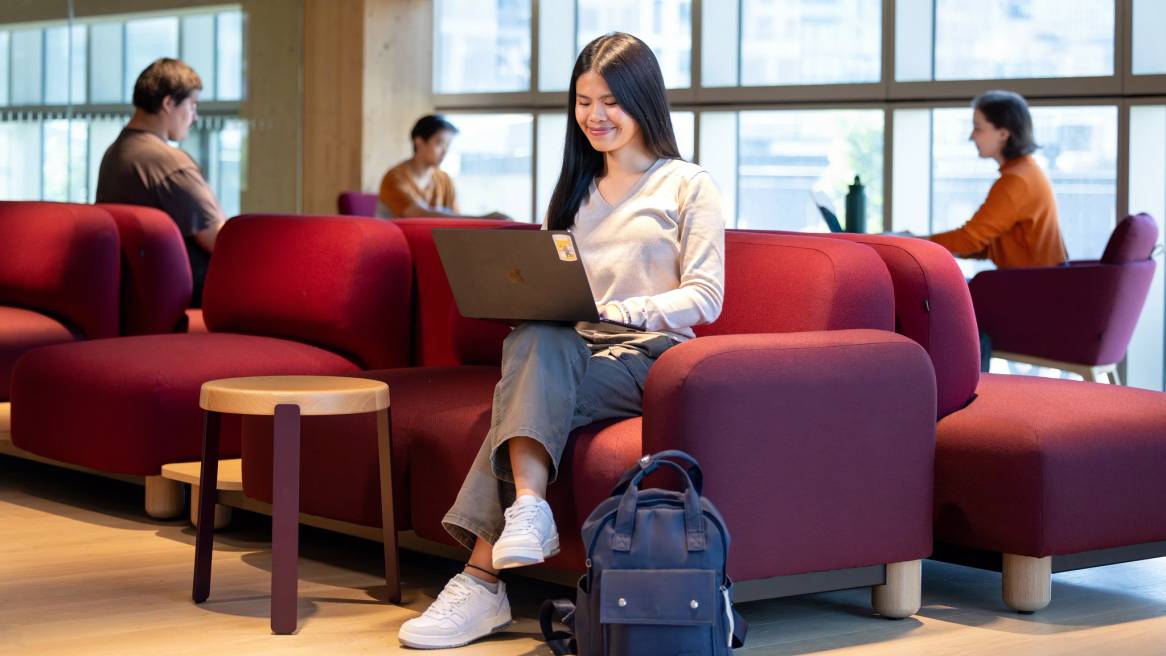

For George Brown Polytechnic, Limberlost Place reflects an ambitious yet practical vision: to create one of Canada’s most sustainable academic buildings while improving how students learn, gather and succeed. The building is home to students in the college’s Architectural Studies program, making it both a place to learn and a living example of sustainable building practices.
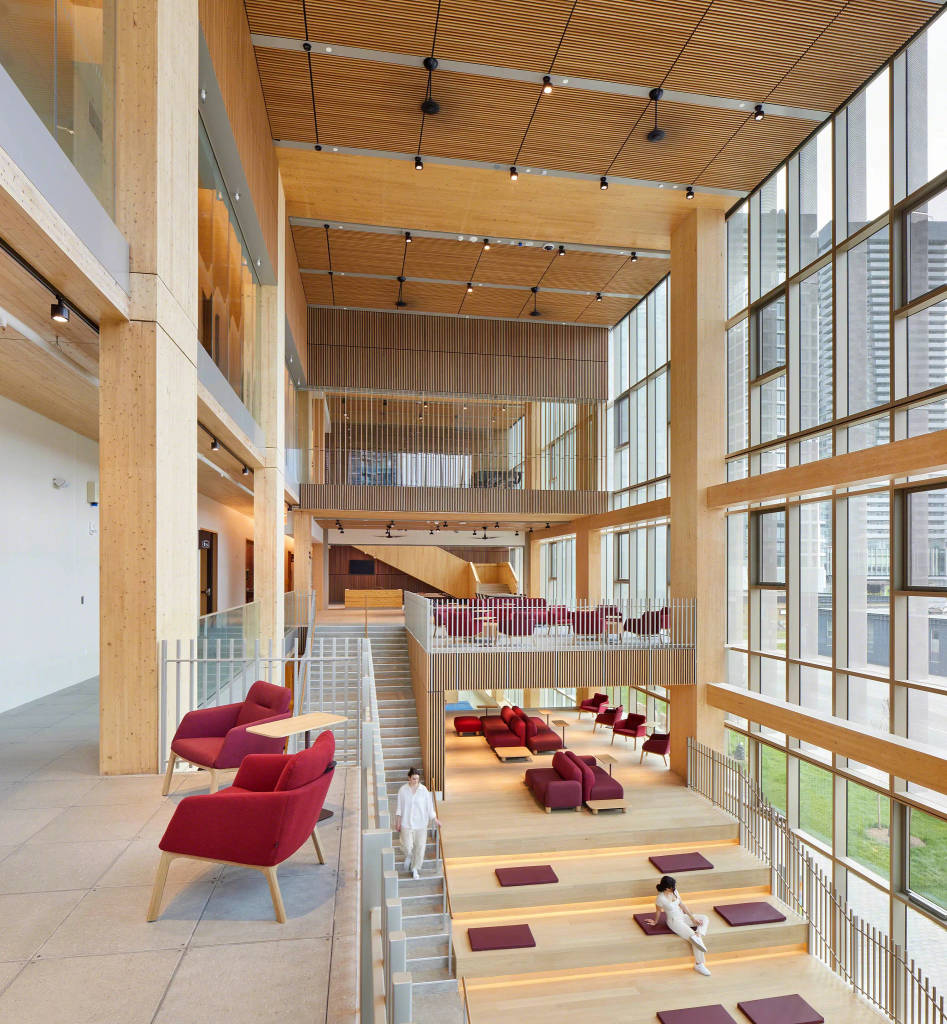
Located on Toronto’s waterfront, the 10-storey mass-timber building brings together academic spaces, student amenities and community services in a compact footprint designed around how students actually learn and spend their time on campus. For George Brown Polytechnic, the project was not simply about adding capacity — it was about reshaping outcomes.
“We wanted a building that supports the full student experience, not just what happens during class time,” says Nerys Rau, executive director, facilities and sustainability at George Brown, and the project director for Limberlost Place. “Learning today is collaborative, social and happens everywhere. The space needed to reflect that.”
.
.
Designing for better learning
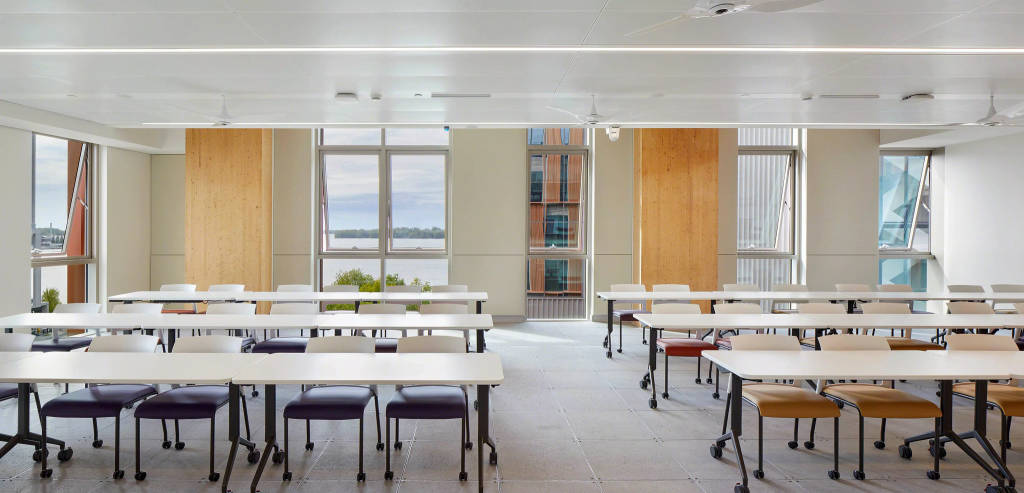
Rather than organizing the building around corridors and isolated classrooms, Limberlost is structured to support a range of learning modes throughout the day. Classrooms were designed as active learning environments, with layouts that allow instructors and students to shift easily between lecture, discussion and group work.
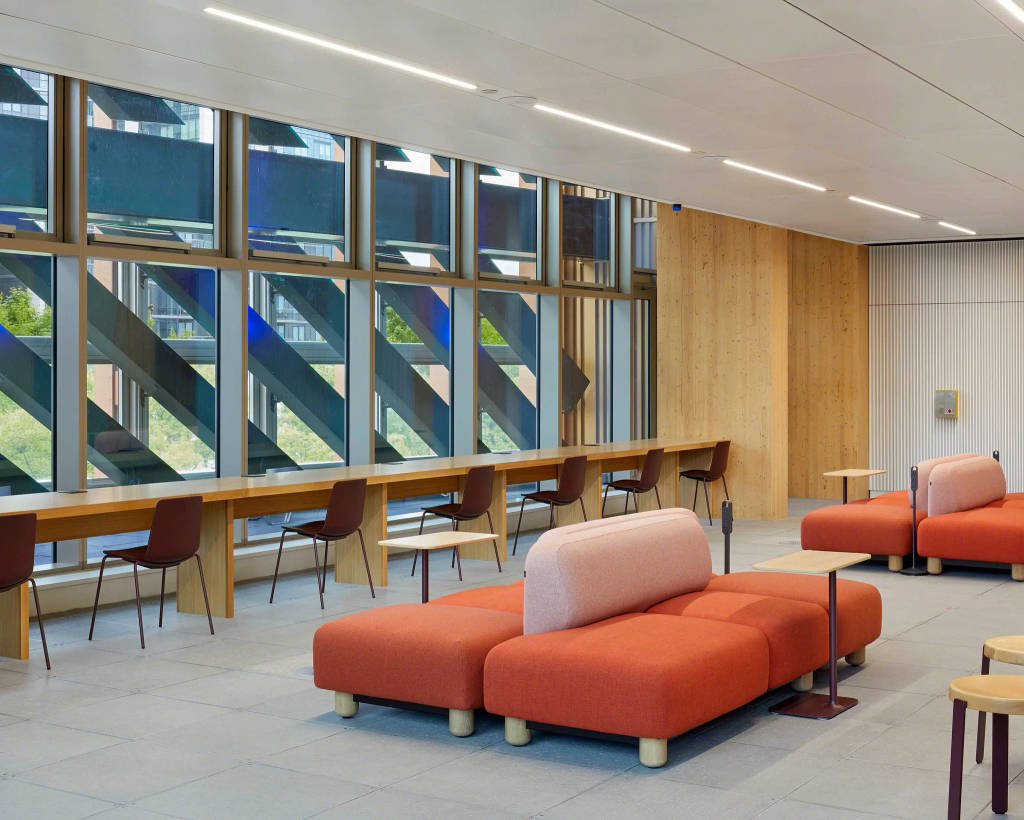
Classrooms, studios and labs are positioned along the perimeter to maximize daylight, while informal social and study spaces sit immediately outside them. On each floor, students encounter a mix of settings: open collaboration zones, enclosed booths and quiet study areas. The intent was to support different postures, personalities and learning preferences.
“We worked very closely with our partners Moriyama Teshima Architects, Steelcase and their local dealer POI Business Interiors to align furniture solutions with pedagogical goals and ensure flexibility without sacrificing durability or comfort,” explains Rau. Flexibility was critical so the space could evolve with curriculum changes and new teaching methods. Mobile tables and seating, digital and analog displays, and integrated technology allow rooms to be reconfigured quickly, supporting multiple teaching modes within a single session.
Kayley Mullings, senior interior designer at Moriyama Teshima Architects and a part-time instructor at George Brown, says student choice was a driving principle. “The variety of seating and postures gives students more choice. Some students are more comfortable sitting in lounge seating at the front, while others prefer being farther back. The room can adapt to all of them.”
She has also observed how behavior shifts when students feel comfortable. “A lot of students gravitate toward the more compressed, lounge‑style areas rather than traditional table‑and‑chair setups,” she says. “They also really like the booth seating. You can see them settling in and staying longer, which tells you the spaces are working for them.”
That willingness to remain on campus — to study between classes, collaborate or simply decompress — is tied directly to student success, says Rau.
.
., Executive
If students feel they belong in a space, they use it more. And when they use it more, the likelihood of stronger academic outcomes increases.
Nerys Rau, Executive Director, Facilities + Sustainability, George Brown Polytechnic
A building shaped by sustainability
Equally central to the project is its environmental performance. Limberlost Place is designed as a net‑zero carbon building, constructed primarily from mass timber — a renewable material that significantly reduces embodied carbon compared with steel or concrete.
For George Brown, sustainability was both an operational priority and an educational statement. “We wanted the building itself to demonstrate our commitment to climate action,” says Rau. “Students can see and feel the difference. It becomes part of their learning environment.”
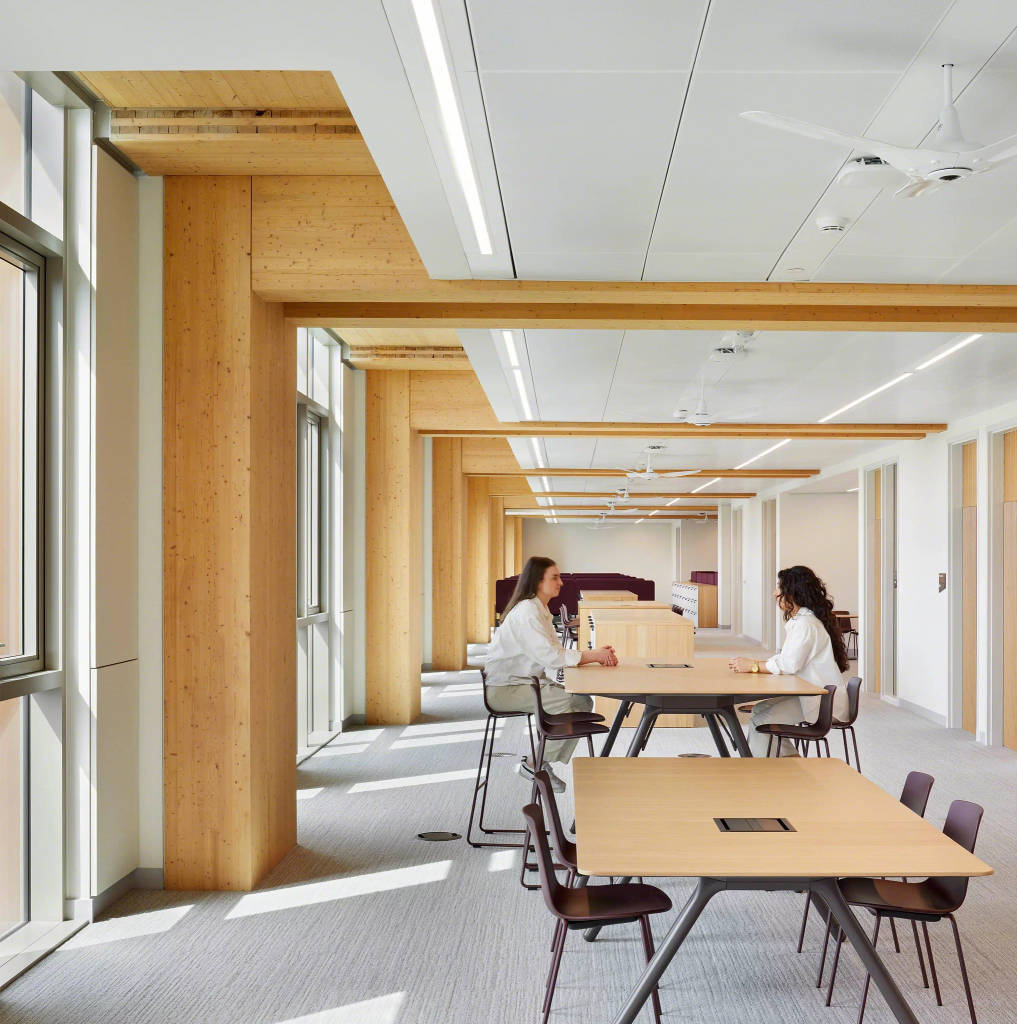
The sustainability strategy extends well beyond the structure. Interior materials, furnishings and finishes were evaluated through a lifecycle lens, considering sourcing, durability and eventual reuse. The project team viewed furniture and architecture as interdependent. They looked for products designed for longevity, disassembly and material transparency, aligning with the building’s low‑carbon objectives.
.
.
“Maintaining material authenticity was especially important within a timber building,” explains Mullings. “That meant focusing on real materials, natural fibers and avoiding finishes that would feel artificial in a mass‑timber structure. We didn’t want to use imitation wood in a building surrounded by real timber. Using real veneer, wool and other natural materials reinforces the health and sustainability goals of the project.”
The building’s environmental strategies extend beyond materials. Limberlost operates in passive natural ventilation mode for roughly half the year, allowing occupants to open windows and rely less on mechanical systems. Early feedback suggests that this has a noticeable effect on comfort. “The air is much fresher,” says Rau. “People find it a very restful environment.”
Flexibility as a long‑term strategy
Sustainability also informed how the building will perform over time. Adaptable classrooms, movable furnishings and multi‑use spaces reduce the need for future renovations, lowering both cost and environmental impact.
“Longevity is a big part of sustainability,” says Rau. “If a space can change instead of being torn out and rebuilt, that’s a major environmental benefit.” This future‑proofing ensures the building can respond to shifts in enrollment, pedagogy and technology without major structural intervention.
.
.
An integrated vision
What distinguishes Limberlost Place is the integration of its two core ambitions. The same design decisions that reduce carbon emissions. Natural materials, daylight, flexible planning also create healthier, more engaging environments for students. “It’s not sustainability for sustainability’s sake,” says Rau. “It’s about creating a place where students can do their best work.”
Early feedback suggests the strategy is resonating. Students are using the building throughout the day, occupying collaboration zones, quiet nooks and social spaces in ways that mirror the college’s original vision.
For Mullings, that lived experience is the ultimate measure of success. “When you see students choosing to stay, to study, to connect — that’s when you know the design is doing what it was meant to do.”
For students in Architectural Studies, Limberlost functions as both a learning environment and a real-world example of sustainable building practices. The building has already received numerous international design and sustainability awards, but its primary measure of success is day-to-day use. “Students want to see that the institution is walking the talk on sustainability,” says Rau. “This building demonstrates that commitment in a very real way.”
At a Glance
George Brown Polytechnic
Industry
Education
Location
Toronto, Ontario
Size
225,000 square feet
Design Intent
Advance net-zero carbon and low-embodied-carbon design
Improve student engagement and academic outcomes
Support flexible, future-ready learning environments
Create a living lab for architectural studies students
Key Features
First building in Toronto to meet Toronto Green Standards Version 3 Tier 4, the highest, voluntary tier of environmental performance for new developments in Toronto, aimed at near-zero emissions.
95% of products achieved BIFMA Level–certified
89% achieved the highest Level 3 rating
97% of products achieved SCS Indoor Quality Certified or Equivalent
Project Partners
Design Firm
Moriyama Teshima Architects with Acton Ostry Architects
Dealer
POI Business Interiors