
How Office Design Can Boost Brain Health
How employers can unlock human potential—and trillions in economic value—by designing workplaces that promote brain health and foster connection.
The world is quietly draining more than $1 trillion in economic output every year due to poor brain health. That’s the stark warning laid out by the McKinsey Health Institute at a recent Brain Capital Health Summit in Houston, Texas. Left unaddressed, this figure could climb even higher, they noted. But the flip side is just as staggering—improving brain health could unlock up to $26 trillion in global economic value.
“Brain science is the study of how the brain works and how it affects our behavior, cognition, emotions and wellbeing,” says the Brain Capital Alliance, which brings together scientists, academics, designers and economists to focus on “neuroscience-inspired” investment and public policy. Brain health goes beyond mental health. It encompasses neurological conditions, like Alzheimer’s, Parkinson’s, autism, anxiety disorders, as well as substance use. According to the McKinsey Health Institute, this broad field studies interconnected variables to help improve “overall cognitive functioning, resilience, and the state of wellbeing in which an individual … can cope with the normal stresses of life, can work productively, and is able to contribute to his or her community.”
Business leaders are taking notice because healthy human brains are the ultimate resource and source of competitive advantage. “Mental and neurological conditions are commonly associated with disability, despair and lack of wellbeing. And so that definitely impacts our economy and the workplace,” noted neuroscientist Harris Eyre on the Work Better Podcast “Building Brain Capital” (S5:E5). Rising healthcare costs and lost economic productivity are increasing by 5% a year, says Eyre, who leads the Neuro-Policy Program at Rice University’s Baker Institute and is one of the founders of the Brain Capital Alliance.
The statistics are sobering. Brain-related conditions—including mental health disorders, neurological illnesses and substance use disorders—translate to 12 billion lost days of productivity annually. McKinsey’s global employee survey found that one in five workers reports symptoms of burnout. This impacts wellbeing and workplace performance. Mental fatigue, stress and cognitive overload reduce creativity, impair decision-making, and increase absenteeism and attrition. And with AI and advanced technology reshaping how work gets done, the demand for brain-intensive skills—like adaptability, resilience and creative thinking — has never been higher. Yet employees who consider themselves frequent AI users report higher levels of burnout (45%) compared to those who infrequently (38%) use AI at work (Quantum Workplace, 2024).
Conversely, the concept of a “brain economy” refers to a thriving, resilient system driven by individuals’ cognitive, emotional and social health. It’s not hypothetical: The gains are based on measurable improvements in productivity, healthcare outcomes and innovation potential.
Most organizations aren’t thinking about brain health holistically yet or in ways that can make a broad impact. Leaders recognize the need for resilience, flexibility and creativity as the essential skills of the future, but may not understand their role or the role of the workplace in helping to foster brain health and grow brain capital. The result, according to McKinsey: Brain health remains one of the most under-addressed drivers of economic performance. “We’re already living in a brain economy,” said Dr. Lucy Perez of the McKinsey Health Institute. “The question is whether we’re willing to invest in it.”
Prioritizing Brain Capital
Brain capital should be treated as a core global asset argued Eyre at the 2025 World Economic Forum in Davos. “Given the rise of advanced generative AI models that strain our brains as well as accelerating societal and environmental challenges, transitioning to a brain economy is of utmost importance.”
Work is where most people spend the bulk of their waking lives, making it one of the most consequential determinants of human health overall, and brain health specifically. Many diverse factors, such as organizations’ health and safety policies, wellbeing practices and corporate culture play a role. The physical workplace is an often overlooked area that can make a significant impact on how people manage stress, find focus, connect with others and build resilience. It can help boost creativity and human potential. In an age when burnout is rising and mental health is straining under constant demands, the need to design healthier workplaces has never been more urgent.
Designing for Wellbeing
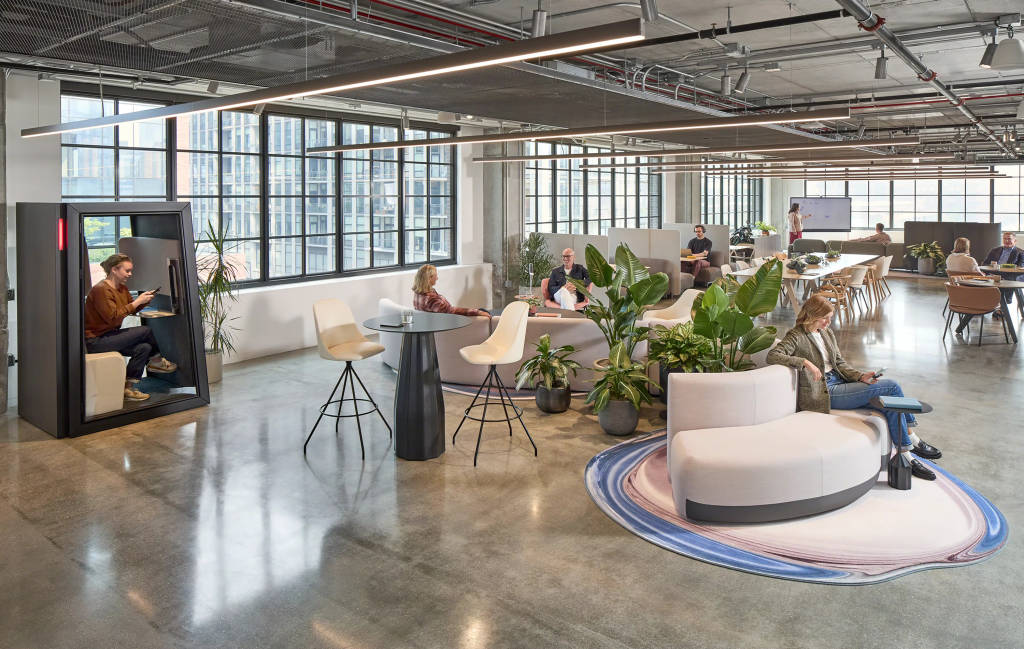
Space can shape human behavior. Places where people work influence their physical, mental and emotional wellbeing, which in turn, impacts their performance and productivity. Research has similarly found that urban design principles in cities and neighborhoods impact the wellbeing and sense of community of the people who live there. Physical environments can create what NYU researcher Erik Klinenburg calls “social infrastructure,” places that encourage people to gather, build relationships and offer mutual support. “Without it, people are more likely to stay isolated,” he notes. People in strong urban communities experience higher levels of trust, shared accountability and greater resilience in the face of change or crisis. When applied to the workplace, Steelcase research found that when people feel a sense of community at work, they have higher levels of wellbeing, engagement and productivity. Conversely, isolation or a lack of community can negatively impact people and their overall health, including brain health.
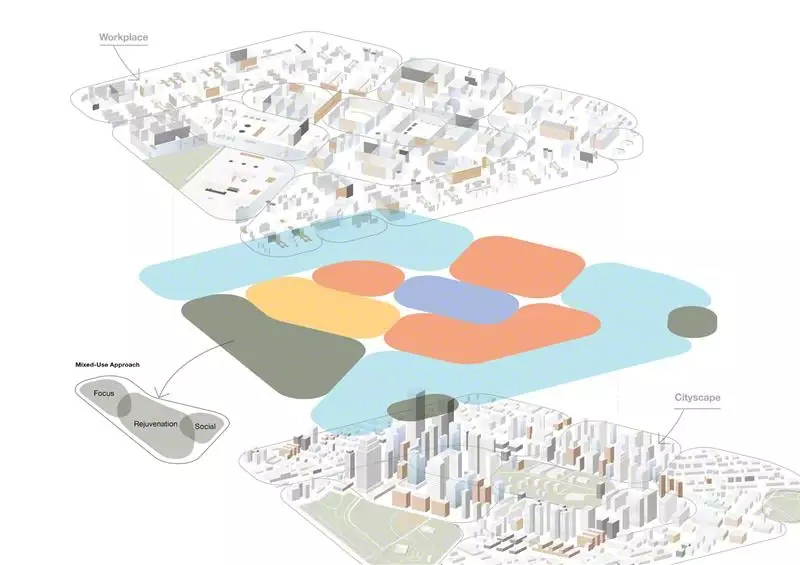
This research led to Community-Based Design, the Steelcase approach for creating workplaces that actively supports wellbeing — helping people think more clearly, feel more connected and perform at their best. This strategic approach to workplace design draws from successful urban planning principles to create vibrant, adaptable environments where people can thrive—one that supports diverse work modes, fosters human connection, and adapts to change. Just as great cities offer a mix of public libraries, parks, quiet homes, bustling cafés and collaborative hubs, the office can provide people with different “districts” to choose from: city centers, team neighborhoods, business districts, urban parks and university districts. Each district is designed to support a specific cognitive mode—focus, collaboration, socialization, learning and rejuvenation—allowing individuals to move fluidly between different types of work and mental states throughout the day.
.
.
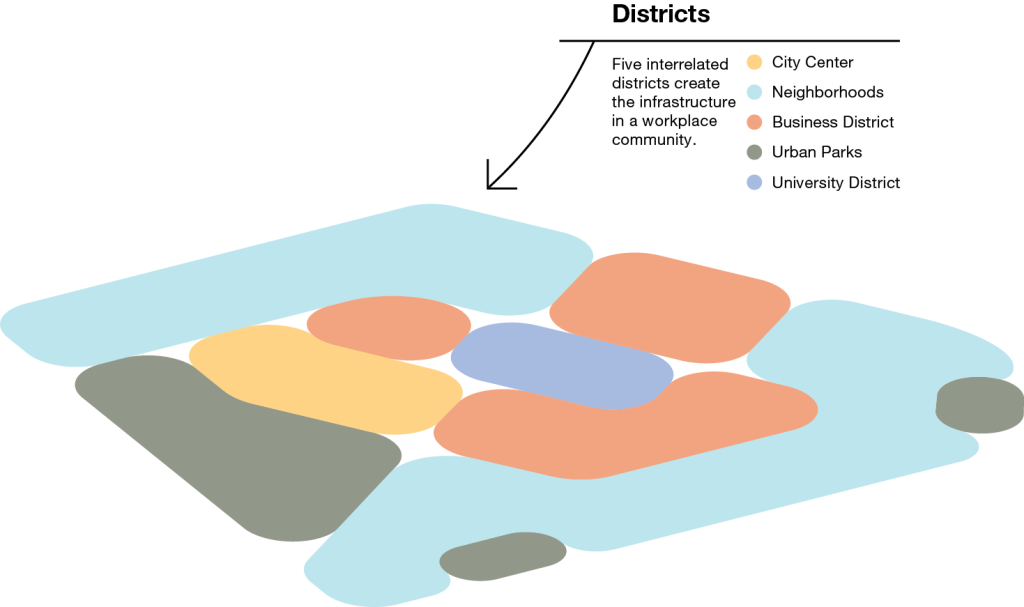
At its core, Community-Based Design is about designing for people—recognizing that individuals need different types of spaces based on a variety of factors such as the type of work they’re doing, their personality types and brain differences. Diverse spaces are vital to protecting brain health. Attention is limited, and environments overloaded with distractions can quickly drain it. People need places to concentrate deeply, alongside spaces to pause, rest and recover from mental fatigue. Far from being perks, these environments are essential to sustaining focus, performance and creativity.
The research is clear: Brain health is a central driver of performance for individuals and teams, which ultimately fuels economic growth and human flourishing. Many factors contribute to it, and the physical workplace is a strategic lever organizations can push to help their people be healthier. Employers who design workplaces that protect cognitive capacity and foster connection are not just improving wellbeing—they are investing in the most valuable resource of all: the human mind.