
Rethinking the Key Spaces People Need to Work Better: Before + After
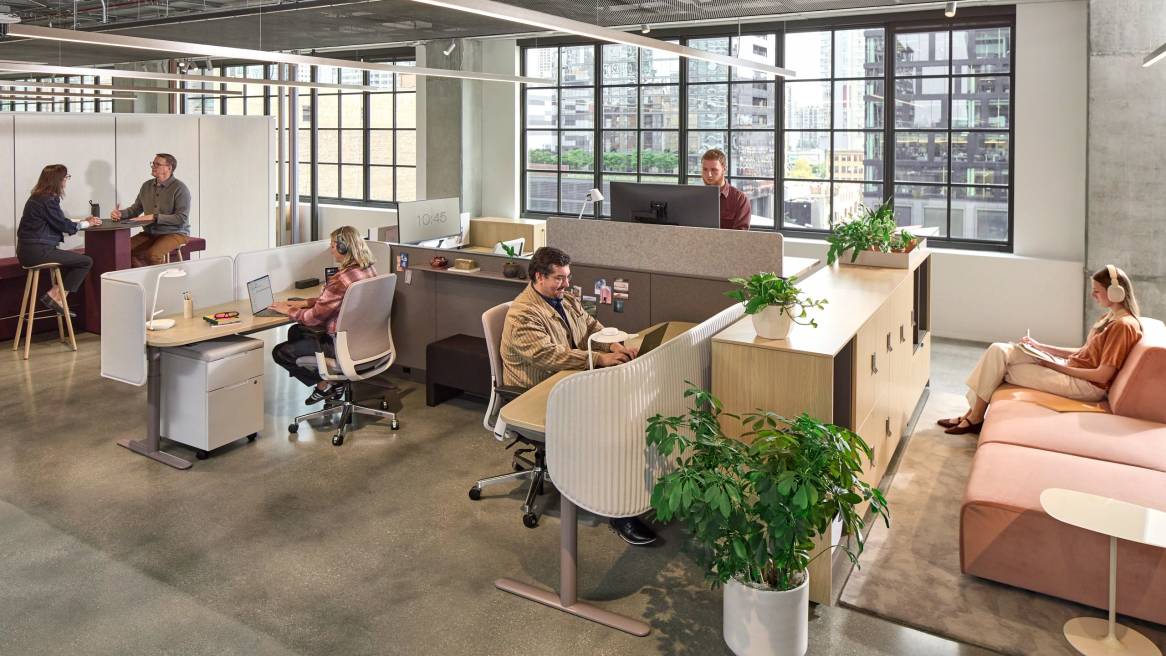
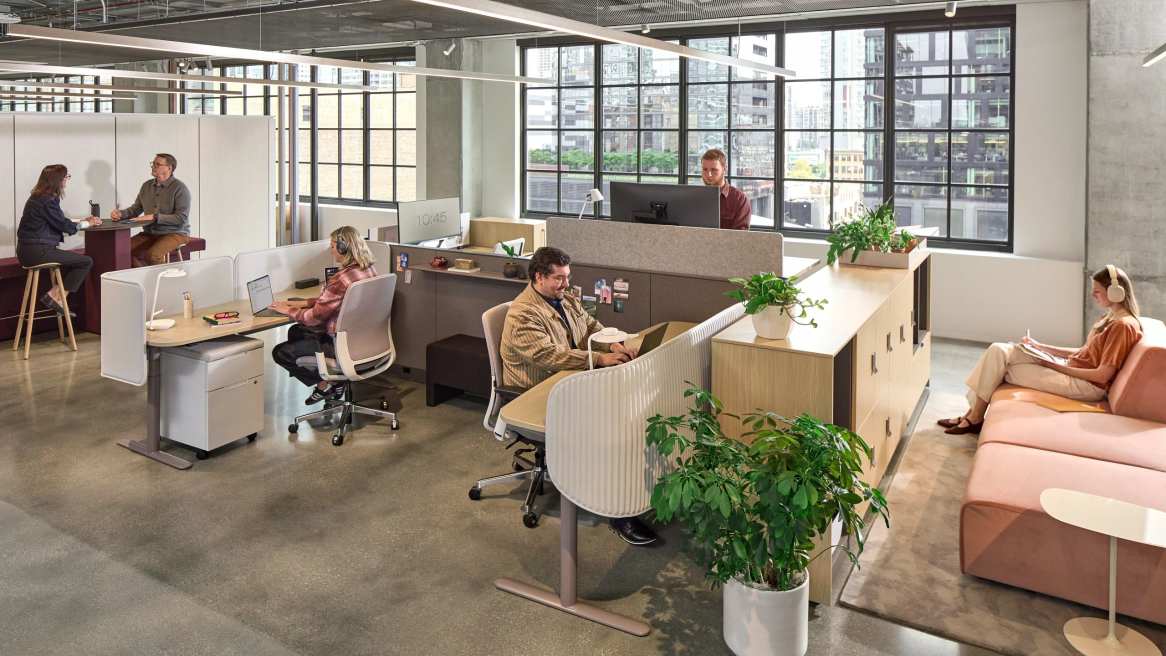
Workplaces are on the brink of a long-overdue transformation. Leaders know their current spaces aren’t cutting it; they’re failing to support how people need to work today. And now, as work patterns stabilize, they’re ready to make a change. As companies push for even more in-person work, the office is under pressure to evolve fast. A recent Steelcase survey of 500 U.S. decision-makers shows the shift is already underway: 96% of leaders plan to overhaul their workspaces within the next two years.
“Many workplaces still reflect pre‑pandemic workplace strategies,” says Meg Bennett, Steelcase global design principal. “Today, we have a rare opportunity to deconstruct inherited assumptions and reframe a more humanistic approach — not simply by updating environments, but by elevating the human experience, acknowledging the value of physical presence and connection, and responding to emerging patterns of work and behavior. When we integrate holistic wellbeing, understand the diversity of individuals, and thoughtfully balance human creativity with the accelerating influence of AI, we can shape spaces that truly help people thrive. Across industries, we’re seeing leaders begin this shift, recognizing the rapid pace of change and making purposeful design decisions that meaningfully impact innovation and the people who drive it.”
This is an opportunity for leaders to make targeted improvements that genuinely help their teams be more effective. To better understand where spaces struggle, Steelcase designers analyzed underperforming space types and proposed new design approaches informed by Community-Based Design — an approach inspired by urban planning principles that foster vibrant, resilient cities. It leads to flexible workplaces that support a range of activities, including deep focus, collaboration, social interactions, learning and rejuvenation.
Community-Based Design transforms single-purpose spaces into flexible, multi-use areas that improve space utilization and enable people to work in different ways, creating a more vibrant and healthy work experience. This method creates workplaces that feel more like dynamic communities — adaptable environments where people can maintain their attention and focus, think creatively and generate innovative solutions. A range of spaces creates a social infrastructure that supports diverse types of work and work styles and creates a sense of community. Technology is integrated throughout each district in ways that enable people to do their best work and help organizations easily adapt to changes when needed.
The Underused Conference Room
Transform a single, large conference room into multiple spaces that support multiple work modes and preferences.
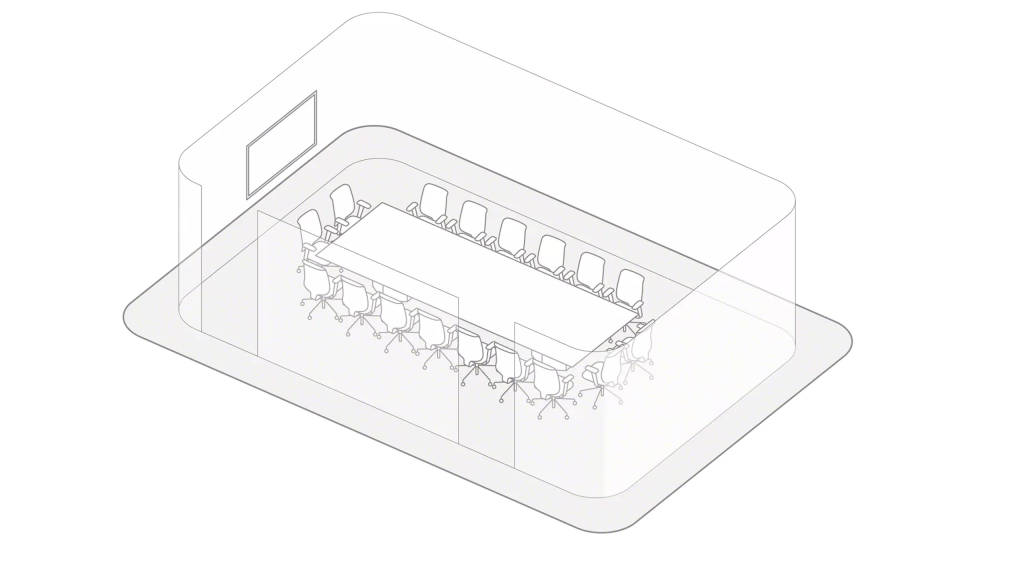
What’s not working: Large conference rooms account for nearly 60% of all meeting space, but 80% of meetings involve only one-to-three people. These more traditional rooms occupy a lot of real estate yet often sit empty.
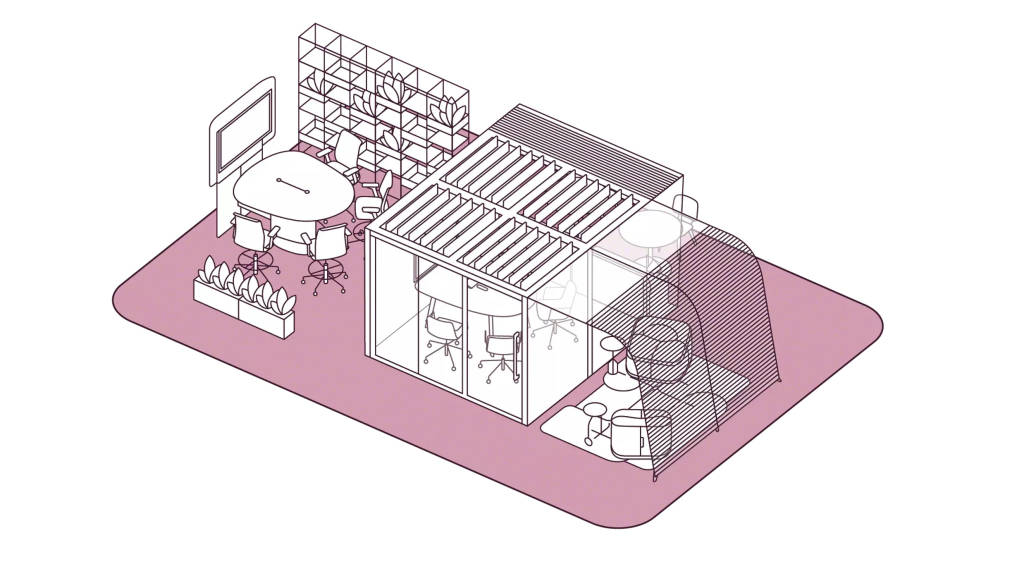
What to do: Shift from a single enclosed space to multiple workspaces that support a range of participants and activities, giving people more choice and control over where and how they work.
How it helps create community
Large, formal boardrooms can feel intimidating, often discouraging people from speaking up or fully engaging. In contrast, smaller, more welcoming spaces create a sense of comfort and equality that encourages participation. These spaces make it easier for people to interact naturally, share ideas and collaborate openly, while also supporting a wider range of work activities and team dynamics.
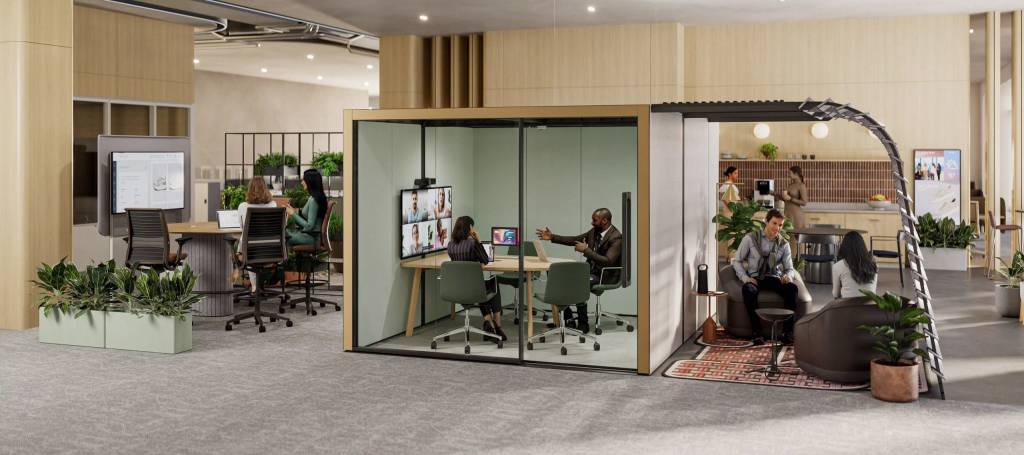
- Flexible architectural products allow for easy reconfiguration and a mix of open and enclosed meeting and social spaces.
- Shelving creates territorial privacy in open collaboration spaces.
- A variety of collaboration spaces support connection, creativity and knowledge sharing. These smaller spaces can support a range of activities: hybrid meetings, quick huddles, informal collaboration and rejuvenation.
- An open area encourages informal gatherings, idea exchange and content sharing.
- A private, acoustically controlled room eliminates distractions and supports both in-person and hybrid meetings.
- A lounge area beneath an awning provides a relaxed, semi-private setting ideal for one-on-one interactions, quiet individual use or to prepare/debrief for a meeting.
The Typical Touchdown Space
Transform basic focus carrels into a more inviting, flexible touchdown destination for both focus and connection.
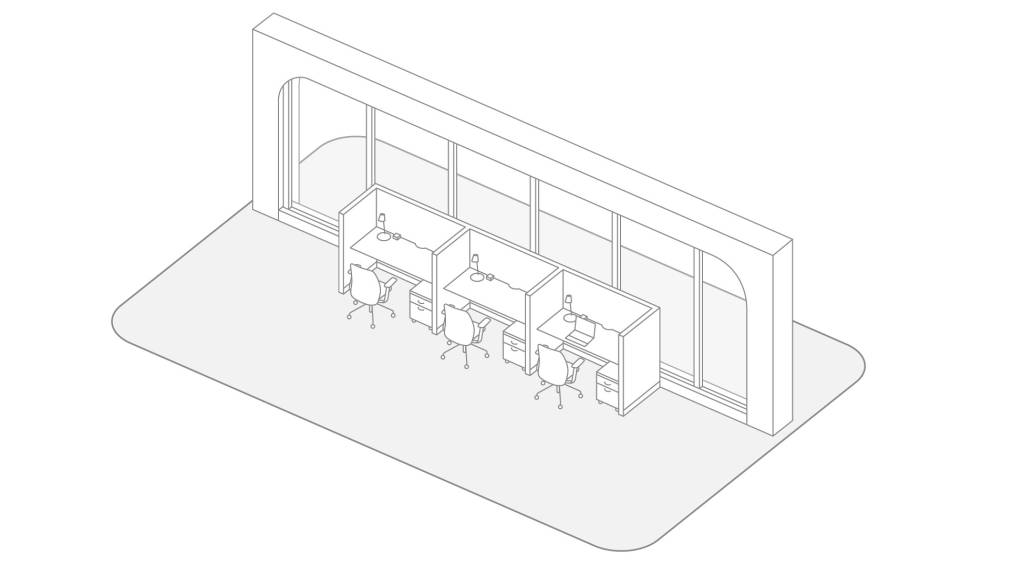
What’s not working: Typical hoteling spaces often leave people feeling overexposed, cramped, isolated and uninspired, and frequently go unused.
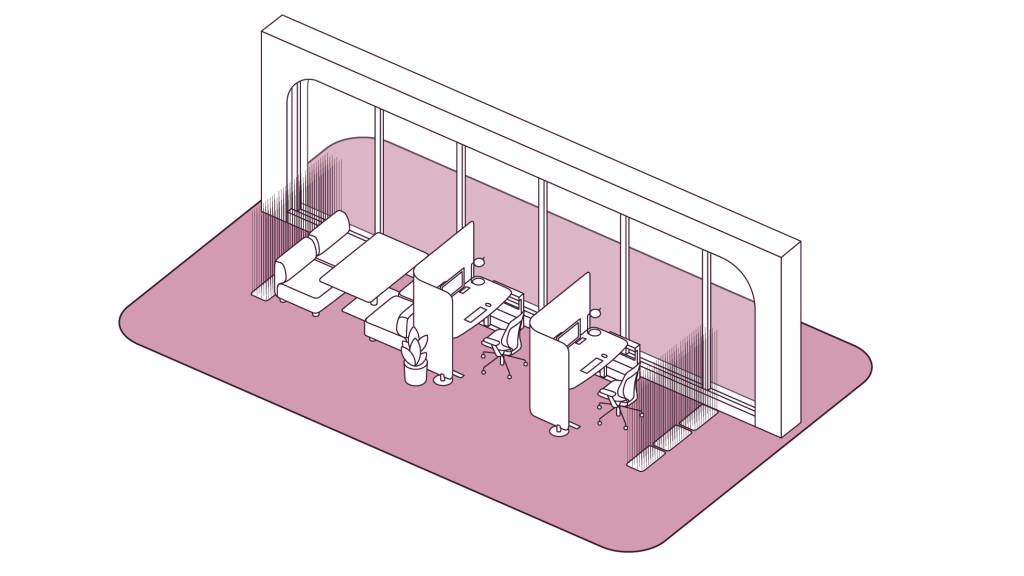
What to do: Transform the space into a more inviting and comfortable work environment, where people want to work.
How it helps create community
Traditional hoteling spaces are often dull, uninviting and isolating. This flexible touchdown destination shifts from cramped and impersonal to a welcoming environment where people genuinely want to work. The adjacent lounge space adds a social aspect, keeping people connected, while still providing people with the privacy they need for focused work.
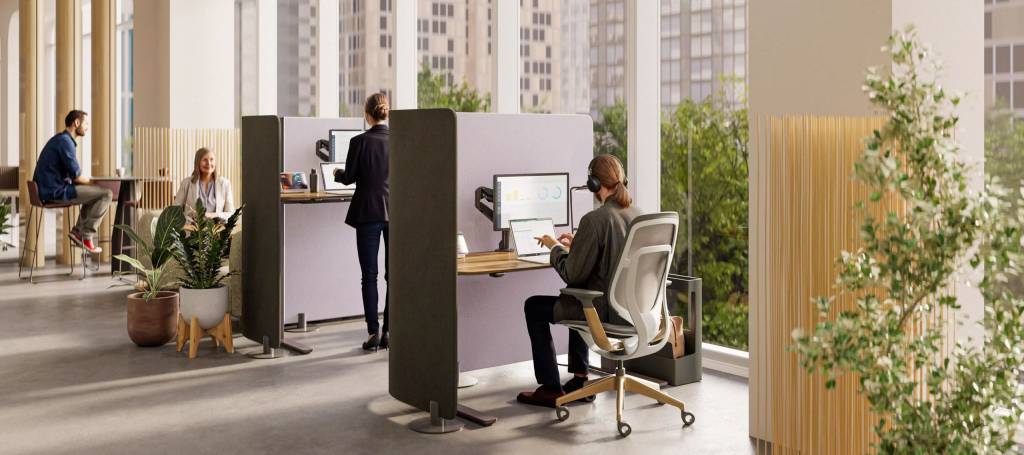
- A more inspiring and comfortable environment with adjustable furniture, integrated technology and screens help people stay focused and productive.
- Shielding provides visual privacy from aisleways and protects people’s backs.
- A visually-connected, adjacent lounge space allows small group conversations to happen, helping people stay connected.
The Overexposed Bench
A pinwheel configuration creates a more private, comfortable and adaptable workspace that limits distractions and helps people focus.
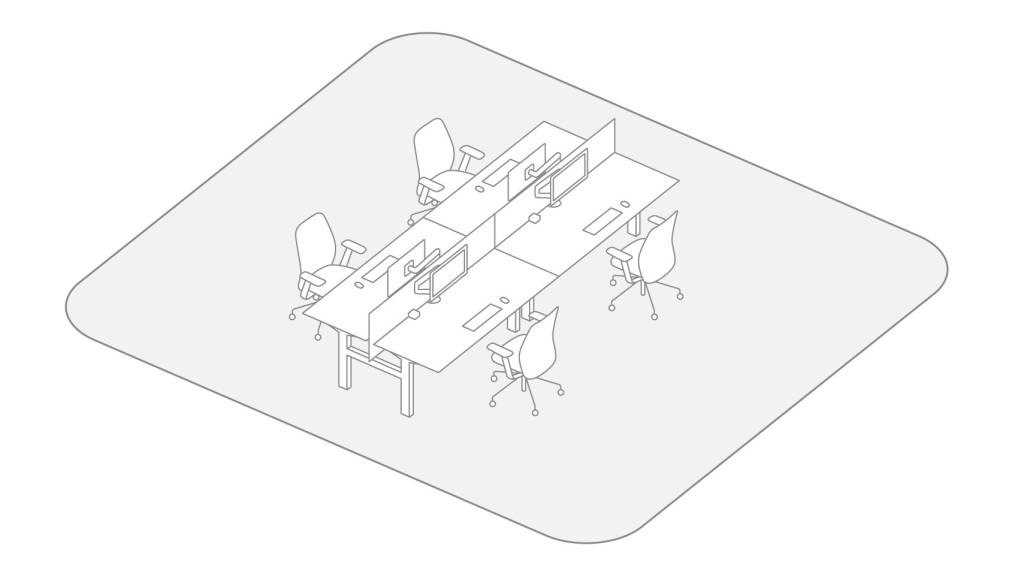
What’s not working: Traditional benching applications lack privacy and personal space, with no buffers or borders between workstations.
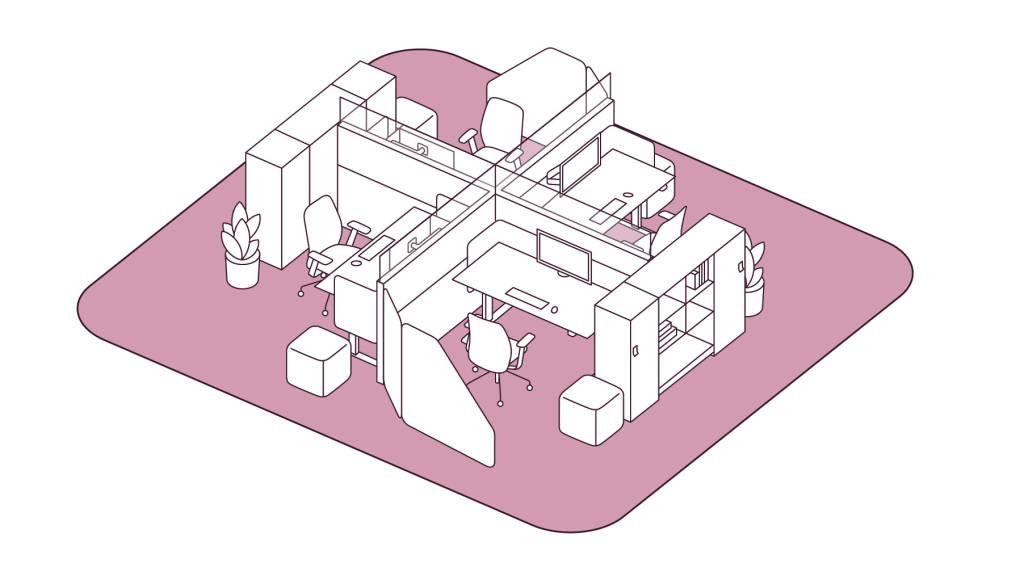
What to do: A pinwheel configuration eliminates face-to-face seating and creates a more private, comfortable and adaptable workspace.
How it helps create community
This workstation pinwheel configuration supports individual privacy in an open office setting, while keeping people connected to their teammates. Employees benefit from increased privacy, personal storage and flexibility, supporting both individual and team work without sacrificing comfort. Privacy is essential in creating community at work because it gives people the comfort and security they need to recharge, focus and confidently re-engage with others.
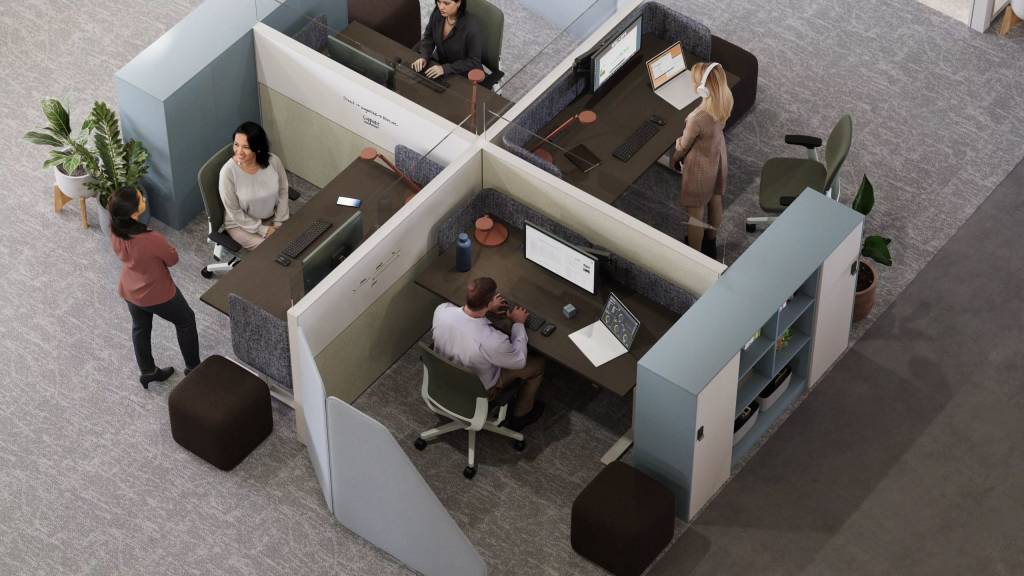
- Pinwheel configuration with privacy screens, flexible storage and no face-to-face seating creates a more private, comfortable and adaptable workspace.
- Glass-topped panels define personal space while maintaining openness and access to natural light.
- Height-adjustable desks and lockers provide both personal storage and visual privacy.
The Low-Performance Lounge
Beautiful spaces often sit empty because they lack what people need to get work done, and people feel uncomfortable in spaces that are too open. Create desirable high-performing spaces by designing for privacy, posture, proximity and presence.
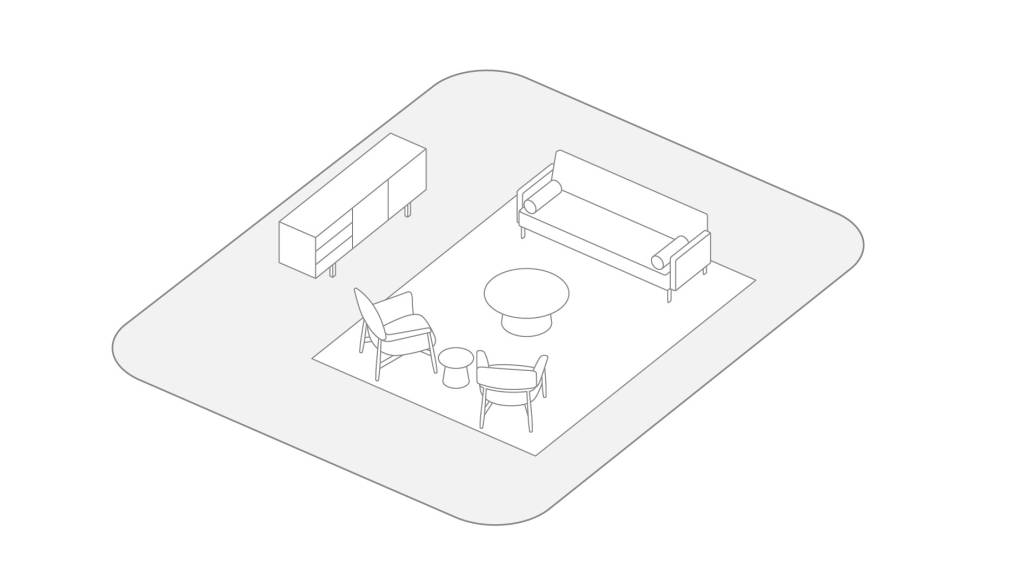
What’s not working: Lounge spaces become underutilized when they lack key performance elements, like technology integration and access to power. Humans unconsciously avoid spaces situated in open areas because they feel exposed and vulnerable.
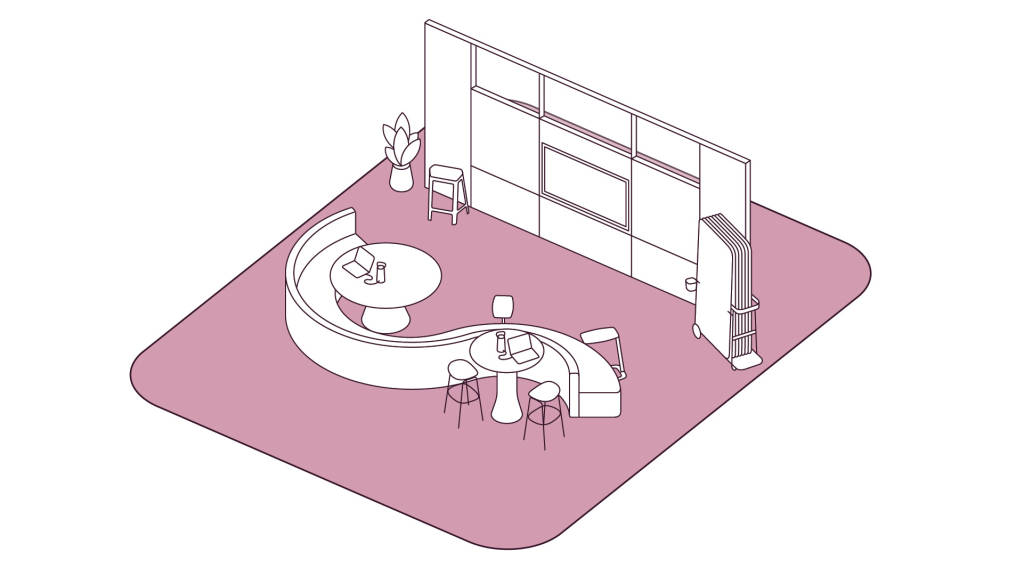
What to do: Add a boundary to create a sense of greater visual privacy and provide a display surface to make it harder working. The organic-shaped lounge provides varied seating options and postures for social, collaboration and focused work.
How it helps create community
This lounge setting makes it easy for people to come together for both scheduled and impromptu meetings and encourage spontaneous conversations, relationship-building and idea sharing. This helps teammates feel more connected to one another and the organization. It enables people to solve problems together — and in doing so, build and strengthen trust.
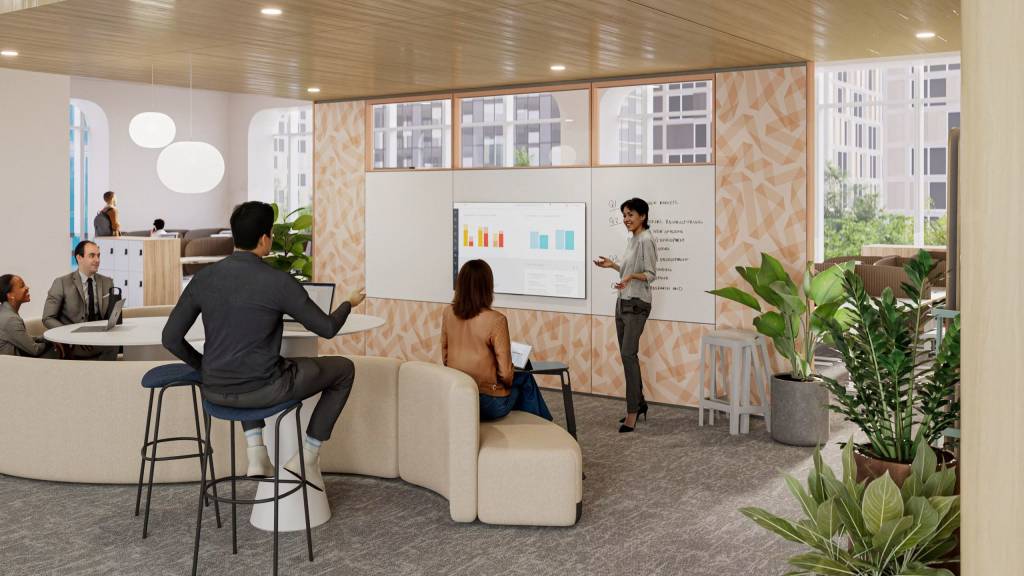
- Integrated technology and markerboards let people share content during brainstorming sessions.
- Modular wall supports technology and provides visual privacy to minimize distractions.
- Stool-height, lounge and perch seating offer relaxed posture options which promote movement, helping to spark greater creativity and new ways of thinking.
- Steelcase Flex Mobile Power ensures people are no longer tethered to one place and can charge multiple devices, helping people gather longer.
The Blasé Café
Many café spaces offer basic hospitality and are used primarily for brief interactions or dining. It’s functional but not inspiring.
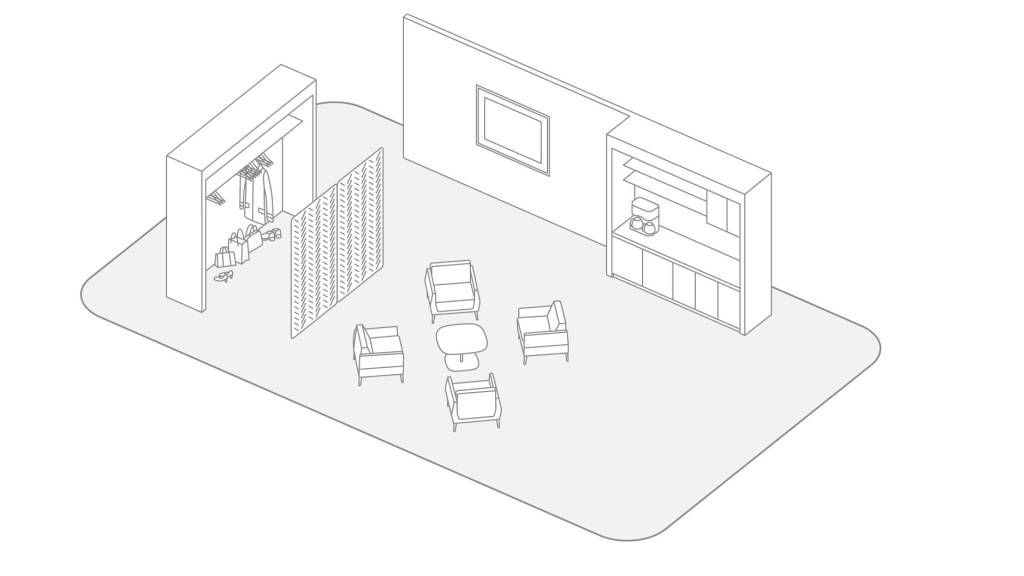
What’s not working: Storage space takes up a larger footprint that could be used to promote more connections. Furnishings support conversation, but don’t encourage lingering or collaborating.
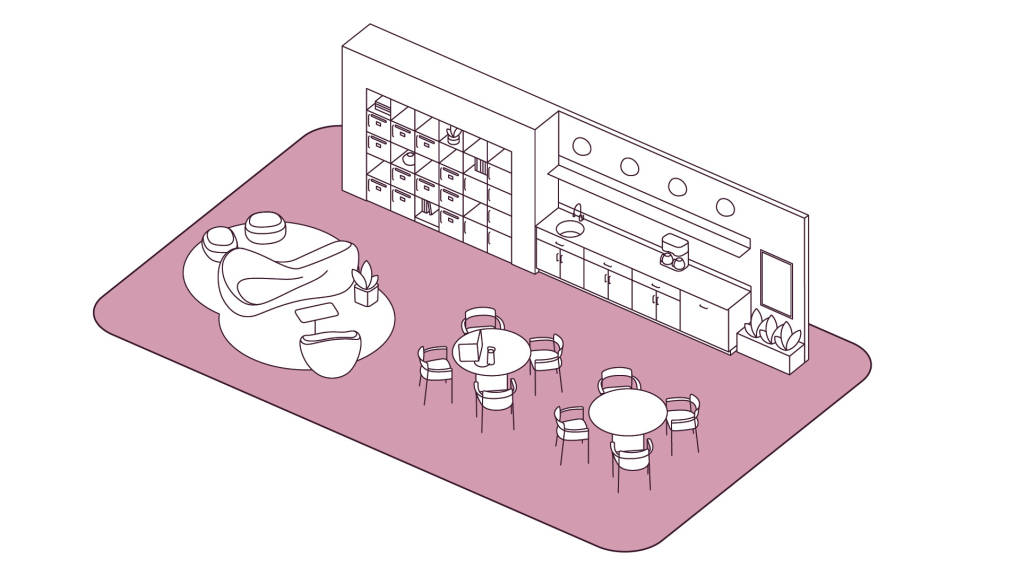
What to do: The new café area combines a welcoming touchpoint with lockable storage that foster chance encounters that can foster relationship building. Diverse settings and seating options allow people to work, eat or socialize throughout the day.
How it helps create community
This vibrant hub blends the comfort and energy of a café with the functionality of a workplace. As more organizations move to shared workstations, this space supports people’s new routines. At the start of their day, it provides them with a place to store personal items, grab a coffee and socialize. It also draws people together throughout the day—for casual conversations, dining, focused work or impromptu collaboration. The space serves as a welcoming anchor where people can connect, collaborate and experience a genuine sense of community—no matter the time of day.
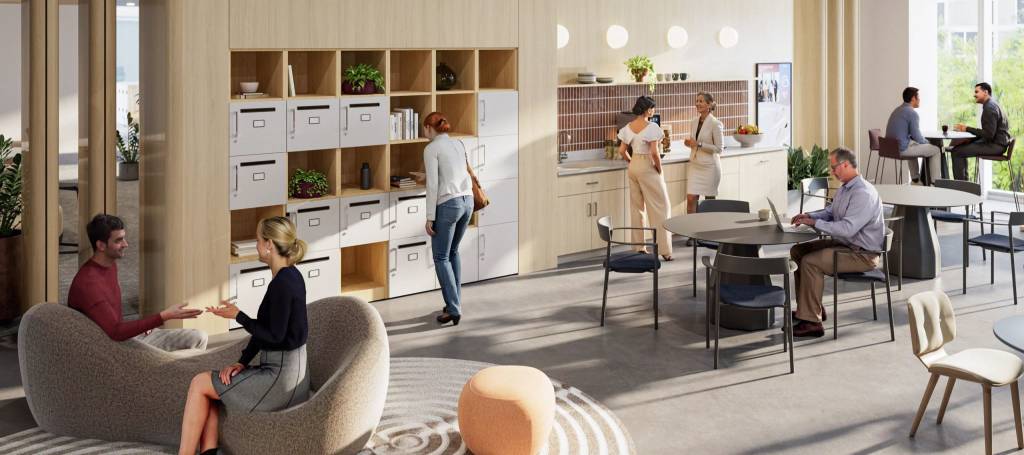
- The vibrant space creates a welcoming experience for people upon arrival and throughout the day.
- A wall of lockers creates a central spot where people begin their day, store belongings and build connections; open cubbies display company artifacts and branding, strengthening the sense of belonging.
- Various seating options support socialization, rejuvenation, informal meetings and dining.
Getting Started
Chances are, most organizations have spaces that just don’t work as well as they should. These underperforming areas are easy to spot — people vote with their feet. Understanding why they’re underutilized is often more challenging. These applications are examples of ways to help address these common problems. But there are many ways to design these types of spaces, depending on an organization’s specific needs and culture. (For some other examples, see “Reinventing Five Essential Spaces: Before + After.”
Every organization is unique, so it’s essential to examine your own spaces closely. Start by evaluating how they’re used to uncover what’s missing. This means digging into the unique aspects of your workplace and listening to a variety of voices across the organization to ensure the space truly supports everyone’s needs.
Steelcase offers several tools and resources to help:
Workplace Readiness Assessment – Measure the in-office experience to shape the right workplace strategy.
Guided Discovery Workshop – Identify needs and align on priorities together.
Concept Reviews – Visualize planning concepts to bring workplace goals to life.
Pilots – Test new ideas on a smaller scale before making big investments.
Ready to learn more?
Connect with your local Steelcase representative to get started.