
Designing Pediatric Spaces That Comfort, Engage and Empower
Designing Pediatric Spaces That Comfort, Engage and Empower
When six-year-old Maya first stepped into the pediatric clinic, her small hand gripped her mother’s tightly, eyes wide with uncertainty. Like so many children, Maya wasn’t just facing a medical appointment—she was navigating a world that felt unfamiliar and intimidating. For Maya, like so many children and teens, a trip to the doctor begins in fear and discomfort. The unfamiliar sights, sounds and routines of healthcare environments can trigger anxiety, not just for young patients, but also for the adults who accompany them. Yet many pediatric spaces today are still designed more for clinical efficiency than emotional wellbeing.
Steelcase Health set out to understand how design can better support pediatric patients and their families. Through a recent study, the team explored a central question: How can healthcare environments be more engaging and comforting for children, adolescents and their caregivers?
What Pediatric Patients Really Need
The research uncovered three core needs that should guide the design of pediatric spaces:
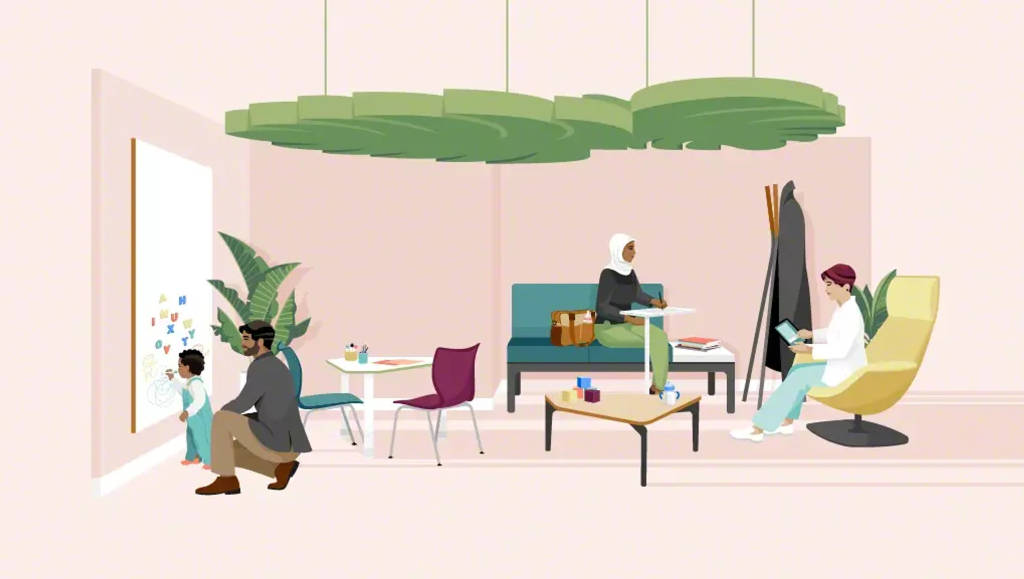
Children need to have their curiosity engaged in unfamiliar settings.
Unfamiliar healthcare settings can make children feel anxious and powerless. But when environments invite exploration—through interactive design, movable furniture and playful elements, children gain a sense of control. Curiosity becomes a calming force, turning passive waiting into active engagement and improving cooperation during care.
Children need movement and sensory experiences to reduce stress.
Staying still for any length of time is unnatural for children. Active play and sensory experiences help regulate emotions and lower stress hormones like cortisol. Spaces that support movement—whether through open layouts, tactile surfaces or playful zones—can transform the healthcare experience into something more empowering and less intimidating.
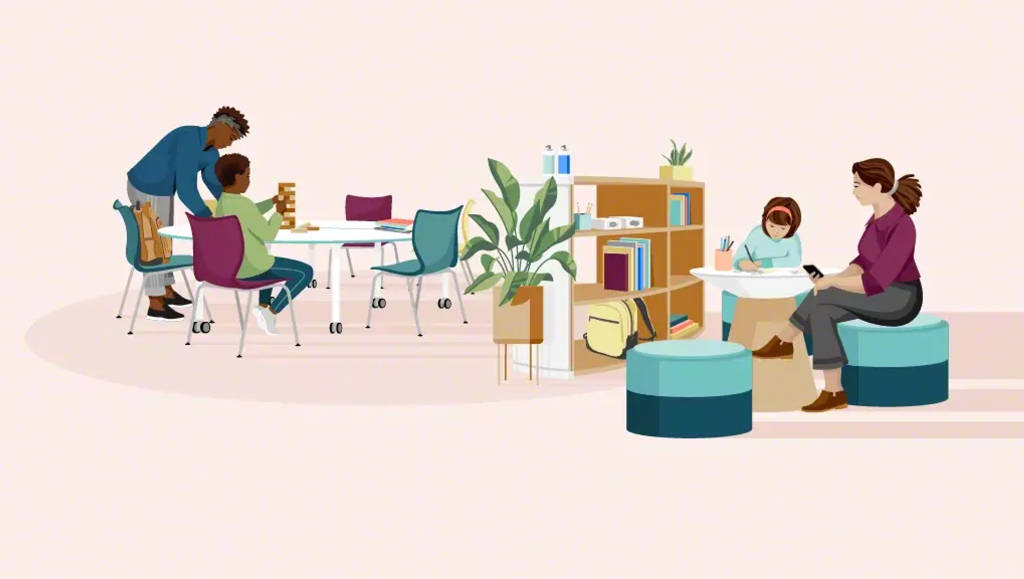
Children need environments tailored to their abilities and ages.
Children quickly sense when a space doesn’t fit them. What comforts a toddler may feel patronizing to a teen. Even young children are critical of environments that seem too “babyish,” while older kids prefer adult-sized furniture, lounge-friendly seating and access to power. A one-size-fits-all approach falls short—variety and intentional design are essential to meet the needs of all age groups.

“The research made it clear—new thinking is needed,” says Jordan Smith, Advanced Explorations leader at Steelcase Health. “Spaces that spark curiosity, support movement and reflect a range of ages don’t just comfort patients—they create real value for healthcare organizations.”
Translating Insights into Design
Building on these insights, Steelcase Health developed a set of guiding principles to help designers create pediatric spaces that are not only functional but also emotionally supportive.
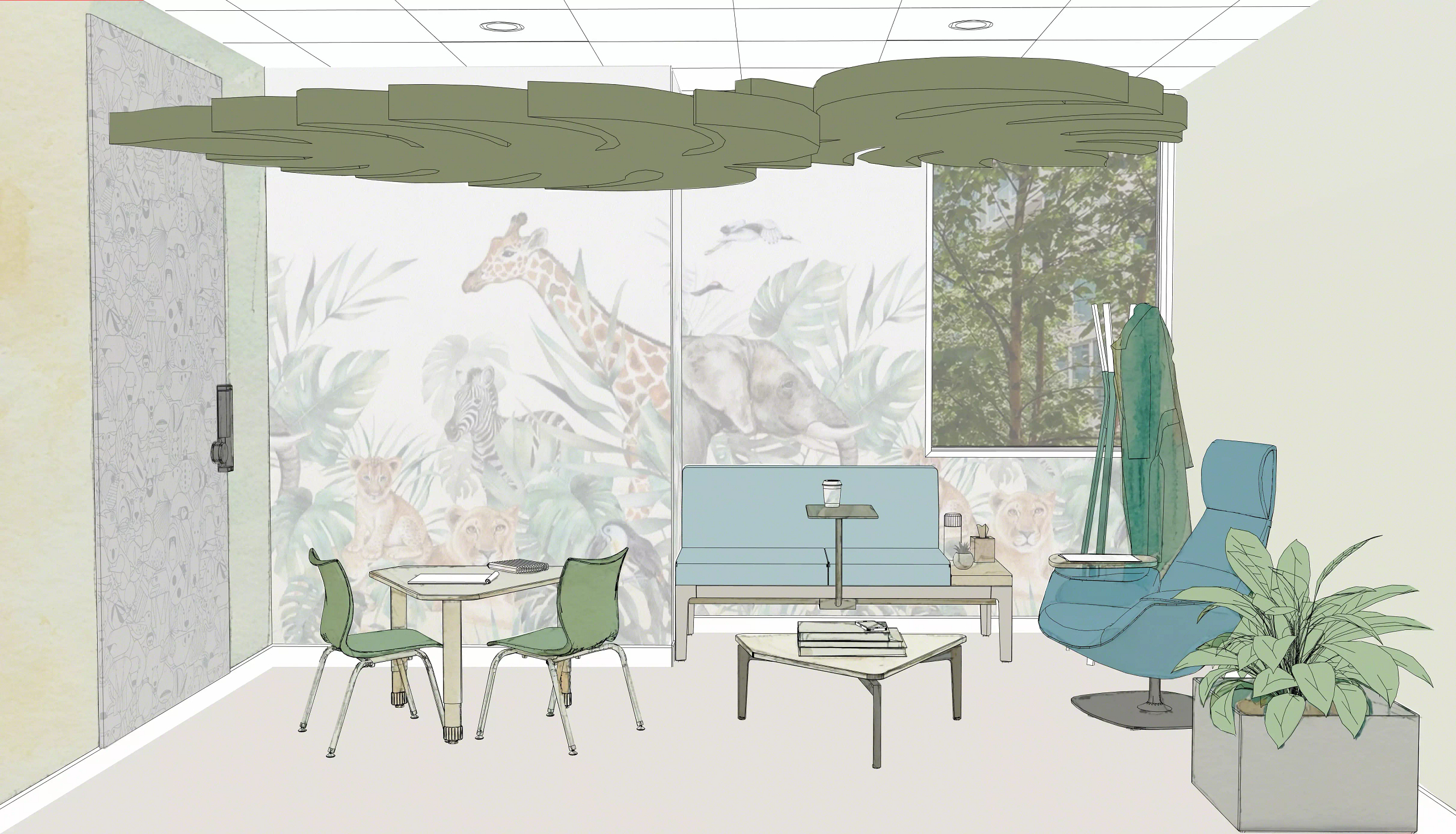
Play and positive distraction are powerful tools. Movable furniture and hands-free media invite children to shape their environment, giving them agency in a setting where they often feel powerless. These elements also help pass time in a way that feels engaging rather than stressful.
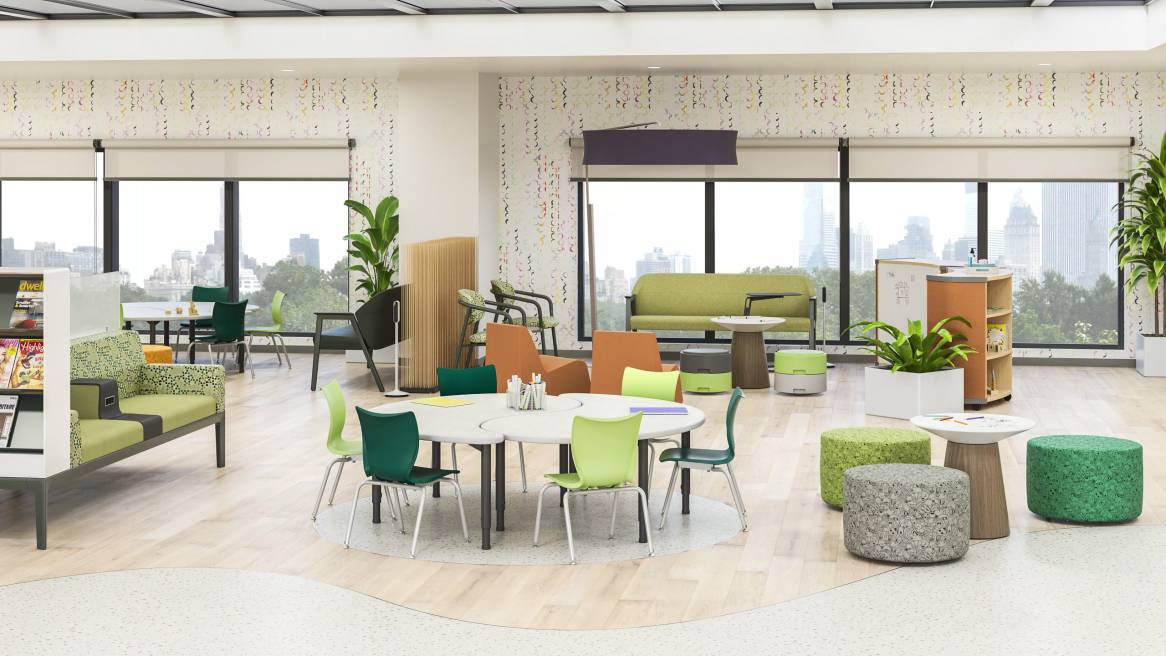
Designing for a range of ages ensures that everyone—from toddlers to teens to parents—feels seen and supported. Quiet zones for reading or device use, active zones for play, and comfortable seating for adults create a layered experience that meets diverse needs.
Nature and biophilic design offer subtle but meaningful benefits. Garden views, natural light and organic textures can calm nerves and spark curiosity. Even small touches—like flooring that mimics flowing water or nature-inspired artwork—can improve mood and aid wayfinding.
Creating “neighborhoods” within larger spaces helps balance efficiency with emotional comfort. Varied zones within a single footprint can offer privacy, create community, and give everyone choices—making even large environments feel personal and less overwhelming.
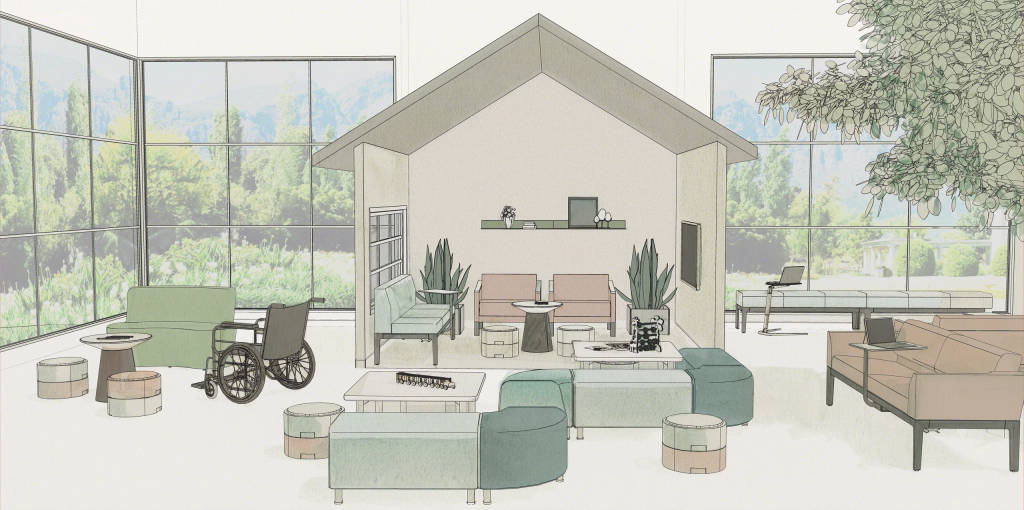
Safety and flexibility are foundational. Clear sightlines, intuitive wayfinding and visible sanitation stations help families feel secure. Adaptable furniture and modular layouts allow organizations to respond to changing needs while empowering families to personalize their space.
By designing with empathy and intention, pediatric healthcare spaces can become places of healing—not just physically but emotionally. When environments support curiosity, movement, and age-appropriate engagement, they transform into spaces that are both engaging and comforting.
Insights in Action
Explore our insights on how to design pediatric spaces that are not only functional but also emotionally supportive.
Download Research Summary: