
Better Brain Health, by Design
Steelcase hosts discussion at 2026 United Nations Global Brain Economy Summit in New York City.
By Tracy Brower, PhD, VP Workplace Insights, Steelcase
People are wired for connection.
Yet many of the trends shaping modern life are pushing us in the opposite direction. Half of people globally report experiencing loneliness, engagement has fallen to an 11-year low, and nearly a third of people say they feel overwhelmed every week. At the same time, organizations are navigating rapid technological change and increasing demands on attention and adaptability.
These realities are raising important questions about brain health at work and what individuals, organizations and communities can do to support employee cognitive performance and well-being while encouraging meaningful connection.
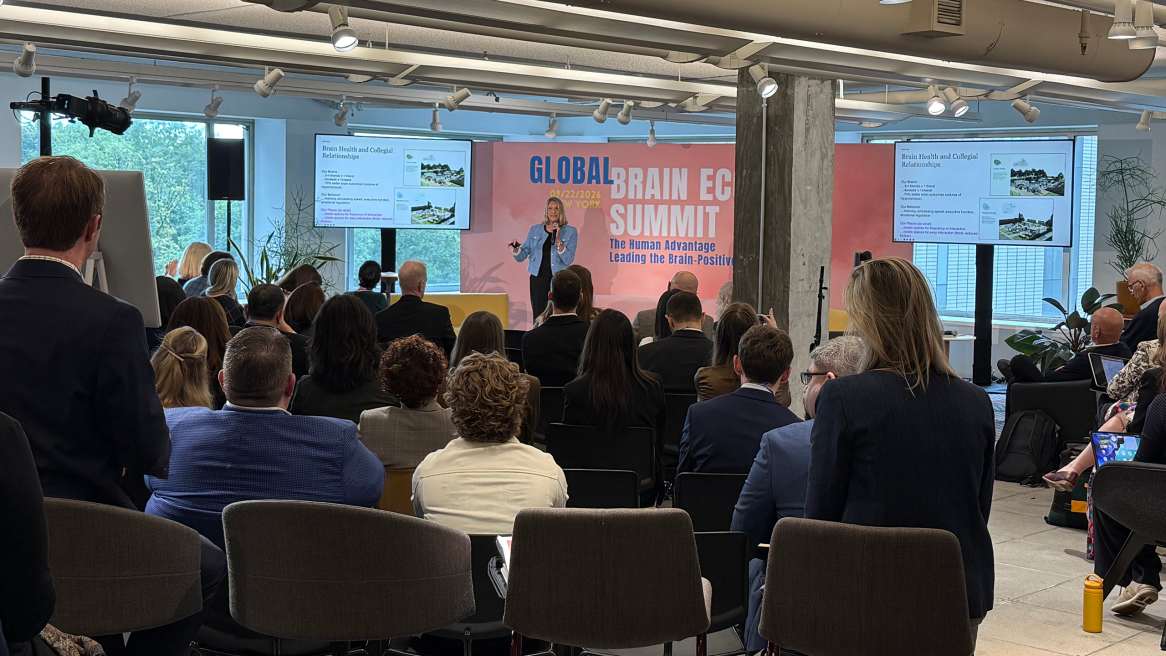
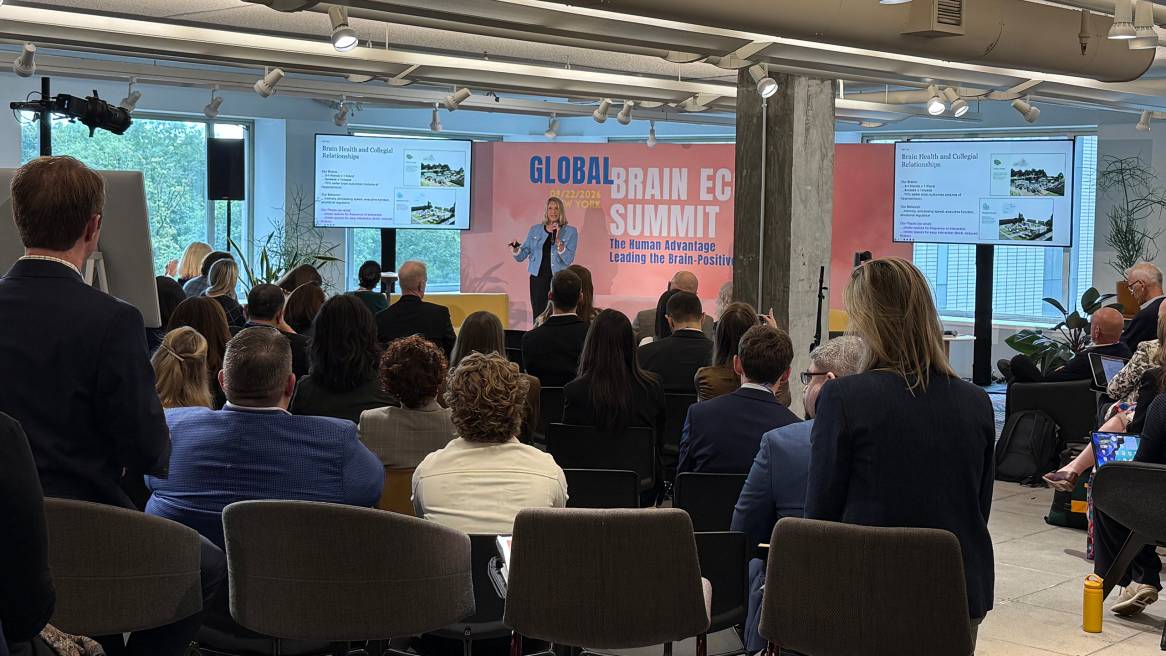
Those questions were at the center of this year’s Global Brain Economy Summit, held during UN General Assembly week in New York City, where leaders from business, healthcare, science and policy explored how brain health and human capability can drive prosperity in the age of AI. As a partner in the summit, Steelcase contributed to the dialogue by focusing on a perspective that is often overlooked: the role that connection, community and the built environment play in shaping how people think and perform.
For years, conversations about brain health have focused on medicine, along with treatment and prevention. But brain health is holistic and significantly shaped by the relationships we build, the communities we belong to and the places where we spend our time.
At Steelcase, we believe we’re moving from an era defined by where people work to one defined by how people think.
Research continues to demonstrate that workplace environments can impact our cognitive performance, brain health, and overall wellbeing above and beyond our comfort and productivity. The workplace can support executive function, helping people create memories, manage emotions and think more flexibly. Environments that encourage interaction, movement, sensory variety and social engagement can strengthen the conditions that help us learn and enhance our cognitive performance.
This was the perspective Steelcase brought to the summit: brain health does not happen in isolation. Creating community and connection matters.
Human beings crave connection with one another. They also want (and need) cognitive challenge, along with a sense of purpose. These types of strong relationships and associations equate to more effective decision-making, stronger accountability, greater wellbeing and overall better outcomes. Communities help people feel embedded in something larger than themselves. And workplaces that support both interaction and privacy can create the conditions where meaningful connections can flourish.
As organizations look toward the future, these human needs are becoming more important, not less.
Tracy Brower, VP of Workplace Insights at Steelcase
While technology continues to transform how work gets done, the qualities that make us uniquely human (our ability to connect, collaborate, learn and create together) remain essential.
One of the most valuable outcomes of the Brain Summit was the opportunity to bring together diverse perspectives around a shared goal. Brain health is a complex challenge, and no single discipline has all the answers. But by expanding the conversation to include the role of place, connection and community, we can create environments that help people thrive.
For Steelcase, the summit reinforced a belief that has guided our research for decades: when we design for how people think, connect and work together, we can unlock greater potential for everyone.
 Dr. Tracy Brower is vice president of Workplace Insights at Steelcase, author of Critical Connections, The Secrets to Happiness at Work, and Bring Work to Life, and a senior contributor to Forbes and Fast Company, where she writes about community, happiness and the future of work and the workplace.