
Transforming IT at Steelcase: An Agile Case Study
Foundation for Success
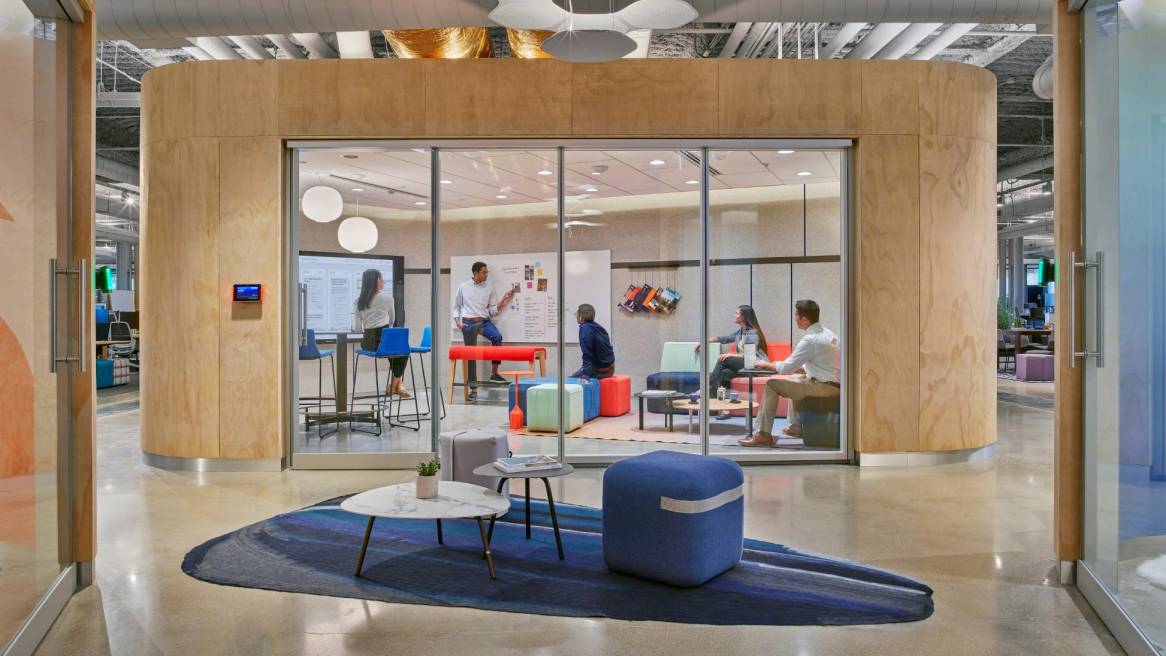
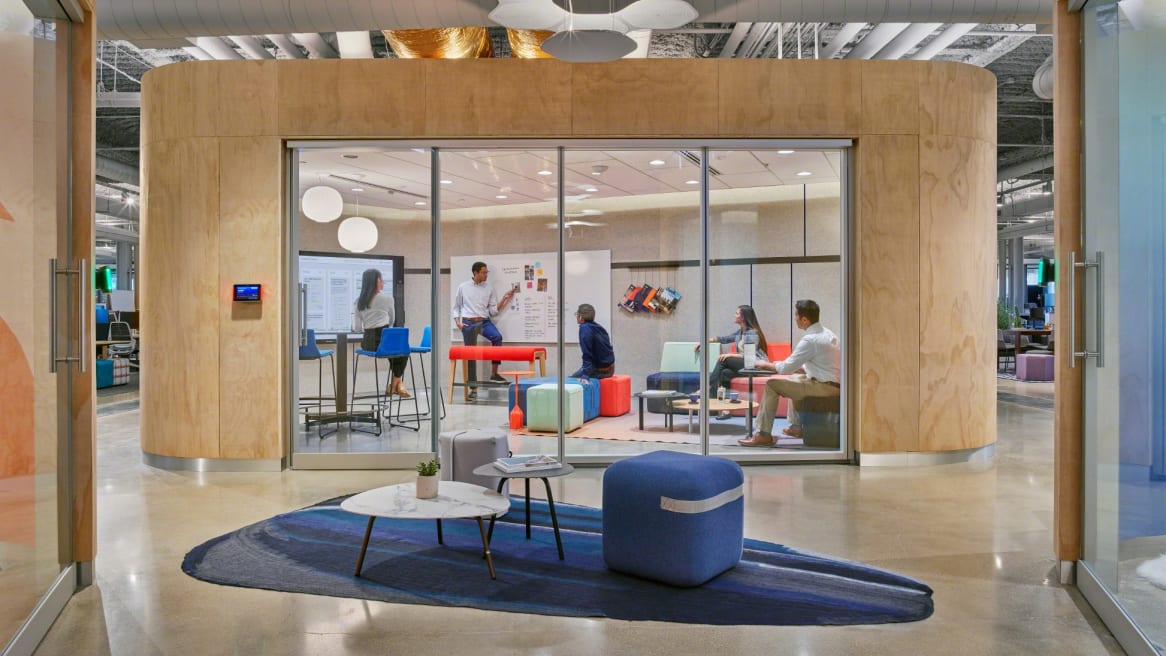
“A central question we had before embarking on this journey was ‘How can IT become a better business partner to the organization?’ We knew we had to develop our ‘true north’ principles that would lay our foundation for success.”
Tom Hunnewell, Director, Steelcase Information Technology.
Before designing a space or adopting agile, IT leaders identified five guiding principles central to achieving their desired transformation. These principles were the lens in which Steelcase adapted agile. They became the foundation for developing new processes and practicing new behaviors.
- Our customer needs always come first
- We value data as a strategic company asset
- We are adventurous explorers of innovation
- We are global systems thinkers
- We succeed as a team
IT identified three types of teams based on the ways in which IT teams support their customers. These provided ways of understanding the unique needs for each kind of team.
Agile Team
A core team dedicated to one project or product with strong customer engagement.
Multi-Project Team
The simultaneous delivery of multiple projects to multiple customers for both project and ongoing work.
Discipline Team
Technology specialists with regular deliverables to one primary customer or multiple customers for ongoing work.
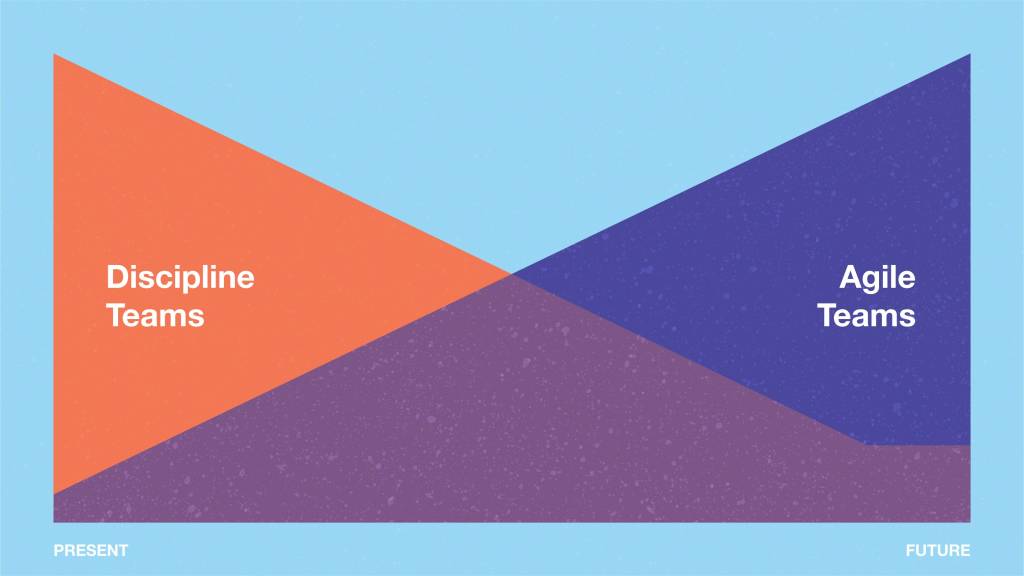
Over time, IT intends to transition more and more teams, so that the majority are working in agile ways. Although, not every team will practice agile to the full extent, the process isn’t the right fit across the board. All of the teams in IT are, however, beginning to adapt an ‘agile mindset;’ being more closely connected to their customers, less siloed and sharing knowledge in broad ways in the organization. In addition, many multi-project and discipline teams are starting to adopt agile ceremonies such as stand-up meetings and retrospectives.
NEXT CHAPTER – Building the Practice
PREVIOUS CHAPTER – What is Agile?