
Can Your Office Make You More Creative? Research Says Yes
6 things you may not have thought of that could create a more ‘curious’ office
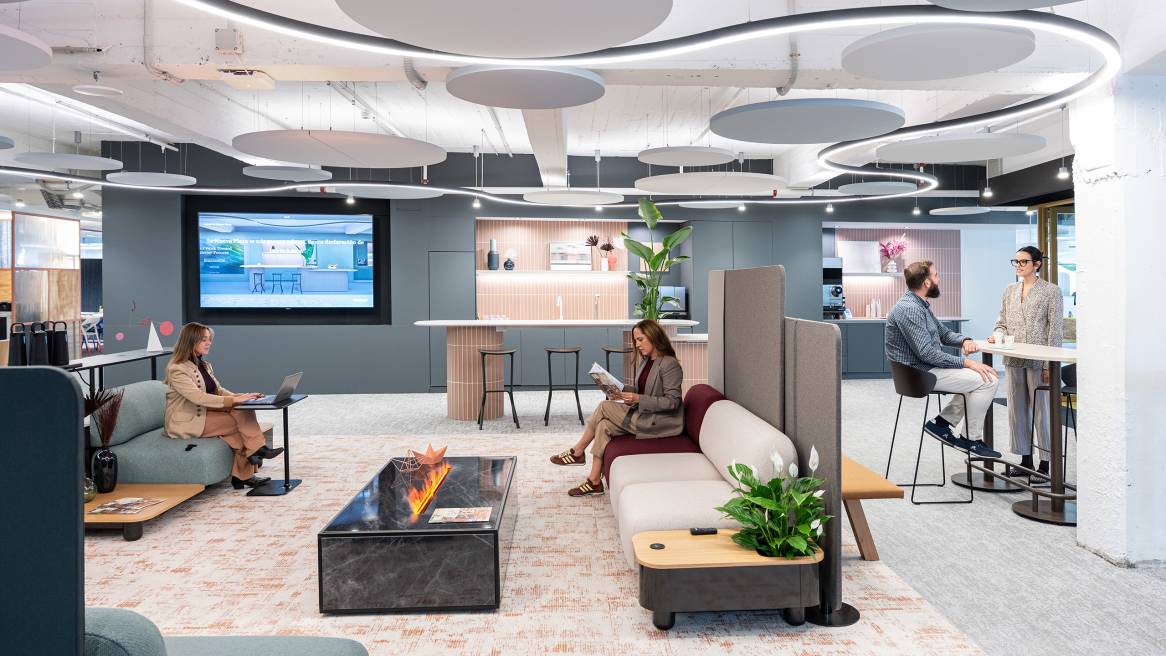
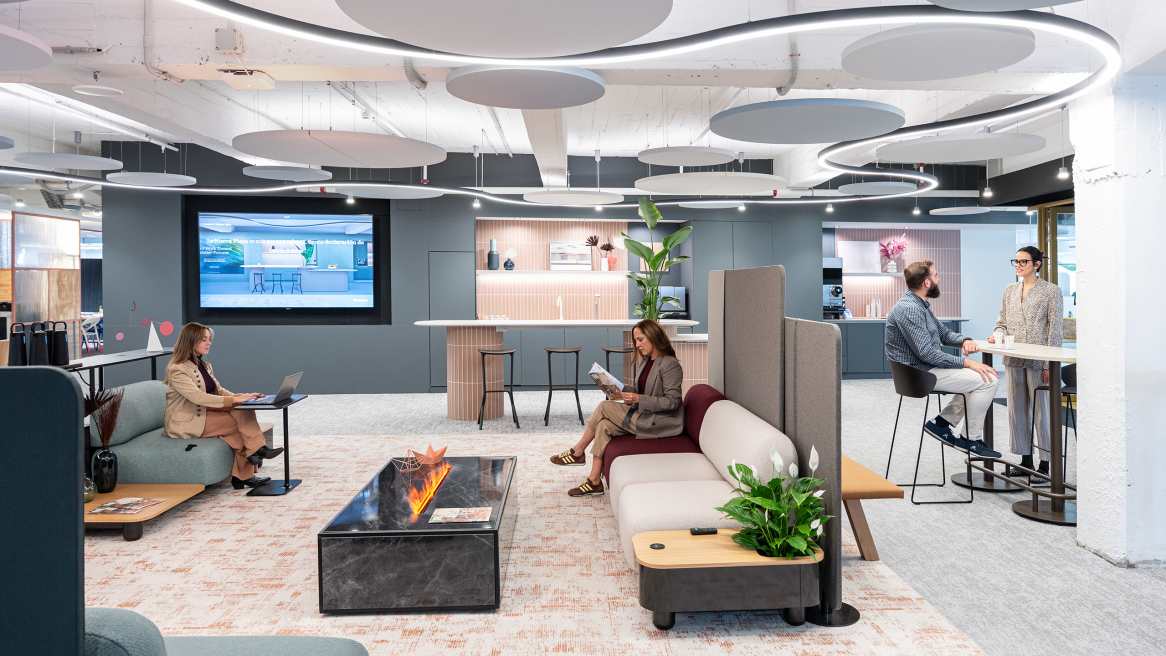
We talk a lot about mindset, culture, and process when it comes to creativity at work. But there’s a quieter lever that gets overlooked: the physical space itself. A growing body of research suggests that where we work – the ceiling height, the lighting, even the noise level – can meaningfully shape how creatively we think.
None of this is about turning your office into a ball pit-and-beanbag fantasyland. It’s about understanding a few specific, research-backed levers and using them intentionally.
Here’s what the science says, and how to put it to work.
1. Go tall for big ideas, low for focus
Marketing researcher Joan Meyers-Levy ran a series of studies on ceiling height and found something surprising: people in rooms with higher ceilings tend to think more abstractly and make more connections between distant ideas, while those in rooms with lower ceilings default to detail-oriented, narrow thinking.
The takeaway
If your space has a variety in ceiling heights, match the room to the task. Save the soaring atrium or open lounge for brainstorms and strategy sessions. Save the low-ceilinged nook for focused execution work.
2. Let the outside in
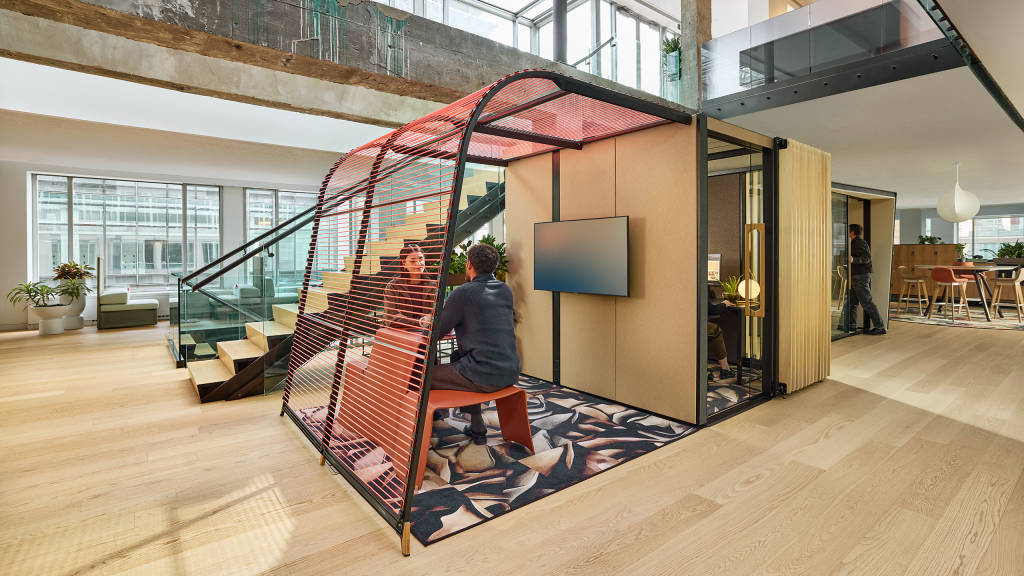
Attention Restoration Theory – a concept developed by researchers Rachel and Stephen Kaplan – holds that natural environments help our brains recover from the mental fatigue of constant focus. Even brief exposure to nature, or simply a view of it, can replenish the cognitive resources we draw on for creative thinking.
One striking study found that people on a four-day backpacking trip, disconnected from technology, scored about 50% higher on creative problem-solving tasks than a control group.
The takeaway
You don’t need a wilderness retreat (although, don’t rule it out). A desk near a window with greenery, a walking meeting outdoors, or even a short walk before a brainstorm can have a real effect. If your space has access to daylight and views, don’t let those become “nice to have” afterthoughts in workplace design – they’re functional tools.
3. The right kind of noise
Total silence isn’t actually the creativity-friendly environment many people assume it is. Research by Ravi Mehta and colleagues found that moderate ambient noise (somewhere around the level of a busy coffee shop) can boost performance on creative tasks compared to both silence and loud noise.
The theory is that a moderate level of distraction is just enough to push your brain into more abstract, less literal processing, without overwhelming it.
The takeaway
If you’re working on something that requires divergent thinking, like generating new ideas or making unusual connections, a coffee shop, a busy common area, or even ambient noise playing through headphones might serve you better than a silent office. Save the quiet rooms for tasks that need precision.
4. Mind the color palette
Color psychology research, including work by Mehta and Juliet Zhu, has found that blue environments tend to support more creative, exploratory thinking, while red environments sharpen focus on detail and accuracy.
The takeaway
This doesn’t mean repainting every wall blue. But for spaces designed around ideation such as brainstorming rooms and innovation labs, leaning into cooler tones might do more than you’d expect. And for spaces meant for proofreading, quality checks, or detail work, warmer tones might actually help.
5. A little mess might help
Here’s one that runs against most workplace norms: a 2013 study by Kathleen Vohs and colleagues found that people working in messier environments generated more creative, “outside the box” ideas, while those in tidy environments were more likely to stick with convention and rules.
The takeaway
This isn’t permission to never clean your desk. But it might explain why some of your most creative colleagues thrive in spaces that look like organized chaos — and why forcing everyone into a sterile, uniform environment might be quietly working against your innovation goals. Consider giving creative teams some latitude here.
6. Give people choices
One of the most consistent findings across workplace research is that the ability to move – to choose where and how you work – supports more flexible, divergent thinking. Environments that offer a mix of settings (quiet rooms, open areas, lounge seating, standing options) and let people self-select based on the task at hand tend to outperform one-size-fits-all layouts.
The takeaway
Variety isn’t just about aesthetics or employee comfort, although those matter too. It’s a creativity tool. When people can match their environment to their cognitive task – high ceilings for brainstorming, quiet corners for deep work, a coffee-shop-like buzz for ideation – they’re more likely to do their best creative thinking.
The bigger picture
None of these factors will single-handedly transform a struggling team into an innovation powerhouse. But together, they make a compelling case: the spaces we design aren’t neutral backdrops. They’re active participants in how – and how well – we think.
The next time you’re stuck on a problem, before you reach for another brainstorming technique or team-building exercise, it might be worth asking a simpler question: is this room helping me, or working against me?