
Step Outside. Your Mind Will Thank You
Why outdoor spaces matter for wellbeing, brain health and performance
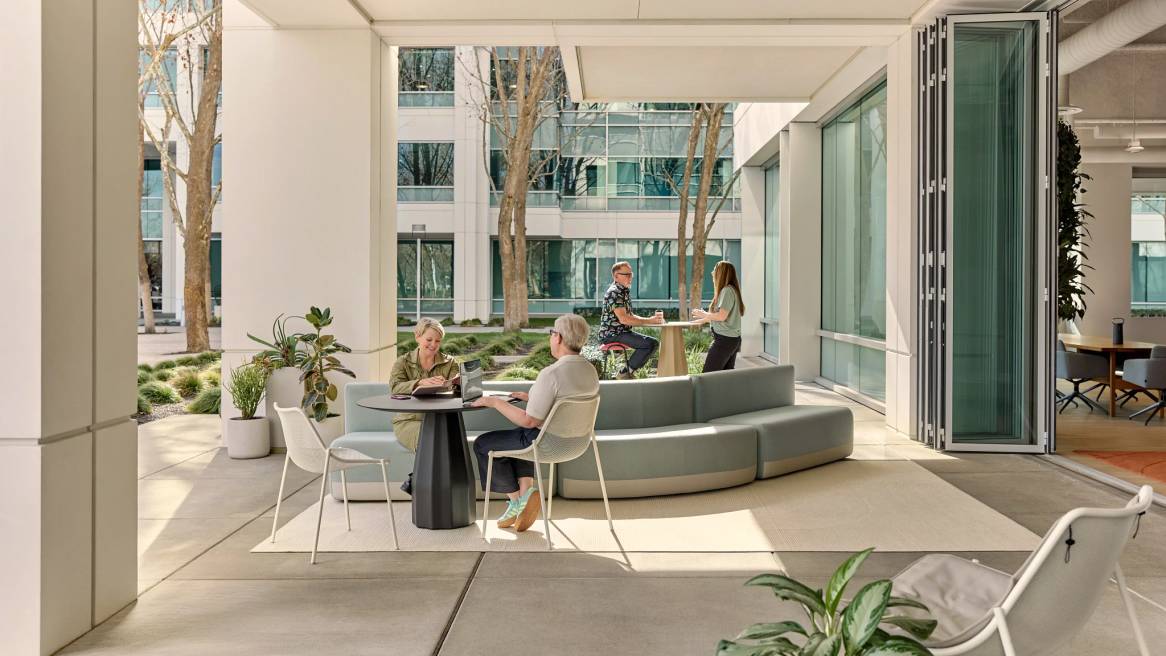
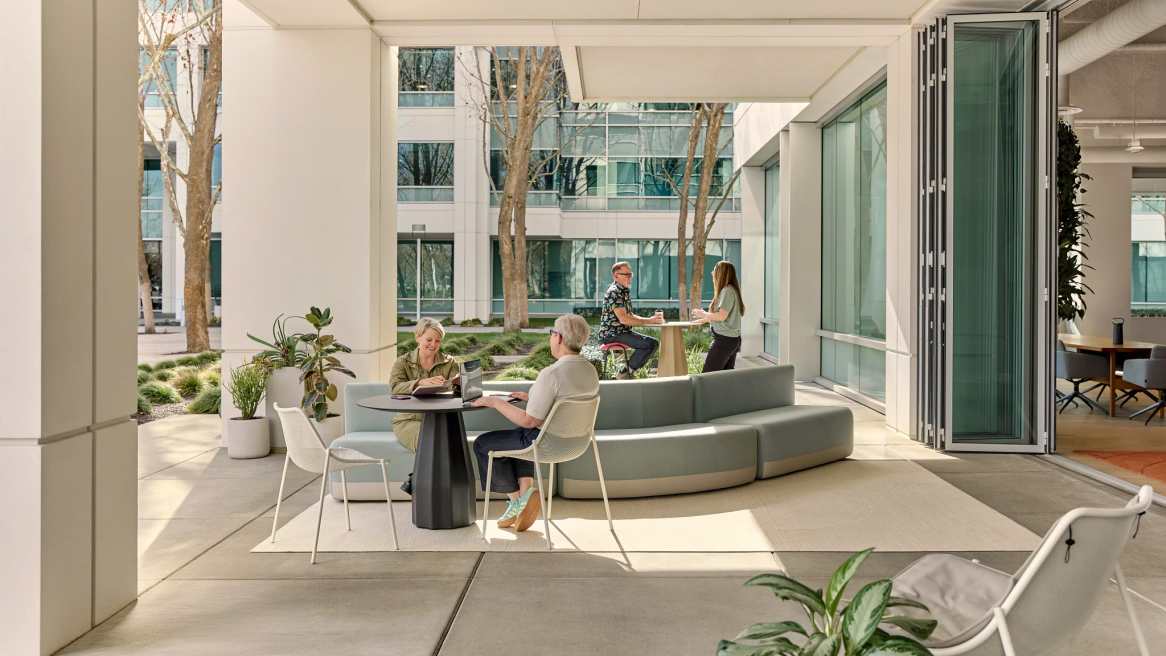
Most people know the feeling of stepping outside for a few minutes and coming back with a clearer head. It’s simple, but it works. And research consistently shows why.
Exposure to fresh air and natural light supports cognitive restoration, reduces stress, and helps people regulate their mood in ways indoor spaces often can’t. Studies from organizations like Harvard’s School of Public Health and the American Psychological Association point to the same pattern: even brief access to outdoor environments can improve focus, lower mental fatigue, and support overall wellbeing.
Steelcase research echoes this. When people are asked which features help them feel refreshed and rejuvenated at work, fresh air and natural light rank among the top three, right behind temperature. The need is even more pronounced for workers in environments with little natural light or limited window access.
Why being outside helps the brain
Outdoor areas that offer shade, a comfortable place to sit and a moment to breathe can make a real difference. They can also encourage movement. Standing, shifting posture or simply walking across a courtyard helps people stay alert. Movement supports attention and reduces fatigue, which benefits both the body and the brain. As organizations think more seriously about wellbeing and brain health, outdoor spaces are becoming an essential part of the conversation. Sure, they’re nice to have, but they can also be a meaningful tool for supporting people throughout the day.
When outdoor areas are designed with intention, they become more than just a place to take a brain break. They can actually support focused work, casual conversations, team meetings or quiet moments alone. The key is giving people choice. In almost all cases, Steelcase research shows that when people can pick the setting that matches their needs, they feel more in control of their day. That sense of control is closely tied to greater wellbeing.
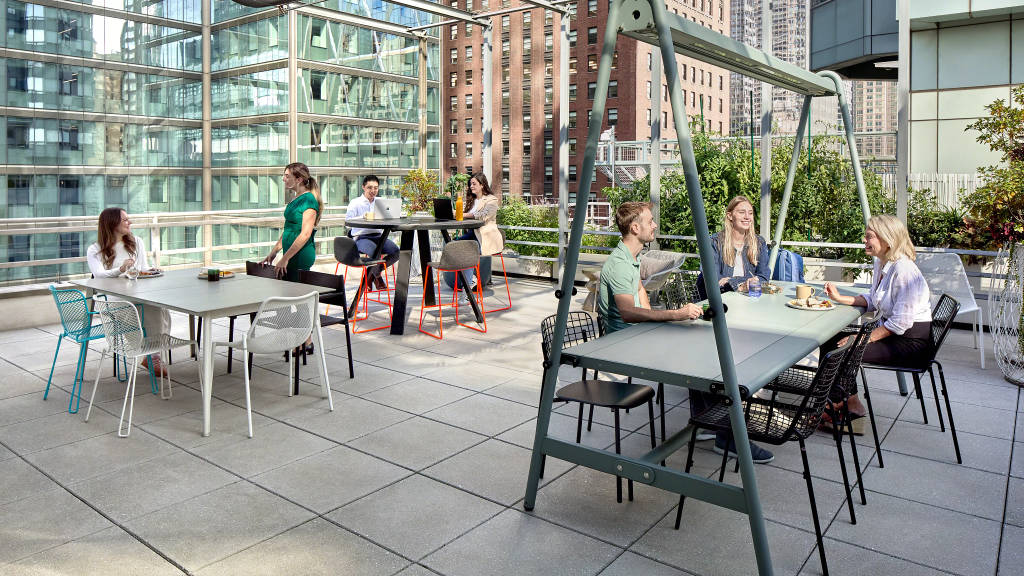
Outdoors spaces planned like urban parks
The Steelcase Community-Based Design perspective addresses that important layer: outdoor spaces work best when they reflect the needs and habits of the people who use them. This approach focuses on designing with communities rather than for them. It means listening, observing and shaping spaces that feel natural and welcoming.
Urban parks are a good example. They act as shared gathering places where people from different backgrounds come together. Parks support wellbeing by offering open space, clear paths, places to sit and a sense of safety. There, people can move, connect with each other or simply enjoy nature. When organizations apply this mindset to their own outdoor areas, the spaces become more meaningful. They feel less like amenities and more like essential parts of daily life.
Supporting wellbeing outdoors isn’t just about helping people feel good. It directly affects how well they perform. When people spend time outside, their brains get a break from constant stimulation, which helps restore attention and improve cognitive control. That means fewer mistakes, better decision‑making and more sustained focus. When people have access to spaces that help them reset, they come back with more clarity, more patience and more energy. Think of investing in outdoor environments as an investment in performance, focus and creative problem‑solving.
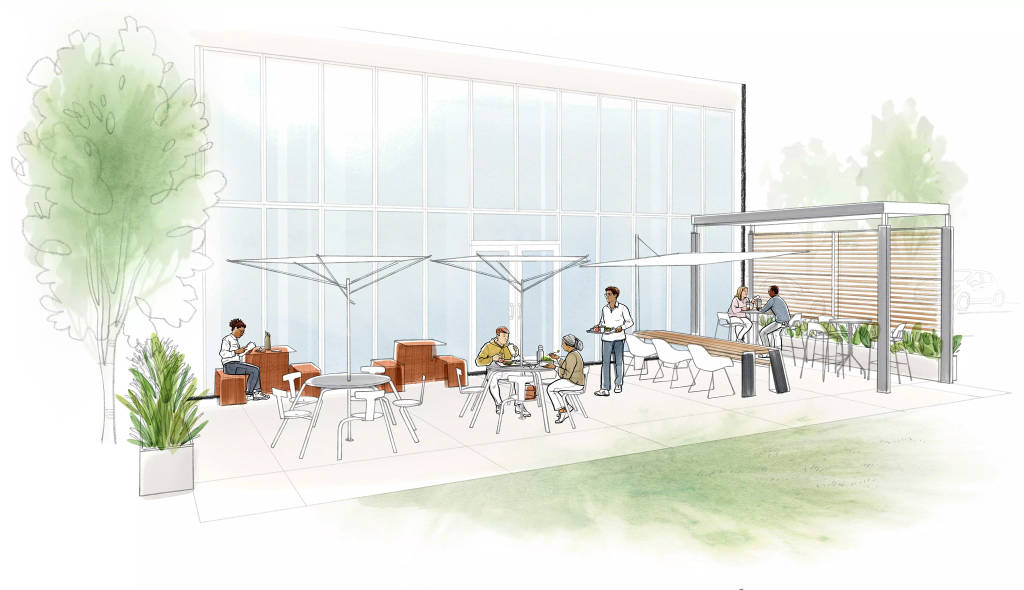
Five things to consider WHEN DESIGNING outdoor spaces
Once the principles are in place, the next step is making sure the space actually works for people. This is where outdoor furniture and tools come in. The right solutions help define space, create comfort and make outdoor areas usable throughout the day.
- Define the space
Clear boundaries, shade and simple cues help people understand how to use an outdoor area and feel comfortable spending time there.
- Create comfort and support gathering
People are more likely to step outside and stay there when the environment feels inviting. That means places to sit, places to rest and protection from the elements, along with layouts that make it easy to talk, meet or relax without feeling cramped.
- Encourage movement and posture variety
Outdoor settings naturally encourage people to stand, shift posture or walk. Designing for movement – along with offering lounge seating and taller tables – helps people stay comfortable, alert and focused.
- Bring work tools outside
Mobile carts, markerboards or simple surfaces let teams move outdoors without losing momentum and make it easier to blend work and restoration.
- Extend the workplace and support wellbeing
When outdoor environments are thoughtfully designed, they function as true extensions of the workplace. They give people more ways to manage their energy, restore their focus and ultimately feel better throughout the day. And remember, perhaps most importantly, just keep it simple. Sometimes the most effective wellbeing strategy is the easiest one. Step outside, take a breath and give your brain a moment to reset.
For more insights, research and design ideas from Steelcase, subscribe to the Work Better Weekly Newsletter.