
AI Needs a Human-Centered Workplace
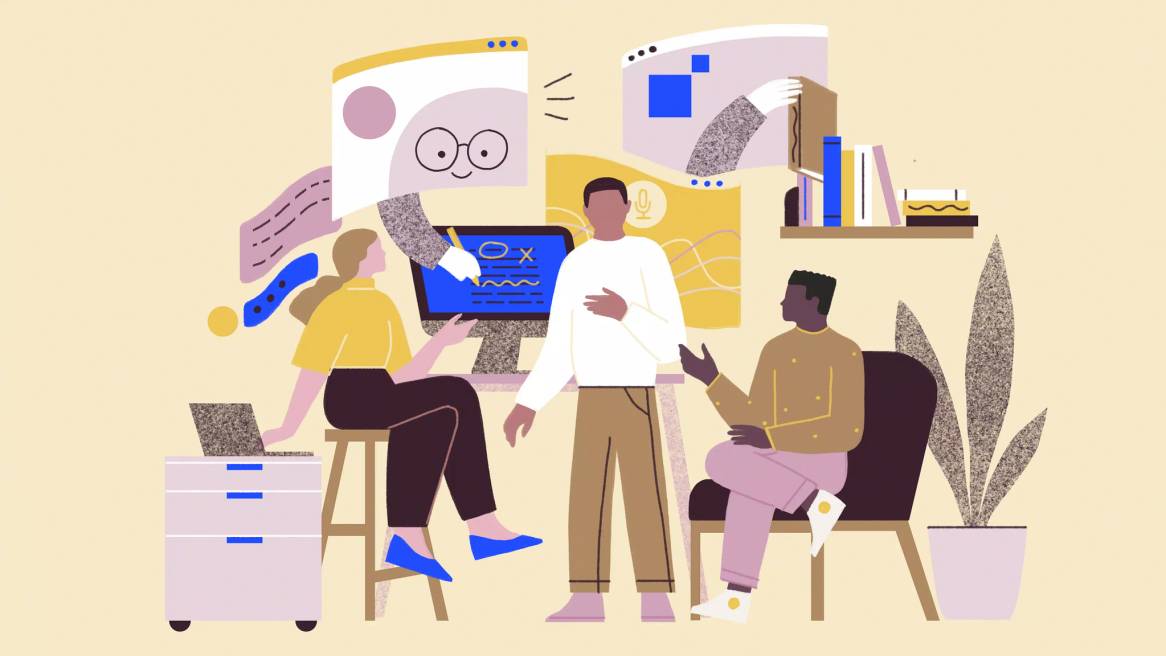
AI helped analyze the data, drafted the outline for this article and proofread this story. But what you’re about to read is far from AI-generated. It’s the combination of human curiosity, collaboration and creativity with well-prompted artificial intelligence. Every fact checked. Every idea is critically examined by thoughtful, human colleagues.
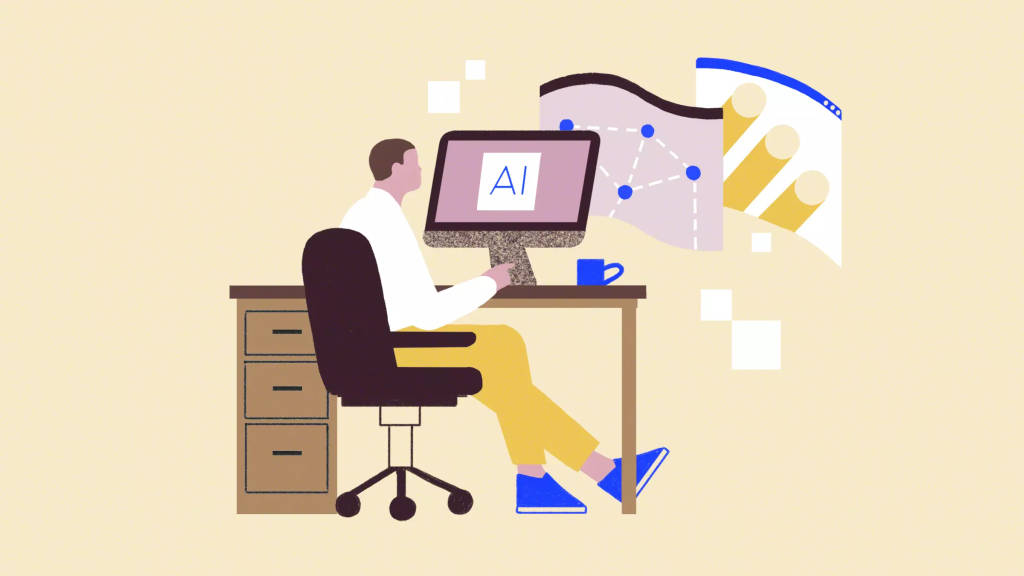
Much like smartphones revolutionized the way we use the Internet, AI is transforming how we interact with computers, shifting from simple text inputs to actual dialogues. This rapid advance is putting pressure on employees to learn and deploy AI, while organizations rush to reap business benefits like enhancing productivity and cost savings.
While navigating this new AI-enhanced future, new Steelcase research shows how leaders can use the workplace to empower people, encourage desired behaviors and help the organization develop new technical capabilities.
NEW RESEARCH
78% of facility and real estate leaders anticipate redesigning office spaces within 2-3 years because of AI integration
– Steelcase Research (U.S., Summer 2025)
AI adoption varies by industry, with the tech sector leading the way.
Highest % of Frequent AI Users by Industry
- Technology 50%
- Professional services 34%
- Finance 32%
Source: Gallup 2025
Leaders tend to use AI to synthesize information, while individual contributors use it more often as a brainstorming partner.
AI Is Used Most Often to:
- Consolidate information or data (Leaders 46%, Individual Contributors 36%)
- Automate basic tasks (Leaders 45%, Individual Contributors 36%)
- Generate ideas (Leaders 41%, Individual Contributors 40%)
Source: Gallup 2024
Leaders say AI will most significantly change their organization in the next 2-3 years through automation and accelerating how work gets done.
Leaders Expect AI to Change Work by:
- Automating routine processes
- Increasing the speed of the workflow
- Enabling greater collaboration
- Creating new types of job roles
- Disrupting existing workflows
- Replacing current job roles
Source: Steelcase Research, 2025
Despite an uncertain future, expectations are high. Nearly one-third (31%) of international C-suite leaders say they expect AI to raise revenue more than 10% in the next three years. Yet only 1% of C-suite leaders describe their generative AI rollouts as mature (McKinsey, January 2025). The majority of organizations are somewhere on an AI journey — trying to figure out what works and how to scale it.
“AI adoption fundamentally changes how work is performed and has the potential to alter organizational structures,” says Keith Bujak, who led a Steelcase WorkSpace Futures research exploration on how AI will change workspace needs. “Organizations will need to adapt to increased competition, rethink talent management and redesign workspaces to support new employee behaviors and AI integration.”
.
HOW AI IS CHANGING WORK NOW
Steelcase WorkSpace Futures researchers wanted to understand how AI might impact employee behavior and workspace needs. Their research merged primary and secondary sources as well as quantitative and qualitative data. While it’s difficult to know how AI will evolve in the future, researchers see signals today that can help organizations navigate what’s ahead and understand how the workplace can help.
AI accelerates the pace of work. How is time reinvested?
What’s changing: AI is freeing up people’s time by taking over unwanted tasks. Leaders should consider how they can support people so that time is reinvested strategically. Research suggests people who view AI as an automated tool save 53 minutes per day and typically spend that extra time on administrative tasks. In contrast, those who see AI as a strategic collaborator save 105 minutes per day, which they use to delve deeper into their work, continuously learn new skills, and generate innovative ideas (Atlassian, 2024).
What it means for the workplace: “Leaders who encourage collaboration and creativity now are more likely to see the innovation benefits from AI they expect in the future,” says Bujak. Workspaces will need to be adapted as employees spend less time on undesirable tasks and more time on higher-value work such as generating ideas, learning together to advance the right concepts, and making better decisions.
AI impacts employee wellbeing. How well are people being supported?
What’s changing: Many people report that despite AI helping with some areas of work, it’s not reducing stress. Expectations are higher for greater productivity at a faster pace and the AI learning curve is steep. Employees who consider themselves frequent AI users report higher levels of burnout (45%) compared to those who infrequently (38%) use AI at work (Quantum Workplace, 2024). This all adds up to more stress and burnout, and it’s happening against a backdrop of increased screen time which can lead to a lack of connections with coworkers.
What it means for the workplace: Wellbeing spaces, and spaces that help foster community and human connection are essential to helping people maximize the benefits of working with AI. People need places where they can rejuvenate and reconnect away from their screens.
AI reshapes the skills people and organizations need. Is your talent strategy changing?
What’s changing: Nearly half of leaders (45%) say expanding team capacity with digital labor is a top priority in the next 12-18 months, second only to upskilling existing employees (47%) (Microsoft Work Trend Index, 2025). If they aren’t already, leaders will begin to manage teams of humans and AI agents. There will be a wide range of AI literacy across most organizations, which will change the types of leadership skills needed in the future.
Some organizations are considering limiting or eliminating junior staff roles and increasing expert roles. This shift could impact culture, the talent pipeline and space planning. Active postings for entry-level roles are 50% lower than in 2022 (Reviolabs, July 2025). While AI isn’t the only reason, these types of roles showed a much bigger decline than other position types, which correlates to the rise in AI implementation.
What it means for the workplace: The workplace will need to cater to expert talent to attract and retain these employees. This may mean more sophisticated and intentional integration of technology and space, higher-performing work spaces and greater access to privacy. A variety of spaces should also support a range of AI literacy. For example, while some people will be working with a chatbot in a workstation with shielded visual privacy and dual monitors, others may need more acoustic privacy to engage in a dialogue with their personal AI agent.
AI is a catalyst for collaboration. How will collaboration happen differently?
What’s changing: Collaboration is evolving. Jeff Smith, Zoom head of product – Workplace AI, Meets and Spaces, says his company is seeing this shift in real time. “People all over the world connect with colleagues, partners and customers via Zoom every day. These conversations generate new ideas, strategies, and action items, and that data can propel collaboration and help people get more work done, faster. We designed Zoom AI Companion to tap into how work is changing, improving productivity and collaboration by proactively helping people optimize their work day to ultimately produce higher quality work.”
With AI tools capturing and summarizing meetings, teams are shifting toward more asynchronous work in some cases. This flexibility is accelerating the move from planned, cross-functional teams to self-forming, temporary project teams. Microsoft reports 60% of meetings are now unscheduled (Microsoft Work Trend Index, 2025). While asynchronous work offers speed and autonomy, in-person collaboration remains vital for building trust and enabling fast, iterative problem-solving. The future of teamwork will require a thoughtful balance between these different types of collaboration.
What it means for the workplace: Collaboration now includes both human colleagues and AI agents. Employees will work solo with AI, ideating, analyzing, and drafting, then bring in teammates for feedback and refinement. To support this new rhythm, spaces must enable both deep focus and spontaneous interaction. For AI to be a meaningful contributor, environments must be digitally integrated. People need to be seen and heard clearly by AI-enabled tools, requiring attention to camera angles (so that AI can crop and zoom), lighting, acoustics, and cable management. Thoughtful design ensures AI can actively support collaboration, not just observe it.
.
CREATING AN AI-READY WORKPLACE
There are early signs AI will create efficiencies and increase productivity. But the real question is: What kinds of work will benefit an organization in the long term? It’s human curiosity, collaboration and creativity that create a competitive advantage.
The AI-ready workplace can empower people to do their best work through the intentional integration of technology and space to:
- Encourage critical thinking – create spaces where it’s easy to bring people together to review, question and verify AI outputs
- Design for a range of work with AI and human colleagues so as not to disrupt others – provide places for visual, acoustic and territorial privacy
- Support different levels of AI maturity – some people will be using AI assistant and chatbots, while others will be in a dialogue with their AI agents
- Create ways to enhance asynchronous collaboration while also encouraging more informal person-to-person collaboration
- Provide places for human connections or individual respite where devices and screens are secondary
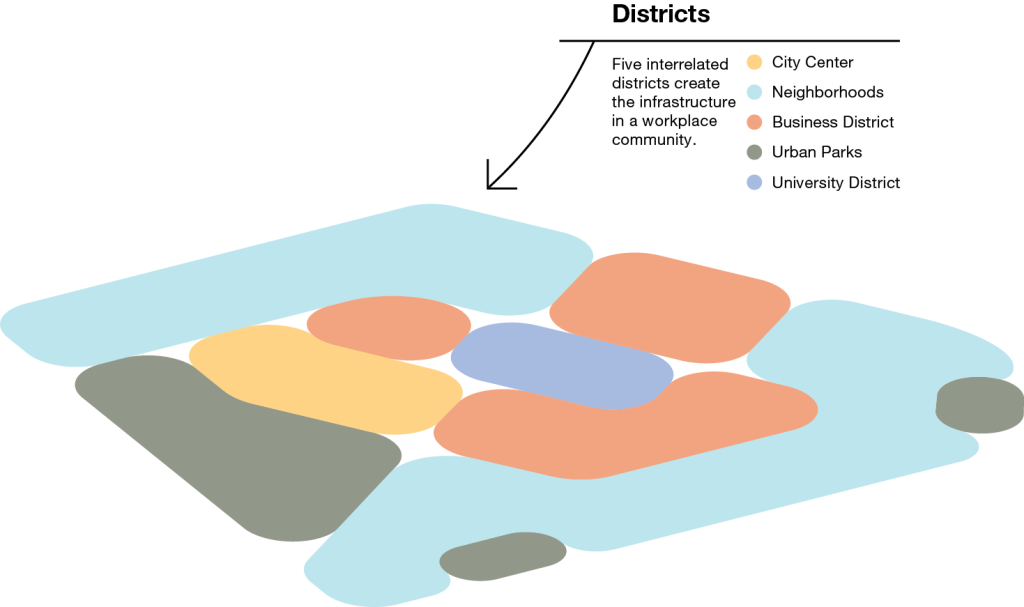
Designing a workplace to support changing work behaviors in the AI era sounds daunting, but it doesn’t have to be. Community-Based Design, an approach developed by Steelcase, is inspired by urban planning principles that create vibrant, resilient cities. It’s built on the foundation of five mixed-use “districts” that build the physical infrastructure for diverse types of work, including deep focus, collaboration, social interactions, learning and rejuvenation. It integrates technology throughout each district in ways that help people do what they do best – create and innovate.
.
.
The result of this approach is a workplace that is flexible, adaptable and responsive to human needs. As people work increasingly closely with AI, the workplace needs to be intentionally designed to be even more human-centered, which will help organizations reap the many benefits that humans bring to the new AI equation.
To explore more ideas for how Community-Based Design can help create a human-centered, tech-enabled workplace, read Creating Community at Work.