
Steelcase Carbon-Neutral Certified Ergonomic Chair Honored as 2025 China Green Point Annual Sustainable Practice Case
Overview
Looking back at Steelcase’s exploration in the field of sustainability, it is a “green journey” driven by responsibility and starting with design. From launching the industry’s first carbon-neutral ergonomic chair certification program, to applying circular materials and low-carbon processes, and implementing supply chain collaboration and global climate action projects, Steelcase has consistently integrated sustainable concepts throughout the entire product lifecycle, promoting deep transformation in office spaces. This year, this “green journey” reached a new milestone.
In the selection process for the 4th “China Green Point” Sustainable Practice Cases, Steelcase stood out from 341 submitted cases and passed the final review, becoming the 2025 China Green Point Annual Sustainable Practice Case. This achievement not only reflects the high recognition from expert judges for Steelcase’s sustainable practices but also reaffirms its industry leadership in driving the green transition.
Steelcase Carbon-Neutral Certified Ergonomic Chair
With its world-first carbon-neutral ergonomic chair, Steelcase deeply integrates full lifecycle carbon management, innovative materials science, and exceptional ergonomic design, providing the office furniture industry with a model sustainable solution that balances commercial value with environmental responsibility.
In today’s world where the “dual carbon” goals have become a global consensus, corporate demand for green procurement is growing at an unprecedented rate. The environmental footprint of office spaces, one of the places where modern people spend the most time, is receiving increasing attention. However, achieving a true green transition poses significant challenges for the office furniture industry – it involves a long chain from raw material sourcing, manufacturing and processing, long-distance transportation, to final disposal, with carbon emissions that are complex and difficult to track. Whoever can decipher the code from “manufacturing” to “smart manufacturing” and then to “green manufacturing” will seize the initiative in future market competition.
Steelcase, a global leader in office furniture since 1912, has embedded environmental awareness deep within its corporate DNA since its inception. In 2020, it announced achieving carbon neutrality in its global business operations and, in June 2024, received validation from the Science Based Targets initiative (SBTi) for its net-zero carbon target. But this was not the end point; rather, it marked the start of a new journey. Building on its operational carbon neutrality, Steelcase further extended its long-term carbon commitment to its core products themselves by launching the industry’s first carbon-neutral ergonomic chair certification program, thereby becoming the only company in the global office furniture industry that can currently provide product carbon neutrality certification. This strategy is driven by a dedicated cross-functional core team with members from R&D, design, sustainability, supply chain, marketing communications, and other departments, and involves deep collaboration with external partners, including material suppliers, carbon accounting agencies, and third-party certifiers, collectively building a green, transparent, and traceable value chain.
This revolution begins at the design stage. The R&D and design teams are committed to optimizing material selection, extensively using raw materials containing recycled components, such as metals and plastics, increasing the product’s recyclability rate to up to 85%. Simultaneously, the team simplifies product components to reduce production energy consumption and adheres to a design philosophy of disassembly for repair and upgrades, significantly extending product lifespan and reducing waste generation at the end-of-life. In the manufacturing phase, Steelcase’s production facilities prioritize the use of clean energy like wind and solar power and employ energy-saving technologies to reduce consumption. The sustainability team quantifies the carbon footprint at each stage through product Life Cycle Assessments (LCA) and transparently discloses this to the public in the form of Environmental Product Declarations (EPD), subjecting itself to market supervision.
Steelcase is committed to reducing the product carbon footprint. For any remaining unavoidable emissions, Steelcase offsets them by investing in rigorously verified carbon offset projects, such as those supporting forest conservation and renewable energy development, ensuring the authenticity and effectiveness of every carbon credit. This means that not only can customers choose to purchase Steelcase carbon-neutral products certified by credible third-party organizations, but also that from the moment of purchase, the corresponding carbon offsets for the product take effect immediately, and the product-related carbon footprint is simultaneously neutralized. This business model innovation, which translates carbon emissions into clear customer value, has made Steelcase’s carbon-neutral chairs highly favored by numerous global companies that place ESG at the core of their strategy. As of October 2024, the project has achieved industrial-scale results: over 15,000 carbon-neutral certified ergonomic chairs have been sold globally; this is equivalent to reducing or avoiding approximately 2,400 tonnes of CO2 equivalent emissions; for flagship product lines like Leap and Gesture, the related product growth rate in the Asia-Pacific region reached 40%.
Steelcase is not only the office furniture company achieving carbon neutrality certification for multiple categories and full lifecycles (covering Scope 3 supply chain emissions), but it has also built an internal material carbon emission system database covering over 10,000 components, significantly improving LCA analysis efficiency. After its successful pilot in North America, the project was rapidly replicated in European and Asia-Pacific markets in less than 12 months, with its standardized carbon reduction pathway saving 50% of the implementation cycle, demonstrating exceptional global synergy.
Steelcase’s carbon-neutral ergonomic chair project proves to the entire industry that deep supply chain collaboration, digital carbon management tools, and forward-thinking green design can systematically advance the achievement of net-zero goals. Looking ahead, Steelcase plans to gradually extend the successful model of this carbon-neutral project from chairs to more categories, such as desk systems, steadily moving towards a greener, more responsible future.
Introduction to China Green Point
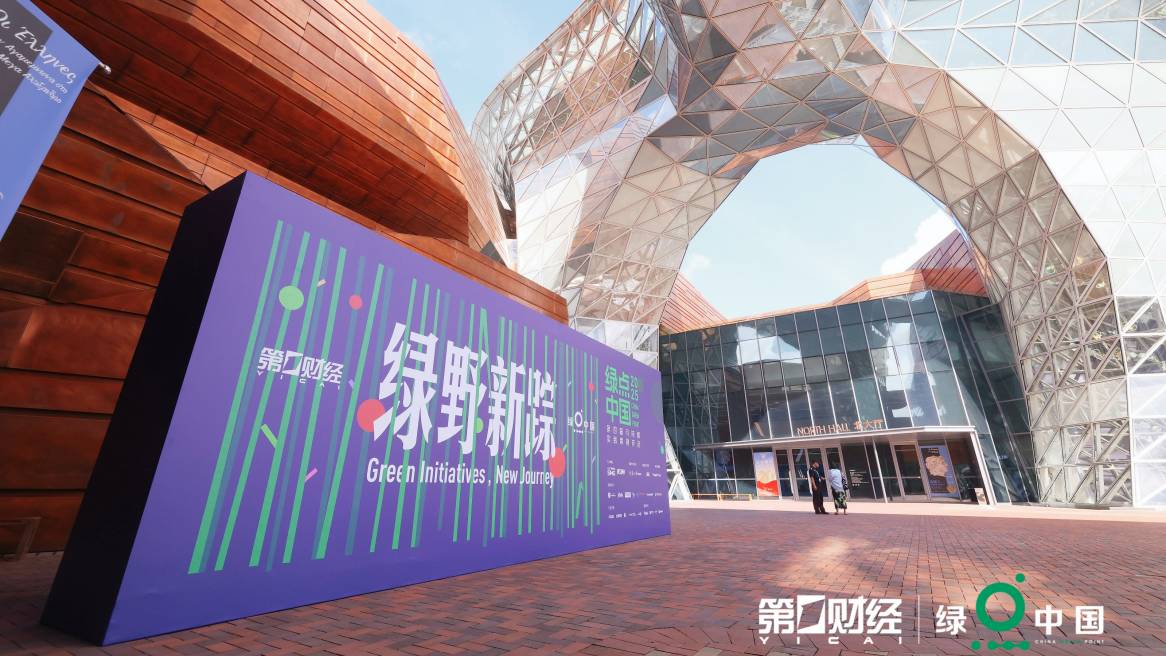
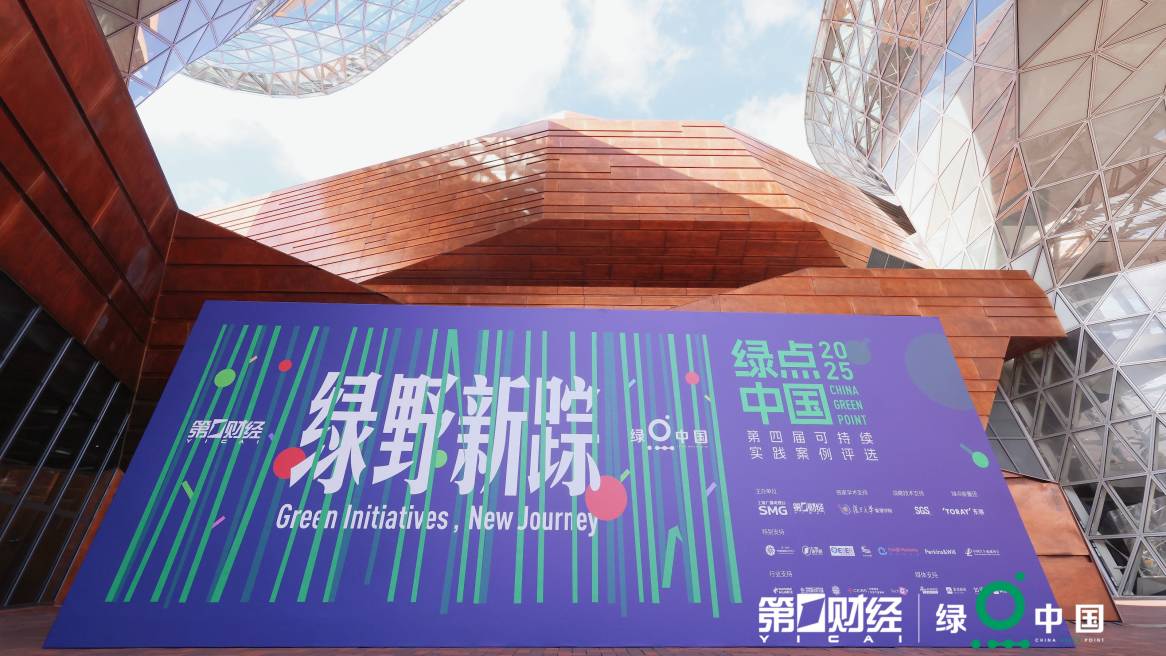
Against the backdrop of global climate crisis and the transition to a low-carbon economy, every green initiative is like a fresh footprint on the earth, marking the path of coexistence between humanity and nature. Launched by Yicai Media Group, China Green Point has been tracking cutting-edge progress in sustainable development for four consecutive years, focusing on innovative transformations in strategy, technology, and consumer scenarios, while witnessing and documenting the tangible footsteps of China’s green development.
This year, the evaluation framework for China Green Point cases has been upgraded! Spanning six core areas—from green traceability to green technology, and from green design to green logistics—the system now comprehensively covers key dimensions of sustainability.
Since its launch in April, this year’s China Green Point has attracted widespread attention across sectors. Ultimately, 33 benchmark cases stood out from 341 submissions, demonstrating new heights of sustainable business practices in China. Through rigorous screening, interviews, field research, and multi-dimensional evaluations by an expert panel, 25 entries were selected as “2025 China Green Point · Annual Sustainable Practice Cases,” 5 as “2025 China Green Point · Annual Green Shell Cases,” and 3 as “2025 China Green Point · Green Pioneer Cases.”
This year’s campaign, under the theme “Green Initiatives, New Journey” symbolizes the exploration of new pathways and possibilities for sustainable development across vast green landscapes. The 341 submitted cases, brimming with exploratory spirit and innovative value, vividly reflect this theme. Compared to previous years, this year’s selection process revealed a significant upgrade: large-scale enterprises with revenues exceeding RMB 10 billion accounted for 70.69% of the participants, multinational corporations made up 46.55%, and B2B enterprises represented 24.14%. These figures, all reaching record highs, underscore the deep commitment and strategic investment of industry leaders in sustainable development.
About the China Green Point Judging Panel
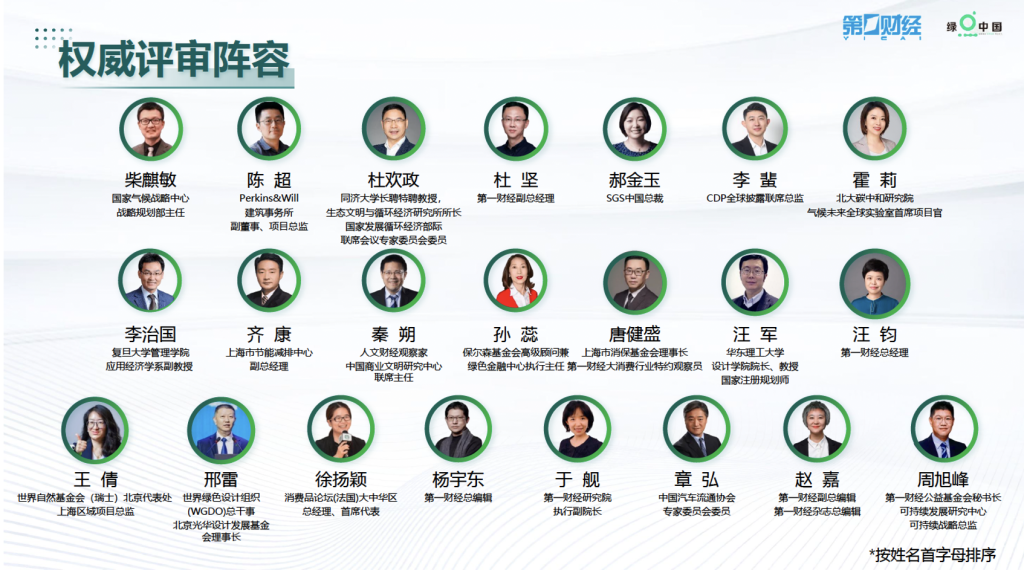
The China Green Point Judging Panel is a high-level, diverse team composed of authoritative experts from key fields including government think tanks, top universities, industry research, international organizations, renowned media outlets, and industrial practice.
Featured Judges (Partial List):
- Chai Qimin, Director of the Strategic Planning Department, National Center for Climate Change Strategy and International Cooperation
- Du Huanzheng, Distinguished Long-term Professor of Tongji University, Director of the Institute of Ecological Civilization and Circular Economy
- Huo Li, Chief Program Director of the Climate Futures Global Lab, Peking University Carbon Neutrality Institute
- Lu Jianzhong, Vice Chairman of the Sustainability Specialty Committee, Chinese Association for Science of Management
- Chen Chao, Associate Principal, Project Director, Perkins&Will
- Qi Kang, General Manager, Shanghai Energy Conservation and Emission Reduction Center
- Tang Jiansheng, Chairman of Shanghai Consumer Protection Foundation; Special Consumer Goods Industry Observer, Yicai Media Group
- Wang Qian, Shanghai Regional Program Director, WWF (Switzerland) Beijing Representative Office
- Xing Lei, Secretary-General, World Green Design Organization (WGDO); Chairman, Beijing Guanghua Design Development Foundation
- Wang Jun, General Manager, Yicai Media Group
- Du Jian, Deputy General Manager, Yicai Media Group