
Children’s Nebraska & Steelcase Health Innovate to Connect Care for Kids
At Children’s Nebraska, innovation isn’t just a strategy – it’s a mindset that improves health outcomes through space and innovative technology.
“What if you could make access to care so seamless, people didn’t even think about it?”
Dr. Jen McWilliamsDivision Chief for Child and Adolescent Psychiatry, Children’s Nebraska
What if a sick child’s hospital visit didn’t begin in a waiting room, but in a space designed to make kids feel safe and families supported? What if hospitals were built to spark ideas, in addition to treating illnesses? And what if technology could close the gap between rural communities and specialists hundreds of miles away – making care feel personal, even from a distance?
These aren’t just questions – they’re the foundation of a bold vision for healthcare at Children’s Nebraska.
.
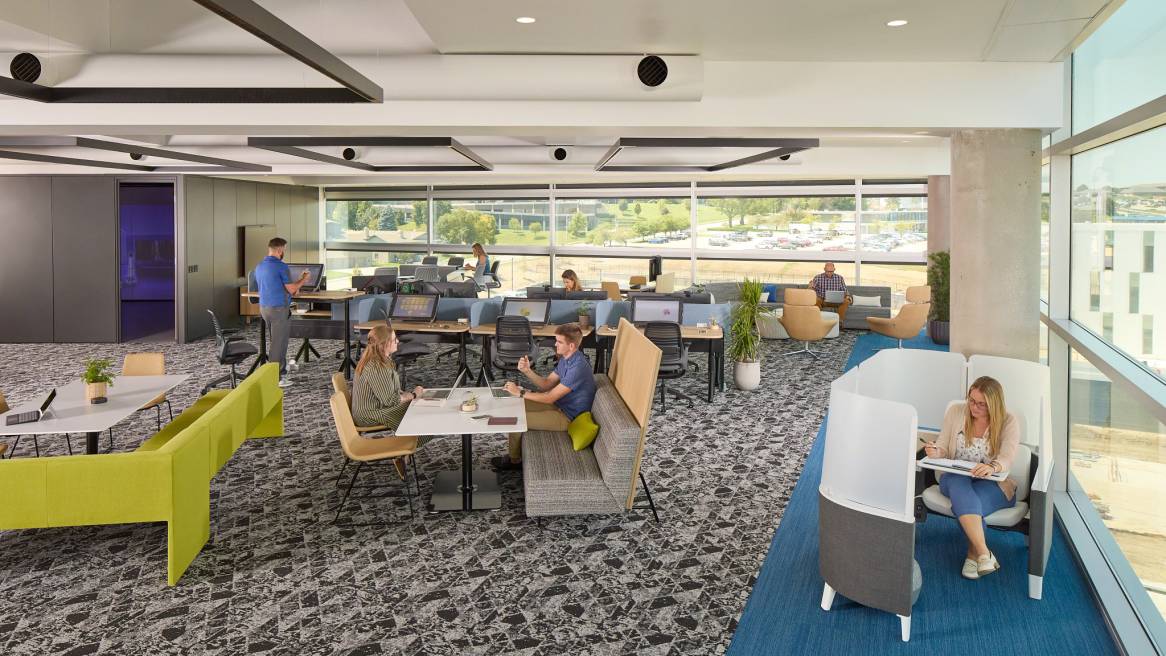
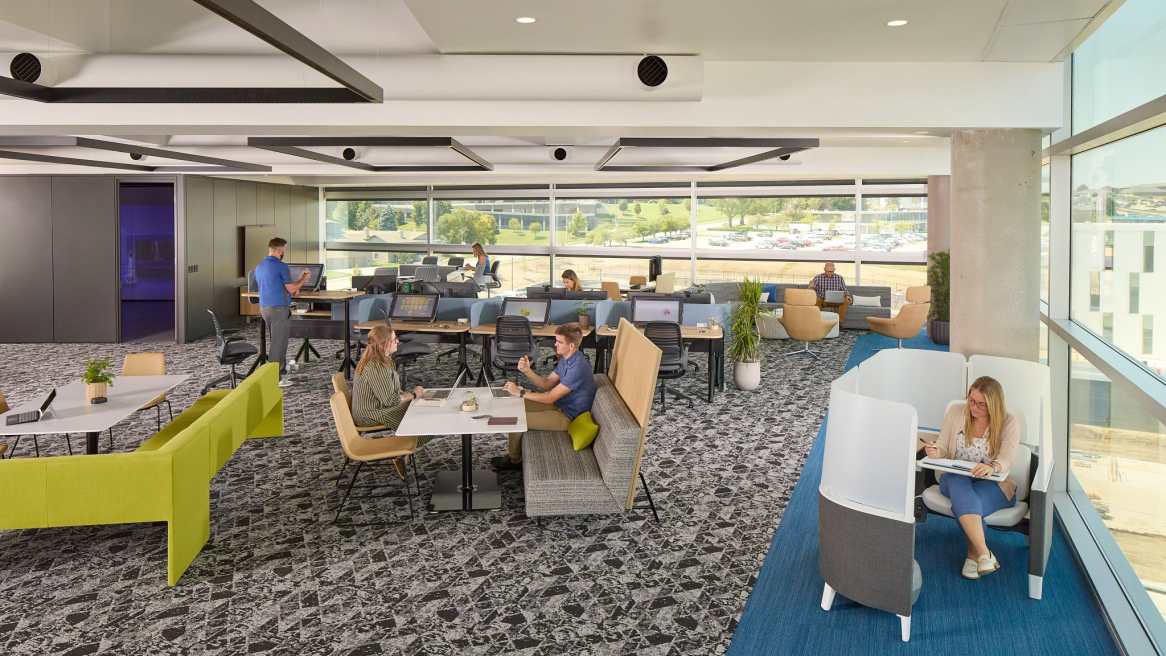
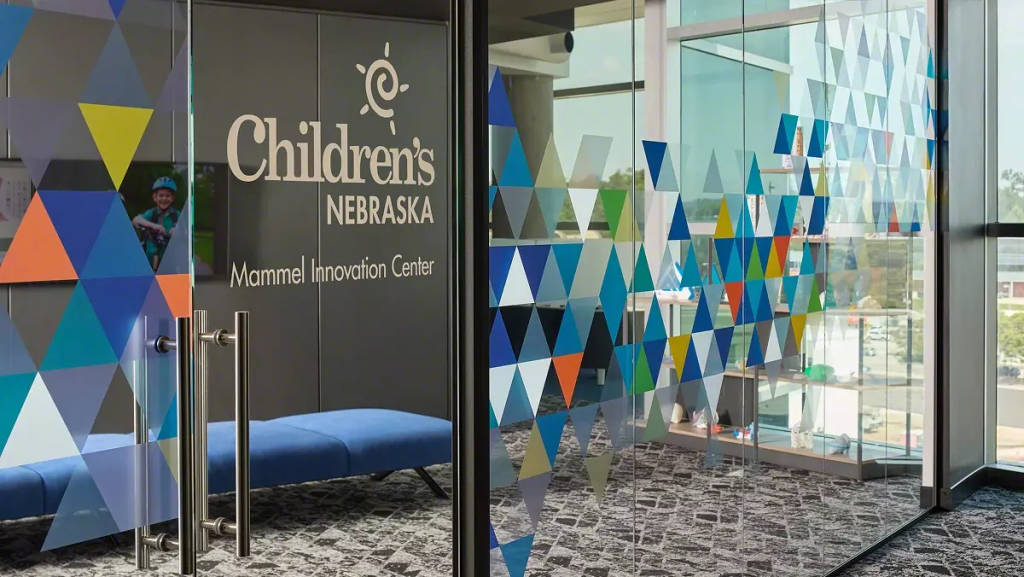
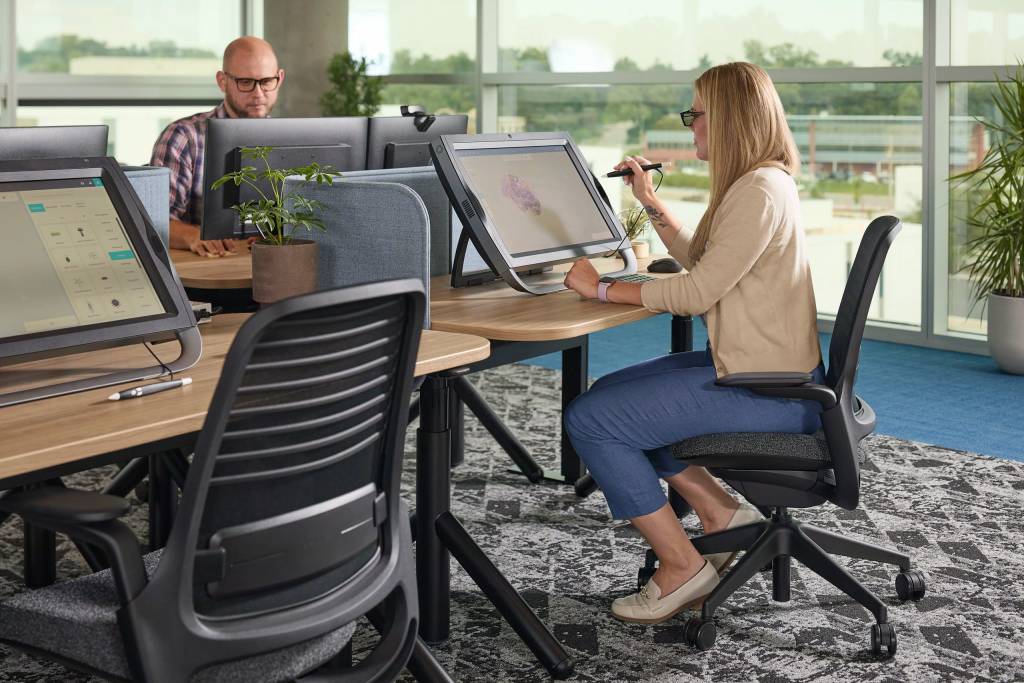
The Mammel Innovation Center at Children’s Nebraska is a purpose-driven facility designed to help answer those big “what if” questions. It serves as a catalyst – where cardiologists bump into respiratory therapists and surgeons brainstorm with technologists. Built in 2024, the 10,000-square-foot Center houses cutting-edge technologies like 3D printing, virtual reality, and AI, alongside immersive spaces for collaboration and experimentation. By intentionally designing an environment with social spaces that invite people to linger and connect, the center fosters bold thinking among clinicians. It explores how physical space can shape healing and human connection.
Open, flexible and full of natural light, Steelcase worked with its partners, architect and design firm HDR and dealer Sheppard’s Business Interiors to create an environment where ideas are born, tested, refined and scaled.
.
“We wanted the experience from the moment you walked in the door to feel inspired and empowered,” says Ryan Cameron, who leads the center.
“You can’t dream big sitting all alone at your desk. We built the Mammel Innovation Center so those conversations could happen and people could share big ideas. It’s a signal that innovation matters here.”
Ryan CameronVice-President of Technology and Innovation
Bridging the distance + advancing access with Ocular View
One exploration at the Center provides the perfect environment for bold thinking and collaboration. Here, the Children’s Nebraska team found the space and inspiration to rethink how pediatric care can truly reach families across Nebraska’s vast landscape and tackle one of pediatric care’s most formidable challenges: access.
Even on good days, getting a child to a doctor’s appointment is a juggling act. But for many families in Nebraska, it’s a full-blown road trip that can mean hours of driving for a 30-minute visit. Serving a geographically vast and diverse population, the team at the Omaha-based health center began reimagining how to reach pediatric patients for behavioral health across Nebraska and beyond. The challenge was clear: How do you deliver high-quality care to families hours away from the hospital’s main campus?
That question sparked a breakthrough. A self-described tech nerd, Cameron came across an article about immersive telepresence technology – a pod called Ocular View, designed by Steelcase Health in partnership with Logitech.
“I thought, ‘What if we could use this to make virtual care feel more human?’” That curiosity led to a partnership with Steelcase Health and ultimately, the integration of Ocular View as a telehealth solution designed to support pediatric behavioral health. Ocular View is an extended reality experience that creates immersive, face-to-face virtual meetings – helping people feel like they’re truly sitting across from each other, even when miles apart.
A new kind of telehealth
Thanks to Ocular View’s human-centered and one-on-one experience, a child in Kearney, Nebraska, can now sit down, look up, and feel like their psychiatrist in Omaha is right there with them – even though they’re nearly 200 miles apart.
“When I started doing telemedicine, I was in a broom closet with a cart the size of a mini-fridge,” says Dr. McWilliams. “Now it feels like I’m in the same room. I can see body language – even the adolescent eye roll.”
.
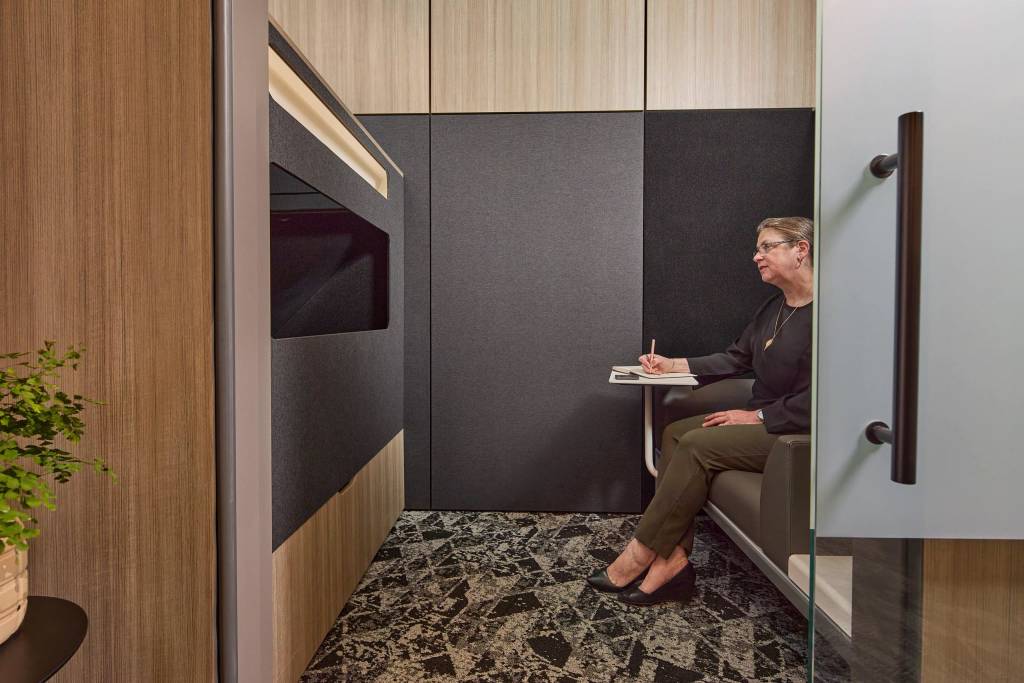
That presence matters. Behavioral health care depends on trust, and trust depends on connection. That’s why the Ocular View’s design details make a difference – camera placement for natural eye contact, crisp audio, and warm lighting.
Another advantage of Ocular View versus a regular laptop screen is that it allows more than one person to join the conversation fully. Instead of just one person squeezed in front of a webcam, Ocular View creates a shared experience – ideal for situations where a parent wants to be present and engaged in conversations about their child’s health. Especially in pediatric care, where clinicians often speak with both the parent and child together, this setup makes it easier for everyone to feel seen, heard, and connected.
“Parents love the clarity,” says Stacy Zoucha, Director of Digital Health and Innovation, who helped lead the rollout. “And kids feel calmer.”
For McWilliams, the difference is profound. “I can pick up on subtle cues, such as how a child is sitting, the look on their face and how they breathe. Those things matter in psychiatry. They tell you what’s really going on.” In the past, those cues were often lost in the flatness of a laptop screen.
The first two Ocular View pods are now live – one in Omaha and one in Kearney, inside a behavioral health urgent care clinic that opened in 2024. A third is on the way. The Kearney location is especially impactful: it’s adjacent to a primary care clinic, making it easy for pediatricians to join sessions and keep care close to home in a setting that feels face-to-face.
The Big What-Ifs
“What if Children’s Nebraska becomes the #1 place to go for pediatric care in the United States?” asks Cameron. It’s a lofty goal – but one Children’s Nebraska believes isn’t just aspirational. It’s actionable. Looking ahead, Children’s Nebraska plans to expand its telehealth footprint with more Ocular View pods, including the possibility of school-based programs.
“We’re piloting ways for kids to get a strep test or have their lungs listened to without leaving school,” Zoucha says. “That keeps kids in class and parents at work.”
Innovative health space design makes these possibilities real. It’s a powerful beginning for the kids who no longer have to spend a day in the car just to be seen and heard. It’s proof that thoughtful design and imagination can bring care closer and help solve one of healthcare’s most persistent barriers.
“Healthcare never stands still, and neither can we,” says Cameron. “As patient needs change, we evolve to deliver care that’s not only excellent but accessible for every family.”
At a Glance: Mammel Innovation Center
Location:
Children’s Nebraska, Omaha, NE
Opened:
2023
Size:
10,000 square feet
Purpose:
A dedicated space for cross-disciplinary collaboration, innovation, and rapid prototyping in pediatric healthcare.
Design Intent:
- Encourage spontaneous collaboration between clinicians, technologists, and researchers
- Create an environment that feels open, flexible, and inspiring
Serve as a testing ground for new ideas in care delivery and space design
Key Features:
- Natural light and flexible layouts
- Meeting zones for informal and formal brainstorming
- Prototyping areas for testing new technologies and workflows
- Designed to feel distinct from traditional hospital environments
- Ocular View for virtual care
Project Partners:
- A&D Firm: HDR
- Dealer: Sheppard’s Business Interiors
- Furniture & Technology Partner: Steelcase Health, Logitech & Zoom