
What’s Really Causing Distraction with Nir Eyal (S6:E8) – Transcript
The big takeaway for me researching and writing this book was that distraction in the workplace is a symptom of cultural dysfunction. I'll say that again. Distraction is a symptom of dysfunction.
Podcast
Chris Congdon: Distractions are a universal problem at work. An email pops up that will just take a quick second to respond to, then your boss asks a question on Teams and you had better respond quickly just as a co-worker stops by for a “quick question”. But before you get back to your task you remember you’re supposed to make the dinner reservation for the weekend and better call the doctor before the end of the day. Sound familiar? With so many internal and external distractions, how are we supposed to get any real work done?
Welcome to Work Better, the Steelcase podcast where we think about work and how to make it better. I’m your host, Chris Congdon.
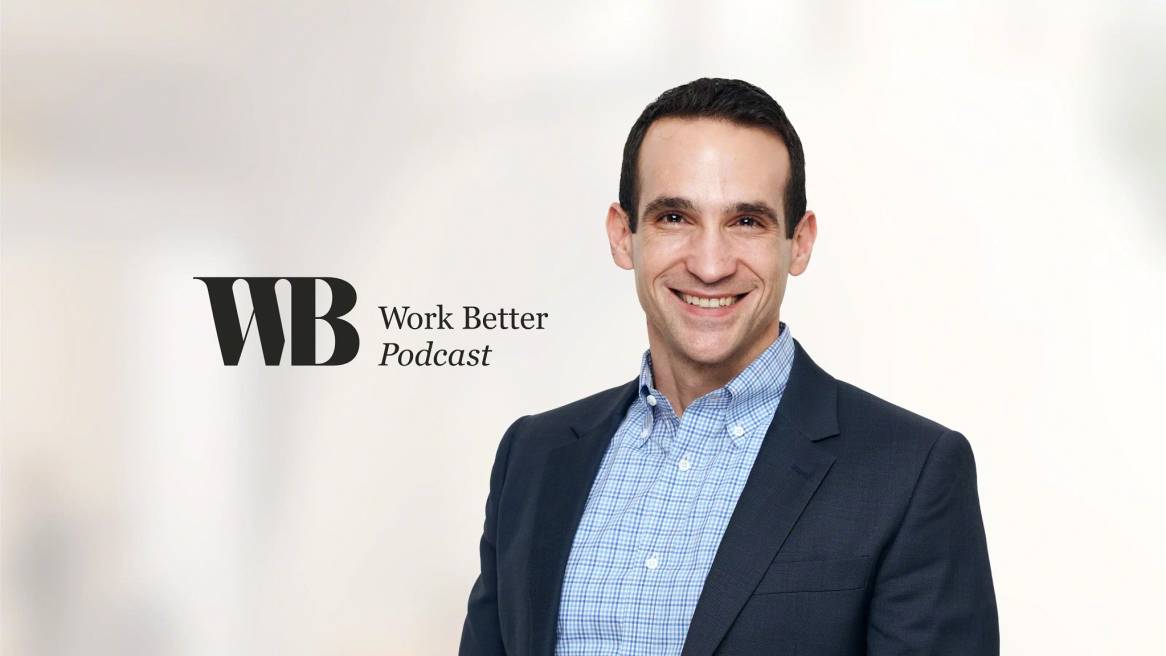
My guest today is Nir Eyal, a behavioral design expert and author of the best-selling book, Indistractable: How to control your attention and choose your life.
Nir says it’s not about the right time management app or even as simple as turning off the pings, dings and rings. Rather, he encourages us to look inside ourselves and understand our motivations. He gives us the four steps to finding more, deep focus at work. If you’ve ever struggled to focus on the task at hand, I think you’ll enjoy this lively conversation.
Enjoy the listen.
========================================================================
CC: Hi, Nir, welcome to Work Better.
Nir Eyal: Hey, Chris, great to be here.
CC:
I am really happy that you were able to join us today because I think this is an issue that a lot of folks are struggling with, have struggled with for a long time. And before we get started talking about distractions, I want to take you back to a story that you told about playing with your daughter one day, and you were working through some games that were in a book. And I think I might actually have that same book that I played with my daughter, as you described it. Can you tell us about what happened that day?
NE: Sure. So that was kind of the genesis of why I wrote Indistractable was that I had this moment in my life that really made me reconsider my own relationship with distraction. I was with my daughter one afternoon, we just had some quality daddy-daughter time, and we had this book of activities. One of them was to do a Sudoku puzzle together. Another was to have a paper airplane throwing contest, all these kinds of games that you could do with your kid.
And one of the activities was to ask each other this question. I’ll never forget it. The question was, “If you could have any superpower, what superpower would you want?” That was the question. And though I remember the question word for word, I cannot tell you what my daughter said in that moment because I was too busy “just giving me one quick sec honey, I just need to check my phone real quick,” And by the time I looked up for my device, she was gone because I had sent her a very clear message that whatever was on my phone was more important than she was, and she left the room to go play with some toy. So that’s when I really had to reassess my own relationship with distraction. And if you ask me today what superpower I would most want, I would tell you it’s the power to be Indistractable because there is no part of your life, whether it’s your mental health, your physical health, your emotional wellbeing, your work performance, everything requires you to be able to harness your attention. Choosing your attention is truly how we choose our lives. And frankly, Chris, if I’m honest with you, it didn’t just happen with my daughter.
NE: When I got distracted, it would happen because I would say I was going to go to the gym, but I wouldn’t. I was going to eat right, but I didn’t was going to work on that big project and somehow I would procrastinate and delay and delay. And so I really figured out that this is the skill of the century. This is what I wanted for myself. And that’s really why I wrote this book. I wrote it for me more than anyone else, and it has completely changed my life. I’m 46 years old now. I’m in the best shape of my life, not because I’m particularly athletic or I have good genes. I hate exercise, but I do it because I say I will. I’m fully present with my kid and my friends and my spouse because I say I will. And it turns out that there’s so many benefits to being accountable to yourself as you are with others.
CC:
Yeah, I feel similarly. Like I found myself in situations, particularly with my husband, where he might be talking and I had the phone laid down on the dining room table, and I’m just changing the music or whatever it is that I think I need to do in that moment. But it’s pulling me away from the conversation. So in our personal lives, I totally get it. Let’s talk a little bit at the organizational level. What happens if we are not able collectively to get this under control?
NE: Oh, I think we’ve all seen what happens that I think the modern workplace today is a den of distraction. And what I want to add to this conversation is a little bit, a lot different than what most people say. I think most people, other books on this topic, and there’s been many of them, they point the finger at the tools and I read all those books and I tried all those techniques, and guess what? None of them worked. Because what I discovered in my decade of research into the psychology of distraction is that only 10% of our distractions begin from outside. We call these external triggers. So the classic, the pings, the dings, the rings, this is what people tend to blame for their distractions. But studies have found, we’ve actually done research where we see why people get distracted. And it turns out that 90% of the time that we get distracted, 90%, it’s not because of what’s happening outside of us. It’s about what’s happening inside of us. We call these internal triggers.
What are internal triggers? Internal triggers are uncomfortable emotional states that we seek to escape, boredom, loneliness, fatigue, uncertainty, anxiety. That is the source of 90% of our distractions. So what I offer up in the conversation is to tell people that these tools are just the symptom of a deeper problem. That all these other books that basically tell you stop checking email, stop looking at your phone, right? Stop doing this, stop doing that. That’s unrealistic. If we stop checking email, if we stop using social media, we will get fired. Our jobs depend on it. Only these professors in their ivory towers can afford to give that kind of advice. They have tenure, but normal people will get fired if we stop checking email. It’s ridiculous advice. So what we need is a tech-positive approach that realizes that it’s not the tools. We love blaming the tools. We love blaming Slack and email and WhatsApp and SMS. We love blaming the tools, but the real source of the problem is much, much deeper because again, 90% of the distractions begin from within. And then to your question, Chris, about in the workplace, there’s a whole section in my book where I dive into this topic very deeply on how to build an indestractible workplace. Because if you have the kind of workplace environment where people are running around doing what’s called reactive work, there’s two kinds of work. There’s reactive work, reacting to emails, reacting to notifications, reacting to taps on the shoulder from the boss.
That’s reactive work. And everybody’s job requires some amount of reactive work, but people become habituated to reactive work
And It pushes out what’s called reflective work. Reflective work is the kind of work that can only be done without distraction. Planning, strategizing thinking for God’s sakes requires us to sit and reflect without distraction. So what many people do today is that they become so habituated to turning to email when they don’t know what else to do, to checking slack when they don’t want to prioritize by going to meetings as opposed to sitting down and actually thinking and doing the hard work they have to do. They are just habituated, if not all- out addicted to this reactive work. And that crowds out all the reflective time where real work gets done. And so what happens to many of us is that you have to do it after work. Real work happens when you go home. And of course, who pays the price? You pay the price because you’re not exercising, you’re not going to the gym, you’re not being with your family. Your family suffers from it. And so that has got to stop. And so what I help people do is actually build an iindistractable workplace, not only from the top down, not only things that you as an employee can do, but also from the bottom down that we can actually build these workplaces so that our staff doesn’t burn out, that we reduce churn, that we have happier, healthier employees by making sure that people can do their best work.
CC: Yeah, that is a lot to unpack, Nir.
So I want to go back. We were talking about technology as a source of distraction. The other thing I hear people blaming a lot is other people, I go into the office and there’s loud talkers or I don’t want to blame other people, but I find myself being visually distracted someplace. Like if I’m sitting in a place where I see people walk by, I’m imagining that this is some kind of an innate human response that I see somebody go by in my peripheral vision, and I look, I look and I find myself doing that. So as you were talking about this kind of human condition where I don’t know that we’re hardwired necessarily, but how would you describe that, where other people might be part of what we’re feeling is pulling us away from the work that we need to do?
NE: Absolutely. I mean, at the end of the day, that is the problem in some other people. And in large part, it’s not the technology. And I think the closer we can understand that it is a human nature. We are a social species. And so once we understand that that’s the root cause of the problem, we realize that it’s a culture problem. That the big takeaway for me researching and writing this book was that distraction in the workplace is a symptom of cultural dysfunction. I’ll say that again. Distraction is a symptom of dysfunction. If you can’t raise your hand and say, Hey, boss, I’m real sorry, but I cannot do my best work if I’m constantly interrupted every 30 seconds.
If you can’t raise your hand and have that conversation, Chris, that is the problem. It’s not the technology, it’s not anything else. It’s the fact that you can’t talk about the problem. And so that’s actually the first trait of a company that is indistractable, is that they give people the psychological safety to talk about this problem. Because if you can’t talk about this problem of, look, I can’t do my best work if I’m constantly interrupted, I promise you there’s all kinds of other skeletons in the closet too. So whether it’s visual distraction, auditory distraction, tech distraction, the first step to building an indistractable workplace is giving people the psychological safety to raise their hand and talk about the problem so we can fix it. Just like any other business challenge. And I actually document several companies, slack and the Boston Consulting Group, who actually are these indistractable companies, or at least they were when I profiled them. Slack has since been acquired. I heard that culture’s changed,
But they really, Slack was a great example because Slack was one of these products still today that when I survey people and I ask them, “what’s the most distracting technology you work with?” Number one is always email. Number two is Slack or some other group messaging system. When I went to Slack headquarters, I thought I was going to find a very distractible workplace. Nobody uses Slack more than Slack. That’s not at all what I found. They have this workplace culture where they have built one, psychological safety to let people talk about the problem. They give employees a forum to talk about the problem. And then third, and most importantly, management exemplifies what it means to be indistractable. So this is actually the same exact advice I give CEOs as I give parents. You can’t tell your employees, you can’t tell your kids “stop getting distracted all the time.” If meanwhile, you’re checking your device, and I see this all the time, right? When I go give these very expensive workshops to corporations and teach them how to be indistractable, is it the Gen Z that’s on their phone? Is it the young kids, the people who are, it’s their first job out of college. No, they’re not checking their phones. They know that’s rude. It’s the big boss who wants to show everybody how important they are and that they’re working 24/7. That’s who’s constantly on their device.
So those three attributes of giving people psychological safety to talk about the problem, a form to talk about the problem, and then finally exemplifying as leaders, what it means to be in distractible. This is the three steps to building an indistractable workplace.
CC:
Yeah, I don’t know if this is a fourth one or just an extension of what you just said, but I find there’s also a culture sometimes of the expectation for an instant response that if you don’t respond right away, you’re viewed as being unresponsive that you don’t care.
NE: Totally.
CC: And that kind of puts people in the spot of, I’ve got to keep checking, because what if that moment that I am focused on a project, somebody, the boss needs me to do something and I miss that, then it makes me look bad.
NE: You’ve exactly proven my point here. This is what we call the cycle of responsiveness: that the more responsive we are, the more people expect and see that that’s what is expected of them. And then this vicious cycle continues. And meanwhile, we get really good at responding to emails, but we don’t stop and realize that that’s not what we get paid for. We don’t get paid to respond to emails. We get paid to do great work. And so if your job is nothing, but if you work on a customer support line, yeah, you do a hundred percent responsive work, but almost nobody does that. All of us have some amount of time that we need for reflective work. So finding that time and apportioning it out to say, okay, this is my reflective work time and this is my reactive work time. If you don’t plan that time and set it aside and protect it that time for reflective work time, I promise you, you’re going to run real fast in the wrong direction.
CC: So you said something earlier that I found a little surprising that I think people would be interested in hearing more about, which is this idea about distractions are actually a way to avoid pain, or there’s something that we’re trying to avoid. I never really thought about distractions in that way. Can you talk about that, Nir?
NE: Absolutely. So the first step to becoming indestructible, there are four steps. The first step is mastering internal triggers. We talked about how distraction begins from within 90% of the time. So external triggers the stuff about here’s how to this special app or gray scale your phone or tips and tricks. That stuff is cheap. It comes and goes, and it doesn’t work very well. External triggers are only 10% of the problem. So let’s tackle the big problem first. The biggest problem are these internal triggers, and so we have to understand how we can master them or they become our masters. And so to do that, we have to ask ourselves this fundamental question, which by the way, for historical perspective, is not a new question. People think that distraction started with the smartphone. Nothing could be further from the truth. Plato, the Greek philosopher 2,500 years ago, was complaining about how distracting the world was, and he was talking about this terrible technology of the written word that was going to Aristotle said in feeble men’s minds. So every new technology we flip out about and think it’s making us rotting our brains. And of course, that’s not the case. So what we have to do is to realize that it’s these internal triggers that we’re trying to escape from. So the deeper question is not just why we get distracted. The more fascinating question is “why do we do anything and everything? What is the seat of human motivation?” And you’ve probably heard in the business context this idea of carrots and sticks, right? You’ve probably heard this dichotomy.
CC: Oh yeah.
NE: It turns out it’s a nice metaphor, but it’s wrong. That when you actually look inside the brain, when we look through FMRI studies and we can actually see blood flow in the brain, we can see that the human brain is not motivated through carrots and sticks. It’s motivated by one thing and one thing only, and that is the desire to escape discomfort. That everything you do, everything you do, is about the desire to escape discomfort, even wanting to feel good. Think about it, craving, wanting, lusting, hungering after something that feels good, that feels pleasurable, is itself psychologically destabilizing. The way the brain gets us to act is by spurring us to action, by relieving the discomfort of wanting to feel good.
So to me, this is very empowering. Some people say, oh, that’s kind of pessimistic. No, no, no. Quite the opposite. That knowing that everything you do is one thing only, and that is the desire to escape discomfort. That to me is incredibly empowering because that itch to get distracted, just a feeling, right? Smoking that cigarette that you’re trying to quit, just a feeling, eating that piece of chocolate cake. If you’re on a diet, just a feeling. Checking email when you really should be working on that big project or reading the news or stock prices or sports scores or whatever, you’re distracted by just a feeling. And so that’s where we have to tackle this problem. Distraction. I have to clarify for people, it’s not a moral failing. It’s not a character flaw. For the vast majority of people, it’s not ADHD. It’s very popular these days to get an ADHD diagnosis. I have one myself, I’ll tell you, that’s not the problem, right? Even if you have a adhd, I’m telling you, pills don’t teach skills. The first line of defense for all of us, those who suffer from a ADHD or do not, is to learn these skills, these non-pharmaceutical interventions that anybody can utilize with just four steps to become indistractable.
CC: Okay, well, we got to talk about the four steps, because clearly this is something that I think everybody’s kind of hanging on the edge of their seats going, okay, talk about what do we do? How do we fix it? So let’s start there.
NE: Let’s do it. Okay. So I’m not going to give you the tactics per se. The tactics are cheap. Tactics come and go. There’s lots and lots of tactics in the book. You can find tactics everywhere. What I want to give you, what’s more long lasting is the strategy, right? Because I’m not going to teach you tactics to check social media less when in a couple years who’s going to be using social media, we’ll be using other tools, VR or AI, or who knows whatever else. So I want to give you tools you can use for a lifetime, which means I’m not just going to teach you tactics, I’m going to teach you the strategy. Tactics are what you do. Strategy is why you do it. So why do we get distracted? We get distracted because we are doing things that are not what we plan to do.
NE: Let’s go back to the very definition of what is distraction. The best way to understand what distraction is, is to understand what distraction is not. So what is the opposite of distraction? The opposite of distraction is not focus. The opposite of distraction is traction.
CC: Okay.
NE: Makes sense. When you look at both words together, traction and distraction, they’re opposites. Both words end in the same six letters, A-C-T-I-O-N, that dispels action, reminding us that distraction is not something that happens to us. It is an action that we ourselves take. Both words, interestingly, also come from the same Latin root trahere, which means to pull. And so traction is any action that pulls you towards what you said you were going to do, things that move you closer to your values and help you become the kind of person you want to become. Those are acts of traction. The opposite distraction is any action that pulls you away from what you plan to do, further away from your goals, further away from becoming the kind of person you want to become.
CC: So interesting.
NE: So now we have our model. Now we have our four strategies. We have traction, we have distraction, and we have our external triggers and our internal triggers. So we’ve got these four parts.
CC: Okay
NE: So step number one, the most important step, is master internal triggers. You need to have tools in your toolkit ready to go so that when you feel boredom, loneliness, fatigue, uncertainty, anxiety, these uncomfortable emotional itches, which are the source of 90% of our distractions, you need tools ready to go so that you know what to do with those distractions. So they lead you towards traction rather than escaping them with distraction. So that’s step number one. Step number two is making time for traction. You cannot say you got distracted unless you know what it distracted you from. I’m going to say it again. You can’t say you got distracted unless you know what you got distracted from. So if I look at your calendar and it looks like what my calendar used to look like, it doesn’t look like anymore. It used to look like blank, right? Nothing on it. My to-do list was a mile long, which by the way, to-do lists are one of the worst things you can do for your personal productivity. We can talk about that as well.
CC: Oh, yes, please.
NE: A much better technique is what’s called time boxing, where you don’t measure yourself by cute little boxes. Why? Because we know what we do when we have cute little boxes to check off. We do the easy stuff.
CC: Sure.
NE: We do the fun stuff. We don’t do the hard and important work that we have to do to move our lives and careers forward. So we plan with time boxing, not to finish the task, not to finish the task, rather, the way you use a time box is to see how far you can get on a task without distraction. That’s it. It’s not about finishing. It’s about understanding how far you can get in a task in a given period of time when you do nothing but that task. That’s the secret to time boxing. We can go, there’s a lot more depth on how to do it, right. But that’s step number two, making time for traction.
Step number three is hacking back the external triggers. So this is relatively easy for most people. It takes maybe a few minutes to maybe an hour where we’re hacking back your phone, hacking back your computer, hacking back, your external space, hacking back, all these potential external triggers. The harder thing to hack back, the external triggers that we don’t think about are the silly meetings. We didn’t need to attend. The emails that we know. Harvard Business Review found that 50% of the emails that the average white collar worker sends, and 50% of the emails that the average white collar worker receives, they did not need to send or receive. Huge source of distraction. So I tell people exactly what to do about email, what to do about meetings, so that they don’t become this constant source of distraction. And then finally, the fourth and final step is to prevent distraction with a pact. A pact is a type of firewall against distraction. So if the first three steps fail for whatever reason, you have a backstop, you have this firewall against distraction, and it’s with these four steps: Master internal triggers, make time for traction, hack back external triggers, and prevent distraction with pacts, anybody can become Indistractable.
CC: Okay. Talk about the pact. What’s that?
NE: Yeah. So there’s several different kinds of pacts, and a pact is basically a pre-commitment. So you’re deciding in advance that I will do this thing or else. So for example, there’s what’s called a price pact, where there’s some kind of financial disincentive. So many times I’ll hear people really, the tough cases, the people who call me up, I do office hours every week, by the way. Anybody can call me and if they’ve read the book, ask me questions, and every once in a while I’ll get somebody who calls and says, oh, you know what? I’ve tried using your book and it’s just not working for me. And I’ve tried step number one, I tried step number two. I tried step number three, but I didn’t try step number four. Okay, what’s step number four? Well, let’s make a pact. So I say to them, this is the kind of person who says, “I can’t stop getting distracted. There’s no way. I can’t find time to exercise. I can’t find time to be with my kids properly. I can’t do this. I can’t.” I said, “Let me ask you something. If I paid you $10,000 to go to the gym tomorrow at 8:00 AM sharp, like you said you would, would you go to the gym?” Yeah, of course you would.
CC: Yes.
NE: So we’ve established you were just negotiating the price,
CC: Right
NE: So that would be an example of a price pact. And I give much more feasible examples for how people can do this. For example, I used to be clinically obese, and today I’m in the best shape of my life.
CC: No kidding.
NE: Oh yeah. Oh yeah. Very much
CC: So. Well, the audience can’t see you Nir, they can see a picture of you if they look online, but you are definitely not somebody who looks like you have ever been obese in your life.
For sure. And so the way, part of the way that I got in shape using these methodologies is having this price pact. So in my closet, there’s a calendar, and I use what’s called the burn or burn technique. So every day I have to either burn some calories or taped to that calendar is a fresh, crisp, $100 bill. And so every day I have a choice to make. I have a bic lighter right next to the calendar that I need to use to set that hundred-dollar bill on fire. Or I can go do some exercise. Do some pushups, go to the gym, go for a swim, go for a walk. I have to do some kind of physical activity. Okay? Now, I’ve been doing this for six, seven years. I don’t even need it anymore. But it was an amazing way to keep myself accountable to say, okay, what’s easier? Just do some darn pushups or burn a hundred dollars. I’ve never had to burn the hundred dollars because it’s this price pact I made with myself to make sure, as a last resort, I don’t get distracted from what I say I’m going to do.
Wow. Did you ever have to burn the hundred dollars?
NE: No, I just do the pushups at the end of the day. Okay. It gets easier and easier. So that’s just one example. There’s dozens of different examples. Price pacts, effort pacts, identity pacts, all kinds of different pacts you can use.
CC: Okay. So I lead a team. I know a lot of other people who lead teams. Are there ways that we can apply these four concepts to our group, work our teamwork together so we can accomplish things? Because a lot of what we do, of course, we need to accomplish things individually to contribute to the team’s work. But a lot of our work is done together.
NE: Absolutely. So if you are in a management position, it’s a goldmine. There’s all kinds of things you can do because you’re in a position to influence how your company runs. So we talked about earlier, giving psychological safety, a form to talk about this problem and then exemplifying what it means to be indistractable. Now, if you are in that management position, lots and lots of things you can do. The more difficult role is what if you are not in that management position? What if you read it, Indistractable? You’re doing everything you can possibly do, and yet your boss insists on calling you every night at 9:00 PM or sending an email on Friday afternoon and expecting an email the next Saturday morning.
What do you do if you’re in that position? I’m going to give you a trick actually. It’s a technique that has saved countless people, okay? It works like a charm. It’s called a schedule sync. Schedule sync looks like this. Okay? The idea of a schedule sink before I tell you how to do it is I’m going to protect you from the worst piece of personal productivity advice, the worst piece of personal productivity advice. We’ve all heard it a million times. It drives me nuts, is this, if you want to be more efficient, if you want to be better at time management, learn how to say, “No”
That is the stupidest advice. Anybody who’s actually had a job, you’re going to tell your boss, Hey, boss, no thanks. I don’t want to do that. No. Do people who give this advice actually have jobs for a living? You’re not going to tell your boss, no, you’re going to get fired. So what do you want to do? You don’t tell your boss. No. You help your boss do their job. What is the point of a manager? Again, we talk about what’s the point of a meeting is to gain consensus. What is the point of a manager? The point of a manager is to prioritize. That is the job of a manager is to prioritize. Everything else is details. So what you are doing is you are going to use this practice to help your boss do their most important job, which is to prioritize.
Here’s how you do it. You don’t say no. You say, Hey, boss, can I get 15 minutes of your time on Monday morning or whenever you can find some time? Just all I need is 15 minutes. Okay, boss. Alright, here is my time box calendar. I read this book Indistractable. It was really great. It helped me make this time box calendar. You see, here’s my working hours. Here’s what I’m going to do for you this week. I’ve got that meeting here. I’m going to have undistracted time when I’m going to check emails. I’m going to work on this big project you asked me to prepare, blah, blah, blah. Here’s my week. Okay? It’s all time-boxed to the minute. Here’s what I’m going to be working on for this week. Now, you see this other piece of paper here. On this other piece of paper, I’ve listed all these things you’ve requested of me that I’m having trouble fitting into my schedule. Boss, can you help me prioritize?
CC: Help me prioritize. Yeah.
NE: I didn’t say no. I’m asking you to do your most important job very politely.
Can you help me prioritize? And what will invariably happen is they’re going to look at that. They’re going to kiss the ground you walk on, because every boss is secretly thinking, “what are my people doing all day?” They’re all thinking this. They won’t tell you that, but that’s what they’re thinking. And you’re showing them, here’s what I’m doing all day. Now, if you’re asking me to do more than I have capacity for, what should I drop? And they’re going to look and say, you know what? That meeting’s actually stupid. You don’t need to go to that meeting. Work on that other project. That’s way more important. That’s where I want you spending your time. You’re doing what’s called managing up. You’re managing your manager by giving them the transparency into your calendar. This practice will change your work life.
CC: Yeah, I think that’s really great advice. Even if you don’t have a whole list of, here are the five things I’m doing. Just to be able to have that conversation and say, look, I’ve got these three different things kind of pulling me in different directions, can you help me with that? I think that’s great advice.
Nir, the other thing I have to talk about with you before I let you go, this is a great conversation, so helpful, but a lot of our listeners are thinking about the workplace, the physical workplace, whether it’s people designing them or people from HR organizations, a variety of backgrounds here, but we’re all kind of thinking about place. And when we ask employees, what are the most important things that you need in the workplace, two things come up consistently. The first one always is privacy. The second one is often something about wellbeing, spaces around wellbeing. So when we hear people ask about that, I’m curious what your reaction is to that in terms of what we need to do differently from a physical perspective. Is that fact that people are asking for privacy is that another way of asking for help so they’re not getting distracted? Or how do you interpret that, and what do you think we should do?
NE: Yeah, a few things. I think that part of that request for privacy is a request to be left alone, to work in peace. It’s people realize that to get into the zone, to do your best work, you need time. You can’t work on a complex task, a marketing campaign, a sales pitch, a strategy, whatever it might be in 30 second sprints, that’s not how the brain works. You just cannot do it 30 seconds at a time. You have to dedicate a block of time to get into it, to think about it, to think about all the edge cases that requires focused work. You have to put that time aside to do it. But if people are tapping on the shoulder every five minutes, or in many cases every 30 seconds, you just can’t get that work done. So that’s what they’re asking for. In fact, the workaround, I mean, this is what I think. I would love to see this built into the design of our spaces, but what I’ve had to do is actually put a screen sign inside every copy of my book. There’s this piece of red card stock, this thick piece of paper. It’s bright red. You pull it out of the book, you fold it into thirds, and you put it on your computer monitor. And people use this. It says, “I’m indistractable at the moment, please come back later.” Because what we found is that people just wearing headphones, nobody knows why you’re-
CC: It’s not a signal anymore. Yeah. Are you just listening to music?
NE: Exactly. Are you listening to a podcast? Are you watching a YouTube video? Nobody has any idea. So they keep interrupting you. But when you have a big red sign that says, “I’m indistractable, come back later.” It works incredibly well. But I’ve had to put that in my book. I wish we could design spaces where it’s okay to tell people, “No, come back later. Don’t bother me right now.”
CC: Yeah, maybe if you had a light, something that you could just, a red light that you could flip on. Well, maybe not. But
NE: People used to have this with their door. When people have an office, it’s much easier. They don’t have this problem. But with open floor plans, that created a new problem. Now, there are of course, benefits to an open floor plan, office layout, but I think we could have the best of both worlds where we have the dynamism of an open floor plan office, but also when I need to focus, when I need to work, that light goes on. That piece of paper goes up, whatever, some kind of signal that makes it okay to say, please don’t bother me right now.
CC: We’ve found that just adding screens like portable privacy screens can make a big difference. Another way of kind of signaling, I need to be able to focus. I’ve kind of hunkered down here. Or even having places that you can go to, even if your desk is more open, to have a place that you can go to can make a huge amount of difference. Well, Nir, I have found this conversation personally, really, really helpful, and I’m sure our listeners have too. So I think everybody’s going to be interested in picking up a copy of Indistractable and giving it a read. Nir’s got a lot of great information there. So, thank you so much for taking the time to join us from Singapore today.
NE: My pleasure. Thank you so much, Chris. It was a pleasure.
CC: Well today I learned to find a distraction free workplace and put boundaries around my time to get important, focus work done. And maybe I’ll even make a pact with myself to do it, but I can’t bring myself to burn to 100 dollars.
If you liked this episode, check out Season 5 Episode 3 with Gloria Mark on our 47 second attention span. She share how small changes in our behavior, and our work environment, can help us find focus – for more than 47 seconds.
Don’t miss next time when I’m joined by Franceco Zurlo, Dean of the School of Design of Politecnico di Milano. He studies the impact of design on business innovations and how it makes all of our lives better. He helps us understand the connection between good business outcomes and good design.
If you enjoyed today’s conversation, would you share the episode with a friend or colleague, like us and visit us as steelcase.com/research to sign up for weekly updates on workplace research, insights and design ideas delivered right to your inbox.
Thanks again for being here and we hope your day at work tomorrow is just a little bit better.