
Inside Innovation
Choice, Control + Transparency
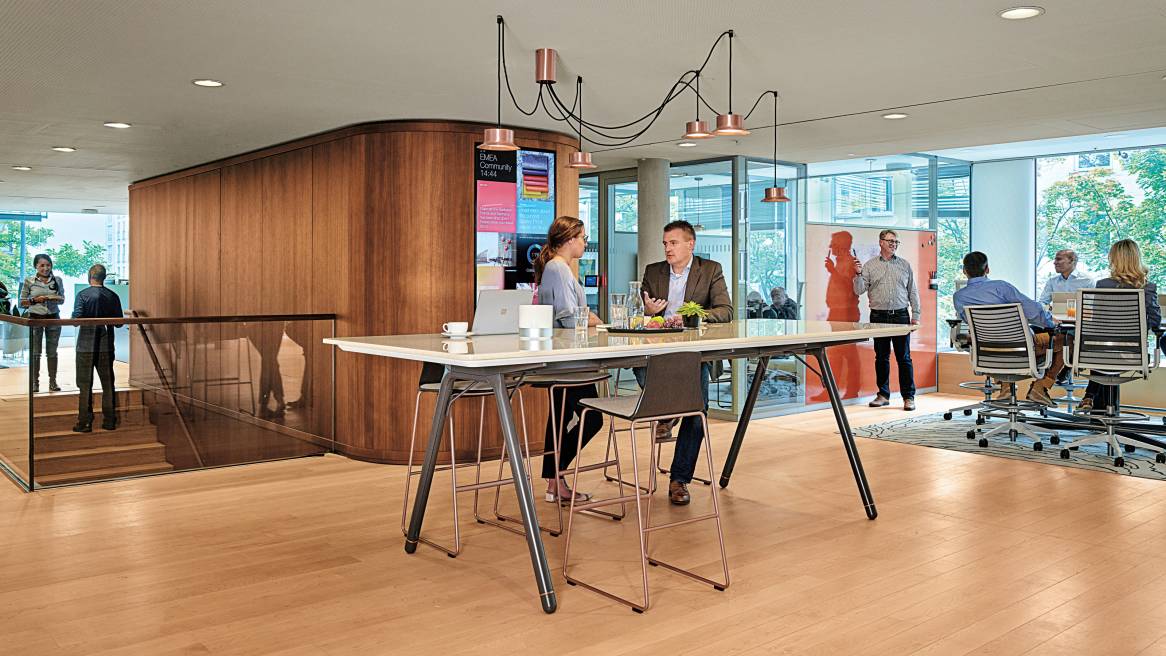
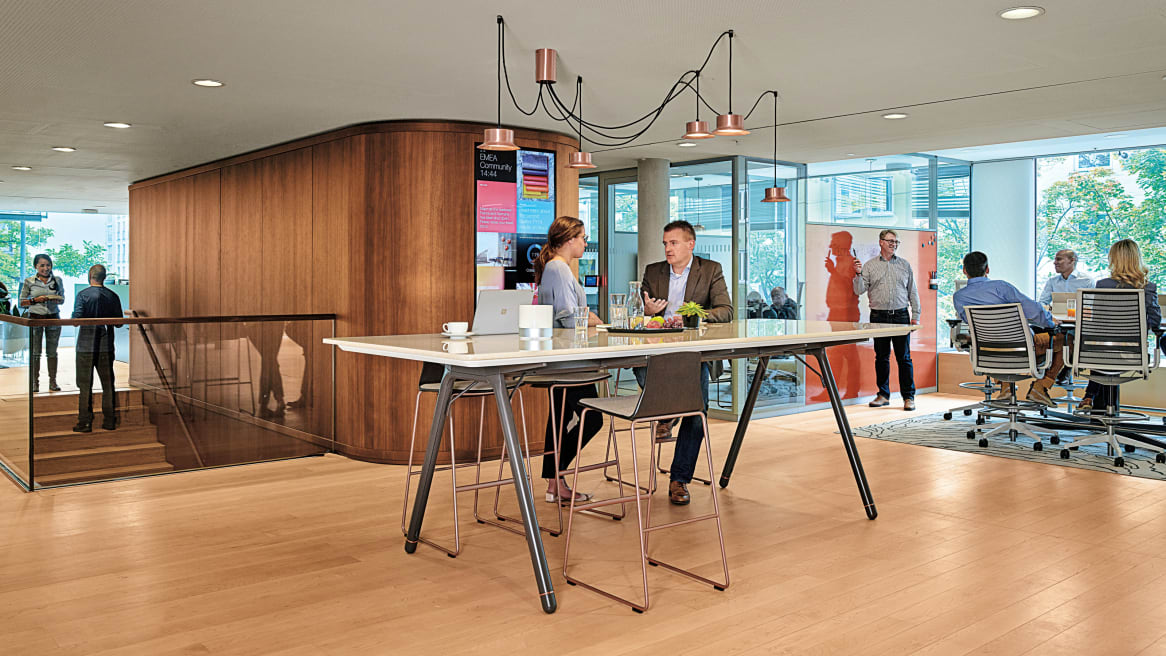
Breaking from the paradigm in many European workplaces of providing primarily one-person or shared private offices, the LINC was designed as an ecosystem of interconnected and interdependent environments. It provides different spaces and technologies for different kinds of work, and recognizes that having choice and control can improve people’s wellbeing and engagement.
The design intentionally encourages people to choose from a variety of environments depending on their task, the technologies they’re using or simply their state of mind.
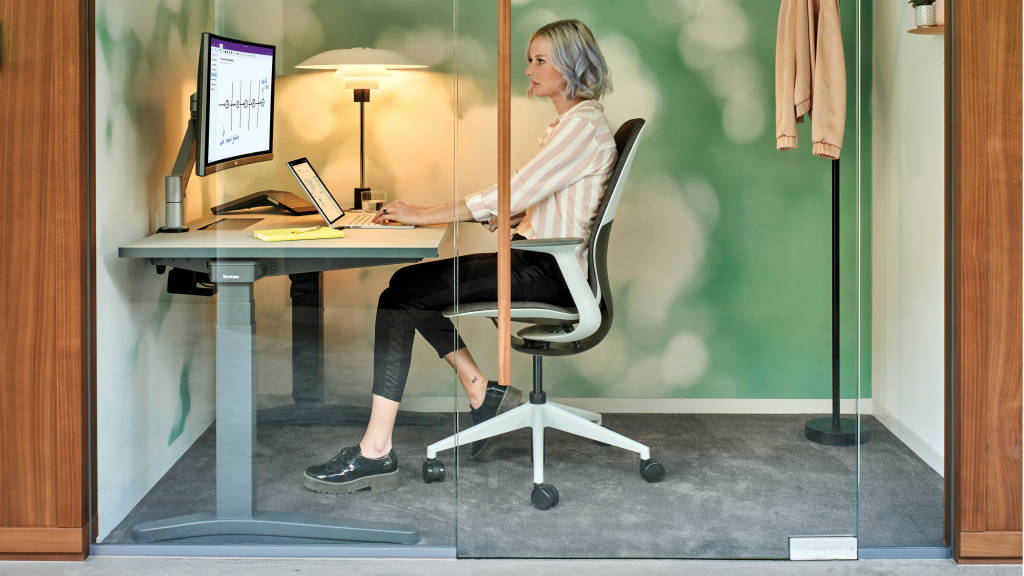
Workers also choose the level of privacy they need with a range of spaces for collaboration and interaction as well as shielded or enclosed settings for focused work, personal conversations or a quiet interlude. They can manage their physical and virtual presence at work, with areas and technologies that support face-to-face interaction as well as virtual collaboration with colleagues in other locations. Straddling just six hours of time difference with both the Americas and Asia Pacific, the LINC leverages technology to effectively bridge time zones, helping distributed teams learn from each other and stay closely aligned.
“It’s about sharing resources, blending boundaries and interacting as a cohesive community.”
James Ludwig Steelcase
A Catalyst for Creativity + Innovation
Innovation is as physical as it is mental, contends Ludwig. “It’s dependent on human interaction, exploration and experimentation. That means the places that bring people together, physically and virtually, are critical to innovation outcomes,” he notes.
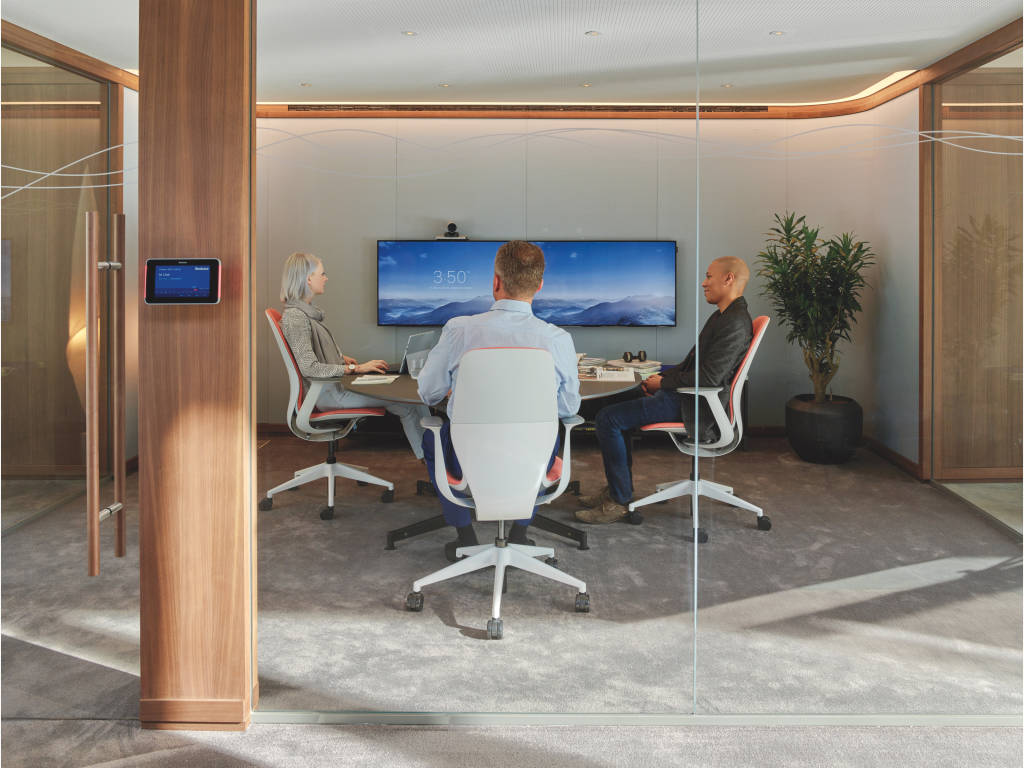
Encouraging a shift towards more creative work, several spaces integrate architecture, furniture and Microsoft Surface technologies to support group ideation, individual focus and pair-based work. Designed to support individuals and teams as they cycle through an iterative creative process, these spaces encourage equal participation and fluid transitions between different modes of work, balancing the need for deep immersion in content with moments of reflection and renewal.
Several design studios support co-located and distributed teams. Open project bays are places to brainstorm, array information and quickly prototype concepts. Anyone can walk by, engage in the work, share ideas and help solve problems. These on-demand spaces are not assigned to any single team, and they can be easily “hacked” to meet changing needs, which also increases their utilization.
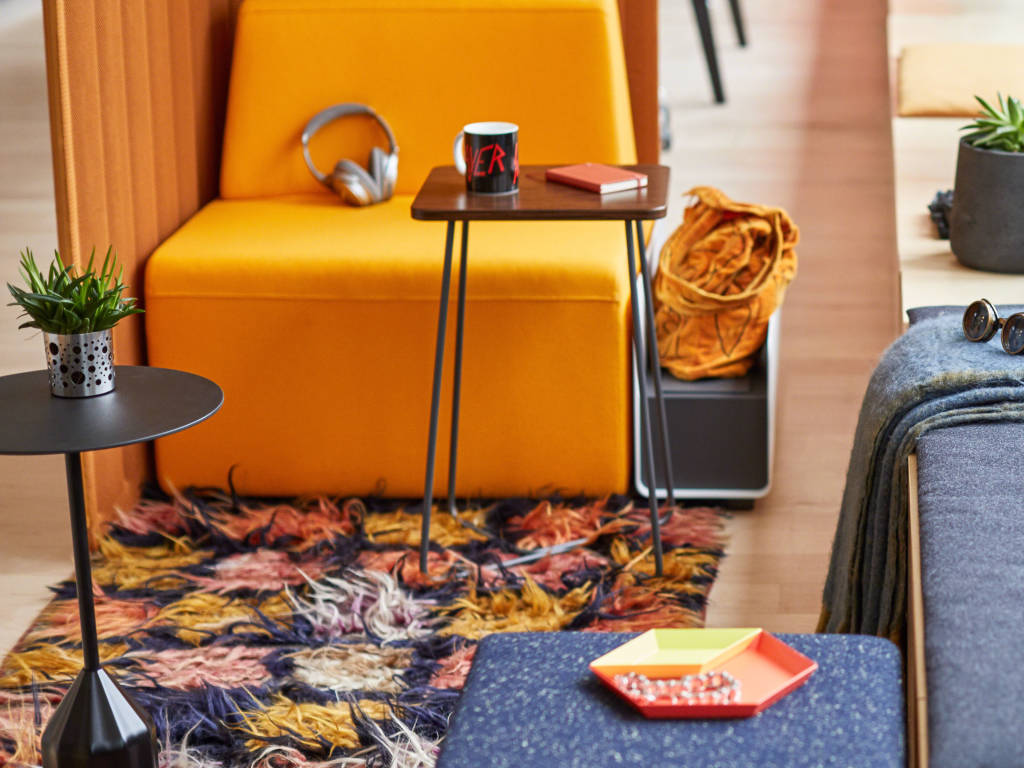
Cross-disciplinary teams get formed and dissolved based on project status or priorities, but functional hubs are a consistent feature of the LINC. These are places where colleagues in the same discipline can gather to array information, hone their specialized skills, mentor and be mentored and strengthen their sense of belonging and identity.
The design studios also include settings for individual focused work, plus enclosed meeting spaces and videoconferencing rooms. A resource center with printers and supplies and a neighborhood café are centrally located to encourage informal chats.
On the top floor, the model shop is a well-equipped space for prototyping and hands-on problem-solving. Instead of being relegated to the basement or a garage-like environment as model shops often are, at the LINC it is connected to daylight and surrounded by expansive views of Munich. Like the rest of the LINC, it’s intended to be an inspiring environment that’s as much about wellbeing as it is about work.
NEXT CHAPTER – A Contemporary Model of Leadership
PREVIOUS CHAPTER – Learning to Learn Together