
How Arkema Built a Workplace Designed to Bring People Back Together
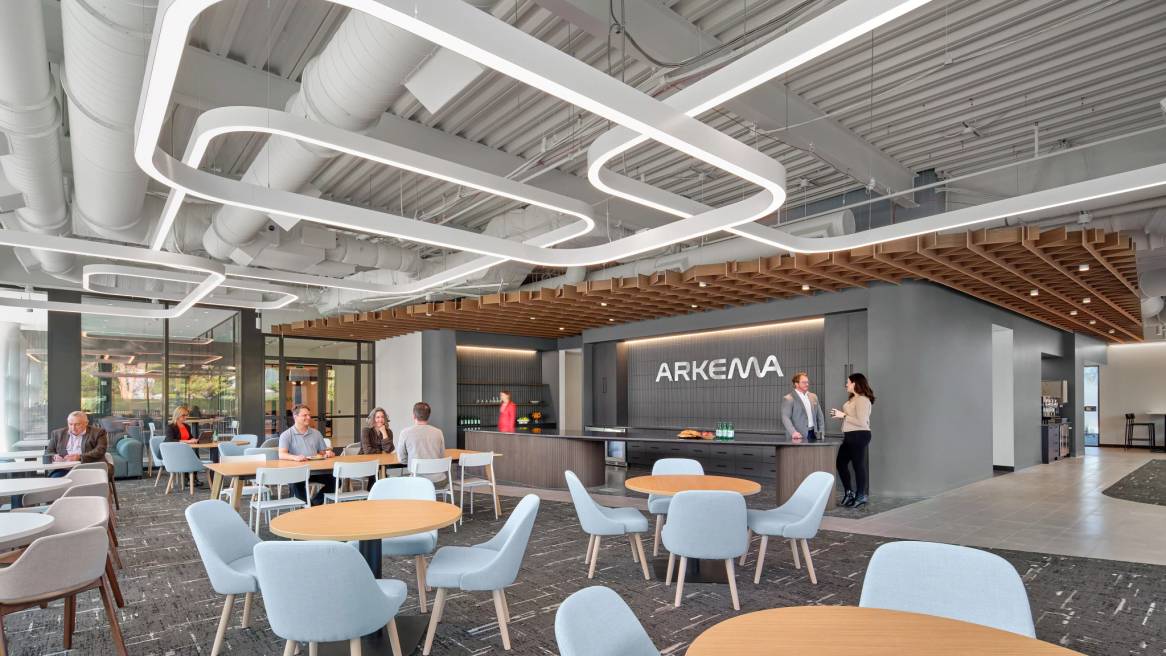
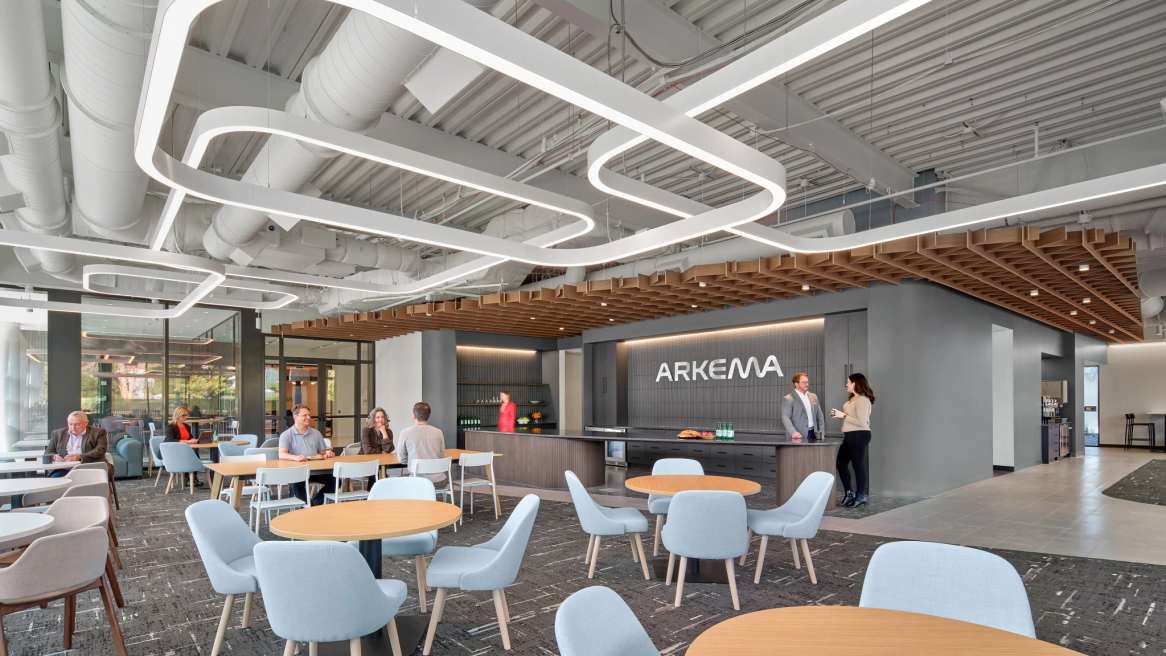
When Arkema began planning a new North American headquarters, the goal was clear: consolidate teams scattered across an aging campus, improve collaboration and create a workplace that could support recruitment and retention in a competitive talent market. The French-based global specialty materials company, whose administrative staff had long worked in outdated buildings in King of Prussia, Pa., wanted a space that better reflects how its people work — and how the company wants to be perceived.
“You could work there for years and barely know people outside your own building,” says Marie Juliana, who leads strategic projects for Arkema North America and oversaw the project. “People went from the parking lot to their building and back again. There wasn’t much reason — or opportunity — to cross paths.”
That physical separation shaped daily behavior. In winter or bad weather, employees avoided walking between buildings altogether. Informal conversations were rare. Teams operated in silos. Even shared amenities, like the cafeteria, went underused. Over time, leaders began to see that the layout was quietly eroding the sense of community that supports innovation, engagement and retention.
At the same time, the interiors themselves were aging. Many employees worked in high-walled cubicles more than 30 years old, originally designed for paper-based work and individual tasks. Perimeter offices blocked natural light and privacy was inconsistent. “It was very compartmentalized,” says architect and Stantec principal Jessica Kavanagh, whose team led the design of the new headquarters. “The space didn’t reflect how people actually work today, or how Arkema wants people to feel when they come into the office.”
.
.
Designing for community, not just efficiency
When Arkema committed to creating a new headquarters, the goal was not simply to consolidate space. It was to rebuild connections. “It wasn’t just about aesthetics,” says Juliana. “It was about whether the space helped or hindered how we want to operate as a company.”
From the outset, leaders defined success in human terms:
• bring people together across functions to foster community
• make collaboration visible and natural
• create a workplace that would appeal to current employees and future talent alike.
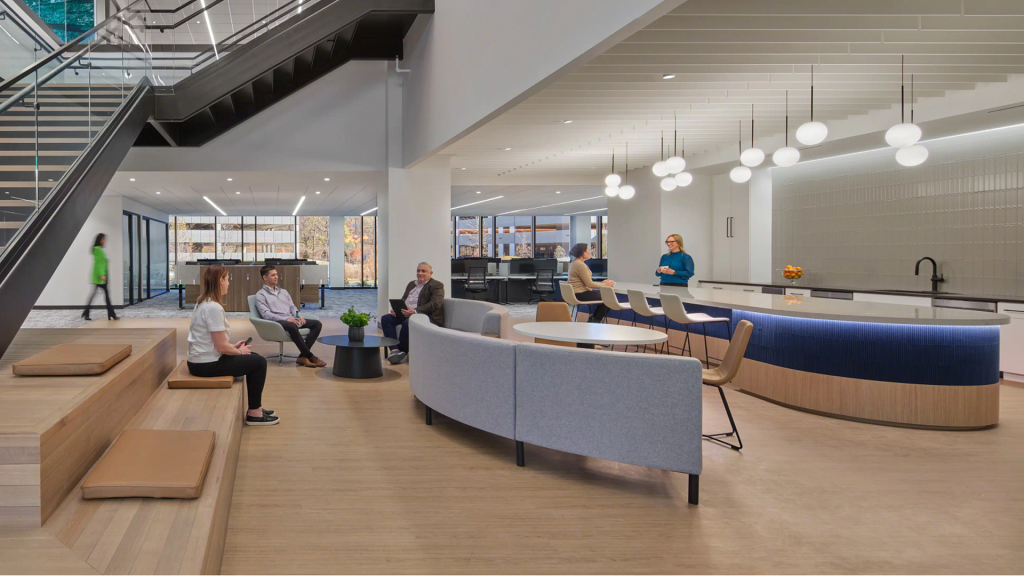
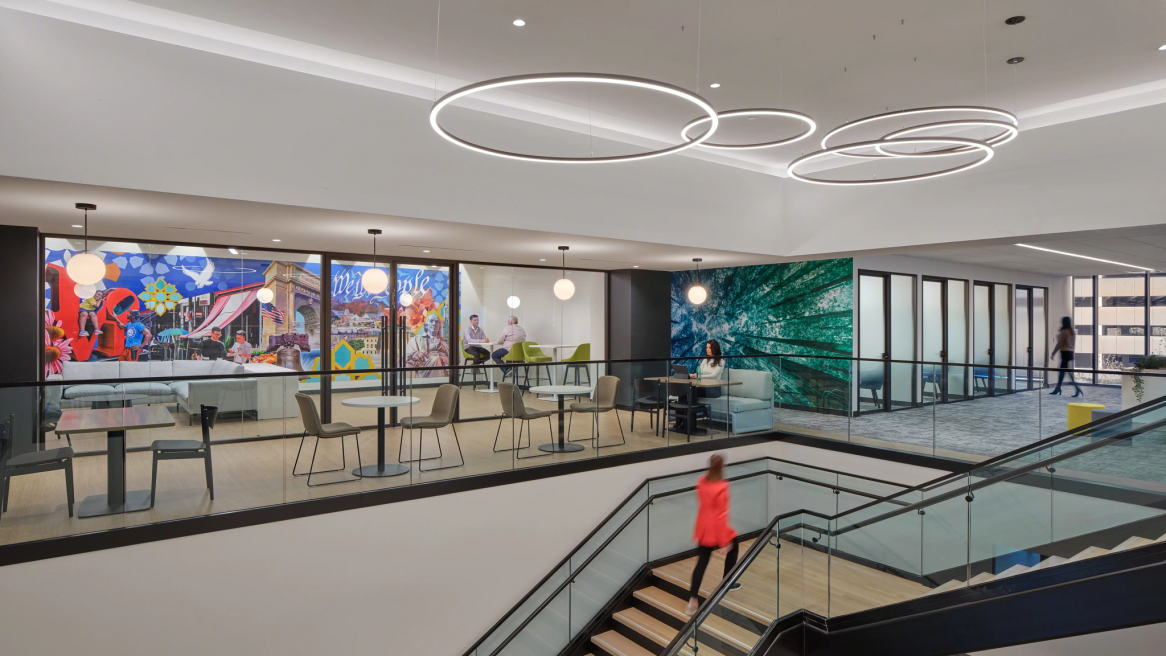
The new building brings employees under one roof for the first time, organizing spaces into team neighborhoods while also allowing flexibility in where people sit. “We wanted the space to encourage movement and chance encounters,” says Kavanagh. “Not just because that’s healthier, but because that’s how relationships form.”
.
.
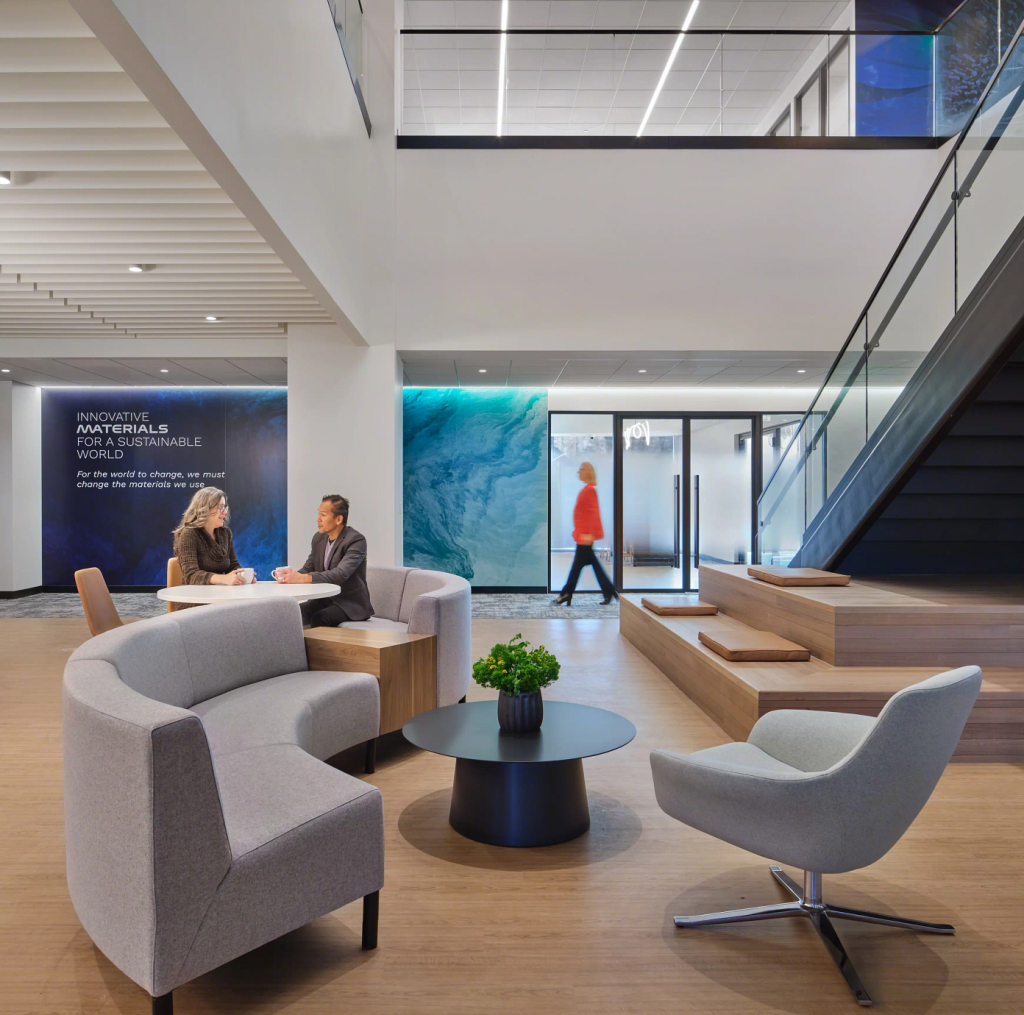
The building’s first floor functions almost like a public square. Alongside the main café, which serves as the social heart of the building, are conference spaces and an innovation lab that showcase Arkema’s research and materials. Executive offices sit on the main floor, near communal spaces, signaling accessibility rather than hierarchy. “That was a big signal,” adds Kavanagh. “It says that leadership is part of the community, not separate from it.”
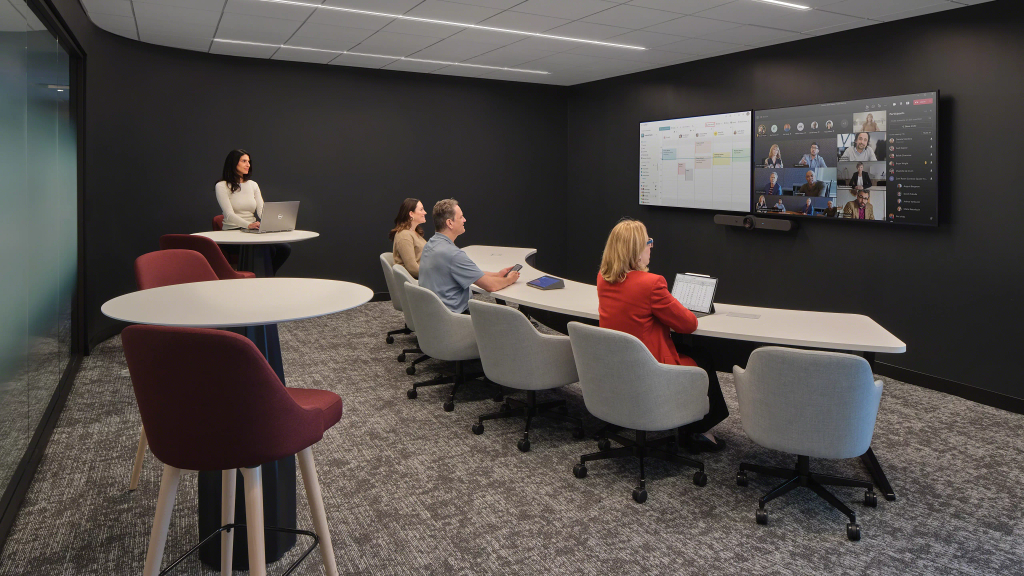
Above, the second and third floors are the team neighborhoods. Multiple teams can access height-adjustable workstations, quiet rooms for focused work, enclosed spaces for video calls, and shared meeting rooms. The result, employees say, is a workplace that feels more social — and more alive. People linger longer, meet more often in person, and report a stronger sense of belonging.
.
.
Preparing people, not just the building
Still, leaders understood a new building alone would not change how people work. Moving from assigned offices and paper-heavy work to a more open, digital and flexible environment required careful preparation. Arkema partnered with Steelcase’s Applied Research and Consulting team to support a comprehensive change management process. That work began months before move-in day and focused as much on mindset as on logistics. “This was a big shift for people,” Juliana says. “We knew we couldn’t just hand them a new building and expect everything to fall into place.”
Workshops with senior leaders came first, helping them understand their role in modeling new behaviors — holding informal meetings in shared spaces, being visible and reassuring teams about privacy and focus. Those leaders then became ambassadors, equipped to answer questions and address concerns within their departments.
Hands-on pilot spaces set up in the old campus invited employees into the process. They tested new furniture, technology and layouts, practiced using shared workstations, and offered feedback that informed final decisions.
“The goal was to make the change feel familiar before it was official,” says CBRE’s Sammie Sukonick. “When people walked into the new building on day one, they already knew how it worked.” A dedicated internal website, town halls and frequent communications reinforced the idea that the move was not being done to employees, but with them.
From the beginning, the project was treated as a shared effort between Arkema’s internal teams, design firm Stantec, CBRE, Steelcase and Corporate Interiors — the local Steelcase dealer that helped execute Arkema’s vision. “This was never just a facilities project,” says Sukonick, who worked closely on coordinating between teams.
“The collaboration was constant. Everyone had a voice — facilities, HR, leadership, employees. That made a huge difference in how the change was received. It was about people, culture and how different groups could come together to shape the outcome.”
A workplace that reflects Arkema’s future
Today, leaders say the new headquarters has become a tangible expression of Arkema’s culture — and a powerful tool for attracting talent. “When candidates visit, they immediately understand who we are,” Juliana explains. “The space reflects collaboration, innovation and care for our people. We didn’t just change the building. We changed how we come together as a community.”
At a Glance
Industry
- Specialty chemicals and advanced materials
Location
- Radnor, Pennsylvania
Size
- 120,000 sq. ft.
Number of employees
- 500
Design Intent
- Create a vibrant destination that brings people together across functions to foster community
- Transform how people work, collaborate and innovate
- Make collaboration visible and natural
- Create a workplace that appeals to current employees and future talent
Partners
- Design Firm: Stantec
- Commercial Real Estate Services and Investment Firm: CBRE
- Dealer: Corporate Interiors
- Change Management: Steelcase Applied Research + Consulting