
A Head and Heart Approach to Leadership (S8:E1) Transcript
Podcast
I believe that those organizations that are going to not only. Survive, but thrive in this place of perma crisis or poly crisis, they are going to be invested in the emotional stamina and wellbeing of their leaders and difference makers and internal change agents because when those folks are well, so will the work of their hands be well?
Chris Congdon: The last time you got a promotion, award or new job – how did it feel? Exciting, but also scary? Honoring, but also overwhelming? My guest today says when we’re given opportunities, be it a new job, new project or new responsibilities, there’s always an emotional cost too. She argues leaders need a support system of learning, community and care to fully thrive.
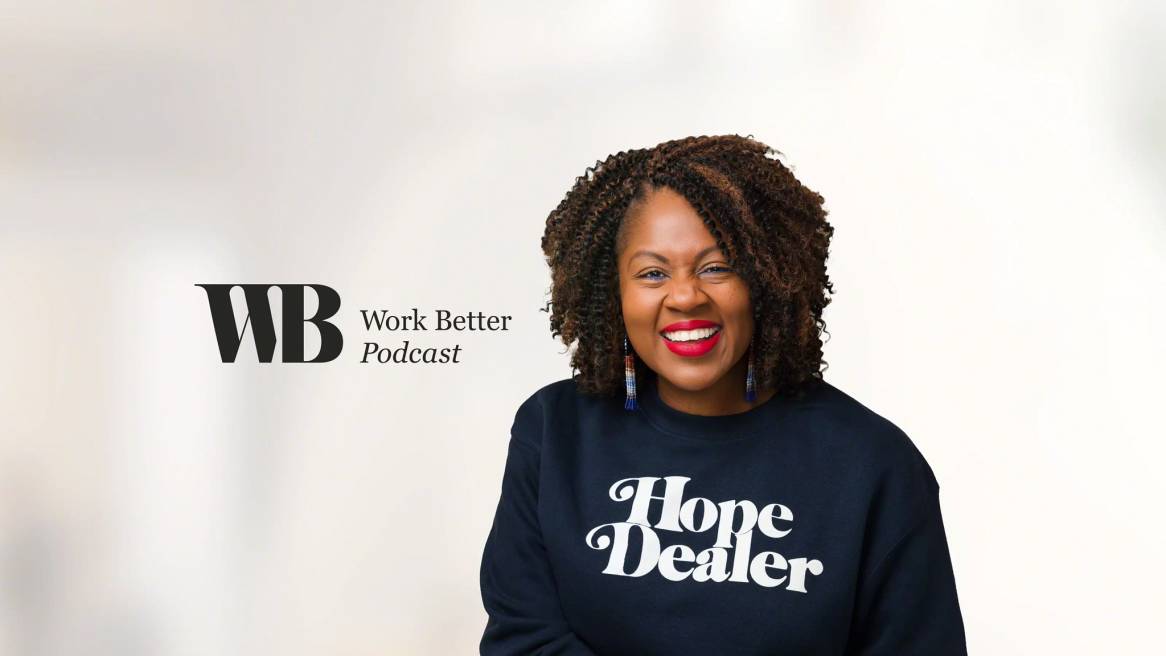
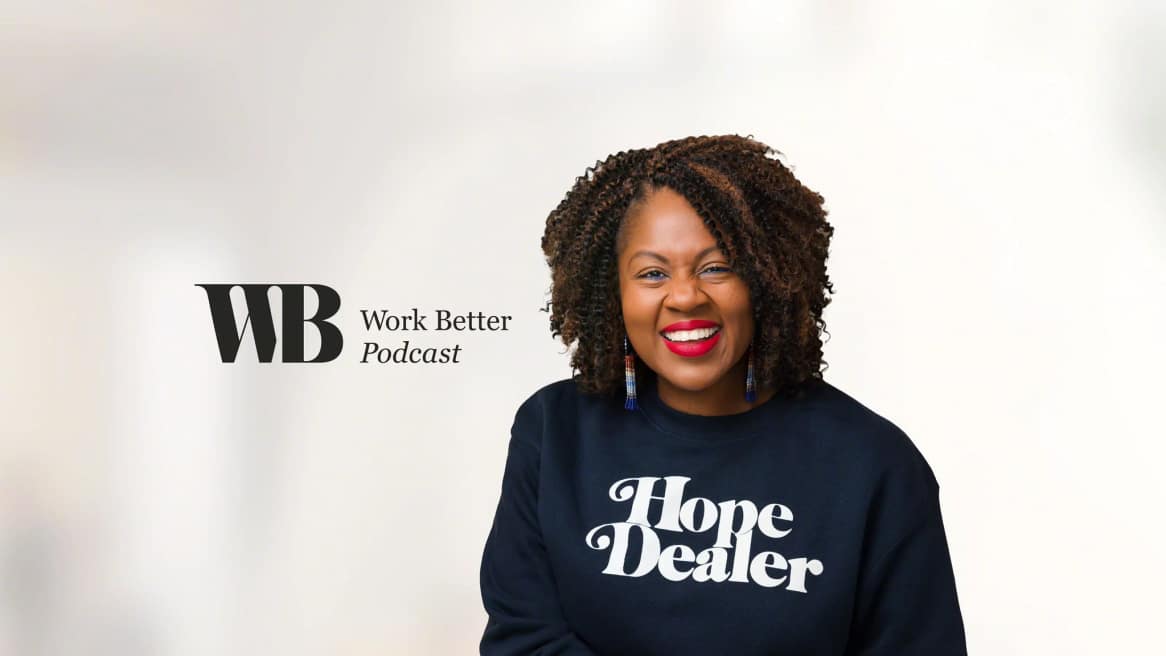
Welcome to Work Better. The Steelcase podcast where we think about work and ways to make it better. I’m your host Chris Congdon and my guest today is Shannon Cohen, founder of the Rockstar Woman Movement community, award-winning author, speaker and leadership trainer.
My conversation with Shannon covers what leaders need to thrive without burning out; how to foster a sense of belonging and the importance of community.
Enjoy the listen.
Chris Congdon: Shannon, welcome to work better.
Shannon Cohen: Thank you, Chris. I’m elated to be with you today.
Chris Congdon: Oh, I love to hear that. I love to hear that. I feel elated just having an opportunity to talk to you because I think there’s so much that’s going on right now that your message is probably gonna resonate with a lot of our listeners.
And I want to start by recognizing the kind of state we’re in, because it feels like work has changed more in the past five years than it has in generations. And I think maybe you use the term, Perma crisis. And I was just wondering if you could talk about that a little bit and what is this kind of current state, what does it feel like to people and what are they looking for from their leaders?
Shannon Cohen: Absolutely. So I can’t take credit for that term. It was actually a term that I read. It was coined by McKinzie and Company. And it was in a research publication that they produced earlier this year to try to encapsulate in verbiage what all of us feel. That we are absolutely working, leading, loving, serving, at home, at work, in our communities through an era that is being termed perma-crisis and poly-crisis, in other words.
I think leading through crisis risk and disruption is not new to anybody that is listening or anyone that’s in the workplace today. The difference is that we are used to being at least able to catch our breath in between a crisis and between risk. And so this concept of perma-crisis speaks to this rapid pace, this consistent presence.
It feels like an ever-evolving snowball effect of crisis after crisis, after risk, after disruption. We can’t even catch our breath right before we’re entering the next, and so this is requiring, it’s taking a new level of stamina, of transparency, and of leader care to navigate being in a state of perpetual crisis risk and disruption.
Chris Congdon: Well, I want to really get into all of those, but I think just even when you said stamina, like that really hit me because it, you know, it just feels like as a leader in an organization, you have to have so many diverse skills, and sometimes I feel like I need to know the answers to everything.
Even though there’s no way I possibly can. And so I think that carries a lot of pressure of that feeling of needing to just keep up with it all. You also say something about victories carrying weight. I want to hear a little bit more about that idea too.
Shannon Cohen: Absolutely, Chris. So about four years ago, I joined a fitness studio, and over the course of four years, I’ve released about a hundred pounds.
Weightlifting has a personal connotation for me. And so I think in the day that we live in as someone that lists weights, as part of my wellness practice, whenever we see someone win, get an achievement. Win an award, receive a promotion, our human conditioning is we clap, right?
We celebrate. That acceleration or that elevation in the life of that difference maker. But now what I see is anytime you get a promotion you just entered a new weight class.
For me, what that looks like is when I, as soon as I’m getting comfortable with the weight, our trainer comes and he puts a new, new plate, a 10 pound plate on each end of that bar because it’s now time to stretch in new weight.
And anybody that’s lifted, you know, weight in any way, you know, when you first start lifting a new weight, you shake. It’s not a capacity issue, it’s just that it’s new. And so this is why I often push back on imposter syndrome because I tell people it’s not an issue that you cannot accomplish it. What I often tell leaders is that when you enter a new weight class. What happens at the gym needs to happen in our professional lives. Once I started lifting heavy I now need spotters. When I was just lifting two pound weights, Chris, nobody needed to spot me.
Chris Congdon: Sure, sure, sure.
Shannon Cohen: But when I went to 45 and 50 pounds, or 70 pounds, now I need someone that’s there spotting with me because I’m lifting heavy.
And so the same thing is true with leaders. When we see a leader struggling in acclimating to a new level, I want our first question to be, not to question their efficacy, but to say, do they have the support systems in place, adequate spotters for the lift that they’re now lifting with this mantle, this title, this role, this responsibility.
Chris Congdon: Sure. Well, you know, I love this analogy and just, I’ll play it out a little bit more. Even if you feel like you can lift the weight at the end of the reps, your arms start to get tired or your legs start to get tired, you start to fatigue. And for me, that’s where a lot of the shaking will come in as like I can get that weight up, nine reps, but it’s that 10th rep where it’s like, oh, I start to get really tired.
And I feel like carrying that analogy into the workplace, like we may seem like we’re okay. Like, “hey, you know, Chris was able to do this and seemed okay”. But maybe nobody saw me on the 10th rep of trying to cope with this problem or to solve this particular issue. And that might be when I’m starting to shake a little bit.
What do those spotters look like? What do spotters do for us?
Shannon Cohen: I believe that in different levels and stages just like you still keeping with this same analogy of spotters, I think that often those spotters come in the form of peers. We need, we benefit from people that are willing to give us the benefit of their wisdom without the pain.I think that’s one critical form of a spotter.
But for folks like me, folks like you that have had to pioneer roles, you know, I think there are quite a few people that listen to Work Better that they’re like, “well, I’m the first or I’m the only”, or “I’m pioneering a new role.” Right? Then I think some of the other things that we need are people that we can cross pollinate ideas with, people that are thought partners in other industries, and they’re maybe at, in those same stages of leadership. They’re carrying similar weight in different industries that we can, we have the psychological safety to say, “hey, you lift heavy too.” Can we have some conversations about the implicit and the explicit realities that have come with this assignment leading at this level?
I think that those are really critical. So it’s through mentors, it’s through coaches, it’s through sponsors, it’s through peers. Sometimes it can even be through automating systems in your everyday life.
Like you and I were talking about in the green room when you said, man, it’s not work. Sometimes it’s what’s happening outside of work in my home life. So I have friends that have elevated into new roles and they’re outsourcing their laundry. They’re outsourcing their groceries. They’re saying, if I can retain and protect energy for these high octane demands in my life, where might I outsource some of these other areas of my life that make it easy for me to show up and be great?
Chris Congdon: Yeah, I definitely am gonna take that away as something I have to think about. It’s hard to outsource the emotional work though. I mean, I can do groceries and laundry and stuff, but I feel like supporting people is a whole other thing that’s more difficult. And you talk about our need to pour into others, which I feel like a lot of time in a leadership role is, is what you try to do with coaching and boosting morale and you know, trying to rally the troops. But you’ve said that it’s really hard to do that. It’s hard to pour into others if your tank is empty. And I think that ties to what you’d mentioned right at the beginning of our conversation, Shannon, about care.
And so I wanna go there a little bit. Like, how do you think about making sure that you are taking time or being cognizant of time for your own wellbeing at work? And is this something like you are responsible for or is it something that the organization is supposed to be helping out with?
Shannon Cohen: I think it’s a little both. And Chris, I often think of three pillars in my life and the work that I get to lead and guide, I think content, community, and care.
So I’m always thinking about content that lists a leadership list that closes knowledge gaps that addresses vision leaks for me, and that can happen through listening to Work Better podcasts like I was sharing with you. That’s through books. That’s through all of these other things that feed me my intellectual wellness as a leader because I know I get paid to think and solve problems. I know that. So I need to invest in content that keeps me curious, creative, and cutting edge.
When I think of community, we think about those spotters. Those spotters we need personally and professionally that help us, you know invest in our social wellness, our emotional wellness, and our mental wellness.
But when it comes to care, I would say that probably the most iconic advice I’ve ever received in this area, and it’s something that I live by. It was in a book by the former chief editor of Essence Magazine, Susan L. Taylor. And she talks about the art of learning, how to give yourself to yourself before you give yourself away.
And I live by that every day. I protect sacred space in the structure of my day. To give Shannon to Shannon before Shannon gives herself away in all of these spaces of leadership that I occupy, home work community. Really embracing that has been revolutionary for me.
Chris Congdon: So I need some coaching. I bet some of our listeners do too, because I’m not good at that.
Like I’m the first one who gets the, you know, cut short in terms of my energy. I’m sure other people experience this, that we are the easiest ones to just go, “okay, I’ll work out tomorrow.” I’ll get more sleep tomorrow, or I’ll do something tomorrow . What practical thoughts do you have about how do we as leaders actually take that seriously?
Shannon Cohen: Yeah. I think Chris, that for a long time, especially being someone that has launched movements, started a company growing and scaling a company. My mindset used to be “hustle harder”. I used to think you know, you won’t outwork me. And I was working feverishly to thrive at work. So while I was winning awards and I was doing iconic, transformational work that I was proud of, I looked up Chris and I was at 304 pounds and I didn’t even realize it.
I looked up and I would check emails instead of having my quiet time in the morning. I was winning at work, but I was not winning in my soul.
And I think that every leader has to wrestle with at some point, I have to invest in the state of my soul as much as I do the work of my hand. And figuring that balance and that harmony out for each one of us is so different.
So for me, four years ago, I think carrying, you know, the weight on my body and it, the feeling of the impact of that on my joints. And the fact that I have an 11-year-old son and I’m like, I want to, I’m choosing now the quality of life as much as I’m able, right? Things are outside of my control, but I’m like, I want to be in a position where he doesn’t have to edit or shrink away from his goals because mom didn’t take care of herself and now he feels obligated as a solo kid to take care of me.
So for me, that looks like rearranging my life. So now I get up at four 4 in the morning. I go to work out at 5:15. I’m a part of a community of all predominantly women, most of whom run businesses and organizations, nonprofit, public sector private sector. They are my accountability, but they are also a beautiful community.
We’ve watched each other, heal, lead, and serve all at the same time. I work out, I leave the gym, I come home. That’s my quiet time. My 615 to 7:00 AM is my, give myself to Shannon before I give myself to these roles. 7:00 I’m up, I’m focusing on my family, and then I’m executing things that I need to do with my CEO hat on after I take care of those things.
It’s been a process. Like I shared with you, Chris, it’s been four years for me, tweaking and aligning, and then I reflect. I’m tweaking and aligning because if you know, it should show some sign and if it’s not working for me, that means that there still needs to be some tweaks to my rhythm, my routines, and my rituals.
So anybody that’s listening, I think that we have to do a head and heart check to say, are my rhythms, routines, and rituals aligning with the kind of life that I want to lead holistically? We get to make adjustments and we get to, we get to try some social experiments on, you know we get to try out what fits for us.
Just like clothing. We get to try some things on for size and we get to recalibrate.
Chris Congdon: So I love listening to you talk about the role of community in your life, and it’s something that we think about a lot. And have done a lot of research on it, Steelcase, because, you know, in terms of what people experience at work, one of the things that we’ve learned is that community, well, it can be two different things.
Obviously the way you’re referring to it is like a set of relationships, but communities are also places in which we live, and so we’re always trying to figure out how we can blend those two together to where the places where people are working also help feed the soul to use – one of your phrases earlier. And I’m interested in how you go about building community in your work, you know, what are some of the things that you do to gather those people around you that, whether they’re spotters or you know, just part of, again, your set of relationships that you rely on, how do you go about doing that?
Shannon Cohen: So I think for this question, I’ll take the vantage point of the Rockstar Woman movement. I founded a movement that it’s multi-ethnic, multiracial, multi-generational. We have we have a year round membership community that’s about 300 in the annual conference we host to serve nearly a thousand women.
So when I think about that community in particular, I think a couple of things. I often say that, you know, one of our mantras, our ethos is that a rockstar woman that is rooted in community is not easily shaken.
I think we’re living in a season, whether that’s with third spaces, we see this rise of third spaces that we are realizing we are shifting from this hyper individualistic approach and honoring these ancestral intelligence approaches to the fact that we need one another from a place of shared destiny and cooperative economics and circular economy.
So I bring that into my thinking as a CEO. How do we braid resources, braid brilliance, reduce overlap? How do we do that in community with one another? How do we think about asks and offers and allow people to bring their strengths and acumen into a space? But I also think, you know, I love the fact that you’re right, Steelcase is a foremost thinker in ecosystems. How do we create human-centered design spaces of belonging? And I often think about the fact that a universal space does not equate to a shared experience.
So often an example I’ll use with other leaders is when you think about a plane many of us have had that experience of being on an aircraft and using a plane for travel.
But, when I think about the fact of like, have you ever flown as a nursing mom? Have you ever, are you over six foot five? Have you ever needed a seatbelt extender? Have you ever traveled with a hidden or invisible illness? At those intersectional identities, we realized that just because we were all on the same plane, we could be having very different experiences.
Were you seated in first class or seated near the bathroom? All of those nuances, and so we understand the power of designing for how different people are positioned differently within the same system, and that’s communal thinking as well.
Chris Congdon: Yeah. You know, and it also makes me, or reminds me rather that the best communities engage members of the community in terms of determining what’s best for them, what’s going to work best for them. Members of the community really know what they need if they get asked, as opposed to us assuming that, that we know for them.
So I think that just to build on that conversation a little bit, I would love to hear your thoughts for somebody who is traveled and done all the things that you’ve done in your career. And I know you’re not an interior designer, but I would just love to get your thoughts. Because your plane analogy really hits home because a lot of workplaces are designed like the airplane. You get what you get. And people think, well that’s about equality because we wanna give everybody the same thing. But maybe equality isn’t necessarily equity, what everybody needs. So I’m just curious if you could give us advice, what would you say to some of us who are thinking about physical places?
Shannon Cohen: I think that there’s so many thoughts that are coming to me, Chris. So one of the thoughts that came up, is a year ago we hired a trauma informed design specialist to audit our annual conference, and I didn’t even tell my leadership team. I didn’t tell any of them because I wanted this consultant to come in to observe everything that we did through a trauma informed lens because of the landscape that we’re living in now.
You know, I’m grateful. We got really great reviews, but she also pointed out spaces and opportunities for us, for us to grow and for us to evolve. So I think that those organizations that want to stay curious, creative, and cutting edge, like you mentioned, we have to put people that are in position differently as it relates to power and decision making.
We have to center those voices to say, “when you walk into this space, what do you see and what do you feel?” And, what are we doing well? And then what’s missing? And let’s invite you to be part of the design thinking that informs this atmosphere. Because really any entity, we want to create atmospheres where everybody can thrive.
Regardless of your background, regardless of your role, your contribution to the team, we want to create an environment where you feel you can thrive, and we see that. You know, we see that as conscious capitalism, right? So now for example, when you’re on a plane, you’ll see now that I was just on a plane with Delta and in the security and the safety announcements, there’s someone that’s doing American sign language.
You see people reflecting every age. You start to see, you know, flight attendants that have silver hair, you know? You see them using different family styles, different representations of couples and different representations of relationships. You see all of this ’cause they want everyone in their consumer base to see themselves and to be. And so we don’t know, maybe that’s just optics for them. I don’t believe it is. I believe that great organizations are thinking like that. Like how do we design so that all of the people that we want to attract as our audience, as our communities, as our stakeholders, as our consumers, that they feel seen and celebrated.
Because people, more than ever, are voting with their feet, their dollars, and their talent around these types of issues. And you know that more than I do with some of the, you know, other guests that I’ve heard you have on the podcast.
Chris Congdon: Yeah. Well, I mean, and I think this whole idea of really starting to make sure that your thinking about everybody from an inclusive perspective, when you’re thinking about a workplace, like I know so many designers are, are totally committed to that. It can be difficult sometimes to convince maybe, you know, other people in the organization who don’t see that, who don’t necessarily see the value in that.
And from your perspective what would you say about how to be able to have that conversation with others in the organization. Like, I don’t wanna blame the finance people. I always feel, I always feel like I pick on the lawyers and the finance people too much. But how would you speak about that from a business payback perspective?
Shannon Cohen: Absolutely. I think that when we think about this belonging as a case for work better, different people get motivated by different things. So there are people within an organization and their motivation is altruistic. They want to see everyone be able to thrive. That kind of a concept of this collective goods speaks to them.
There’s the person that if it doesn’t make dollars, it doesn’t make sense. And so there are ways where you have to even be able to quantify because we are positioned in this way. How does that add to our bottom line because there is a business case for inclusive economy thinking and design. I think that anybody that is championing this work within a system has to have multiple lenses through which they’re looking, because some people, you’re right, they’re going to be motivated by “how does this make dollars and cents?” There’s the person that’s going to be motivated by the fact that I felt like the other and so I want to be part of designing so that people feel a belonging and they have more of an altruistic social lens to it.
I don’t think one is right or wrong. I think that it’s wise to be able to make a case. Or a common goal to different people that are motivated by different things.
Chris Congdon: Yeah. No, I do too. I wanna make sure, before our time wraps up today though, Shannon, to ask you kind of like a, the big question. When we start the show, we always say at work better, we think about work and ways to make it better. So if you got asked the question, what does it look like to make work better? How might you answer that?
Shannon Cohen: I love this question. I feel like this is the classic Chris question.
I think work better today for me would involve investing in the humans doing the lift of transformative work within our organizations and systems. I know that we are living in a rapidly evolving AI landscape. But AI and at the same time there is this deep, I was just in Stockholm, Sweden. There is this deep calling for social connection too. Yes, I mentioned it earlier. We are seeing this rise in third spaces. We are seeing this push and demand for organizations to protect their employee resource groups. We are seeing a rise in people using AI for therapy, which we do not, you know, recommend. But just lifting up, we see loneliness being an epidemic. We see all of mental health.
And so 26:18- 12:47 I believe that those organizations are going to not only. Survive, but thrive in this place of perma crisis or poly crisis, they are going to be invested in the emotional stamina and wellbeing of their leaders and difference makers and internal change agents because when those folks are well, so will the work of their hands be well.
Chris Congdon: Yeah. I, I think they can also leverage those investments in technology in AI by having that emotional wellbeing, then if the pendulum swings too far and you go, “yeah, I’m gonna put all my money into this idea that could increase productivity and maybe I can decrease some job roles in order to do that.”
Like if you swing too far in that direction, but you’re not investing in the human capital, your investment in the AI, it’s just not gonna go as far. I mean, maybe it’ll do some things for you, but it doesn’t seem like you’re gonna get the payoff.
Shannon Cohen: Absolutely agree. I believe that there’s organizational sustainability and human sustainability. It should not be omitted as we are looking and exploring new ways to think about organizational sustainability. I think it’s a both-and truly.
Chris Congdon: Yeah. I do too. Shannon, I’ve really enjoyed our conversation today. I really find it helpful and our producer Katie, was right when she told me before the show that just talking to you was gonna make me feel better. So I very much appreciate the gift of your time and you sharing all of your thoughts with us today.
Shannon Cohen: Thank you, Chris. I always welcome the thought partnership that you cultivate through this podcast. I believe it’s a lifeline for a lot of difference makers that are wanting to stay, do good and work better. So, so thank you.
Chris Congdon: Thanks, Shannon.
I’m not sure I can get up at 4am, but I have started to think about how I can take care of myself first. Shannon reminded me today that although we’re living in an era of perma-crisis, we really do need to take care of our emotional wellbeing to lead well.
If you enjoyed today’s episode, share it with a friend or colleague, follow us wherever you get your podcasts and visit us as steelcase.com/research to sign up for the Work Better Weekly newsletter for workplace research, and design ideas delivered right to your inbox.
Thanks again for being here and we hope your day at work tomorrow is just a little bit better.