
How Inclusive Design Redefines Parkinson’s Care + Community
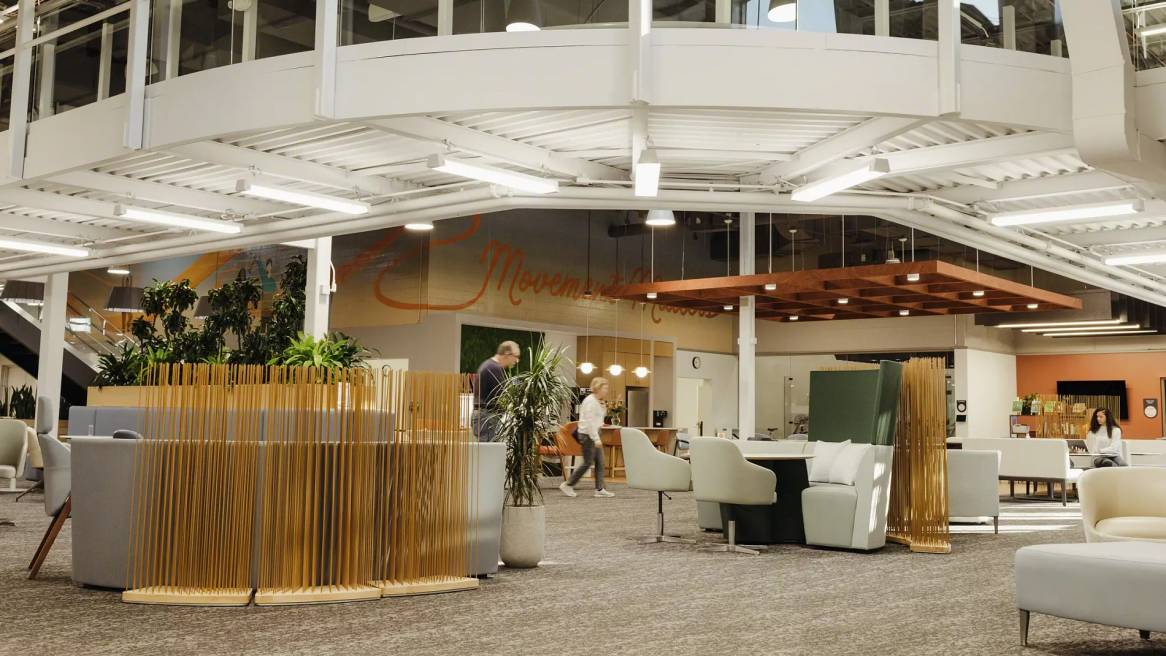
Baseball legend Kirk Gibson’s defining moment came in 1988: injured and barely able to plant his feet, he stepped to the plate in the World Series and launched a walk‑off home run that became an iconic symbol of raw grit. His painful, defiant trip around the bases with fist raised and legs failing cemented his place in baseball lore.
Years later, that same determination would be tested again. This time, the opponent wasn’t a pitcher on the mound but Parkinson’s disease: a progressive neurological disorder that affects movement, balance, speech, and even mood and cognition. The disorder stiffens muscles, slows reaction time, disrupts coordination, and can chip away at confidence and independence. Everyday tasks become harder, and environments that once felt simple can suddenly feel overwhelming, unsafe or inaccessible.
.

.
“People need help fighting the effects every single day,” Gibson says. “Since my Parkinson’s diagnosis, it has become clear that exercise and movement are critical to my overall treatment. Regular exercise helps me manage the severity of my symptoms and helps slow down the progression of the disease.”
That’s why the spaces where people with Parkinson’s can move – and connect – matter so much. It’s what pushed the legendary slugger to create the Kirk Gibson Center for Parkinson’s Wellness in Farmington Hills, Michigan. The center is a first‑of‑its‑kind, community‑focused wellness facility that offers free, activity‑based and educational programs to support people living with Parkinson’s and their care partners. It’s a place where people with similar challenges can come together in ways they may not otherwise be able to.
To bring that vision to life, the foundation partnered with Steelcase and its local dealer NBS Commercial Interiors. Steelcase brought its inclusive design practice to the project, which centers on designing with people rather than for them. This meant closely listening to and considering different lived experiences, understanding barriers, and accounting for the full spectrum of mobility, sensory needs and comfort.
.
.
Kirk’s son, Cam Gibson, who helps run the center, explains that Parkinson’s often brings new anxiety. People worry others will notice their tremors, posture, or speech. “People can come here and just be themselves,” Cam says. “This new version of themselves. Creating this community setting where they feel comfortable enough to leave that shell is everything.”
From the start, the team spent time learning directly from people living with Parkinson’s. The Steelcase Workplace Innovation Design Studio and the Kirk Gibson Foundation held an inclusive design workshop to identify potential barriers and benefits of different furniture settings. The foundation brought employees, care partners, caregivers and people living with the disease together to help envision how the new space should work. Their insights shaped everything from the layout to the furniture choices.
Kirk Gibson Foundation CEO & Managing Director Steve Annear, an amputee, says he entered the process skeptical: “I wasn’t sold on the idea that we needed to do the inclusive design workshop, but it changed everything.”
The goal was to create a space that supports a wide range of needs, while making the center feel calm, warm and easy to use. A place where people can move freely, feel safe and stay connected to their unique community.
“Early in the workshop, a participant with Parkinson’s shared that ‘using furniture has become very difficult’ for them,” says Kamara Sudberry, inclusive design leader with Steelcase. “Our ears immediately perked up. These are the experiences we have to be more intentional about.”
That revelation was just one of many that led to concrete changes.
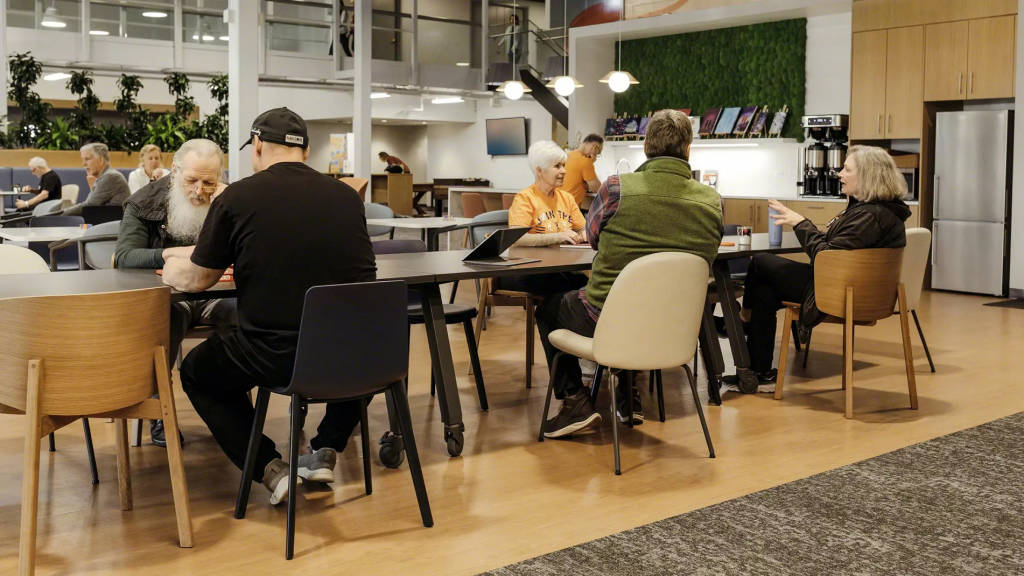
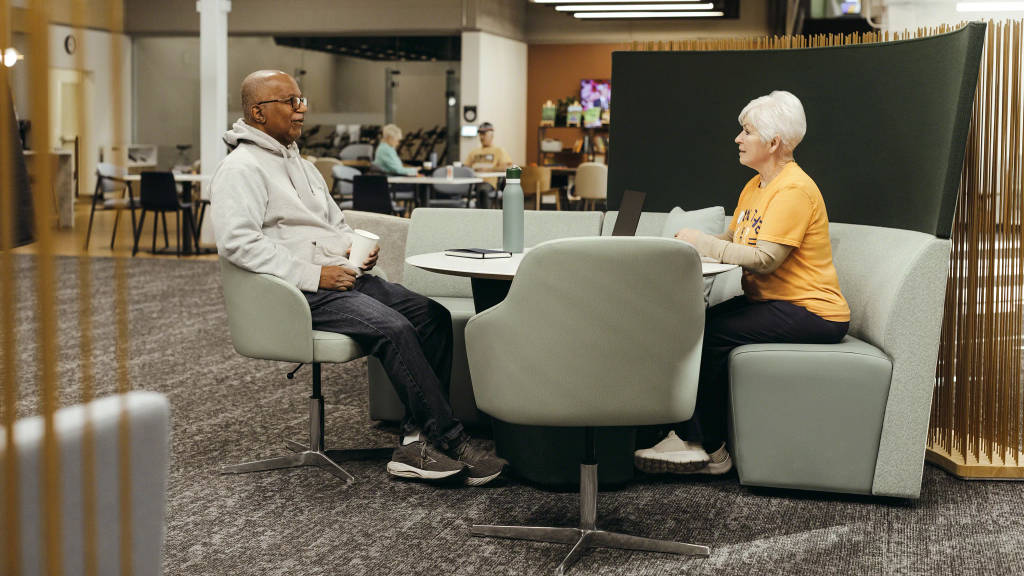
- Selecting swivel seating that reduces the need to lift and pull your body to the table.
- Choosing chairs with strong, stable armrests to support independent sitting and standing.
- Offering a range of seat heights so people who struggle with lower options still have a comfortable, dignified choice.
.
.
I wasn’t sold on the idea that we needed to do the inclusive design workshop, but it changed everything.
Steve AnnearKirk Gibson Foundation CEO & Managing Director
“It has to be an interactive space. It has to be able to adapt to the people who are utilizing it,” adds Cam Gibson. Team members with Parkinson’s tested furniture and layouts early in the process. “We wanted to make sure that when it’s here and being used like it is today, it’s actually going to be helpful.”
For Brenda Lanker, director of community outreach, who has Parkinson’s, inclusive seating is paramount to those with the disorder. In fact, it’s become part of the space’s ethos.
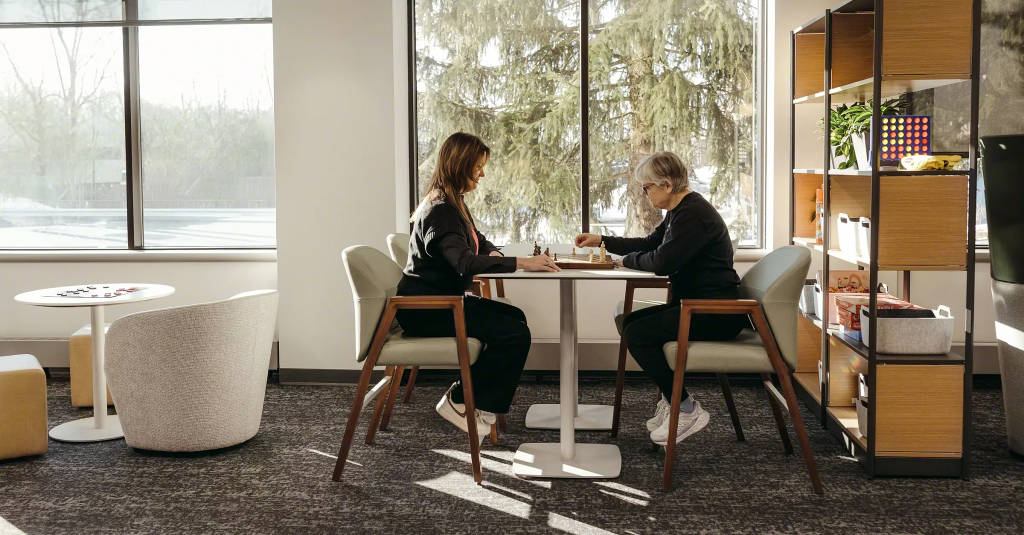
“Parkinson’s affects everyone differently, but at our center, that spectrum is our strength. Whether someone is lightly touched by the disease or deeply challenged by it, they belong here. We remind everyone who walks through our doors: there is a place and something for you. Whether it’s boxing, cardio, yoga or pilates, no matter your stage, pace or needs. And just as there is an activity for everyone, there is – quite literally – a seat for everyone. It’s part of the story we tell new members.”
.
.
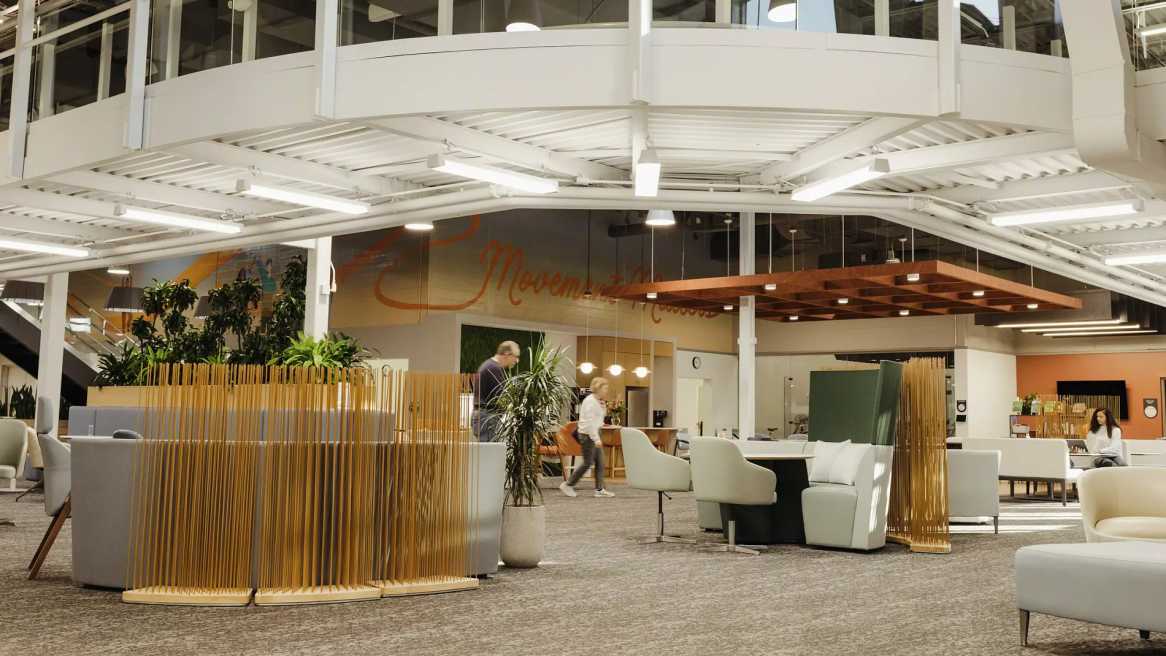
The resulting design of the Kirk Gibson Parkinson’s Center is grounded in four simple ideas that make the space easier to navigate, more comfortable to use and more supportive of people at every stage of their Parkinson’s journey.
1. A predictable environment
The center is designed to feel intuitive from the moment someone walks in, with clear landmarks, consistent access to amenities, and pathways that guide people without blocking their view. Simple tools like clear signage and boundary elements make wayfinding and conversations easier, reducing cognitive load and helping people move through the space with confidence.
2. Support for every stage of the Parkinson’s journey
Furniture and settings are chosen to meet physical needs, offering stable seating with armrests and higher seating options. Tables can be adjusted or configured with unobstructed clearance so anyone can join the conversation. The space can flex as activities change, balancing stability with adaptability.
3. Designing for wellbeing through materials
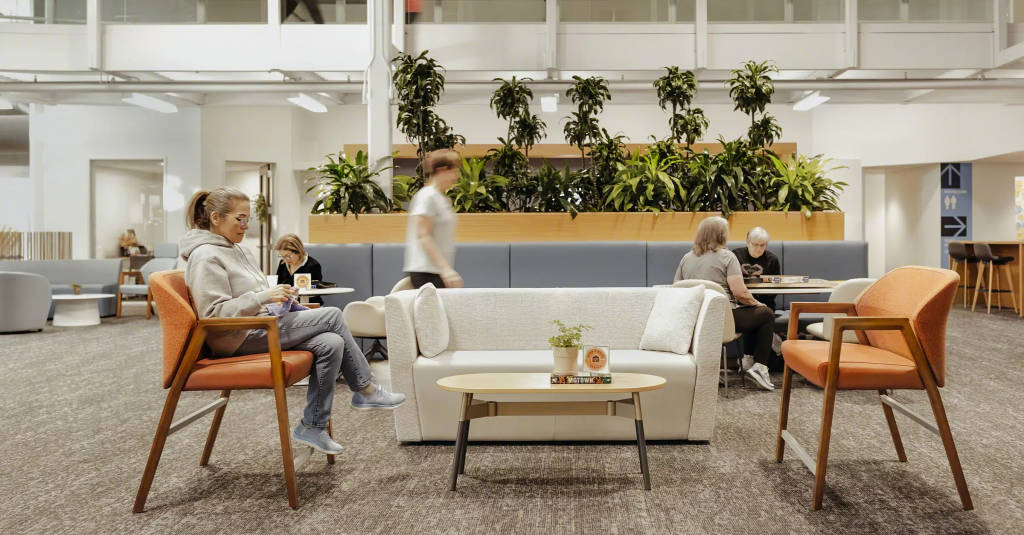
Soft textures, neutral colors and biophilic cues create a calming atmosphere, while durable, cleanable surfaces support active use. Sound‑absorbing materials help reduce ambient noise, and thoughtful choices in contrast and reflectivity make the environment more supportive for those sensitive to light.
4. Creating micro‑environments for connection and privacy
Within the larger community space, smaller zones give people choices; places to gather or rest, and quieter nooks for private moments like phone calls or virtual therapy. Communication circles encourage conversation and play, and touchdown spots give care partners or visitors a comfortable place to work or wait.
Building a place centered on community
Cam shared how meaningful these details have become. “Every day we’re hearing how people are noticing the little details we talked about at the beginning.” His father gravitates toward one of the elevated chairs, he says. “It’s so much easier for him. He just pops right up. He wants to take it everywhere he goes around the space, so it’s worth dragging the thing across the room.”
The emotional impact is just as powerful as the physical accommodations. A man diagnosed with Parkinson’s five years ago had kept it quiet. He didn’t want anyone to see his symptoms. “But his perspective completely flipped after coming here,” Cam says. “Being able to come to a setting where it’s a community of people going through the same thing made all the difference for him.”
.
.
“Inclusive design isn’t limited to one community – it’s a mindset that applies to every workplace,” says Sudberry. “The lessons from our work with the Kirk Gibson Foundation help us ensure design can be an aide, not a barrier, for people of all generations, abilities and neurodivergent conditions.”
Steelcase and its research teams continue to work with the Kirk Gibson Center to understand how people use the space every day by measuring their experiences. Treating the center as a living lab enables the team to make thoughtful adjustments over time, reinforcing a culture of continuous learning and ensuring the environment evolves to meet the needs of the Parkinson’s community.
The result is a center shaped by the voices of the people who use it. It honors the resilience of the Parkinson’s community and the belief that thoughtful design can help people live well. It also captures the spirit of Kirk Gibson himself, a champion who once limped around the bases on sheer will – now championing others to find that determination in their own journey.
.
At a Glance
Kirk Gibson Center for Parkinson’s
Location
- Farmington Hills, Michigan
Industry
- Healthcare
Size
- 40,000 square feet
Design Intent
- Create an accessible, community-focused social gathering space for people living with Parkinson’s and their care partners
- Support various activity-based programs
Key Features
- Inclusive Design
- Swivel seating to reduce the need for trunk flexion
- Strong, stable armrests to support independent sitting and standing
- Multiple seat heights to accommodate varied mobility needs
Project Partners
- Design Firm: Gensler
- Dealer: NBS Interiors
- Steelcase Workplace Innovation Design Studio
For more stories like this, along with design and research insights, please subscribe to the Work Better Weekly newsletter – delivered straight to your inbox.