
New Year, New Focus on How We Sit, Move, and Collaborate


The start of a new year often invites reflection. Not just on what we do, but on how we do it, especially in environments where habits quietly shape outcomes. Few habits are as persistent, or as overlooked, as the way we sit at work.
Despite decades of ergonomic progress, many workspaces are still organized around a static idea of sitting: upright, forward-facing, task-oriented. Yet research tells a very different story. Sitting is not a single posture, but a continuous sequence of movements: leaning forward to engage, reclining to absorb information, twisting to collaborate, or curling inward to concentrate.
The Steelcase Global Posture Study documents how digital technology and task-switching drive frequent posture changes, and how unsupported postures can create discomfort that undermines our ability to concentrate and be creative.
Two examples bring this to life:
- One is “the strunch” (a stretched-out hunch), a common laptop posture that emerges as people push their device away, reach forward, and prop themselves up as fatigue sets in. It can increase risk of discomfort and, over time, contribute to strain across the back, neck, shoulders, arms, and wrists.
- Another is “the take it in”, a reclined posture associated with viewing content on larger displays and shifting into contemplation. It can be a healthy way to sit, but only when a chair supports the lumbar region in recline.
Work itself has also changed. Digital tools allow us to work anywhere, at any time, but they also pull our attention inward. In shared spaces, individuals can be physically present but cognitively isolated, tethered to screens that demand new, often unsupported postures. The result is a paradox: environments designed to support highly collaborative teams, filled with people sitting alone together.
The challenge, then, is not simply to design better chairs, but to rethink the role of seating in contemporary work. Seating must now support not only physical comfort, but the mental and social states that work requires focus, openness, engagement, and ease.
Movement as a Cognitive Asset
Steelcase research shows that movement while seated is not a distraction from work; it is fundamental to it. Micro-movements help distribute physical load, improve circulation, and reduce fatigue, which in turn supports concentration and creativity.
When seating restricts movement, discomfort becomes cognitive noise, pulling attention away from thinking, listening, and contributing.
Designing for movement means recognizing that the body is never still, even when the task appears sedentary. Dynamic support through the spine, arms, pelvis, and legs allows people to remain oriented to their work without locking them into a single posture. This is especially critical in collaborative settings, where people shift frequently between listening, speaking, and reflecting.

Ergonomics for Wellbeing
Ergonomics is often framed as a corrective measure, a way to reduce injury or meet standards. But this undersells its potential.
Thoughtful ergonomic design can actively address a global epidemic of mental health struggles and burnout. This phenomenon of wellbeing urgency is centered on neuroinclusion: designing spaces that offer sensory control (lighting, sound) and tactile respite areas for employees to decompress. With data showing that employees prioritize wellbeing second only to family (ranking it higher than the work itself), the office must serve as a regenerative space that actively prevents burnout, rather than just a place of production.
When seating responds intuitively, it removes the mental burden involved in finding comfortable postures for work, and allows people to focus on ideas rather than their bodies.
Equally important is desire. An object may be ergonomically advanced, but if it feels technical, intimidating, or visually inert, people resist using it fully or correctly. As designers know, engagement is emotional before it is functional. The most effective seating solutions are those that invite use through visual lightness, material expression, and a sense of effortlessness.
Designing for Shared, Fluid Workplaces
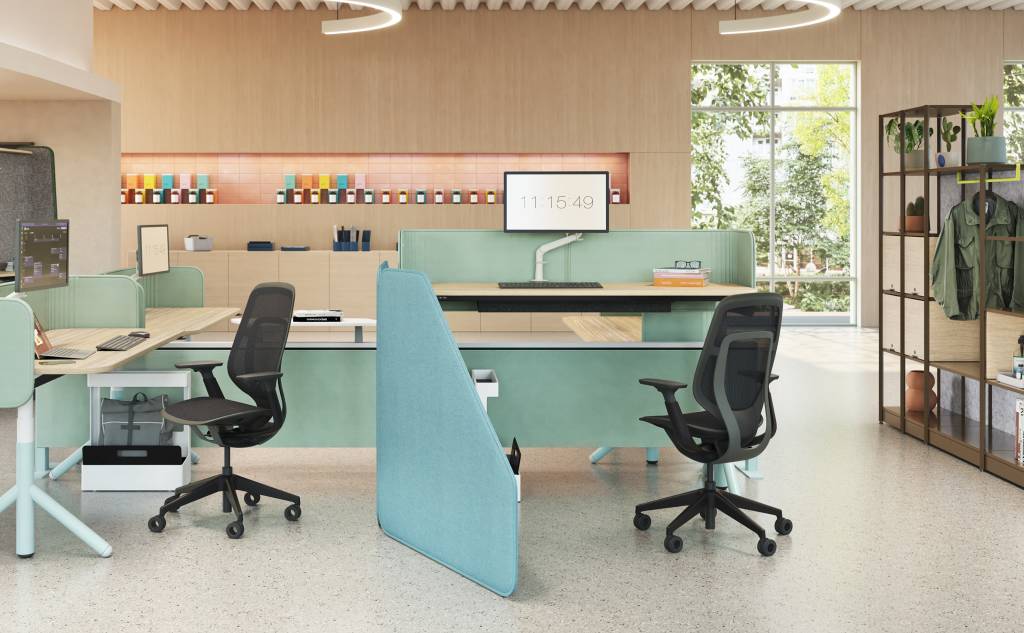
One way Steelcase is applying these principles is through Karman, a chair that combines an ultra-light frame with a proprietary performance textile to deliver effortless comfort. Karman’s design language also reflects the reality that aesthetics shape behavior. Karman is intentionally simple, creating less visual noise, with an emphasis on clean lines and a soft seat edge.
That simplicity hides engineering complexity. A weight-activated mechanism responds automatically as users change postures in every direction. The patented hybrid seat and integrated cushioning are designed to sustain comfort over time. And the Comfort Edge flexes to eliminate hard edges and pressure points, promoting better blood circulation to the legs and feet.
Now made in Asia, discover how Steelcase Karman enhances wellbeing and collaboration in shared spaces here or in person.
The new year offers a rare pause, a moment when organizations, designers, and leaders are more willing to question long-held assumptions. It is an opportunity to look beyond surface-level change and reconsider the fundamentals of how work is supported. Rethinking how we sit is part of that reflection, not as a matter of furniture selection, but as a redefinition of what work asks of the body and mind today.
Frequent Asked Questions
Q1: How does the Steelcase Karman chair support different users and work styles?
The Steelcase Karman chair adapts naturally to movement and posture, making it comfortable for focus work, collaboration, or informal meetings. Its patented hybrid seat, Comfort Edge, and Intermix textile provide soft, responsive support for a wide range of body types.
Q2: How does Steelcase Karman enhance wellbeing at work?
By supporting natural movement and posture, Steelcase Karman helps reduce fatigue and discomfort, keeping people energized and focused throughout the day. Its responsive design encourages micro-movements that promote better circulation and long-term comfort.
Q3: Can the Steelcase Karman chair keep up with dynamic work environments?
Yes. The Steelcase Karman chair adjusts seamlessly as tasks shift between deep focus, team discussions, and spontaneous collaboration, helping teams stay comfortable and engaged across the day.