
The Hidden Rules No One Tells You at Work (S8:E11) – Transcript
Podcast
4:41- 5:15 And so every organization has the rules that will be in the HR handbook that you receive in your first week of working there. But then they have those unspoken rules, those other opportunities for advancement, opportunities to socialize, those rules that are only usually told through mentors or proximity to leadership and power. And many people in organizations are left to figure out those rules on their own, and it does have an impact on not only their performance, but their long-term career trajectory.
Chris Congdon: What if the biggest barrier to inclusion at work isn’t what’s said out loud… but everything that isn’t?
Welcome to Work Better, the Steelcase podcast where we talk with experts about how to help the world work better. I’m your host Chris Congdon and today’s conversation might make you rethink the rules you didn’t even know you were playing by.
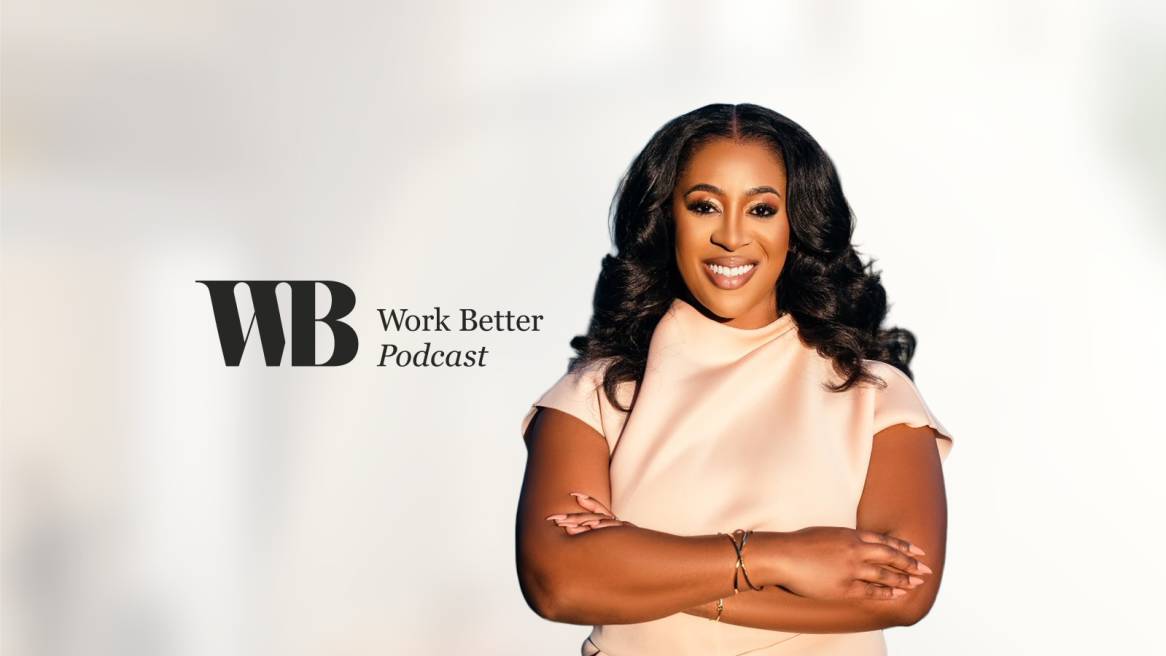
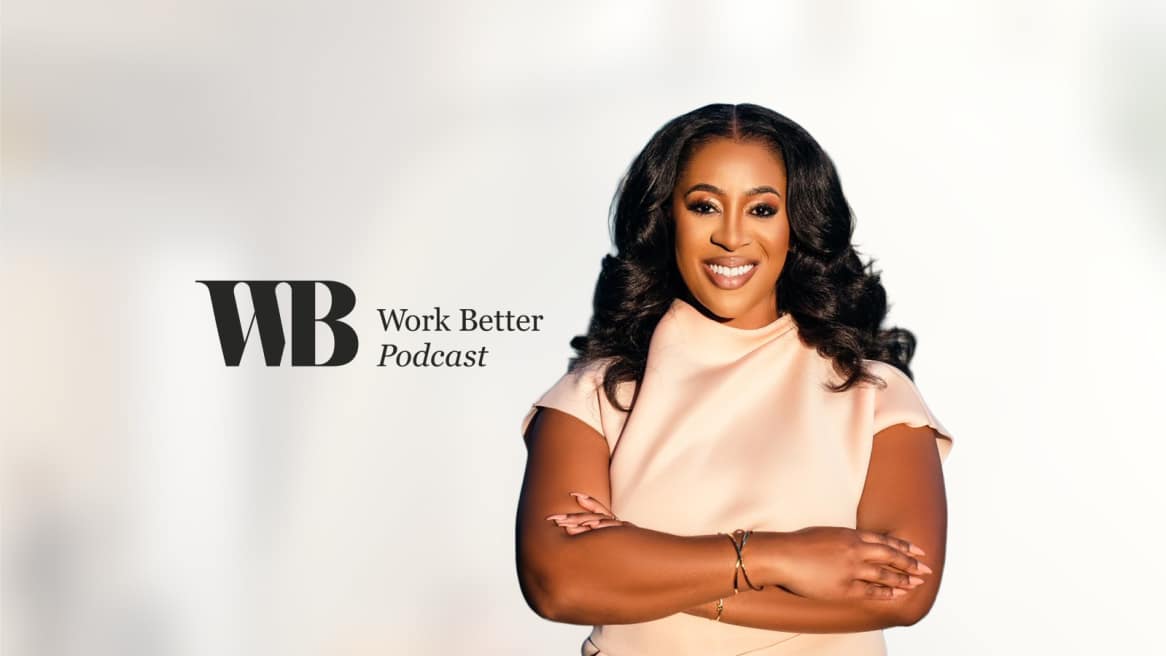
My guest today is Dr. Ella Washington — organizational psychologist and author of the book “Unspoken: a guide to cracking the hidden corporate code.” And today, she’s calling out something many of us have felt… but couldn’t quite name: the “if you know, you know” or IYKYK culture. It’s the meeting after the meeting. The opportunities that never get announced.
Dr. Ella helps us understand why some people’s careers seem to move smoothly upward while others are stuck figuring out the rules to get ahead. And she also helps understand how leaders can help level this playing field.
Her book was inspired by a personal moment of clarity so that’s where I started the conversation. Here’s Dr. Ella.
Chris Congdon: Welcome to Work Better, Dr. Ella
Dr. Ella: Thank you for having me. I’m so excited to be here today.
Chris Congdon: I’m excited to hear from you as well. And I wanna start out talking about something that a lot of us have experienced in our careers, but maybe not in the same way that you experienced it. We all kinda have these, I’ll call them moments of clarity, where something happens in our lives that really causes us to think seriously about the direction we’re going in. Could you tell us the story that was kind of your moment?
Dr. Ella: Yeah, absolutely. You know, it still kinda gives me chills when I think back to it. You know, about nine years ago, I had just been promoted in a new consulting role, and I had so many clients, and I knew that the stakes were high for me to do well, as many of us want to do well when you’re first promoted, right? To demonstrate that, you know, they made the right decision. And so I remember I was driving back, and this was the middle of the day, so about probably around 2:00 PM from a client site about an hour away from my home, and all of a sudden I woke up on the side of the road.
And… what had happened was that I’d fallen asleep at the wheel and I recognized what had happened when someone pulled right beside me, and it was a good Samaritan on the road, so thankfully they checked I was okay, and they were like, “Okay, you probably wanna get going so the police don’t think anything was, like, seriously wrong.”
But it was such a scary moment and so many things went right in that moment. You know, there was an angel there to check on me. But also, if there had been a median in that, on that highway- as opposed to, you know, some dirt area in the middle, it would’ve ended very differently.
And that was my wake-up call that not only was I burnt out, that something was wrong. You know? Something was really wrong with how I was approaching work. And even in that situation, I think many of us, you know, have found ourselves in situations that may have been similar, but what I am so not proud of from that moment was the fact I didn’t tell anyone.
I think that is the real travesty in this story. It’s not just the act of falling asleep because I was so burnt out, but it was that I didn’t feel safe enough to tell my manager at the time. I didn’t even feel safe enough to tell my loved ones because I was a bit embarrassed, you know, that this happened to me in the middle of the day, right? And so you know, to me, not only was it as a wake-up sign, it’s a warning signal because we have community for a reason, and our workplaces should be safe enough at least for us to tell our manager, our colleagues, you know, what’s really going on with us, especially when it comes to something so serious.
Chris Congdon: Yeah, I mean, I feel like we’re in a culture right now where putting on this facade, our best foot forward, has just been ingrained in our behaviors. You know, if you think about what you post on social media, I mean, we all know that we’re not gonna post like, “Wow, I had a really crummy day at work, and I’m feeling burned out and exhausted.” You know, we’re always gonna paint this beautiful picture, and I think, like, sometimes we almost come to believe that, well, that’s the truth for everybody else. Everybody else has this perfect career and it’s going great. I’m the only one who’s dealing with this.
Dr. Ella, you talk in your work about these unspoken rules. I think that’s an example of one, like don’t talk about it if you’re struggling. And in your studies about how workplaces actually work, what’s one of the truths that you think leaders need to hear right now?
Dr. Ella: You know, I want leaders to understand that your workplace is probably running on some unspoken rules that you can’t see, but your people feel every single day. You know, when I talk to leaders, I feel they tend to overestimate how much success comes from just talent and performance and hard work, and they often forget about those informal and invisible norms that they likely had to navigate to get where they are.
But what happens is, when you get in that seat of leadership, and research actually shows, you know, once you get higher up in leadership, you forget what it’s like. It’s really hard for you to empathize and even remember what it’s like in those earlier phases of your career.
And so every organization has the rules that will be in the HR handbook that you receive in your first week of working there. But then they have those unspoken rules, those other opportunities for advancement, opportunities to socialize, those rules that are only usually told through mentors or proximity to leadership and power. And many people in organizations are left to figure out those rules on their own, and it does have an impact on not only their performance, but their long-term career trajectory.
Chris Congdon: And I feel like as leaders sometimes, you know, if we’ve been around an organization longer, there are things that we know or we believe to be true- But we don’t always think about, you know, transferring that knowledge to everybody in the organization because it, it’s just kind of second nature. I’m curious if you could talk a little bit about a phrase that you use “if you, if you know, you know” culture. Is that right?
Dr. Ella: That’s right. That’s right. So on, on social media, you may see it as I-Y-K-Y, Let me do that again. On social media, you may see it as I-Y-K-Y-K, right? If you know, you know.
And when you hear that phrase, most people automatically, you know, can resonate with the fact that, like, there are some people in the crowd of this information, and if you know- great. But if you don’t know, you know, the implication is that no one may, may tell you, or I may not tell you if I’m saying, “If you know, you know.”
And so you know, in real life, that happens all the time. I might say, “Well, I know the best new restaurant in Washington, DC,” where I live, right? And if you know, you know, right? So it’s like I’m keeping the best kept secret for myself. But when those cultures show up in the workplace, that’s where it becomes problematic because it’s no longer, you know, something that would be nice to know.
Oftentimes it can lead to derailment of folks’ careers or lack of opportunity to advance if they don’t know the rules of operations, if they don’t know how things actually get done. And so what you said before around, you know, oftentimes leaders get used to how things are done, and they kinda forget that someone either told them or they may have learned the hard way.
It’s that passing of knowledge that’s critical, but it’s also the acknowledgement that there are some informal expectations in this work environment that do matter, like whether it’s, you know, we expect you to come to the happy hours at least once a quarter to, you know, say hello to everyone and so folks know who you are. Or we do expect you to dress in a certain, particular way even if you’re working from home, right? There are just so many things that organizations come to have as their norms, but they often don’t name, and then they, that leaves people guessing.
Chris Congdon: Do you feel like when you got to that level of just crazy exhaustion where you’re falling asleep in the middle of the day, you know, on the road, was that part of an unspoken rule that you were feeling at the time? You know, were you feeling like, “I just have to drive myself further and harder,” you know, to where you got to that place?
Dr. Ella: Yeah, absolutely. You know, in the work environment that I was in, it was all about how many hours that you were logging on your client work. It was all about, you know, meeting the annual goals for the organization, and then you had individual goals that you needed to meet. And so there wasn’t really an option or space to say, “Hey, this is too much.” And, and I didn’t want to, to be honest, because I wanted to demonstrate that I was up for the challenge. And what I conflated was, you know, working harder and more with my ability to do the job, right? And those things aren’t the same.
I had the ability and the competence and the skills to do the job, but that didn’t mean that I had the capacity to take on 10 clients at one time, right? And, to be able to give my all. And so absolutely, I think, you know, that unspoken rule of not complaining or not, you know, talking about your boundaries or your limitations or just even the season that you’re in right now. Maybe last year I could do 10 clients but this year, you know, for whatever life reason, health reason, personal reason, I’m not able to do that, or I don’t desire to do that. I think that’s the conversation we have to normalize.
Chris Congdon: Yeah. You’re, you’re reminding me of a time earlier in my life. When we’re recording this podcast, for our listeners, it’s tax week. We just passed April 15th, and I’m remembering when my husband was early in his accounting days, the pressure to achieve a certain amount of billable hours was just really high. And, but I don’t know that that was a clearly articulated rule. You just knew that the people who were getting ahead were the ones who were, you know, putting in, I’d say, kind of inhumane amounts of hours just to be able to get through.
So are there other examples of other… Like in that situation, we’ve talked a little bit about people who are maybe newer in their career not getting the unspoken rules. Are there other kinda situations of, like, in-groups, out-groups that, you know, we need to make sure that we’re communicating clearly to?
Dr. Ella: Yeah. So, you know, one thing that comes to mind when you mention the experience your husband had early in his career was, you know, thinking about what are the types of cultures that we celebrate or that we acknowledge in our workplaces, right? And this would never be in the rule book, but I remember in my first consulting job, it used to be a badge of honor if we came in and said, “Oh, we, we did an all-nighter last night. We were up all night till 6:00 AM working on the deck.” And that was just like a thing, and no one would actually feel bad for you. It was just like, “Oh yeah, well that’s what you gotta do.”
That is, that should not be normalized, right? That is a cultural thing. And then that becomes an unspoken rule that like, not only is it appropriate for me to be working throughout the night on a regular basis on these client deliverables, but it is okay for me to talk about it and brag about it, if you will.
And a manager kinda stopped me in my tracks in my very next position at a different consulting firm, and I think I alluded to kinda working all night on something, and she was very clear. She said, “You know, here, we don’t want you to work all night. The expectation is not that you’re pulling all-nighters, and if you’re doing that on a regular basis, we’re gonna kinda question if you’re having challenges with time management, and we’re gonna see where we need to support you or shift some things, because that’s not what we wanna see in this culture.” And I vividly remember that conversation and that moment because that was a night and day difference culturally. All the rules on paper at both organizations were the exact same. Get your work done, you know, and, and do what you need to do to be in client service. But the posture of the culture of the second firm I was at was vastly different and, and it made a huge impact on my wellbeing and experience at that organization.
Chris Congdon: So I think we can safely say most leaders would not want their people… They might, you know, celebrate you pulling an all-nighter, but they really don’t want you to fall asleep at the wheel. You know, that’s, that’s pretty.. So what guidance would you give to leaders who are listening today about how you bring these kind of unspoken rules to light? And how do you change them too, if you need to?
Dr. Ella: Yeah. Well, you can’t change things that you don’t acknowledge, right? And so first we have to understand that these unspoken rules exist. And when leaders talk to me and they say, “Well, how do I figure this out?” One, you have to talk to your employees. You have to talk to your team members to understand their experience. ‘Cause as I said before, oftentimes we’re in positions of leadership, and we have forgotten what it’s like to be in those earlier seats, or things have changed, right?
We are quick as leaders to say, “Oh, back in my day,” or, “When I first started working-” “X and Y.” However, we don’t equally acknowledge the fact that things are different for those folks early in their careers. And so you have to really start to understand what their lived work experience.
I think when you have new employees, it’s the easiest way to do that. You know, check in with them in the first 30 days, 60 days, and ask them, you know, what observations have they made? What questions are coming up for them? What do they observe the culture to be? Now, in order to get some real answers to those questions, there has to be psychological safety and trust, right in the organization.
But oftentimes, I find that leaders are not curious enough about the lived experience of their team members in order to address some of these cultural unspoken norms. Because again, we assume everything is good because of the rules that we have on paper.
And the second thing I might say is that, you know, leaders have to stop assuming people will just figure it out. We are leaders for a reason, right? We are supposed to lead our teams. And so when you use broad terms, like executive presence or cultural fit without defining them, it’s not a neutral experience. You are gatekeeping. It’s helpful to define what you actually mean.
When you say cultural fit, what does that mean here at this organization? What are the behaviors and the competencies that you’re expecting to see? When you say executive presence and what you’re looking for for someone to get promoted to that next level, be specific. You know, is it in how you communicate verbally, non-verbally, asynchronously, or what have you, with clients or with team members? Is it that you show up when we ask you to, whether it’s a you know, client meeting or a social gathering? Whatever those things are, you have to name them, and just leaving them up for interpretation doesn’t make you more accessible. It doesn’t make you, you know, a leader that people look up to. It makes your team members confused and not really understanding how to navigate the workplace environment.
Chris Congdon: Yeah. That is just such good insight and advice for all of us. I also wanna ask about- When we were talking about change a moment ago, it feels like in the past five, six years, you know, since the pandemic, we have gone through more change at work than we have in, like, generations. And one of the big changes we see with a lot of our customers is remote or hybrid work that, you know, companies now are kinda all over the place.
It feels like there, there’s some who leaned into it, and then they’re really backing off of it. There’s others who say, “Hey, we never really leaned into it in the first place. We never left the office. We don’t have to worry about bringing people back,” et cetera. But today, I feel like we’re in this world where, you know, some people are in the office having experiences and others aren’t to varying degrees. And I’m really interested in how to navigate these unspoken rules kind of with that scenario going on. Do you, do you have thoughts on that?
Dr. Ella: Oh, absolutely. So, you know, remote work did not eliminate unspoken rules. It actually in some ways made them harder to see. One thing that, you know, we studied early during the pandemic was something called proximity bias, and it’s the tendency to favor people who are physically closest to you. And that often leads to more opportunities, visibility, sponsorship, simply because they are seen more often. And so this is not always intentional, but it is consistent.
And what’s interesting is, you know, proximity bias didn’t just start when we shifted to a more remote and hybrid work experience. It’s always been there. You know, we’ve always heard you know, leaders talk about how they want people to be visible. They want people to have that face time in the office or with other individuals in the organization. And so, you know, one, it’s us naming what our expectations are and making it plain, and it cannot be assumptions.
So I remember a few years ago, one company got a lot of backlash for publicly stating that their remote employees would not be promoted if they were not in the office, right? So they really drew a hard line in the sand, and they got a lot of backlash because that was not the right approach. I wanna be clear. But what I did actually appreciate is that they were honest and transparent in letting their team members know their expectations and who or what types of competencies they were looking for to get promoted, which in that case was face time, you know, being able to be in person.
What they got wrong is that if they’re going to have remote and hybrid workers, they can’t punish them for that, their worker status, right? They have to acknowledge that this proximity bias exists and make it a pathway that everyone can succeed no matter if they’re remote or hybrid workers. But again, what I’d appreciate is they, they made it plain.
But there’s some other ways that, you know, this shows up in our remote and hybrid work environments. Even when you think about, you know, who speaks up first in a Zoom meeting, right? We used to say in the office, you know, the loudest person or the first person to speak is often the one who gets paid attention to, and that is even more prevalent in these virtual room meetings because as we know, there’s a little lag time, right? And so it’s, it’s easy to you know, not get your word in or to. It can be hard to jump into a conversation. Or, you know, even signals like who talks the most in the Slack chat or whatever your company uses, right? Those types of things are now looked at as, you know, engagement. It looked as, you know, the employee being present. And if someone doesn’t name those things, then again, someone may easily think, “Well, I was on the meeting and they said we didn’t have to have our cameras on, and so I thought it was fine,” when really someone is, you know, judging you or, or making a mental note or making even worse assumptions about why you’re not on camera, that you’re not engaged. Instead of just saying, “Hey, we expect everyone to be on camera in our team meetings,” and making that expectation clear as opposed to the assumptions that happen and then all of the downstream effects from not making those things plain.
Chris Congdon: You know, I had really good advice from a leader one time because, you know, we worked in a hybrid way before hybrid was even a term. Like, that was just a behavior here. But one of my leaders coached me to say, “You need to make your presence felt.” Wherever you are, however you know, however you’re working, make sure your presence is felt. And then she went on to explain, like, what that meant, because I could see where that might be an example of kind of vague direction. But I thought that that was really helpful.
You know so many of our listeners are thinking about the physical space as well as the virtual space, like how those two are working together. And I know that you’re not a designer by trade, but I am always interested in how you think about the role of the workplace, the role of space, and I’m curious if you have things that you would suggest to all of us about how do we create, you know, these kind of more equitable experiences at work that are gonna help everybody thrive.
Dr. Ella: Yeah. You know, one thing that I think about when it comes to space is creating space for real connection and conversation and, and one-on-one moments. I’ve seen a lot of workplace environments where, you know, we’re moving to these open space concepts, and that is, you know, designed to drive team orientation and also the flexibility for folks to come in and hotel at different spaces, and that’s great.
But what often is missing is that ability to, you know, have that time with your manager to let them know that something is not going quite right in a safe space environment. And so I think about that both in the physical and just the cultural. Like, how do we make sure that we’re making time and space for those authentic connections?
You know, if you only talk to your manager when there’s a 30-minute meeting on the calendar every other week, and that’s the only time that you have, that doesn’t really often feel like a safe space to say, “Hey, something’s not going quite right.” That doesn’t actually create the space for the human connection that we actually need in these relationships to have trust.
And so, yes, there’s time for those quick meetings and going down the checklist. I mean, we all have them, and they’re needed to keep things moving forward. But then, as a leader, you also have to think about how do I intentionally create spaces to check in with this person, um, just to make sure things are going okay or to ask different questions if I’m not really getting what I’m needing. And I think that there’s something else that could be going on. How do I create space to even ask the right questions to connect with my team members?
Chris Congdon: Yeah. I think that’s, um, a really helpful insight. I’m wondering, you know, we’re going through a time now, I think but we all go through times where it, the situation in the world maybe looks a little challenging. You know, the situation at work feels tough, and I’m just curious, like, what’s giving you hope right now about the future of work and how things are likely to change going forward?
Dr. Ella: The younger generations, while I know we read all the headlines, they also give me hope, right? Because they see things in a new perspective, and when we take the time to create space for them to learn from us and for us to learn from them you see… You can’t help but to get this positive feeling that the future is bright.
I mean, they have so many great ideas. They’re living in a world that we could have only imagined, you know, with technology being something they’ve had from the very beginning, right? We’re still adapting in some ways. Um, and they kinda have it figured out in that regard. Now, they still need our guidance and support, but I think it’s really powerful when you have those intergenerational conversations about how we can actually make the workplace better, because you get all these new, innovative ideas.
The other thing that, you know, really is inspiring me as of late is I’m starting to see more organizations recognize that with the push of AI, it’s really helpful to get more things done, but it doesn’t work without the human part of leadership, without that human connection. So I’m actually getting really, really excited about that, because I think this is an opportunity for leaders to lean in even further to those human skills, to those, you know, areas of who they are from their personality to just the, the people skills that they actually have developed over the years, to help teams figure out what to do with all of these changes, with all of that, what AI is bringing to the workplace that can be really positive.
So I’m excited about that, because I think management and leadership skills are, have never been more important, and I love that many companies are not only starting to recognize it, but investing in those skills to make sure they’re not falling behind.
Chris Congdon: Oh, I agree with you on that one so much, that it does give me hope when I hear organizations say that, yes, AI is a, it’s a productivity tool, without a doubt. Let’s leverage it and learn how to use it, and let’s recognize that it’s impossible to truly innovate without human hearts and minds, um, being able to fully function at work. Dr. Ella, this has been such a great conversation. I’ve really appreciated learning from you, and I just wanna tell you to be safe when you’re out on the road, and I’m sure you are.
Dr. Ella: Absolutely. Well, thank you so much, Chris, for having me. It’s been a pleasure to talk with you
Chris Congdon: Since talking with Dr. Ella, I’ve been thinking about what the Unspoken rules of my organization might be, and how I can name them, especially for newer employees.
If you enjoyed today’s episode, share it with a friend or colleague and follow us wherever you get your podcasts. Be sure to visit us as steelcase.com/research to sign up for the Work Better Weekly newsletter for workplace research, and design ideas delivered right to your inbox.
Thanks again for being here and we hope your day at work tomorrow is just a little bit better.