
Designing Better Connections
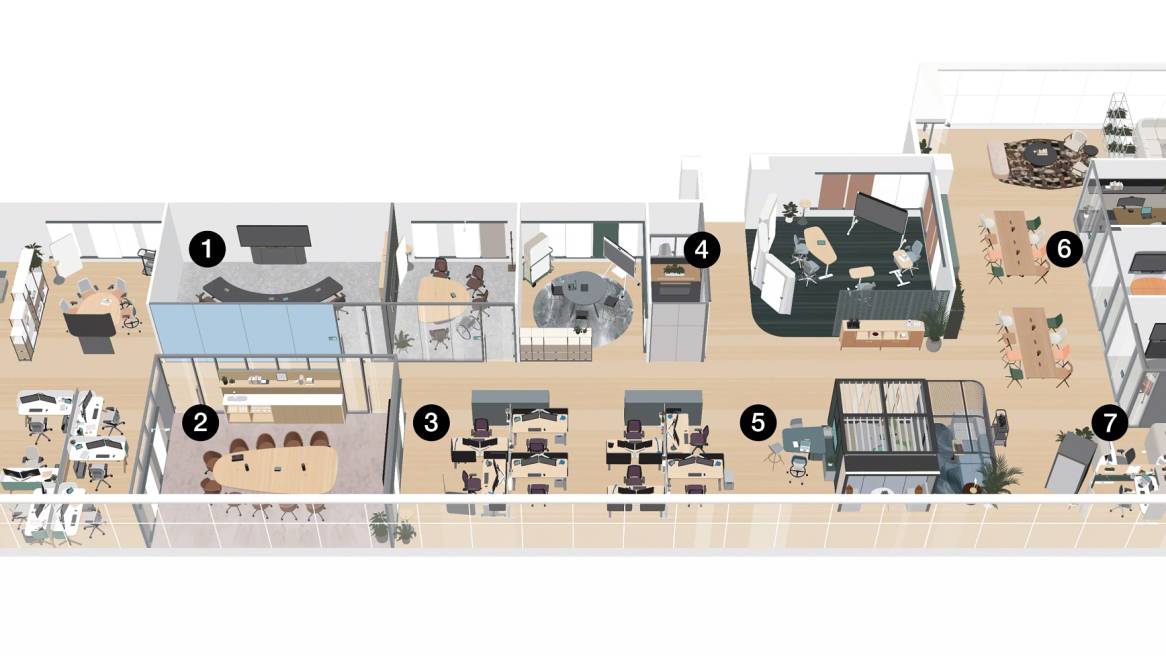
When technology breaks down, so does your workday. That connection raises the stakes for how technology and the physical workplace operate as one, driving interior designers and IT professionals to partner in ways they rarely did before. In the past, designers only connected with IT when their computer needed fixing. Today, a company’s digital roadmap impacts its design roadmap — leading to new conversations and better types
of workspaces.
With IT as a strategic partner, organizations now create workspaces that are both hard-working and flexible. Directors of digital transformation, AI, IT strategy and data analytics are designing the future of workplace technology, influencing how and where people do their best work. When these teams work closely with facilities, design and workplace strategists, the places they create enable more productive and engaged employees.
“Years ago, we started to collaborate with leading technology partners because we knew how important the integration of technology and space is to the future of work,” says Christina
Vernon, Steelcase general manager of technology partnerships. “We seek out companies committed to forward-thinking, research-driven design, just like we are. The relationships we’ve developed are unmatched in our industry. We share information and roll up our sleeves together to pressure test ideas and design new integrated solutions to create a better work experience for people.”
Steelcase recently announced Spaceti as a new technology partner to deliver real-time occupancy, bookings and environmental conditions such as air quality. Spaceti works seamlessly with existing partners to enable smarter, connected spaces that respond to common workplace needs.
These partnerships help close the gap between what people need and what spaces can do. Together, integrated technology and innovative design give employees more control over their workday.
From finding the right space to understanding how it supports collaboration, focus and wellbeing, these partnerships design better connections across the workplace.
.
Designing space and tech together
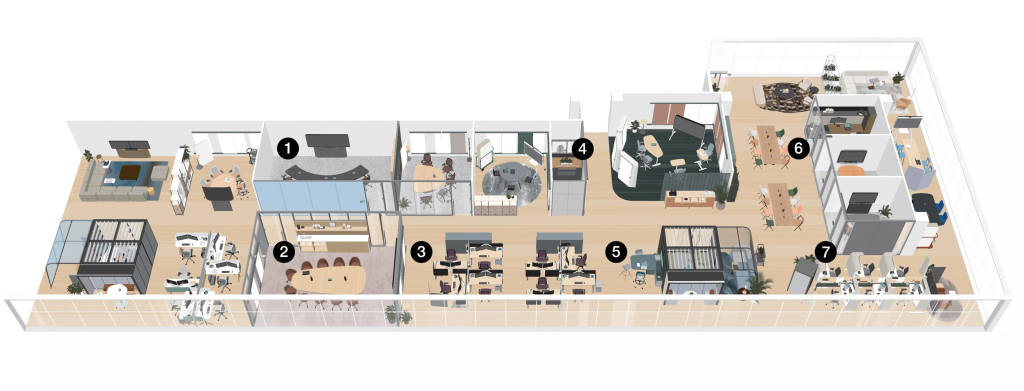
- Design for flexibility with furniture that makes it easy to reach power and data cables or to mount digital displays.
- Reduce meeting fatigue with rooms powered by software and hardware that enable inclusive, spontaneous collaboration.
- Reveal usage patterns with real-time occupancy analytics at workstations, meeting spaces and communal tables.
- Support more human connections with immersive collaboration solutions co-developed by Steelcase and Logitech.
- Build smarter, healthier workspaces with AI-intelligent environmental sensors and adjustments.
- Create more equitable, engaging and easy-to-use spaces with integrated video, audio and furniture solutions so everyone can be seen and heard.
- Team norms, like headphones for video calls, reduce distractions.Orienting desks away from one another, with boundaries, adds visual and territorial privacy.
.
A robust partner ecosystem
Steelcase intentionally collaborates with technology partners to create enhanced work experiences. Together, we work with organizations to integrate space and technology seamlessly, while also co-developing innovative solutions to support how work is changing.

How can meetings be more inclusive of everyone, in-person and remote?
Microsoft’s AI-powered collaboration software (e.g., Copilot) and digital ecosystems (e.g., Teams Rooms) enable real-time engagement to boost productivity.

How do you enable spontaneous collaboration across locations?
Zoom’s dynamic, inclusive and accessible hybrid communication platforms enable spontaneous collaboration and equitable participation anywhere.

Do you know how your spaces are actually being used?
Vergesense provides real-time occupancy analytics and data-driven space optimizations to help organizations make informed decisions and minimize wasted space.

Where do your teams struggle most with the quality of virtual meetings?
Logitech helps deliver crystal-clear meeting experiences and flexible workspaces that make remote participants feel present and engaged.

How do you make desk sharing easier and more comfortable?
Crestron’s desk reservation systems offer visual indicators and intuitive booking tools that clearly signal availability, enhancing utilization and efficiency.

How do you measure and manage workplace wellness?
Spaceti creates healthier, more responsive workspaces by combining sensor and building management data, such as air quality, for comprehensive and predictive analysis.