
Creating a Flexible Office That Meets People’s Needs at Work Today
Flexible Spaces for Every Way We Work Today
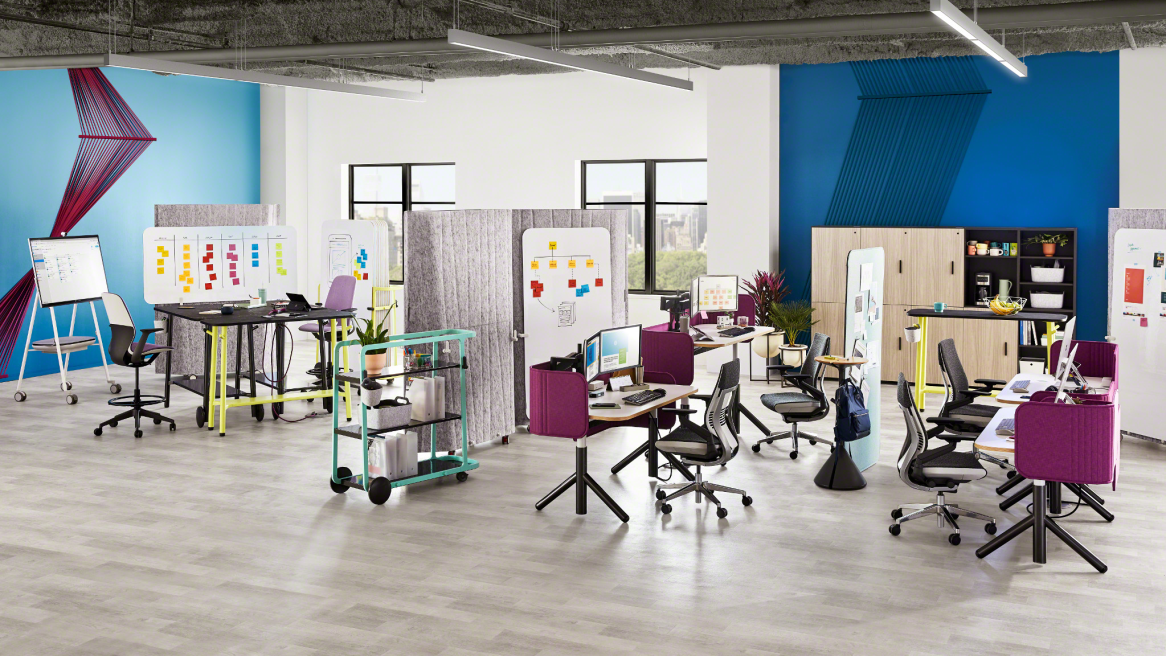
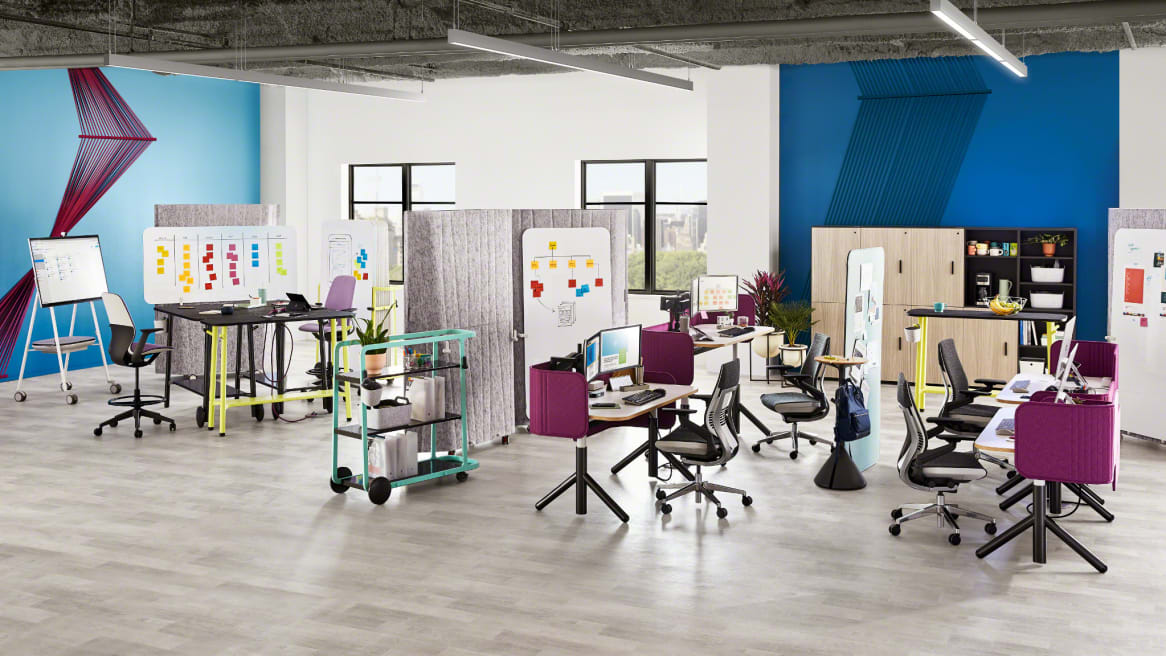
Work rarely follows a straight line. A quiet morning of focus can quickly turn into an impromptu discussion, or a planned meeting may become a working session. Teams expand, contract, and overlap as priorities shift. Yet many offices are still built around fixed roles and layouts rather than the reality of how work happens today.
Employees shift between different work modes dozens of times each day, and when spaces cannot keep up, engagement, energy, and focus suffer.
Flexibility Beyond Furniture
Flexibility is often seen as simply moving furniture or reconfiguring spaces. True flexibility reduces friction. When spaces are hard to adjust, people end up compromising by sitting where they shouldn’t, gathering in places where they don’t quite fit, or retreating into individual work. Over time, this affects energy, participation, and focus.
Steelcase research shows a 25% increase in the use of flexible furniture in collaboration spaces, reflecting teams’ growing need for environments that can adapt to new technologies and ways of working. Employees move between different work modes dozens of times each day. When spaces can’t keep up, energy, engagement, and focus begin to drop.
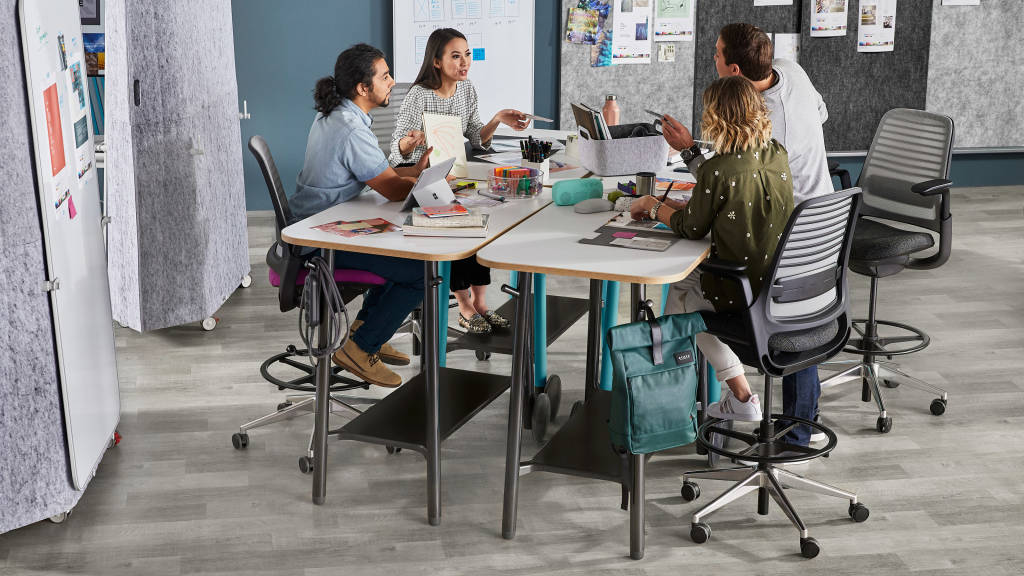
Designing for Teams in Motion
Teams are fluid. Projects evolve, roles shift, and priorities change constantly. Spaces that support this reality respond to behavior rather than dictating it. When environments allow people to move and adapt intuitively, work flows more smoothly and engagement is higher.
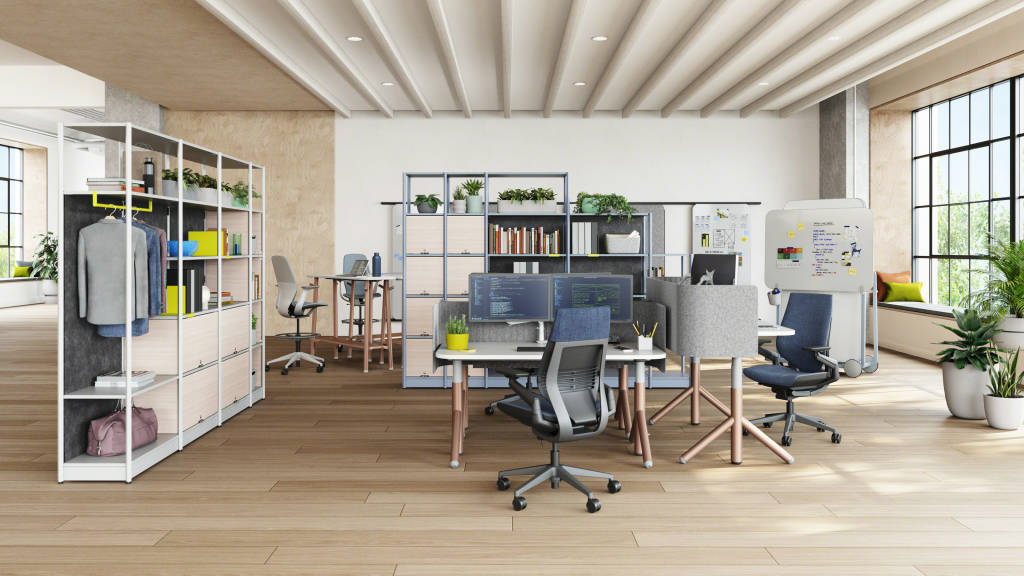
Where Flex Comes In
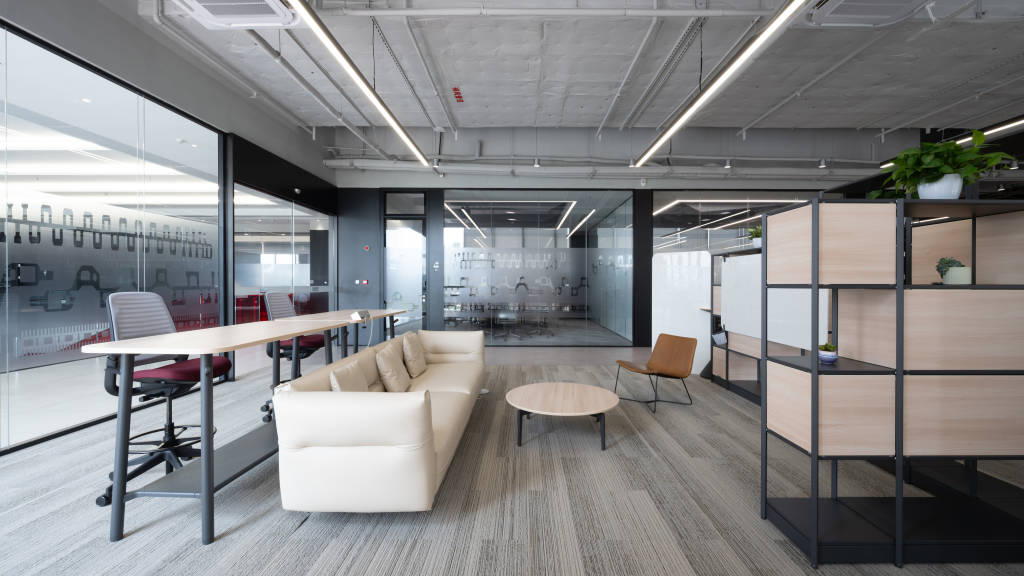
In environments like those using the Steelcase Flex Collection, lightweight, mobile elements make it easier to rearrange as needs change. Adjustable tables, movable boards, and flexible storage give teams the freedom to shape their surroundings for both planned and spontaneous work.
A good example is the Intralox Regional Headquarters in Shanghai. The Steelcase design team studied employees’ work styles, communication habits, and project rhythms to understand what the team truly needed from the workplace. Using these insights, they built a flexible, modular space where movable elements and reconfigurable furniture balance privacy with collaboration. Teams can leave project materials in place, reducing the need to rebook rooms or restart thinking at every meeting. The Golden Corner acts as a “physical working memory,” supporting both planned sessions and spontaneous collaboration.
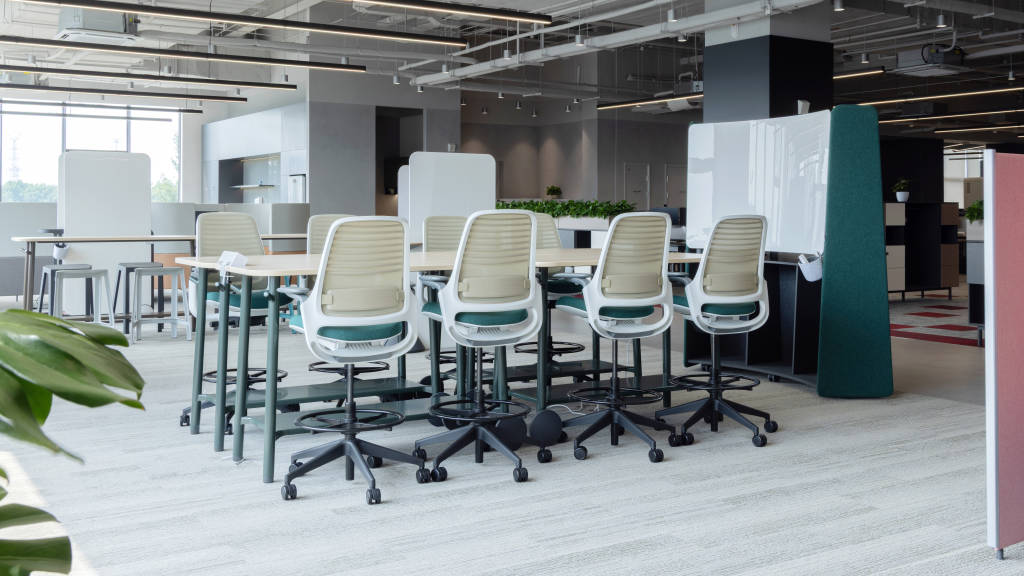
Employees noticed the difference: “Warmth, openness, and approachability make conversations easier and collaboration more natural,” said a facilities employee, while an engineering colleague added, “It gives us more space to collaborate and communicate.” Flexible elements like the Flex Collection help the space adapt to different work modes while fostering connection and flow.
Flexibility as a Human Strategy
The most resilient offices are not the most complex, but the most responsive. Spaces that trust people to shape how they work signal that adaptation is expected, not exceptional. A flexible office removes obstacles so people can focus on what matters the most – the work itself.
Learn more about Steelcase Flex Collection or experience it in person at our locations.
Frequent Asked Questions
Q1: How can a workspace support different work styles and team needs?
Adaptable spaces let individuals and groups shape their environment for independent work, group discussion, or spontaneous collaboration. When the workspace responds to how people work, energy, focus, and collaboration improve.
Q2: How does the Steelcase Flex Collection support this flexibility?
Flex provides lightweight, mobile elements such as tables, boards, and storage that teams can arrange as needs change. This helps spaces adapt naturally to different work modes throughout the day.
Q3: How can furniture support flexible work without being distracting?
Intuitive, approachable furniture encourages natural use without drawing attention. Teams can move and adjust elements quickly, creating spaces that respond to work as it happens while keeping focus on outcomes rather than the furniture.