
Transforming Design Education in India
How Steelcase helped Anant National University design a campus for collaboration
As India pursues its dominant aspiration to become a developed nation(Viksit Bharat), the demand for innovation has never been higher. To meet the challenges of tomorrow, the country needs more than traditional technical expertise; it requires a new generation of creative problem solvers.
“We not only need doctors, engineers, and space scientists, but we also need designers of world-class standing and legitimacy in this country.”
Enter Anant National University, India’s first integrated design university, where leading corporate minds have come together to reimagine the future of education. Here, the curriculum is not built simply to teach design as a rigid skill, but to embed it as a fundamental methodology.
“The curriculum is designed not to facilitate design as a function, but to facilitate design thinking as a tool to solve problems.”
To support this visionary pedagogy, Anant National University partnered with Steelcase to create a built environment as dynamic and forward-thinking as the students it serves.
Anant University
Breaking the Boundaries of Traditional Learning
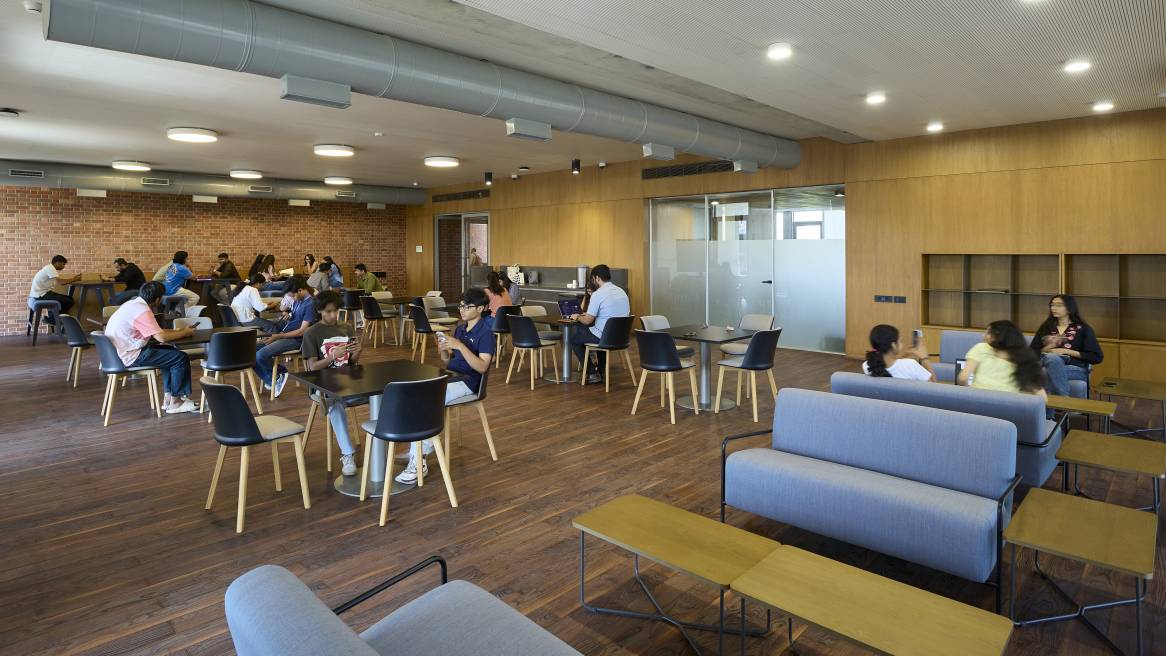
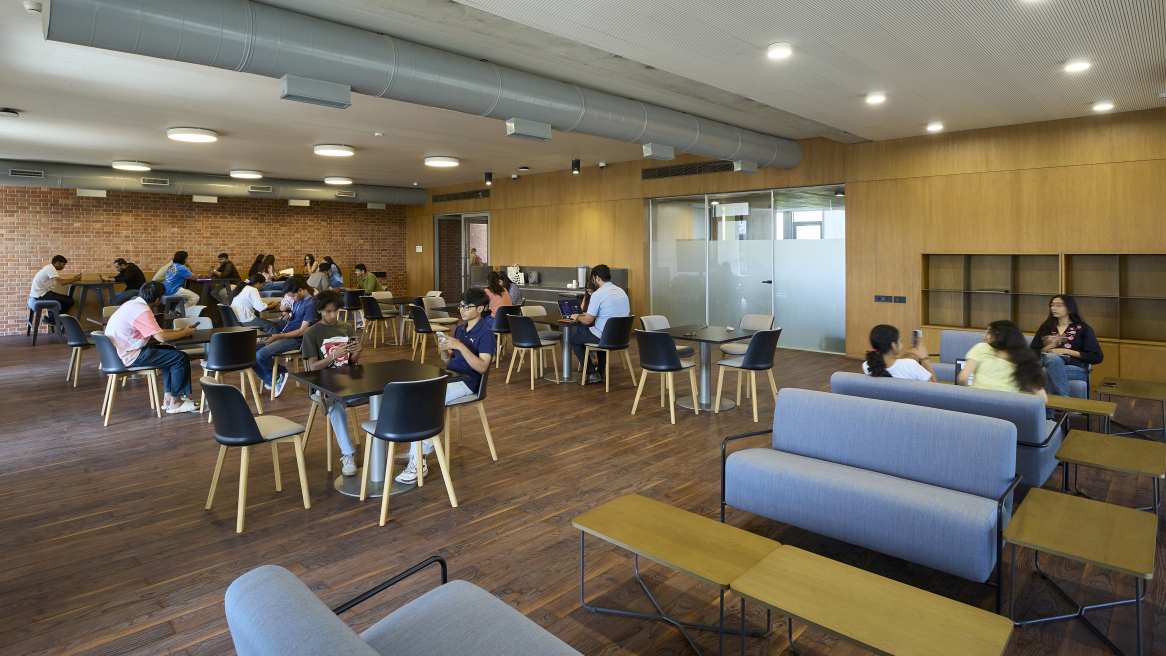
To foster true innovation, the physical environment must reflect the openness of the curriculum. The Anant campus was envisioned as open, porous, and seamless, a place with no boundaries. At the heart of this ecosystem are the learning studios.
Traditional education settings often fall short of supporting active, hands-on creation. The university needed an environment that offered unhindered movement, moving away from a static setup into something highly adaptable.
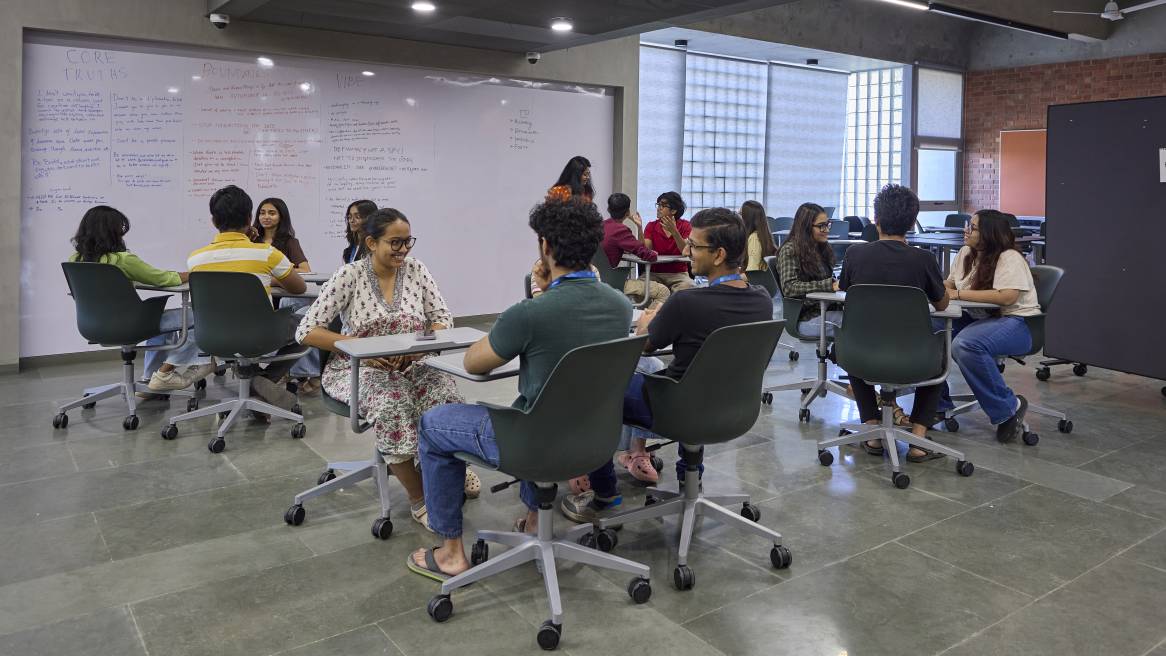
“Our brief to Steelcase was very simple. Our students are not going to be confined in one single classroom or any single space, and there has to be a plethora of options given to them to truly express themselves.”
Prof. Jasmine GohilDean, Anant National University
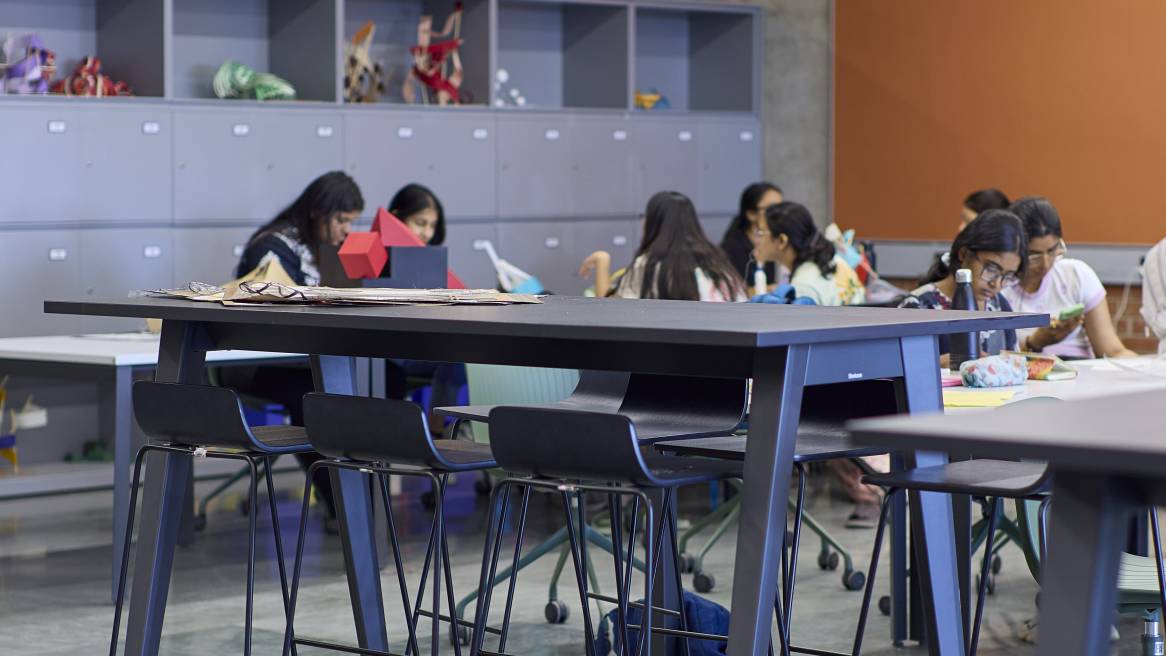
An Ecosystem of Choice and Posture
To translate this pedagogy into a physical reality, Steelcase worked closely with the university to observe, listen, and co-create solutions tailored for active learning. The resulting campus operates away from a one-size-fits-all approach.
“It was an ecosystem of micro spaces that was laid out around the campus, thus giving a palette of choice, a palette of posture and a palette of presence.“
Tirthankar BasuManaging Director, India & SAARC, Steelcase Inc.
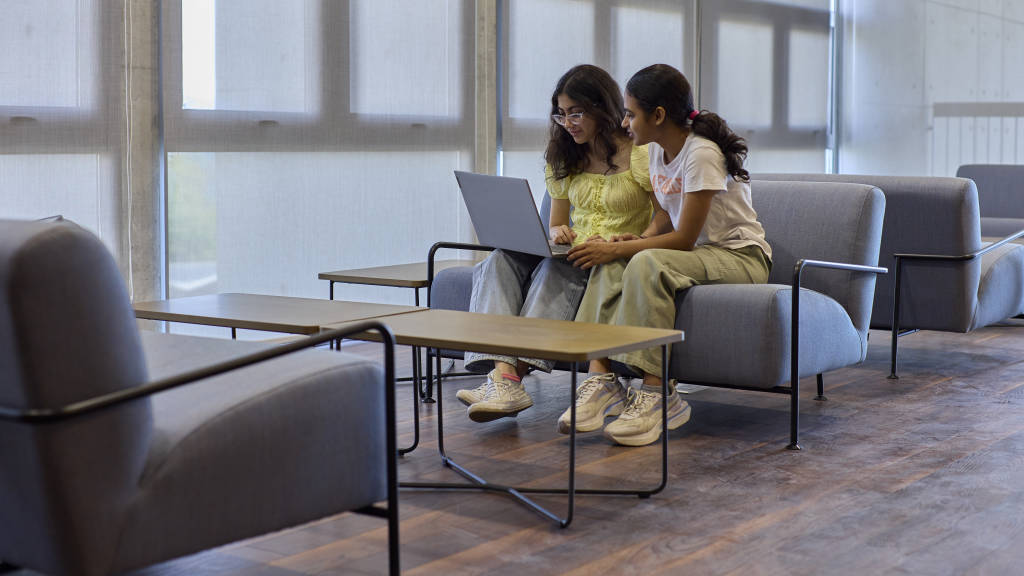
The specialized furniture allows students to adopt different physical postures throughout their day, directly fueling their creativity and enhancing their learning experience. The spaces are empowering both faculty and students, offering alternative configurations on the fly. Whether individuals need to break off into small clusters, gather as a large batch, or engage in focused one-to-one discussions, the environment flexes to meet the moment.
Prioritizing Faculty Well-Being
A world-class learning environment cannot be built for students alone. To support the educators, their spaces were intentionally designed to feel more residential and restorative. By prioritizing human-centric design, the environment allows faculty members to authentically connect with their colleagues and recharge.
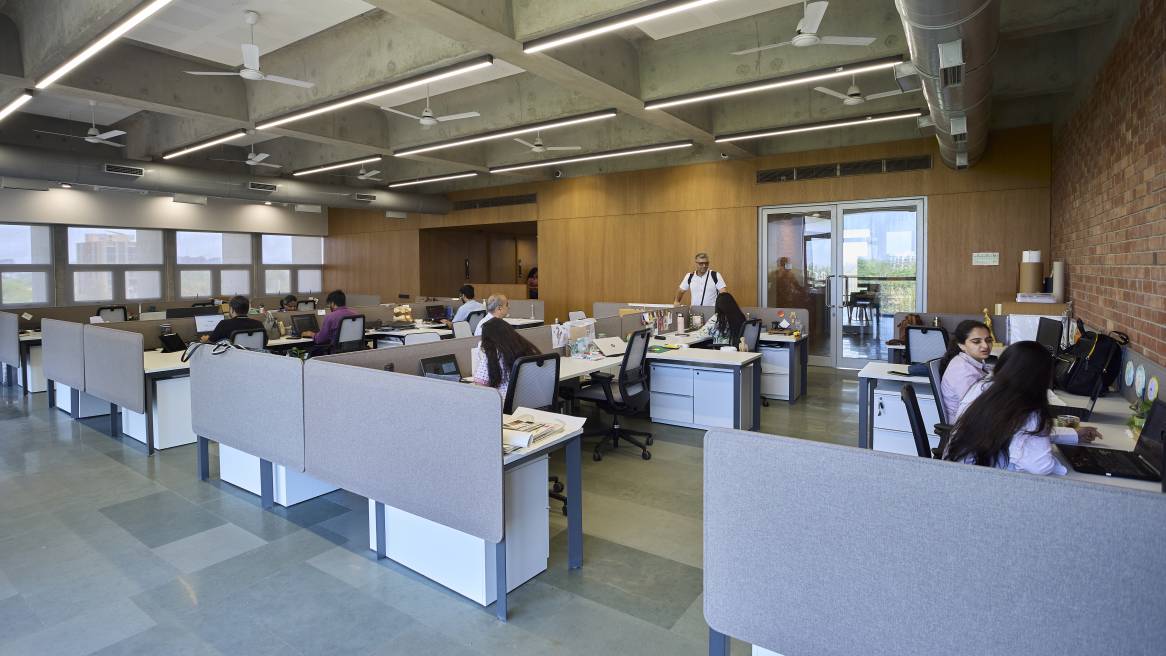
“Faculty spaces feel more like home. We can actually switch off, get rejuvenated and connect with our colleagues. I don’t think you can design for learning environments without designing for faculty spaces.“
Prof. Sangramsinh ParmarAssociate Professor and Lead, Space Design, School of Design, Anant National University
A Blueprint for the Future of Work
The impact of Anant University’s spatial design extends far beyond the campus walls. The principles applied here are highly relevant to the broader corporate landscape. The lessons learned from creating this highly agile, active environment map perfectly onto modern industry needs, whether teams are engaging in physical product design or developing software in agile tech workspaces.
Today, Steelcase solutions across the campus stand as a testament to the intersection of form and function, sturdily built to withstand the rigors of a design school, yet highly aesthetic in their appearance. As students and faculty continue to thrive in these versatile micro-spaces, the university serves as a living laboratory, constantly solving for the built environment of the future.
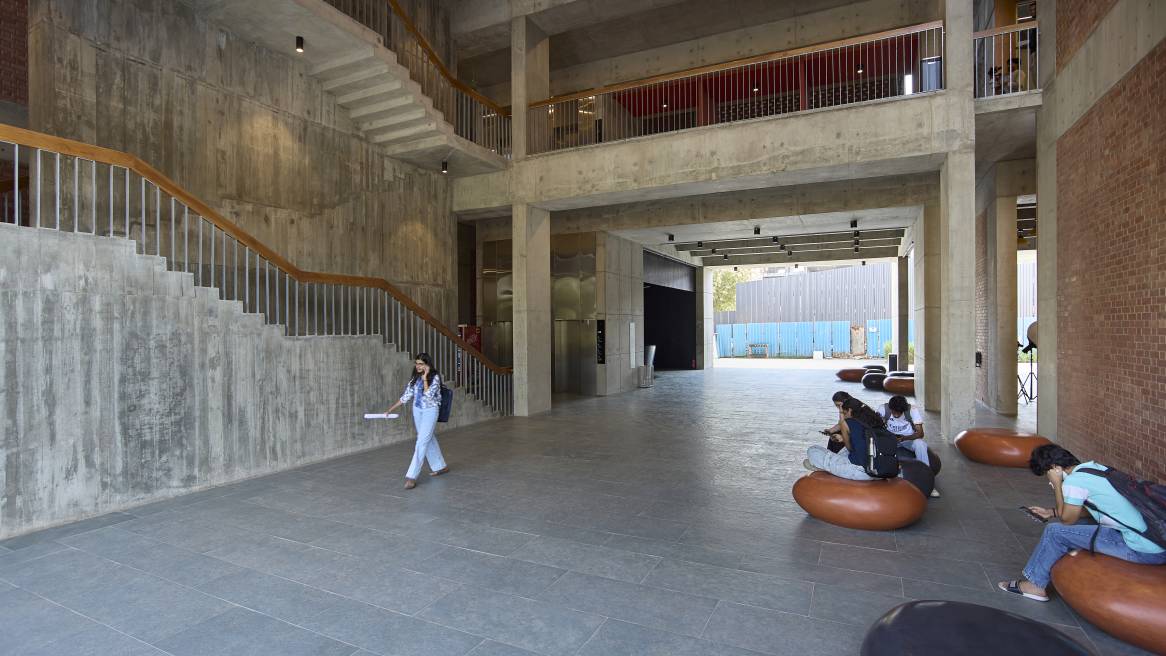
“The Steelcase solution that we have used on this campus is both aesthetic in its appearance and functional by nature. It’s sturdily built and our students and faculty are enjoying it a lot.”
Dr. Sanjeev VidyarthiProvost, Anant National University
Watch the Video:
