
Creating the Link Between Learning and Innovation
The Central Question
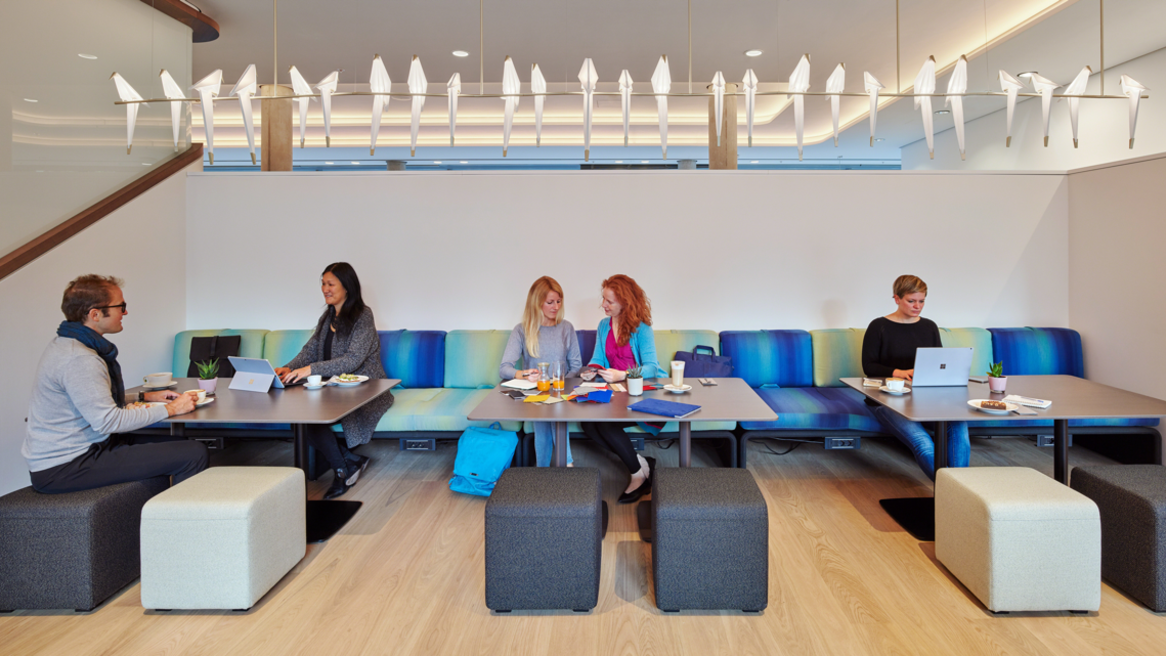
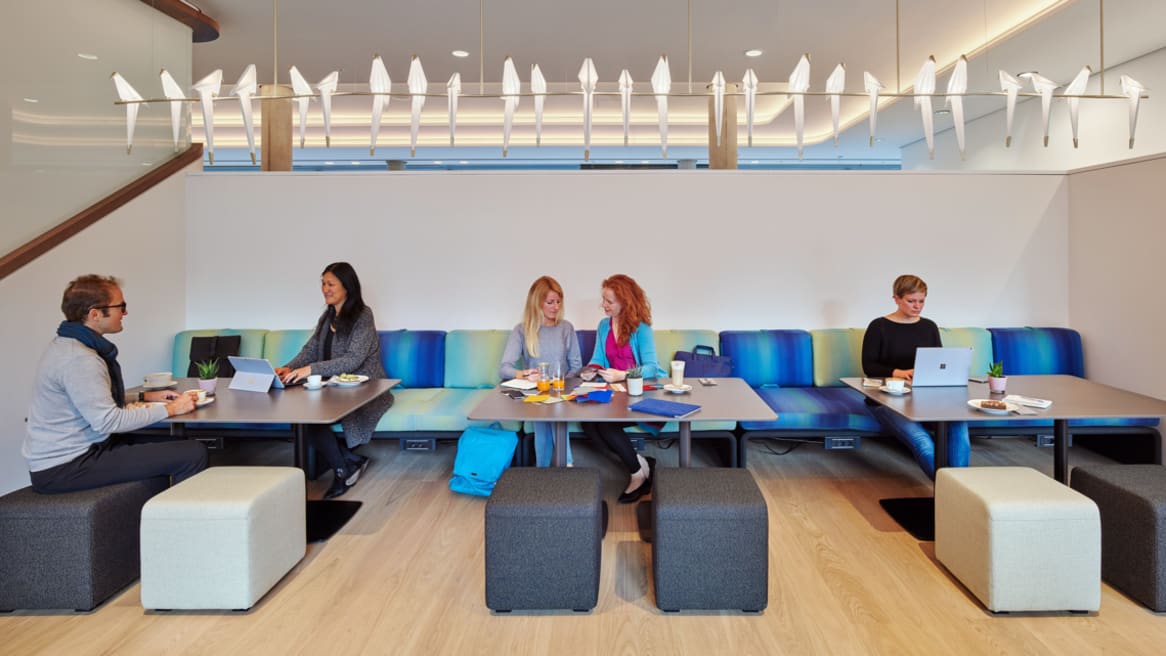
How can Steelcase create a work experience that inspires and connects colleagues and customers across functions and locations, that promotes experimentation and continuous learning?
core statement of project intent
It was clear from the start that this project was about much more than adding real estate. The new Learning and Innovation Center (LINC) is intended to fundamentally change how Steelcase EMEA operates, and leaders knew the LINC had to be a stage for meaningful and memorable experiences—for employees, leaders, customers, architects and designers, Munich residents and other visitors. Before any architectural blueprint could be created, a human-centered experience blueprint was needed to purposefully guide the design.
To gain clarity on how to proceed, the 24-month planning effort began with a cross-functional, in-depth design thinking process that centered on achieving a deep understanding of various users’ needs and wants–what might truly inspire, support and delight those who would be working in the LINC, as well as those who would be visiting.
As defined by IDEO’s Tim Brown, design thinking is a “human-centered approach to innovation that draws from the designer’s toolkit to integrate the needs of people, the possibilities of technology and the requirements for business success.”
The Team
A team was created to oversee the entire project and 10 work streams were identified: design, communications, learning and development, customer experience, facilities, model shop, applied research, IT, change management and finance.
The team kicked off the project by developing a central question–defining the problem the new space would have to solve:
“How can Steelcase create a work experience that inspires and connects colleagues and customers across functions and locations, that promotes experimentation and continuous learning?”
Each work stream progressed in parallel and through a series of workshops conducted by the Steelcase Applied Research team. Five key areas were identified that would be critical to the LINC’s success: employee experience, learning, leadership, innovation and visitor experience.
Five teams were then formed to each formulate a framework of actionable principles to inform the design of the LINC.
Communications Strategy
To build momentum and provide complete transparency to employees during the entire process a global communications strategy was developed. Activities included town hall meetings, the LINC intranet communications portal where regular updates appeared and employees could submit questions and view documentary-style videos showing what was happening and why.
NEXT CHAPTER – The Employee Experience
PREVIOUS CHAPTER – Introduction