
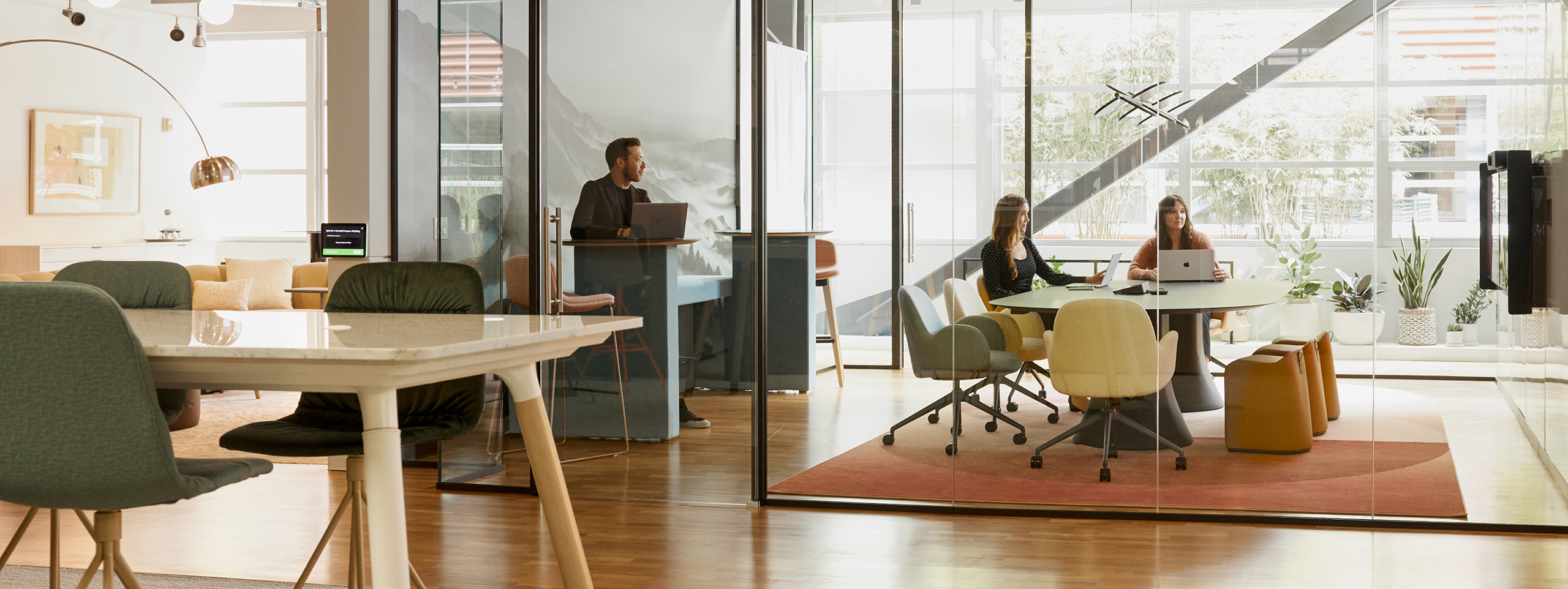


Steelcase is a global design and thought leader in the world of work. Along with our expansive community of brands, we design and manufacture innovative furnishings and solutions to help people do their best work in the many places where work happens.
Helping the World Work Better
Work, at its best, brings people purpose. At Steelcase, we help people do their best work by creating places that work better.
For over a century, we have designed and manufactured an expansive range of furnishings and solutions for the many ways people work. Partnering with leading organizations around the world, we support the many places where work happens – offices, homes, and learning and health environments.
We are driven to deeply understand the changing realities of work that our customers face. Through human-centered research and critical design thinking, we uncover insights that lead us to design innovation for better outcomes.
Our solutions and services come to life through talented design professionals, our dealer community and other partners. Together, this unmatched network provides local expertise and tailored experiences with the global power of Steelcase. And because we recognize that we must do our best work for the places we all share, we come together for the wellbeing of people and the planet — using our business to help the world work better.
Steelcase Health
Steelcase Health offers solutions and spaces that lead to better health outcomes for everyone involved in the complex work of care.
Steelcase Learning
Steelcase Learning inspires a life of learning by creating places that engage and empower people, within and beyond the classroom.
Steelcase Small + Midsize Business
With a curated portfolio, guided purchase experience and quality solutions scaled for your vision and budget, Steelcase SMB helps you build the place that’s right for your business.